


Baghouse Manufacturers
In the landscape of industrial air pollution control and material recovery, the selection of baghouse manufacturers is a critical decision that impacts long-term operational efficiency, regulatory compliance, and total cost of ownership. A baghouse, or fabric filter, is an engineered system designed to remove particulate matter from industrial gas streams. While the external structure of these systems is vital, the internal filtration components—often where precision engineering meets harsh environmental conditions—determine the ultimate success of the installation. For engineers and procurement professionals, understanding the capabilities of various baghouse manufacturers requires a deep dive into material science, mechanical design, and application-specific requirements.
Industrial filtration is not a one-size-fits-all solution. Depending on the industry—whether it be chemical processing, food and beverage production, or pharmaceutical manufacturing—the demands placed on filtration media vary significantly. This guide explores the technical considerations essential when evaluating manufacturers and the critical role that high-performance components play in modern dust collection systems.
The Role of Baghouse Manufacturers in Industrial Ecosystems
Baghouse manufacturers typically fall into two categories: full-system providers who design the entire housing and ducting, and specialized component manufacturers who produce the critical filtration media and internal hardware. For many high-stakes industrial applications, the synergy between these two is what ensures a system meets its particulate matter (PM) emission targets.
When evaluating baghouse manufacturers, technical teams must look beyond the steel enclosure. The core functionality of a baghouse relies on the "air-to-cloth" ratio, the pressure drop across the media, and the efficiency of the cleaning mechanism (such as pulse-jet, shaker, or reverse-air systems). Manufacturers who offer deep technical support can help engineers calculate these variables to prevent premature filter failure or excessive energy consumption by the system's fans.
Technical Criteria for Evaluating Manufacturers
Selecting a partner in the filtration space requires a rigorous assessment of their engineering standards. The following criteria are essential for any B2B procurement process involving industrial dust collection:
1. Application-Specific Engineering
A reputable manufacturer must demonstrate an understanding of the specific gas stream chemistry. For example, in chemical processing, the presence of corrosive vapors or high-temperature gases can degrade standard polyester or aramid bags within weeks. Manufacturers who specialize in diverse materials, including stainless steel wire mesh and sintered metal components, provide a significant advantage in these demanding environments.
2. Filtration Efficiency and Micron Ratings
Engineers must confirm that the manufacturer can meet the required MERV (Minimum Efficiency Reporting Value) or specific micron ratings necessary for their process. In pharmaceutical or food-grade applications, the filtration media must often capture sub-micron particles while maintaining compliance with health and safety standards. This is where the precision of the mesh and the quality of the weave become paramount.
3. Structural Integrity and Durability
The internal cages and support structures provided by baghouse manufacturers must withstand constant mechanical stress, especially in pulse-jet systems where high-pressure air bursts are used to dislodge dust cakes. Inferior materials can lead to cage corrosion or mechanical fatigue, resulting in filter bypass and system downtime.
The Shift Toward Metal Filtration Media
While traditional fabric bags are common, many modern industrial processes are shifting toward stainless steel filtration solutions. As a specialist in this field, Kaifil provides the precision components that baghouse manufacturers often integrate into high-performance systems. Stainless steel wire mesh filters and cartridges offer several advantages over traditional fabrics:
* Temperature Resistance: Stainless steel can operate in environments exceeding 500°F, where most synthetic fabrics would melt or lose structural integrity.
* Chemical Compatibility: In the presence of acids, alkalis, or organic solvents, stainless steel (particularly 304 and 316L grades) provides superior corrosion resistance.
* Cleanability and Longevity: Unlike disposable fabric bags, metal filter elements can often be cleaned and reused, significantly reducing the long-term waste and replacement costs associated with industrial filtration.
Engineers looking for these high-durability solutions can Review product options and application support on the Kaifil Main Page to understand how custom metal components integrate into larger dust collection frameworks.
Common Risks in Baghouse Procurement
Working with baghouse manufacturers involves navigating several potential pitfalls that can lead to increased operational costs:
* Undersized Systems: To lower initial bid prices, some manufacturers may propose a system with an aggressively high air-to-cloth ratio. This leads to high pressure drops, increased energy costs, and shortened filter life.
* Material Mismatch: Using standard galvanized steel components in a moisture-rich or corrosive environment will lead to rapid oxidation. This oxidation can contaminate the collected product or cause structural failure of the filter supports.
* Lack of Customization: Many large-scale manufacturers offer "off-the-shelf" units that may not fit the spatial constraints or specific ducting requirements of an existing facility. A manufacturer’s ability to provide OEM and customized filtration solutions is often the deciding factor for successful retrofits.
Engineering Considerations: Pressure Drop and Energy Efficiency
The most significant ongoing cost of operating a baghouse is the energy required to pull air through the filters. This is measured by the differential pressure (pressure drop). Baghouse manufacturers must provide data on the clean-filter pressure drop and the projected operational pressure drop once a dust cake has formed.
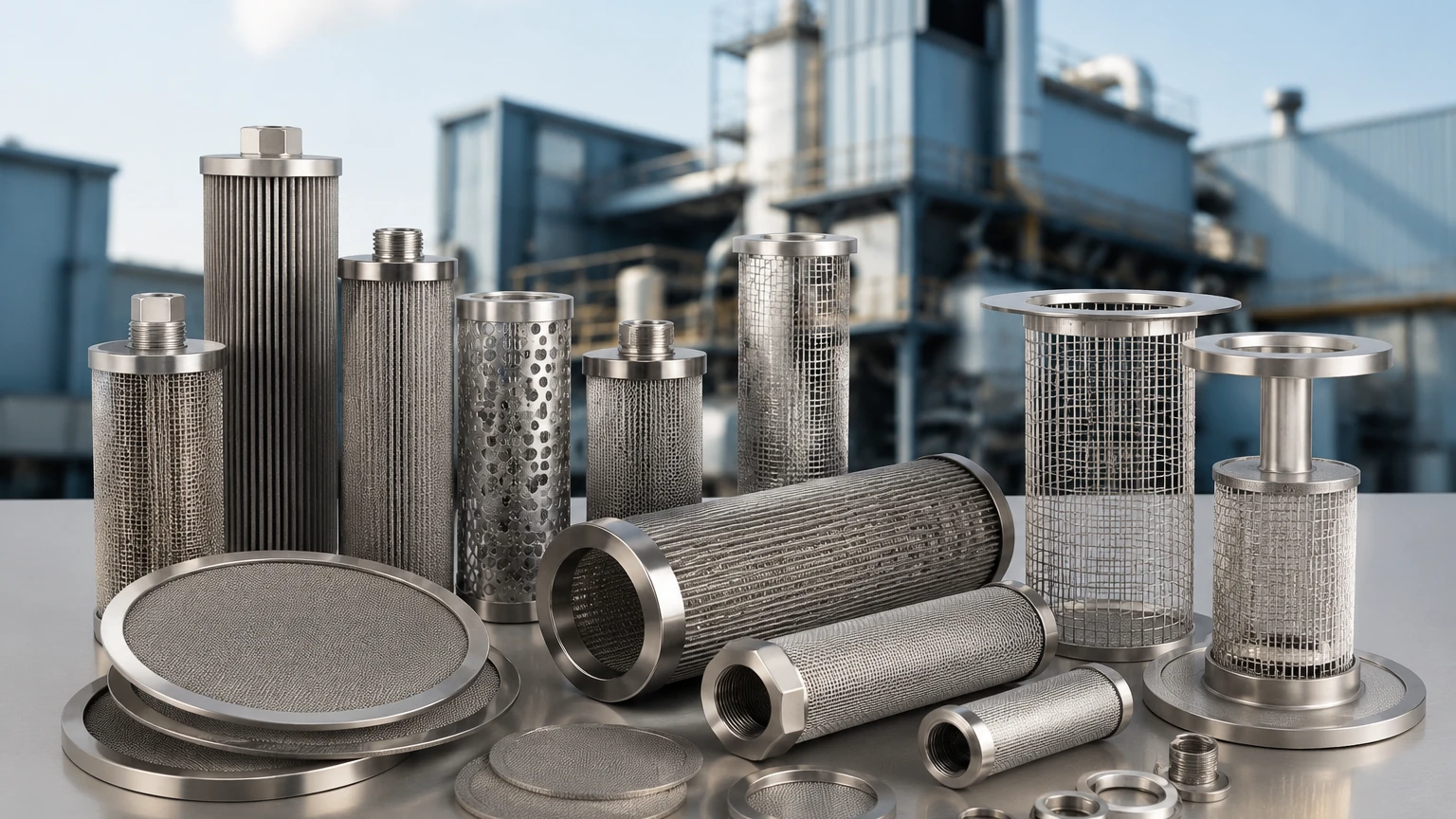
Precision-engineered metal mesh filters, such as those produced by Kaifil, are designed with specific pore structures to optimize airflow while maintaining high capture efficiency. By selecting the correct weave and wire diameter, engineers can minimize the resistance to airflow, leading to substantial energy savings over the life of the system.
Customization and OEM Capabilities
In the B2B sector, the ability to produce custom components is vital. Many industrial systems require non-standard filter dimensions or specialized mounting hardware. When vetting baghouse manufacturers, it is important to ask about their OEM capabilities. Can they manufacture to your specific drawings? What are their tolerances for precision metal filter components?
Kaifil excels in this area by working closely with global customers to develop high-performance filter products that meet specific application requirements. Whether it is a unique stainless steel filter cartridge for a hydraulic system or a custom wire mesh screen for a pharmaceutical dust collector, the focus remains on durability and precise filtration performance.
Maintenance and Replacement Cycles
A common question for engineers is the expected lifespan of the filtration media. While fabric bags might require replacement every 6 to 24 months, stainless steel components can last for years if maintained correctly. When discussing terms with baghouse manufacturers, clarify the recommended maintenance intervals and the ease of access for filter replacement. Systems designed with "tool-less" entry or modular filter banks can significantly reduce labor costs during maintenance shutdowns.
Total Cost of Ownership (TCO) Analysis
When comparing quotes from various baghouse manufacturers, a TCO analysis is more effective than comparing initial capital expenditure (CAPEX). The TCO should include:
1. Initial Purchase Price: The cost of the housing, media, and installation.
2. Energy Costs: Calculated based on the average pressure drop and fan efficiency.
3. Replacement Costs: The price of new filters and the labor required to install them.
4. Disposal Costs: Especially relevant if the dust or the spent filters are classified as hazardous waste.
5. Downtime Costs: The potential lost production during filter changes or system repairs.
By investing in higher-quality stainless steel filtration components from the outset, many facilities find that the higher initial cost is offset by the drastic reduction in replacement frequency and energy consumption.
Conclusion: Making an Informed Decision
The selection of baghouse manufacturers and their component suppliers is a foundational engineering decision. By focusing on material compatibility, filtration efficiency, and the long-term benefits of customized stainless steel solutions, purchasing teams can ensure their filtration systems perform reliably in even the most demanding industrial environments.
For those seeking technical expertise in the manufacturing of these precision components, visiting the Kaifil Main Page provides access to a wealth of information on wire mesh filters, stainless steel cartridges, and the engineering support necessary to optimize industrial filtration performance. From chemical processing to water treatment, the right filtration partner is one who understands that precision is not just a specification, but a requirement for operational success.
