


Water Separation Filter Manufacturers
In industrial fluid management, the presence of water in fuels, oils, and chemical solvents is a primary cause of equipment failure, corrosion, and reduced process efficiency. Water separation filter manufacturers play a critical role in providing the components necessary to remove both free and emulsified water from these systems. Selecting a manufacturer involves more than comparing unit prices; it requires a deep understanding of filtration media, housing design, and the specific physical properties of the fluids being processed.
For engineers and procurement professionals, the challenge lies in identifying a partner capable of delivering high-precision components that withstand demanding industrial environments. This guide explores the technical considerations, material requirements, and evaluation criteria essential when selecting water separation filter manufacturers for industrial applications.
The Engineering Principles of Water Separation
Water separation is typically achieved through two primary methods: mechanical separation and coalescence. Manufacturers specializing in these technologies must understand the fluid dynamics and surface tension interactions at play.
Mechanical Separation
Mechanical separation often utilizes gravity or centrifugal force, but in many compact industrial systems, it relies on hydrophobic barriers. These filters are designed to allow the primary fluid (such as diesel or hydraulic oil) to pass through while repelling water droplets. Stainless steel wire mesh, often treated with specialized coatings or engineered with specific weave patterns, is a preferred material here due to its structural integrity and predictable pore sizes.
Coalescence
Coalescence is the process of merging small, emulsified water droplets into larger drops that can be easily settled or filtered out. Coalescer filters usually consist of multi-layered media. As the fluid passes through the dense layers, water droplets are trapped and forced to collide. Once they reach a sufficient size, gravity pulls them to the bottom of the filter housing for drainage. Manufacturers of these systems must calibrate the density and fiber diameter of the media to match the viscosity and flow rate of the target fluid.
Material Selection in Water Separation Systems
The choice of material is the most significant factor in the longevity and reliability of a separation filter. While synthetic fibers and paper media are common in light-duty applications, industrial-grade water separation filter manufacturers often prioritize metallic components, particularly stainless steel.
Stainless Steel Wire Mesh
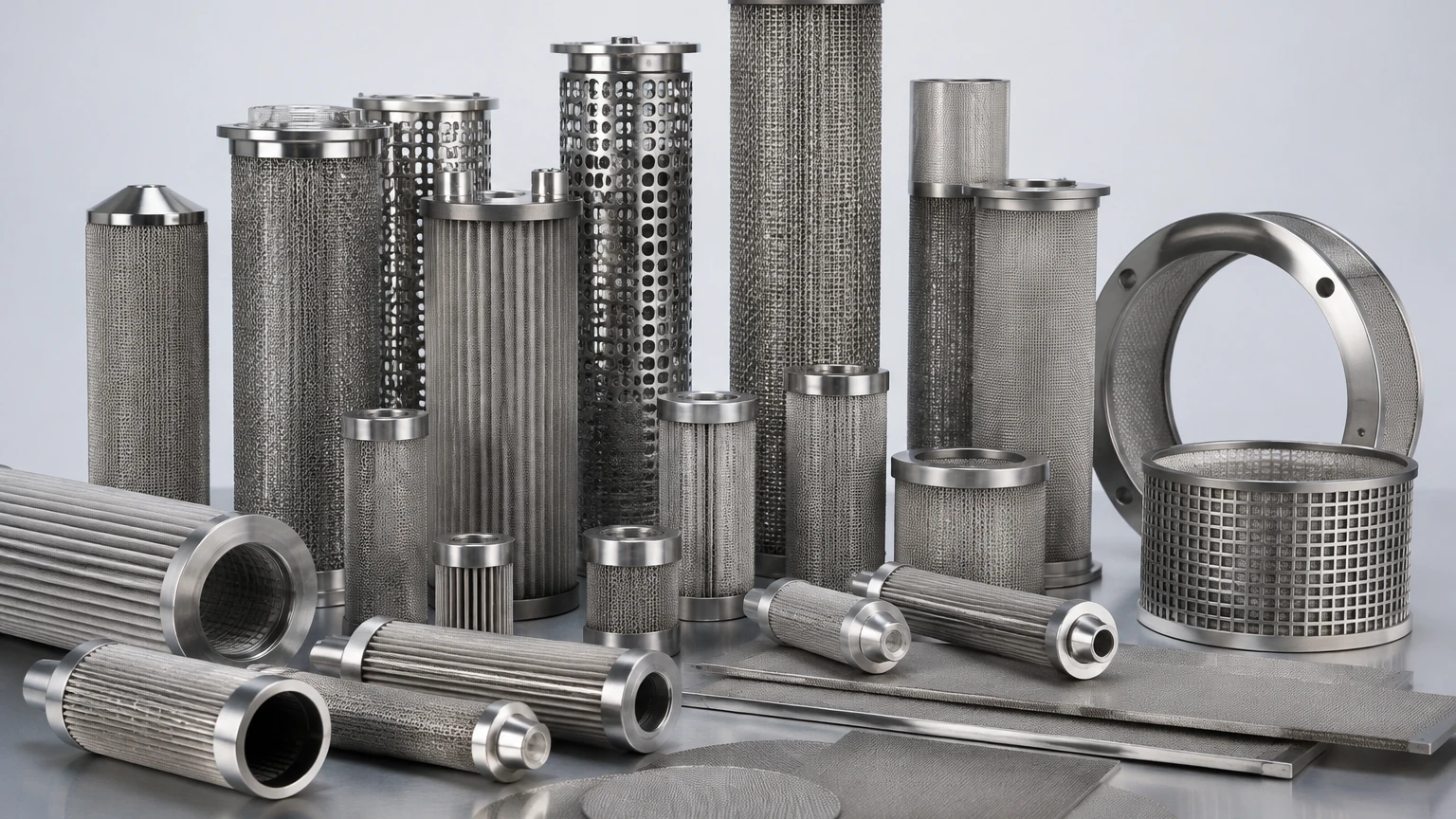
Stainless steel 304 and 316L are the industry standards for durable filtration. These materials offer exceptional resistance to corrosion, which is vital when dealing with water-contaminated fluids. Furthermore, stainless steel mesh can be engineered into various weaves, such as Plain Dutch Weave or Twilled Dutch Weave, to provide high mechanical strength and precise filtration ratings. Unlike polymer-based media, stainless steel does not degrade when exposed to high temperatures or aggressive chemical additives.
Sintered Metal Components
For high-pressure applications, sintered metal fiber or sintered mesh provides a rigid structure that prevents media migration. This is crucial in hydraulic systems where pressure spikes could cause traditional filter media to fail, leading to downstream contamination. Manufacturers with advanced sintering capabilities can produce filter elements that offer a high dirt-holding capacity while maintaining efficient water separation properties.
Evaluating Water Separation Filter Manufacturers
When vetting potential suppliers, technical teams should look beyond the product catalog. The ability to provide engineering support and customization is often what separates a commodity vendor from a strategic partner.
Technical Expertise and Engineering Support
Reliable manufacturers should be able to discuss the "Beta Ratio" of their filters and provide pressure drop curves based on specific fluid viscosities. They should understand the impact of interfacial tension (IFT) on separation efficiency. If a manufacturer cannot provide data on how their filters perform under varying flow velocities, they may not be suitable for critical industrial applications.
Customization and OEM Capabilities
Many industrial systems have unique spatial constraints or specific interface requirements. A manufacturer like Kaifil, which focuses on custom stainless steel filtration solutions, provides the flexibility needed to design filter cartridges that fit existing housings while improving performance. Whether it is a custom flange, a specific micron rating, or a unique housing geometry, OEM capabilities ensure that the filtration component integrates seamlessly into the larger system.
Quality Control and Testing Standards
Quality assurance is paramount. Inquire about the manufacturer’s testing protocols, such as:
* Bubble Point Testing: To verify the integrity of the filter media and the absence of bypass leaks.
* Multi-pass Testing: To determine the filtration efficiency and dirt-holding capacity.
* Material Traceability: Ensuring that the stainless steel used meets ASTM or international standards to prevent premature corrosion.
Applications Requiring High-Precision Water Separation
Different industries face unique challenges regarding water contamination. Understanding these helps in selecting a manufacturer with the right application experience.
Oil and Gas Processing
In the oil and gas sector, water separation is required at almost every stage, from wellhead production to refinery processing. Filters must handle high flow rates and resist the corrosive effects of sour gas or brine. Stainless steel wire mesh filters are frequently used here as pre-filters to protect more sensitive downstream coalescers.
Marine and Aviation Fueling
Water in fuel is a major safety risk in aviation and marine environments. It can lead to microbial growth (fuel bugs) and ice formation at high altitudes. Water separation filter manufacturers serving these industries must adhere to strict international standards (such as EI 1581 for aviation) to ensure that fuel is delivered dry and clean.
Hydraulic and Lubrication Systems
Water in hydraulic oil reduces lubricity, leads to component wear, and causes the depletion of additives. Precision metal filter components are used in these systems to maintain oil dryness, extending the life of pumps, valves, and actuators. For more information on specialized components, you can visit the Main Page to review product options and application support.
Total Cost of Ownership (TCO) Considerations
For procurement managers, the initial purchase price of a filter is only one part of the equation. A comprehensive TCO analysis includes:
1. Service Life: How long does the filter last before it reaches the terminal pressure drop? Stainless steel filters often have a longer service life than disposable alternatives.
2. Cleanability: Many stainless steel filter elements are cleanable and reusable. This reduces the recurring cost of replacement filters and minimizes waste, aligning with corporate sustainability goals.
3. Downstream Protection: A high-quality water separation filter protects expensive downstream equipment. The cost of a single pump failure far outweighs the investment in a premium filtration solution.
4. Energy Efficiency: Filters with an optimized pleat design and high porosity offer lower differential pressure, reducing the energy required by the system's pumps.
Key Questions for Manufacturers Before Procurement
Before finalizing a contract with water separation filter manufacturers, engineers should confirm several technical details to ensure the product meets the application's demands:
* What is the maximum operating temperature and pressure? Ensure the materials and seals are compatible with the environment.
* Is the filter media compatible with the fluid's chemical composition? This is especially important for synthetic oils and aggressive solvents.
* What is the recommended cleaning procedure? If the filter is reusable, the manufacturer should provide clear instructions on ultrasonic cleaning or backwashing.
* Can you provide a certificate of conformance? This confirms that the batch meets the specified technical requirements.
Conclusion
Water separation is a critical process that requires precision engineering and high-quality materials. By focusing on manufacturers that offer technical expertise, robust stainless steel construction, and customization capabilities, industrial operators can ensure the reliability of their systems. Whether the application involves fuel purification, hydraulic oil maintenance, or chemical processing, the right filtration partner will provide a solution that balances performance, durability, and cost-effectiveness.
For those seeking reliable, custom-engineered filtration components, working with experienced manufacturers ensures that specific industrial challenges are met with proven engineering solutions. By prioritizing material integrity and technical transparency, companies can mitigate the risks of water contamination and optimize their industrial processes for the long term.
