


Candle Filter Element
In industrial liquid-solid separation, the candle filter element stands as a critical component for achieving high-clarity filtration and efficient solids recovery. These cylindrical filter inserts are designed for use within pressure leaf filters or specialized candle filter housings, where they operate under significant pressure to remove fine particulates from process streams. For engineers and procurement professionals, understanding the technical nuances of candle filter design, material selection, and operational performance is essential for optimizing plant efficiency and ensuring product purity.
As a professional manufacturer, Kaifil specializes in providing high-performance filtration components tailored to demanding industrial environments. For more information on our full range of stainless steel filtration solutions, please visit our Main Page.
Understanding the Role of Candle Filter Elements in Industrial Filtration
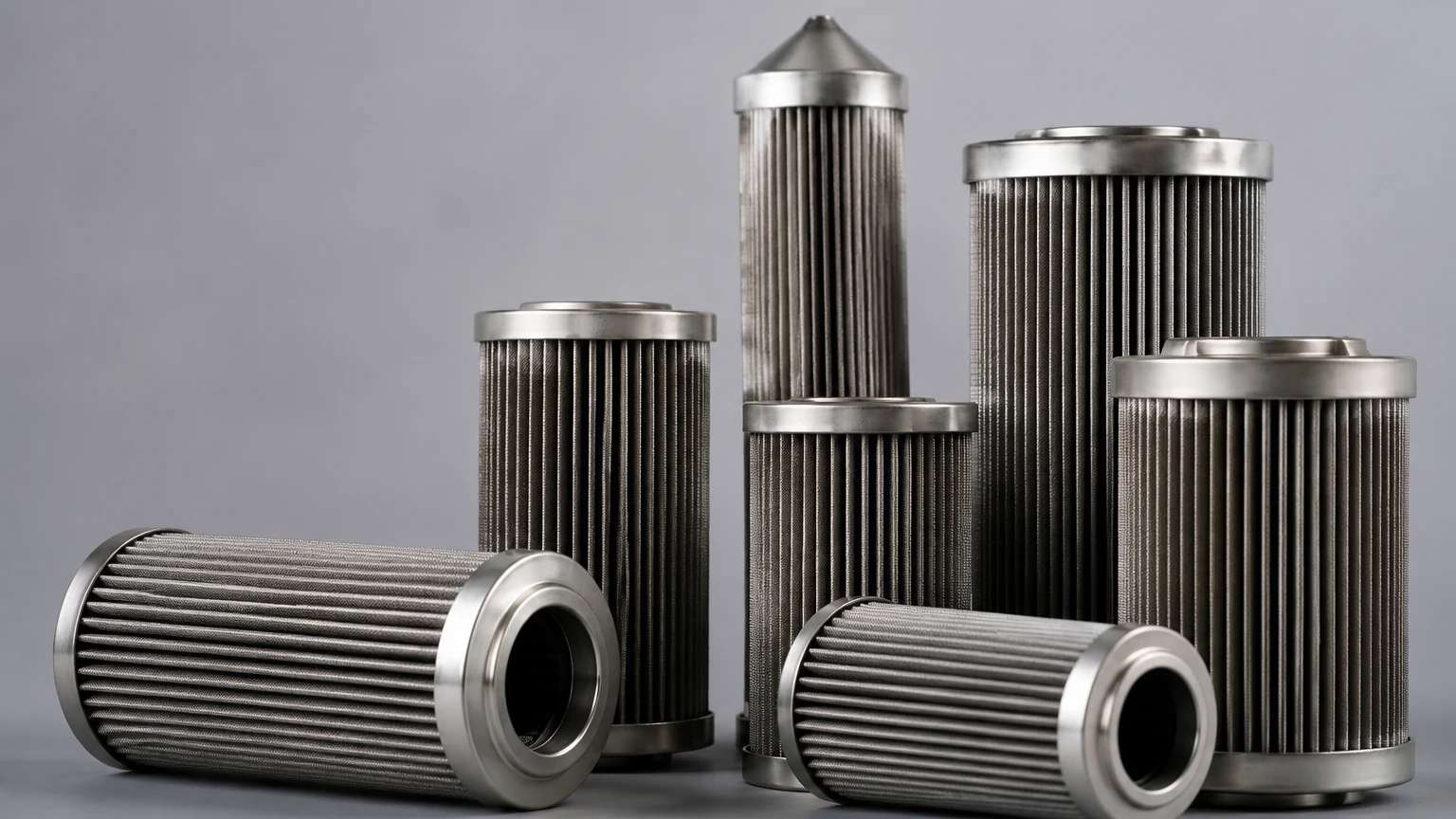
A candle filter element is a vertically oriented, cylindrical filter component utilized in batch-operated pressure filtration systems. These elements are typically arranged in clusters within a pressure vessel, providing a large surface area for filtration within a relatively small footprint. Their primary function is to facilitate the formation of a filter cake—a layer of accumulated solids that eventually acts as the primary filtration medium.
Unlike traditional bag or cartridge filters that may be disposed of after a single cycle, candle filter elements are designed for long-term use and periodic cleaning. They are particularly effective in applications requiring high solids discharge, catalyst recovery, or the filtration of hazardous materials where a closed system is mandatory for operator safety. The "candle" design allows for efficient cake discharge through backwashing or vibration, making them a cornerstone of automated filtration processes in the chemical and pharmaceutical sectors.
Structural Components and Engineering Design
The engineering of a candle filter element must balance filtration precision with mechanical strength. A standard industrial candle element consists of several key structural layers:
1. The Support Core
At the center of the element is a perforated or grooved support tube. This core must be robust enough to withstand high differential pressures (often exceeding 5-7 bar) without collapsing. In many high-end designs, the core is manufactured from heavy-duty stainless steel to ensure longevity under the mechanical stress of backwashing cycles.
2. The Filter Medium
The outer layer of the candle is the active filtration surface. Depending on the application, this may consist of:
* Sintered Wire Mesh: Multiple layers of stainless steel mesh bonded through heat and pressure to create a rigid, stable pore structure.
* Wedge Wire: V-shaped profiles that provide a non-clogging surface, ideal for high-viscosity fluids and heavy solids loading.
* Woven Wire Cloth: A flexible but durable mesh used for finer micron ratings, often supported by an underlying drainage layer.
3. End Fittings and Seals
To ensure a leak-proof installation within the filter header, candle elements are equipped with precision-machined end fittings. Common configurations include threaded connections, bayonet mounts, or flanged ends. The choice of sealing material—such as PTFE, EPDM, or Viton—is determined by the chemical compatibility and temperature of the process fluid.
Material Selection and Chemical Compatibility
Material integrity is paramount in industrial filtration. Because candle filter elements are frequently exposed to corrosive chemicals, high temperatures, and abrasive solids, the choice of alloy is a critical engineering decision.
* 304/304L Stainless Steel: The standard choice for general industrial applications, offering good corrosion resistance and structural strength at a cost-effective price point.
* 316/316L Stainless Steel: Preferred for pharmaceutical and food-grade applications due to its superior resistance to pitting corrosion and chlorides.
* Hastelloy and Monel: For highly aggressive environments, such as those involving strong acids or high-salinity brines, specialized nickel-based alloys are utilized to prevent premature element failure.
Engineers must also consider the thermal expansion coefficients of these materials, especially in processes that involve rapid temperature fluctuations (thermal cycling), which can lead to mechanical fatigue at the weld points of the filter element.
Operational Principles: Cake Filtration and Backwashing
The efficiency of a candle filter element is defined by its ability to manage the filter cake. The filtration cycle typically follows three distinct phases:
Phase 1: Pre-coating (Optional)
In applications requiring extremely fine filtration, a pre-coat of diatomaceous earth or perlite is applied to the candle elements. This protects the filter medium from premature blinding and facilitates easier cake discharge.
Phase 2: Filtration and Cake Building
As the slurry flows into the filter vessel, solids are retained on the surface of the candle filter element. Over time, these solids build up into a uniform cake. As the cake thickness increases, the filtration efficiency often improves, as the cake itself begins to trap finer particles than the original mesh could alone.
Phase 3: Backwashing and Discharge
Once the differential pressure reaches a pre-set limit, the filtration cycle stops. The vessel is drained, and the cake is removed. This is achieved by a reverse flow of liquid or a "gas bump" (compressed air or nitrogen) from the inside of the candle element. The sudden pressure increase causes the filter medium to expand slightly or the cake to lose its adhesion, causing it to fall into the discharge hopper. The ability of the candle element to withstand these repeated pressure reversals is a hallmark of high-quality manufacturing.
Technical Specifications and Performance Evaluation
When evaluating a candle filter element for a specific process, several technical parameters must be scrutinized to ensure performance expectations are met:
1. Micron Rating: This defines the size of particles the element can effectively trap. Ratings can range from 1 micron for fine polishing to over 200 microns for coarse separation. It is important to distinguish between "nominal" and "absolute" ratings.
2. Effective Filtration Area (EFA): The total surface area available for filtration. A higher EFA allows for lower flux rates (flow per unit area), which generally leads to longer cycle times and better cake stability.
3. Collapse Pressure: The maximum differential pressure the element can handle before structural failure. This is critical in high-viscosity applications where pressure can spike rapidly.
4. Permeability: A measure of how easily fluid passes through the clean filter medium. High permeability reduces the initial pressure drop and energy consumption of the pump systems.
Industrial Applications and Sector-Specific Requirements
Candle filter elements are utilized across a diverse range of industries, each with unique technical demands:
* Chemical Processing: Used for the recovery of expensive catalysts (such as palladium or platinum on carbon) and the filtration of resins, polymers, and specialty chemicals.
* Food and Beverage: Critical in the clarification of edible oils, sugar syrups, and fruit juices. In these applications, elements must adhere to strict hygienic standards and be compatible with Clean-in-Place (CIP) chemicals.
* Pharmaceuticals: Employed in the production of Active Pharmaceutical Ingredients (APIs) where batch purity and total containment of hazardous substances are required.
* Water Treatment: Used in high-flow systems for the removal of suspended solids from process water or the protection of downstream membrane systems.
Maintenance, Cleaning, and Replacement Cycles
While candle filter elements are durable, they are not permanent. Effective maintenance extends their service life and maintains filtration accuracy.
Blinding and Fouling: Over time, fine particles can become lodged within the pores of the filter medium (irreversible fouling). If standard backwashing does not restore the original pressure drop, ultrasonic cleaning or chemical soaking may be required. Engineers should monitor the "clean pressure drop" after each cycle; a steady increase indicates that the elements are reaching the end of their functional life.
Mechanical Inspection: Regular inspection for signs of deformation, mesh fraying, or weld cracks is necessary. Even a small breach in the filter medium can lead to "bypass," where unfiltered slurry contaminates the filtrate, potentially ruining an entire production batch.
Selection Guide for Engineering and Procurement Teams
Choosing the right candle filter element involves more than simply matching dimensions. To ensure the best total cost of ownership, consider the following factors during the procurement process:
1. Particle Size Distribution: Understanding the full range of particle sizes in the slurry helps in selecting a micron rating that prevents internal pore blinding.
2. Fluid Viscosity: High-viscosity fluids require elements with greater structural strength and potentially larger surface areas to maintain viable flow rates.
3. Cleaning Compatibility: Ensure the filter medium and seals can withstand the specific temperatures and chemicals used in your cleaning protocols.
4. Customization Requirements: Off-the-shelf components may not fit specialized housings. Working with a manufacturer that offers custom OEM designs for lengths, diameters, and fitting types is often necessary for retrofitting older systems.
By focusing on these technical criteria, engineering teams can select candle filter elements that provide reliable, long-term service in even the most demanding industrial environments. For further technical assistance or to discuss customized filtration components, explore the resources available on our Main Page.
