


Casing an Oil Well
Casing an oil well is a fundamental engineering process in the petroleum industry, serving as the structural backbone of the wellbore. It involves the installation of a series of metal pipes—known as casing strings—into a freshly drilled hole. This process is not merely a structural requirement; it is a complex operation designed to ensure well integrity, protect environment-sensitive zones such as freshwater aquifers, and provide a stable conduit for the extraction of hydrocarbons. For engineers and procurement professionals, understanding the technical nuances of casing an oil well is essential for optimizing production and ensuring the long-term viability of the asset.
In modern industrial applications, the success of a casing operation relies heavily on the integration of precision-engineered components, including specialized filtration systems and sand control screens. These components, often manufactured from high-grade stainless steel, are critical in preventing the ingress of formation solids while allowing for the efficient flow of oil and gas. As a manufacturer specialized in custom stainless steel filtration solutions, Kaifil provides the technical components necessary to support these demanding downhole environments.
The Primary Functions of Well Casing
Before delving into the mechanical steps of casing an oil well, it is vital to understand the multi-faceted roles that casing plays throughout the lifecycle of a well. The engineering requirements for casing are dictated by the geological conditions of the formation, the depth of the well, and the chemical composition of the fluids being extracted.
1. Borehole Stabilization
As drilling progresses, the pressure exerted by the surrounding rock formations can lead to borehole instability. Without casing, the walls of the wellbore would eventually collapse, especially in unconsolidated or high-pressure zones. Casing provides the necessary hoop strength to resist external formation pressures and maintain the diameter of the hole.
2. Zonal Isolation
One of the most critical aspects of casing an oil well is zonal isolation. This refers to the prevention of fluid migration between different geological layers. For instance, casing prevents oil or gas from leaking into shallow freshwater aquifers and, conversely, prevents water from entering the production stream. This is achieved through a combination of the steel pipe itself and the cement sheath that fills the annular space between the casing and the rock wall.
3. Pressure Control
Casing provides a high-pressure environment that allows for the safe management of formation fluids. It serves as the foundation for the installation of the Wellhead and Blowout Preventer (BOP) stack. During production, the casing must withstand significant internal pressures from the reservoir and external pressures from the overburden.
The Hierarchy of Casing Strings
Casing an oil well is rarely a single-step process. Instead, it involves the installation of multiple concentric strings of pipe, each serving a specific purpose as the well deepens. The selection of materials and the diameter of these strings are determined during the well design phase.
Conductor Casing
The conductor casing is the first and largest string installed. Its primary purpose is to prevent the top of the wellbore from washing out during the initial stages of drilling and to provide a stable platform for the drilling rig. In offshore environments, the conductor pipe also serves as a structural support for the riser system.
Surface Casing
Surface casing is installed to protect freshwater zones. It is typically run to a depth that extends past the deepest known aquifer. Once in place, it is cemented to the surface, creating a permanent barrier. This string also supports the weight of all subsequent casing strings and the wellhead equipment.
Intermediate Casing
Intermediate casing is used in deeper wells to isolate troublesome zones, such as high-pressure gas pockets, lost circulation zones, or swelling shales. By casing off these sections, engineers can continue drilling to the target depth with a heavier or lighter drilling fluid without risking wellbore failure in the upper sections.
Production Casing
The production casing is the final string run into the well. It extends into the hydrocarbon-bearing formation. This string is the primary conduit through which the oil and gas will flow to the surface. Because it is in direct contact with reservoir fluids, the material selection for production casing is critical, often requiring corrosion-resistant alloys or high-strength stainless steel to handle the presence of H2S or CO2.
The Role of Sand Control and Filtration in Casing
When casing an oil well in unconsolidated reservoirs—where the formation consists of loose sand—standard casing is not sufficient. In these scenarios, the casing must be integrated with sand control systems to prevent the migration of sand into the production tubing. Sand production can lead to the erosion of surface equipment, the plugging of separators, and the eventual collapse of the well.
Wire-Wrapped Screens and Metal Mesh Filters
In the completion phase of casing an oil well, engineers often utilize screen liners. These are specialized sections of casing that are perforated or slotted and wrapped with high-precision stainless steel wire mesh or wedge wire. These filters are engineered to a specific micron rating based on the particle size distribution (PSD) of the reservoir sand.
Kaifil’s expertise in manufacturing custom stainless steel filter cartridges and wire mesh filters is particularly relevant here. Precision in the slot width and the uniformity of the mesh are paramount. If the filtration media is too coarse, sand will pass through; if it is too fine, the filter will plug, restricting production. Therefore, engineering these components requires a deep understanding of fluid dynamics and material durability.
Sintered Metal Filtration
For particularly demanding high-pressure or high-temperature (HPHT) wells, sintered metal fiber or multi-layer sintered mesh is used within the casing string. These materials offer superior mechanical strength and a higher dirt-holding capacity compared to standard wire-wrapped screens. They are capable of withstanding the high differential pressures encountered during well stimulation and long-term production.
Engineering Considerations for Material Selection
Selecting the right materials for casing an oil well is a balance between mechanical performance and cost-effectiveness. While carbon steel is the standard for many applications, the presence of corrosive elements necessitates the use of stainless steel and other high-performance alloys.
Corrosion Resistance
Oil and gas wells often contain "sour" gas (H2S) or "sweet" gas (CO2), both of which are highly corrosive to standard steel. In these environments, 304 or 316L stainless steel, or even Duplex and Super Duplex alloys, are utilized for the filtration components and critical sections of the casing. These materials prevent Stress Corrosion Cracking (SCC) and pitting, which could otherwise lead to a catastrophic loss of well integrity.
Mechanical Loads
The casing must be designed to withstand three primary types of loads:
1. Tension: The weight of the casing string itself as it hangs in the wellbore.
2. Collapse: The external pressure exerted by formation fluids and rock.
3. Burst: The internal pressure from the reservoir or during hydraulic fracturing operations.
Engineers use safety factors to ensure that the chosen wall thickness and material grade can handle these loads throughout the projected life of the well. For technical specifications on stainless steel filtration components used in industrial applications, engineers can visit the Main Page to review product options and application support.
The Process of Running and Cementing Casing
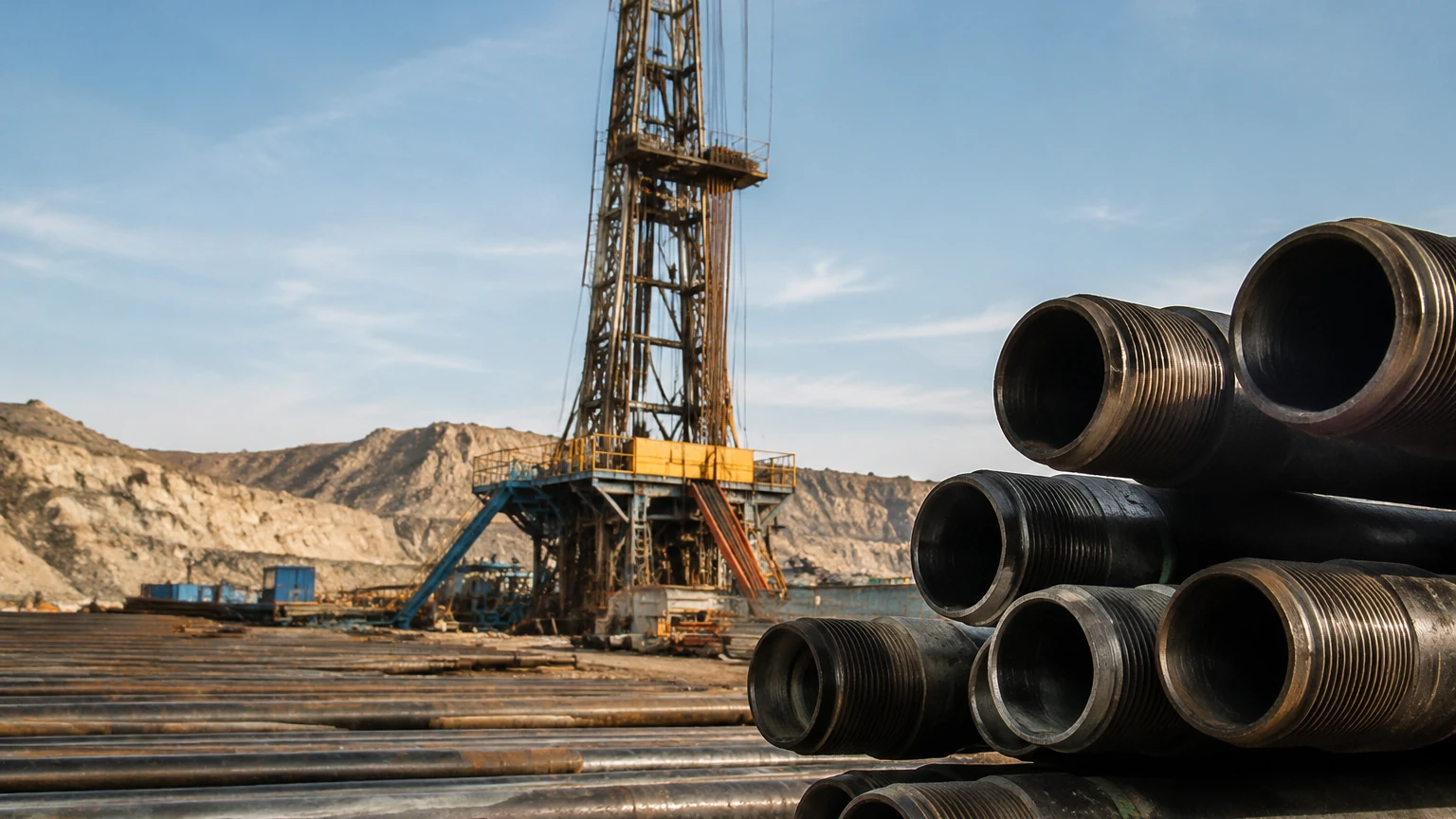
The physical act of casing an oil well is a precision operation that requires specialized equipment and a highly trained crew.
Running the String
Once the drilling of a specific section is complete, the drill string is pulled out of the hole. The casing joints—typically 30 to 40 feet long—are then screwed together and lowered into the wellbore. Centralizers are attached to the outside of the casing to ensure it stays in the middle of the hole, which is crucial for a uniform cement job.
The Cementing Operation
After the casing is in place, cement slurry is pumped down the inside of the casing and forced up into the annular space between the casing and the wellbore wall. Once the cement hardens, it bonds the casing to the formation. This cement sheath is what provides the actual zonal isolation and protects the steel pipe from corrosive formation waters.
Integrity Testing
After the cement has set, the integrity of the casing and the cement bond is tested. This is often done using a Pressure Integrity Test (PIT) or a Cement Bond Log (CBL), which uses sonic waves to detect gaps or channels in the cement. Ensuring a perfect bond is essential before drilling the next section of the well.
Customization and OEM Solutions in Well Completion
No two oil wells are identical. The geological diversity of global energy reserves requires highly customized solutions for casing and completion. This is where the capability for OEM manufacturing becomes a strategic advantage for engineering firms.
Customization options often include:
* Specific Micron Ratings: Tailoring the filtration mesh to the exact sand profile of a specific field.
* Custom Dimensions: Manufacturing screen liners that fit non-standard borehole sizes.
* Alloy Selection: Providing components in specialized materials like Monel, Inconel, or specific grades of stainless steel to match the chemical profile of the reservoir.
By working with a professional manufacturer like Kaifil, engineers can ensure that the filtration components integrated into the casing string meet the exact performance expectations required for the application. This collaborative approach helps in reducing the total cost of ownership by extending the maintenance-free life of the well.
Common Risks and Mitigation Strategies
Casing an oil well involves significant risks that must be managed through rigorous engineering and quality control.
1. Casing Collapse
If the external pressure exceeds the collapse rating of the pipe, the casing can fail, often leading to the loss of the well. This is mitigated by using high-strength alloys and thicker wall sections in high-pressure zones.
2. Poor Cement Bond
If the cement does not properly fill the annulus, fluids can migrate between zones, leading to surface casing pressure or environmental contamination. This is managed through the use of proper centralizers and optimized cement slurry designs.
3. Filtration Failure (Sand Ingress)
In the production section, if the sand control screen fails due to erosion or corrosion, the well may "sand up," requiring expensive workover operations. Utilizing high-quality, precision-welded stainless steel screens is the primary defense against this risk.
Conclusion: The Importance of Quality Components
Casing an oil well is a definitive step in transforming a hole in the ground into a productive industrial asset. The integrity of this system is only as strong as its weakest component. From the heavy-duty surface casing to the precision-engineered stainless steel filtration screens in the production zone, every element must be selected based on rigorous technical criteria.
For engineers and purchasing teams, the focus should always remain on durability, filtration accuracy, and material compatibility. By understanding the mechanical and chemical demands of the downhole environment, professionals can select casing and filtration solutions that optimize flow rates while protecting the long-term structural integrity of the well. For more information on how custom stainless steel solutions can support your industrial filtration needs, please visit our Main Page to explore our full range of capabilities and technical support services.
