


Filter Flask
In the realm of laboratory science and industrial process development, the filter flask—also known as a Büchner flask, vacuum flask, or side-arm flask—serves as a fundamental component for solid-liquid separation. While often associated with glass laboratory equipment, the principles governing the filter flask are the same principles that drive large-scale industrial vacuum filtration systems. For engineers and procurement specialists, understanding the mechanics, limitations, and scaling requirements of vacuum filtration is essential for transitioning from benchtop prototypes to full-scale production environments.
At its core, a filter flask is designed to facilitate rapid filtration by creating a pressure differential. This article explores the technical specifications of vacuum filtration, the transition from laboratory-scale glass to industrial-scale stainless steel components, and the engineering considerations necessary for optimizing filtration performance in demanding B2B applications.
The Mechanics of Vacuum Filtration and the Role of the Filter Flask
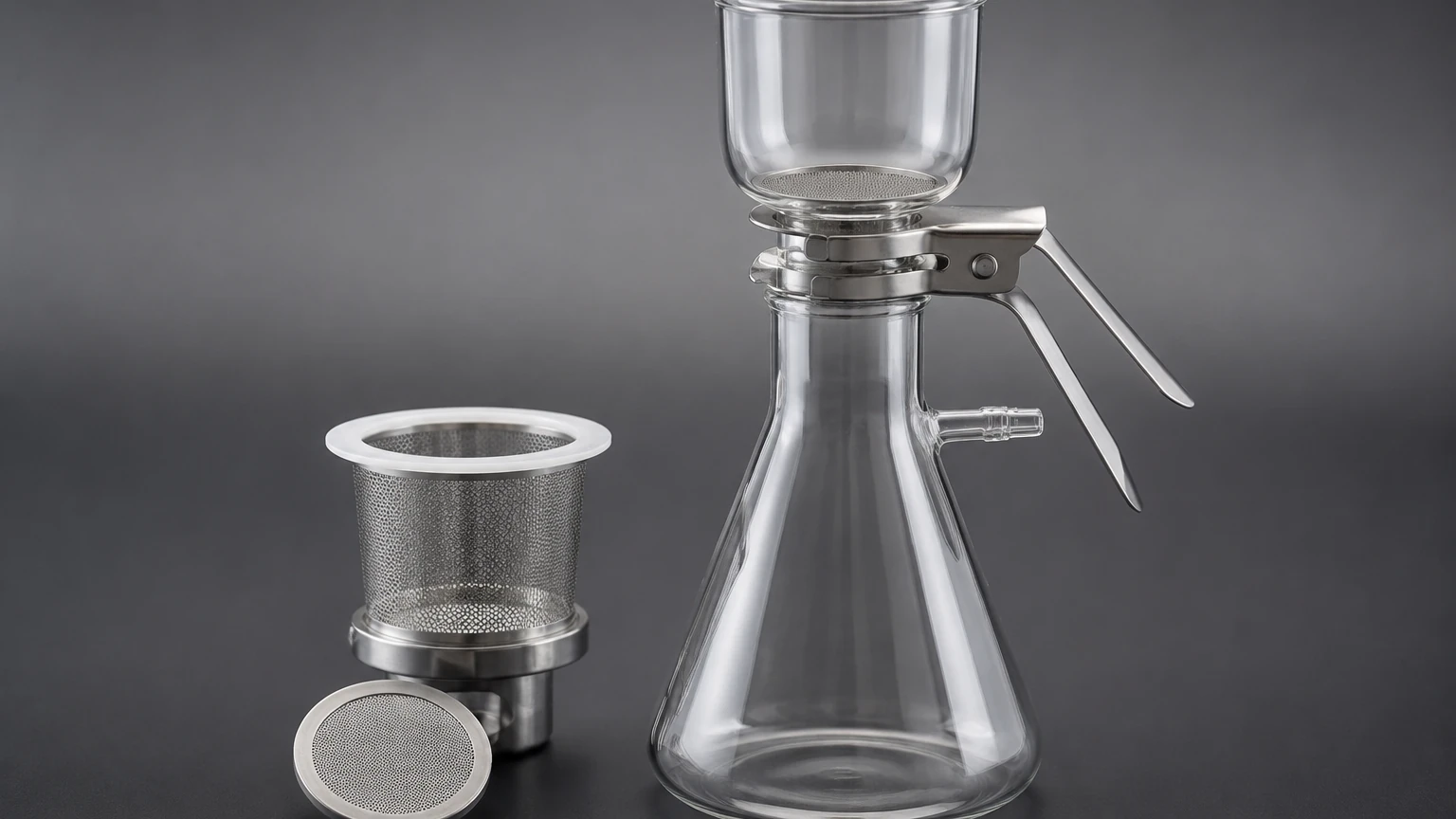
The primary function of a filter flask is to act as a receiver for filtrate while allowing a vacuum to be pulled through a side arm. Unlike a standard Erlenmeyer flask, a filter flask features thick walls designed to withstand the atmospheric pressure exerted on it when the internal pressure is reduced.
In a typical setup, a filtering medium—such as a Büchner funnel or a specialized stainless steel filter cartridge—is placed on top of the flask. A vacuum pump or water aspirator is connected to the side arm, drawing air out of the flask. This creates a lower pressure zone beneath the filter medium. The higher atmospheric pressure above the slurry forces the liquid through the filter, leaving the solid cake behind.
From an engineering perspective, the efficiency of this process depends on several variables:
* Pressure Differential (ΔP): The difference between the atmospheric pressure and the vacuum level inside the flask. A higher ΔP generally increases the flow rate but can lead to cake compression or media blinding.
* Filter Media Resistance: The structural resistance offered by the wire mesh or porous material.
* Viscosity of the Liquid: Higher viscosity fluids require higher vacuum levels or larger surface areas to maintain acceptable flow rates.
Scaling from Laboratory Filter Flasks to Industrial Vacuum Systems
While the glass filter flask is indispensable for R&D, industrial applications require far more robust solutions. When a process moves from the lab to the plant, the "filter flask" concept evolves into vacuum receivers and pressurized filter housings.
Kaifil specializes in bridging this gap by providing high-performance stainless steel filtration components that replace fragile glass and disposable paper media. In industrial settings, the limitations of the traditional glass filter flask become apparent:
1. Fragility: Glass is prone to thermal shock and mechanical impact, posing safety risks in high-volume production.
2. Volume Constraints: Standard flasks are limited in size, whereas industrial processes may require the filtration of thousands of liters per hour.
3. Chemical Compatibility: While borosilicate glass is resistant to many acids, it cannot handle the high-pressure cleaning cycles or the abrasive slurries common in chemical processing.
To address these needs, industrial systems utilize stainless steel wire mesh filters and cartridges that offer the same precision as laboratory-grade equipment but with the durability required for 24/7 operations. For those looking to upgrade their filtration infrastructure, visiting the Main Page of a specialized manufacturer provides insights into the various configurations available for large-scale vacuum systems.
Material Selection: Why Stainless Steel Replaces Glass
In industrial filtration, the choice of material for the filter housing and the media is critical. While the filter flask in a lab is almost always glass, industrial components are typically fabricated from 304 or 316L stainless steel. This shift is driven by several technical factors:
Corrosion Resistance and Hygiene
In pharmaceutical and food-grade applications, the filtration system must be non-reactive and easy to sterilize. 316L stainless steel provides superior resistance to pitting and crevice corrosion, making it ideal for processes involving chlorides or high-temperature steam sterilization (SIP).
Pressure and Vacuum Ratings
Industrial vacuum receivers must be engineered to handle significant negative pressure without implosion. Unlike glass, which can have hidden stress points, stainless steel components are manufactured to strict ASME or ISO standards, ensuring structural integrity under continuous vacuum cycles.
Customization of Media
Traditional filter flasks rely on paper or polymer membranes. In contrast, industrial systems utilize sintered wire mesh or wedge wire. These materials can be customized to specific micron ratings (from 0.5 to 200+ microns), allowing for precise control over the filtration outcome that a standard lab flask cannot achieve.
Engineering Considerations for Vacuum-Rated Filtration Components
When designing or purchasing filtration components for vacuum applications, engineers must look beyond the basic filter flask setup. Several technical parameters must be confirmed to ensure system compatibility and performance longevity.
Micron Rating and Pore Distribution
The "tightness" of the filter mesh determines the size of particles retained. In industrial vacuum filtration, it is crucial to select a media that balances filtration accuracy with flow rate. A mesh that is too fine will clog (blind) quickly, requiring frequent cleaning, while a mesh that is too coarse will allow contaminants to pass through into the filtrate.
Flow Rate and Surface Area
The speed of filtration is directly proportional to the surface area of the filter media. In industrial designs, pleated stainless steel cartridges are often used to maximize the surface area within a compact footprint. This allows for much higher throughput than a flat-bottomed Büchner funnel used with a filter flask.
Sealing and Gasket Compatibility
Vacuum systems are only as effective as their seals. Engineers must ensure that the gaskets (typically EPDM, PTFE, or Viton) are compatible with the process chemicals and can maintain an airtight seal under vacuum. Any leak in the system will reduce the pressure differential and significantly degrade filtration efficiency.
Maintenance and Durability of Industrial Filtration Media
One of the primary advantages of moving from a disposable laboratory filter flask setup to a permanent industrial solution is the reduction in total cost of ownership (TCO). Stainless steel filter elements are designed to be cleaned and reused, whereas lab-scale filter paper is a recurring expense and a waste stream.
Cleaning Procedures
Industrial filters can be cleaned using several methods:
* Backwashing: Reversing the flow of fluid to dislodge particles trapped on the surface of the mesh.
* Ultrasonic Cleaning: Using high-frequency sound waves in a cleaning solvent to remove fine particulates from deep within the sintered metal pores.
* Chemical Cleaning: Using acids or alkalis to dissolve organic or mineral scaling.
Replacement Cycles
While a glass filter flask might last years if handled carefully, the filter media itself is the wear item. Stainless steel mesh is highly durable but can eventually suffer from fatigue or permanent blinding. Establishing a regular inspection schedule helps in identifying when a cartridge needs professional cleaning or replacement, preventing unexpected downtime in the production line.
Selecting the Right Filtration Solution for Your Process
Choosing the right equipment requires a deep understanding of the specific application. Whether you are dealing with hydraulic fluids, chemical catalysts, or food products, the filtration solution must be tailored to the environment.
When evaluating a supplier for your filtration needs, consider the following checklist:
* Customization Capabilities: Can the manufacturer provide custom dimensions or specific micron ratings that fit your existing vacuum receiver?
* Technical Support: Does the supplier offer engineering guidance on flow rates and pressure drops?
* Quality Certification: Are the materials sourced and manufactured under recognized quality management systems (e.g., ISO 9001)?
For organizations looking to optimize their filtration processes, it is essential to work with a partner that understands the nuances of both laboratory principles and industrial realities. By leveraging advanced manufacturing techniques, companies can achieve the precision of a filter flask with the scale and durability of industrial machinery.
Conclusion
The filter flask remains a symbol of the scientific process, but its industrial counterparts are the workhorses of modern manufacturing. Transitioning from small-scale vacuum filtration to robust, stainless steel industrial systems requires careful consideration of materials, engineering specifications, and long-term maintenance needs. By focusing on high-quality components and precise filtration media, engineers can ensure that their processes remain efficient, reliable, and cost-effective.
To explore a wide range of industrial filtration solutions and technical specifications, please visit the Main Page for detailed product information and engineering support.
