


Depth Filter Capsule
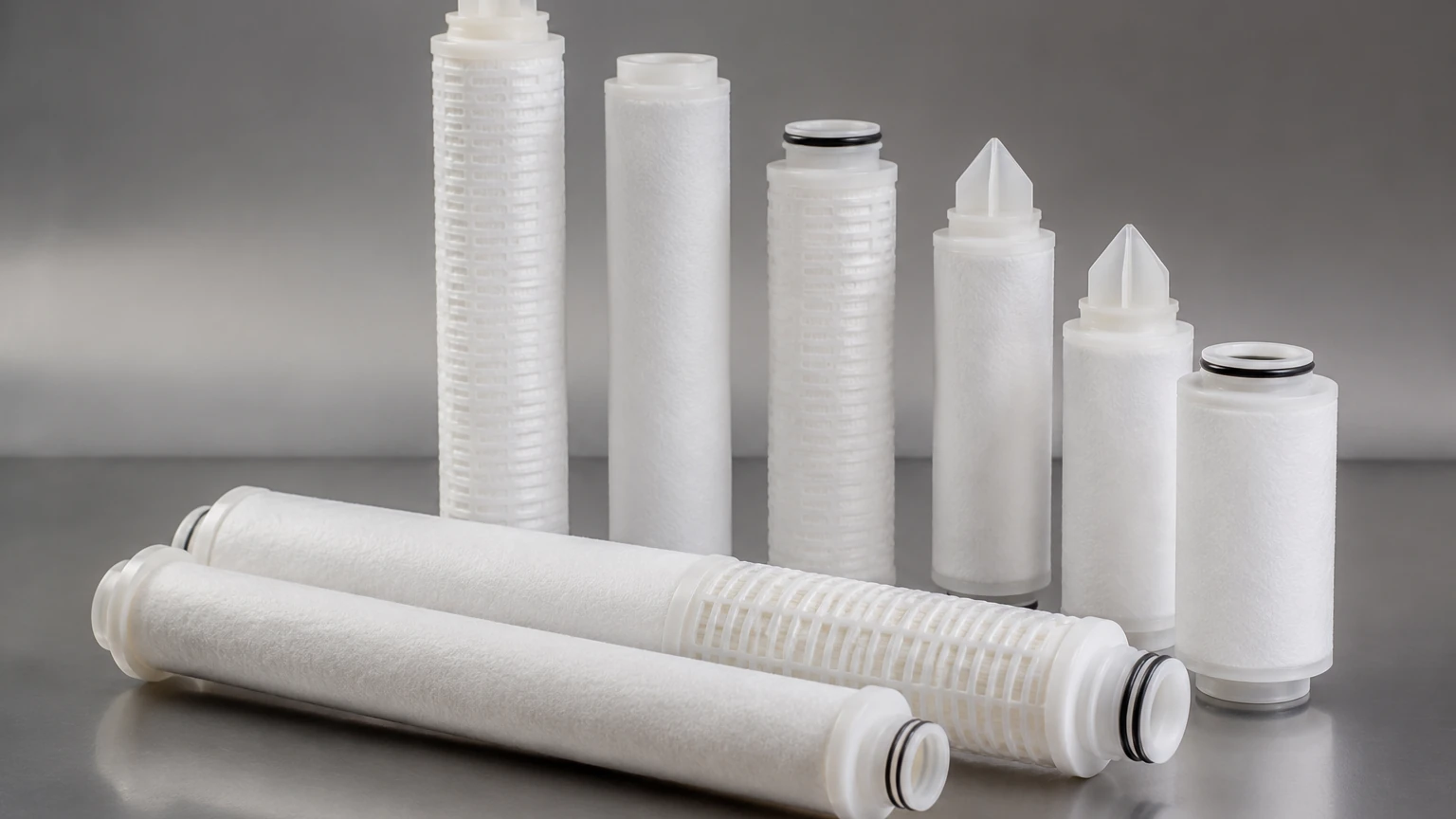
In industrial process engineering, achieving the desired fluid purity requires a nuanced understanding of filtration mechanisms. The depth filter capsule represents a critical component in this pursuit, offering a self-contained, disposable solution designed to handle high solids loads while protecting sensitive downstream equipment. Unlike surface filters that trap contaminants on a single plane, depth filter capsules utilize a three-dimensional matrix to capture particles throughout the entire thickness of the media.
For engineers and procurement specialists, selecting the right depth filter capsule involves balancing flow rates, dirt-holding capacity, and chemical compatibility. This guide examines the technical architecture of these components, their operational advantages, and the engineering considerations necessary for successful integration into industrial workflows.
Technical Principles of Depth Filtration
To appreciate the utility of a depth filter capsule, one must first understand the physics of depth filtration. While membrane filters act as a sieve—stopping any particle larger than the pore size at the surface—depth media utilize a "tortuous path" to trap contaminants.
Mechanisms of Particle Retention
1. Mechanical Entrapment: As fluid passes through the interconnected voids of the filter media, particles larger than the narrowest channels are physically wedged within the matrix. Because the media is thick, it can hold a significantly higher volume of solids before the differential pressure reaches its terminal limit.
2. Adsorption (Zeta Potential): Many depth filter media, particularly those incorporating cellulose or specialized resins, carry a surface charge. In many aqueous applications, contaminants carry a negative charge. By utilizing media with a positive zeta potential, the filter can electrostatically attract and retain particles much smaller than the physical pore size.
3. Inertial Impaction: In high-velocity flows, particles may cross fluid streamlines and collide with the filter fibers, becoming trapped by Van der Waals forces.
By combining these mechanisms, a depth filter capsule provides a high-efficiency solution for clarifying liquids containing a broad range of particle sizes and types, including deformable organisms or colloidal suspensions that might otherwise "slime" a surface filter.
Construction and Material Engineering
The "capsule" designation refers to the integrated nature of the unit. Unlike traditional filter cartridges that require a separate stainless steel or plastic housing, a depth filter capsule is a fully enclosed system. This design eliminates the need for housing cleaning and reduces the risk of operator exposure to the process fluid.
Filter Media Composition
The internal media is typically composed of a blend of materials tailored to specific industrial needs:
* Cellulose: Provides a renewable, fibrous structure with excellent mechanical strength.
* Diatomaceous Earth (DE) or Perlite: These inorganic processing aids are often embedded within the cellulose matrix to increase the surface area and enhance the fine-particle retention capabilities.
* Synthetic Fibers: Polypropylene or polyester fibers may be used for applications requiring high chemical resistance or where the presence of organic extractables must be minimized.
Housing and Hardware
The outer shell of the capsule is usually constructed from high-purity polypropylene. For industrial applications, the housing must be thermally bonded rather than glued to ensure structural integrity and prevent the introduction of adhesives into the process stream. Engineers must verify that the capsule hardware can withstand the intended operating pressures and temperatures, typically ranging up to 60°C or 80°C depending on the specific model.
Key Evaluation Criteria for Engineers
When specifying a depth filter capsule for a new or existing process, several technical parameters must be evaluated to ensure performance and cost-effectiveness.
Micron Rating: Nominal vs. Absolute
Depth filters are almost always nominally rated. This means they are designed to retain a high percentage (e.g., 90% to 98%) of particles at a specific micron size. Because the pore structure is random, a small percentage of particles at the rated size may pass through. If absolute retention is required, the depth filter capsule should be positioned as a pre-filter to a membrane stage. This arrangement protects the expensive membrane from premature fouling.
Flow Rate and Differential Pressure
The relationship between flow rate and differential pressure ($ΔP$) is a primary indicator of filter health. Engineers should design systems to operate at a low initial $ΔP$ (typically below 0.1 bar or 2 psi) to maximize the available dirt-holding capacity. As the matrix fills with contaminants, the $ΔP$ will rise. The terminal differential pressure—the point at which the capsule must be replaced—is usually between 1.5 and 2.5 bar, depending on the structural limits of the media and the sensitivity of the process.
Chemical and Thermal Compatibility
Before implementation, it is vital to cross-reference the process fluid's chemical composition with the capsule's materials of construction. While polypropylene is broadly resistant to many acids and bases, certain organic solvents or high-temperature oxidative environments can compromise the structural integrity of the capsule. For highly aggressive environments or high-pressure steam sterilization cycles, consulting with a specialist manufacturer like those found on the Main Page can provide insights into more robust metal-based alternatives or specialized polymer configurations.
Common Risks and Mitigation Strategies
While depth filter capsules are reliable, certain operational risks must be managed to prevent process failure.
Media Migration
In lower-quality depth filters, there is a risk that fibers from the filter media may shed and enter the effluent stream. This is known as media migration. To mitigate this, engineers should select capsules that utilize "non-fiber-releasing" media or ensure a downstream polishing filter is in place. High-quality capsules undergo rigorous testing to ensure that the cellulose or synthetic fibers remain locked within the matrix even under pressure pulses.
Extractables and Leachables
In pharmaceutical and food-grade applications, the presence of extractables (chemicals that can be pulled out of the filter under aggressive conditions) is a major concern. It is essential to confirm that the depth filter capsule meets relevant regulatory standards, such as USP Class VI plastics testing or FDA CFR Title 21 compliance. Rinsing the capsule with a specified volume of deionized water or process fluid prior to use is a standard industry practice to remove any residual manufacturing artifacts.
Bypass and Seal Integrity
The internal seals of the capsule must be robust. If the fluid can bypass the media through a faulty internal O-ring or a crack in the thermal bond, the filtration efficiency drops to zero. Regular integrity testing, though more common for membrane filters, can sometimes be adapted for certain types of depth capsules to ensure the unit is installed correctly.
Industrial Application Scenarios
Depth filter capsules find utility across various sectors due to their versatility and ease of use.
* Biopharmaceutical Manufacturing: Used for cell culture clarification and the removal of lipids or colloids prior to sterile filtration. The disposable nature of capsules is highly valued in single-use technology (SUT) environments to prevent cross-contamination between batches.
* Fine Chemicals: Ideal for removing catalysts or carbon fines from reaction mixtures. The high dirt-holding capacity allows for the processing of concentrated slurries that would quickly blind other filter types.
* Food and Beverage: Employed in the polishing of spirits, syrups, and edible oils. The ability of depth media to remove haze-forming proteins and polyphenols is critical for maintaining product clarity and shelf stability.
* Water Treatment: Used as a point-of-use (POU) filter for high-purity laboratory water or as a protective stage for sensitive analytical instruments.
Total Cost of Ownership (TCO) Considerations
While the unit price of a depth filter capsule is a factor, the Total Cost of Ownership (TCO) provides a more accurate picture of value. TCO includes:
1. Labor Savings: Because capsules do not require housing disassembly or cleaning, change-out times are significantly reduced compared to traditional cartridge systems.
2. Disposal Costs: Capsules are typically incinerable or compactable, which can reduce waste management expenses in large-scale operations.
3. Product Yield: The low hold-up volume of well-designed capsules ensures that more of the valuable process fluid is recovered rather than being trapped in the filter housing.
4. Downstream Protection: By effectively removing the bulk of the contaminant load, depth capsules extend the life of more expensive downstream components, such as chromatography columns or sterile-grade membranes.
Conclusion and Next Steps
The depth filter capsule is an indispensable tool for modern industrial filtration, providing a balance of high capacity, ease of use, and effective contaminant removal. However, the performance of these units is highly dependent on matching the media characteristics to the specific requirements of the process fluid.
Before proceeding with a purchase, technical teams should confirm the expected solids loading, the required effluent quality, and the chemical compatibility of the entire assembly. For complex applications or those requiring customized filtration architectures, leveraging the expertise of a specialized manufacturer is recommended. Kaifil provides comprehensive support for industrial filtration challenges, offering precision-engineered solutions that meet demanding performance standards. For more information on customized filtration components and technical specifications, visit the Main Page to explore professional product options and application-specific guidance.
