


Dust Collector Filter Cartridge Manufacturer
In industrial environments, the efficiency of air filtration systems is directly tied to the quality of the filtration components used. Selecting a specialized dust collector filter cartridge manufacturer is a critical decision for engineers and facility managers who must balance air quality standards, equipment longevity, and operational costs. Industrial dust collection is not a one-size-fits-all process; it requires a deep understanding of particle characteristics, airflow dynamics, and material science to ensure that the filtration system performs reliably under demanding conditions.
As a professional manufacturer specializing in custom stainless steel filtration solutions, Kaifil understands the complexities involved in industrial air purification. Whether the application involves chemical processing, pharmaceutical manufacturing, or high-temperature metalworking, the structural integrity and filtration accuracy of the cartridge determine the overall success of the dust collection system. For technical teams seeking to optimize their filtration processes, exploring the Main Page offers insights into the engineering capabilities required for precision metal filtration.
Technical Engineering and Pleat Design Optimization
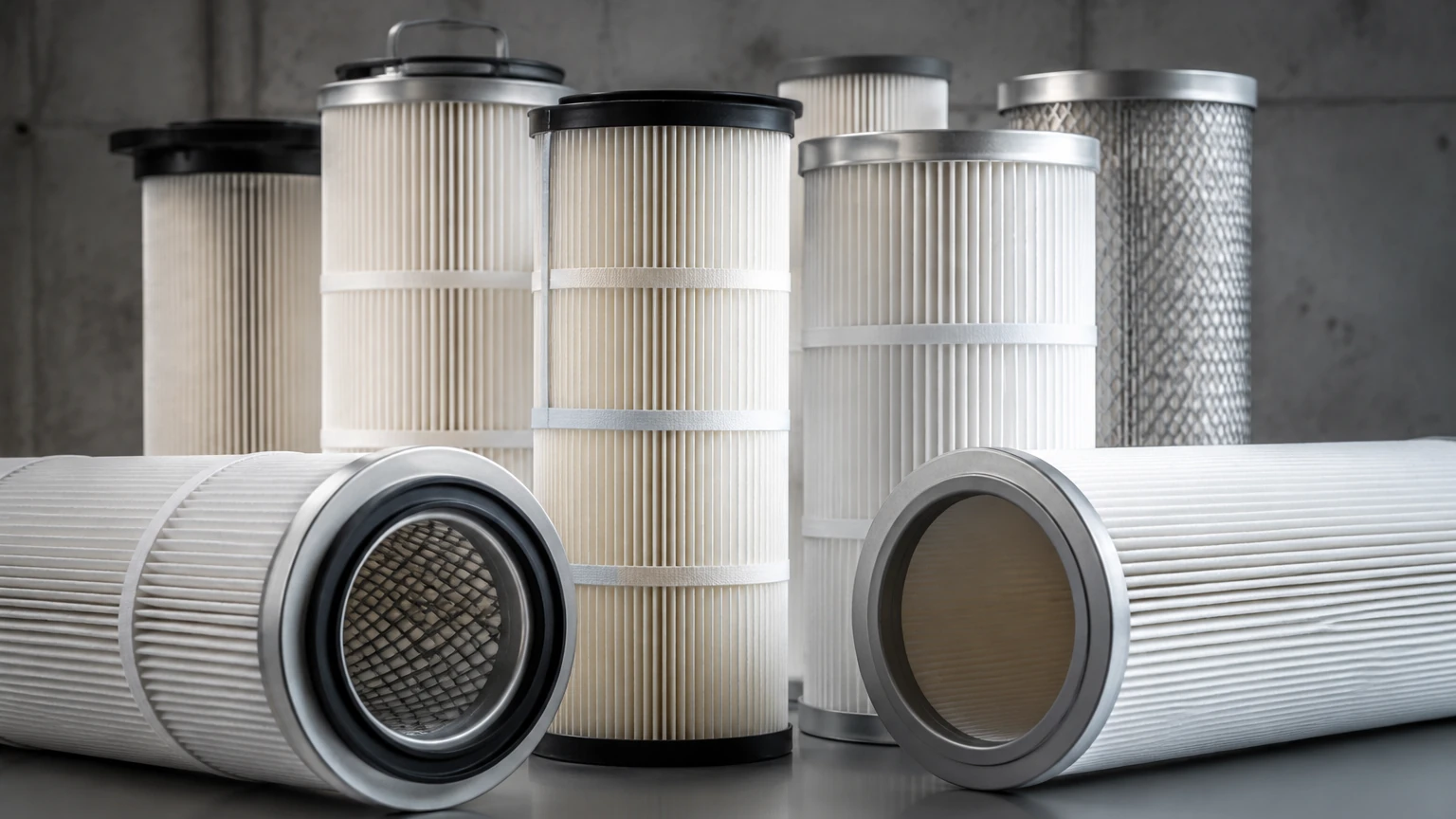
The primary function of a dust collector filter cartridge is to provide a large filtration surface area within a compact footprint. This is achieved through pleating. However, the engineering of a pleat pack involves more than simply folding the media. A reputable dust collector filter cartridge manufacturer must calculate the optimal pleat count, depth, and spacing to prevent "pleat bridging."
Pleat bridging occurs when the folds are too tight, causing dust to become trapped deep within the pleats where pulse-jet cleaning cannot reach it. This leads to a rapid increase in differential pressure and a decrease in the effective filtration area. In high-performance cartridges, manufacturers often use pleat stabilization techniques, such as synthetic beads or specialized wire mesh backing, to maintain uniform spacing even under high airflow velocities. This ensures that the entire surface area of the media is utilized and that the cleaning cycle remains effective throughout the life of the filter.
Material Selection for Demanding Industrial Environments
While many standard dust collectors use cellulose or polyester media, specialized industrial applications often require the durability of metallic components. As a dust collector filter cartridge manufacturer focused on stainless steel solutions, the choice of material is dictated by the chemical composition of the dust and the operating temperature of the environment.
1. Stainless Steel Wire Mesh: For applications involving high temperatures or corrosive gases, stainless steel wire mesh provides unparalleled durability. It can withstand thermal cycling that would cause synthetic fibers to degrade or melt. Furthermore, stainless steel is inherently resistant to oxidation and a wide range of industrial chemicals.
2. Micron Rating and Permeability: The selection of the mesh weave determines the filtration accuracy. Manufacturers must balance the need for high-efficiency particle capture with the requirement for low resistance to airflow. Precision-woven wire mesh allows for consistent pore sizes, ensuring that the cartridge meets specific emission standards.
3. Gasket and Seal Compatibility: The effectiveness of a filter cartridge is only as good as its seal. Manufacturers must provide gaskets made from materials like EPDM, Silicone, or Viton, depending on the chemical exposure and temperature. A failure in the seal leads to bypass, where unfiltered air escapes the system, potentially damaging downstream equipment or violating environmental regulations.
Structural Integrity and Mechanical Construction
Industrial dust collectors often utilize pulse-jet cleaning systems, which send a high-pressure blast of air through the cartridge in the reverse direction to dislodge accumulated dust. This process subjects the filter cartridge to significant mechanical stress. A high-quality dust collector filter cartridge manufacturer ensures that the structural components of the cartridge can withstand thousands of these pulses without deformation.
* Inner and Outer Cores: The cartridge requires a rigid internal support core, often made of perforated stainless steel or expanded metal, to prevent collapse under vacuum pressure. In some designs, an outer cage is also used to protect the pleats from high-velocity abrasive dust particles.
* End Cap Bonding: The connection between the filtration media and the end caps is a common point of failure. Manufacturers use advanced potting compounds or specialized welding techniques to ensure a leak-proof, permanent bond. For food-grade or pharmaceutical applications, these materials must also comply with relevant safety standards.
* Custom Dimensions: Many legacy dust collection systems require cartridges with non-standard dimensions. A manufacturer with OEM capabilities can produce custom lengths, diameters, and mounting configurations to fit existing housings without the need for expensive system modifications.
Evaluating Performance: Pressure Drop and Efficiency
For engineers, the two most critical performance metrics are the initial pressure drop and the filtration efficiency. A well-designed cartridge from a competent dust collector filter cartridge manufacturer will exhibit a low initial pressure drop, which translates directly to lower energy consumption for the system's fan or blower.
Filtration efficiency is typically measured by the cartridge's ability to capture particles of a specific size, often expressed as a MERV rating or a percentage at a certain micron level. In industries like pharmaceutical manufacturing or fine chemical processing, sub-micron filtration is often required. Manufacturers must provide documented testing data to verify that their cartridges meet these stringent requirements. Furthermore, the "dust cake"—the layer of particles that builds up on the surface of the media—actually assists in filtration, but the manufacturer must ensure the media is designed to release this cake efficiently during the cleaning cycle to maintain steady-state operation.
Total Cost of Ownership and Maintenance Cycles
When evaluating a dust collector filter cartridge manufacturer, purchasing teams should look beyond the initial unit price and consider the total cost of ownership (TCO). A lower-quality cartridge may have a cheaper upfront cost but can lead to higher expenses through:
* Frequent Replacements: Short service life increases labor costs and disposal fees.
* Increased Energy Usage: High differential pressure requires the system fan to work harder, consuming more electricity.
* Compressed Air Consumption: If the media does not clean well, the pulse-jet system must fire more frequently, wasting expensive compressed air.
* Production Downtime: Unexpected filter failures can halt production lines, leading to significant financial losses.
By choosing a manufacturer that prioritizes durability and cleanability, such as those specializing in stainless steel filtration, facilities can extend the intervals between maintenance cycles and ensure more predictable operating costs.
Selecting the Right Partner for Custom Filtration
Choosing the right dust collector filter cartridge manufacturer involves a thorough assessment of their technical expertise and manufacturing standards. Engineers should confirm the following before finalizing a supplier:
1. Application Engineering Support: Does the manufacturer offer guidance on material selection based on specific gas chemistry and dust characteristics?
2. Prototyping and Customization: Can they produce small batches of custom-designed cartridges for specialized equipment?
3. Quality Control Standards: What testing protocols are in place to ensure weld integrity and filtration accuracy?
4. Material Traceability: For regulated industries, can the manufacturer provide material certifications for the stainless steel and polymers used?
Kaifil's commitment to quality and precise filtration performance makes it a reliable partner for industries requiring dependable filtration components in demanding environments. By working closely with global customers, Kaifil develops high-performance filter products that meet specific application requirements, from material selection to final production. For more information on how custom filtration solutions can improve your industrial processes, visit the Main Page to review product options and application support.
In conclusion, the role of a dust collector filter cartridge manufacturer is to provide more than just a replacement part; they provide a critical component that ensures environmental compliance, protects worker health, and maintains the efficiency of industrial operations. By focusing on engineering precision, material durability, and structural integrity, technical professionals can select filtration solutions that offer long-term value and reliable performance.
Download Dust Collector Filter Cartridge Manufacturer as a PDF
