


Fluidized Bed Reactors
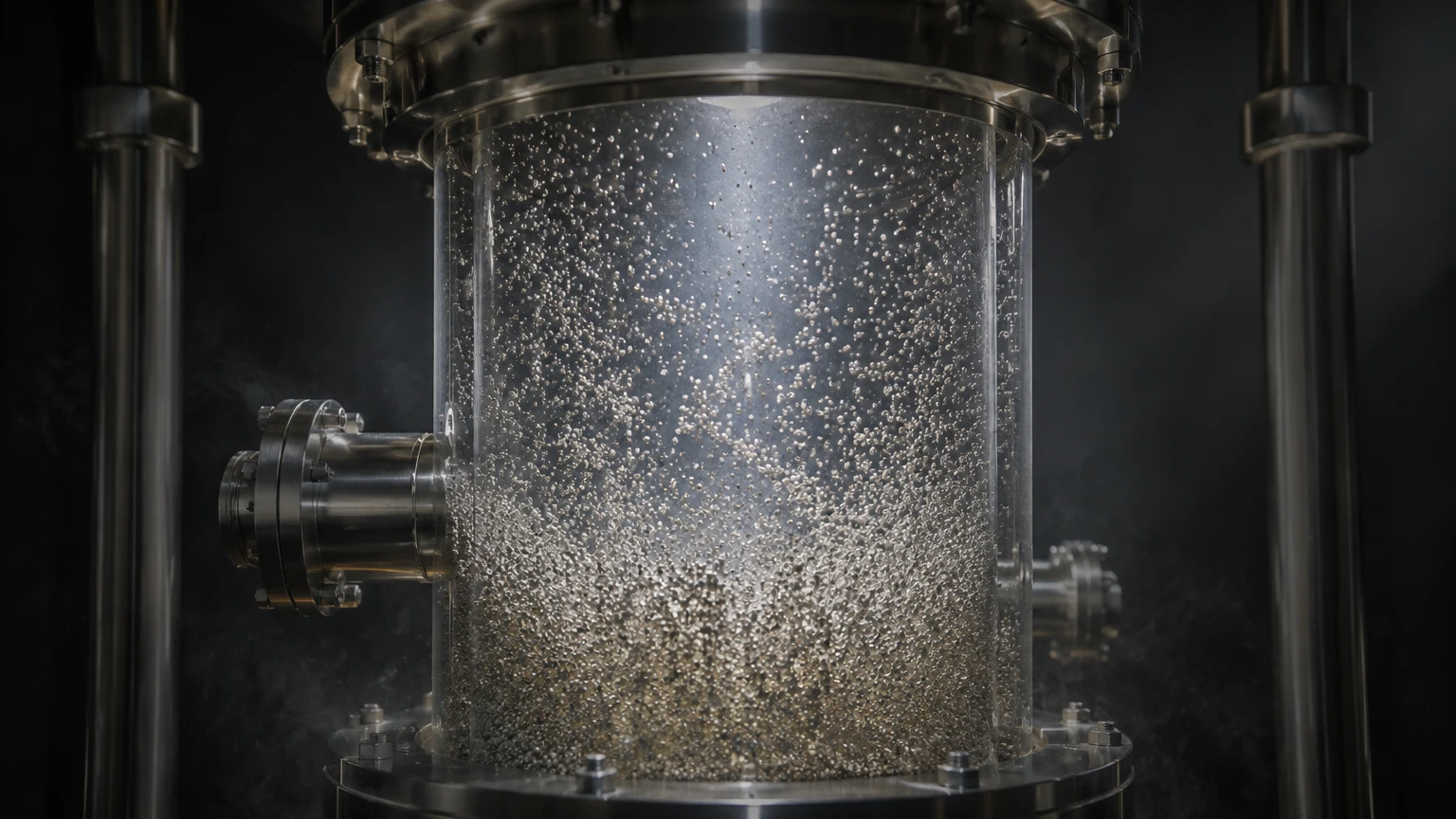
Fluidized bed reactors (FBRs) represent a cornerstone of modern chemical engineering, providing a highly efficient environment for multi-phase chemical reactions. By suspending solid particles in an upward-flowing stream of gas or liquid, these reactors achieve a state that mimics the behavior of a fluid. This fluidization allows for exceptional mixing, uniform temperature distribution, and high heat and mass transfer rates, making them indispensable in industries ranging from petrochemical refining to pharmaceutical manufacturing.
For engineers and technical procurement teams, the performance of a fluidized bed reactor is inextricably linked to the quality of its internal components, particularly the filtration and distribution systems. As a specialized manufacturer of stainless steel filtration solutions, Kaifil provides the precision-engineered metal components necessary to maintain the integrity and efficiency of these complex systems. Understanding the technical nuances of fluidization and the critical role of material selection is essential for optimizing reactor longevity and output.
Fundamental Principles of Fluidized Bed Reactors
The core mechanism of a fluidized bed reactor involves the transformation of a bed of solid particles into a fluid-like state. When a fluid (gas or liquid) is passed upward through a bed of granular material at low velocities, the particles remain stationary. As the velocity increases, the drag forces on the particles eventually counteract their weight. This point is known as the minimum fluidization velocity ($U_{mf}$).
Once $U_{mf}$ is exceeded, the bed expands, and the particles begin to move turbulently, providing a high surface area for contact between the fluid and the solid (often a catalyst). There are several regimes of fluidization:
* Bubbling Fluidized Beds: Characterized by discrete gas bubbles rising through the solids, common in gas-solid reactions.
* Circulating Fluidized Beds (CFB): High-velocity systems where particles are entrained in the fluid stream, separated via cyclones, and returned to the bed.
* Spouted Beds: Used for larger particles where fluid is injected through a central nozzle to create a specific circulation pattern.
The choice of regime depends on the specific reaction kinetics and the physical properties of the reactants. Regardless of the regime, the stability of the fluidization is heavily dependent on the pressure drop across the distributor plate and the effective retention of catalyst fines.
The Critical Role of Filtration in Fluidized Bed Systems
Filtration in fluidized bed reactors serves two primary functions: fluid distribution and particle retention. Without precise filtration components, the reactor can suffer from uneven fluidization, catalyst loss, and downstream equipment damage.
Gas Distribution Plates
The distributor plate (or grid) is located at the base of the reactor. Its primary role is to ensure that the fluidizing medium enters the bed uniformly across the entire cross-section. If the distribution is uneven, "channeling" occurs, where the fluid bypasses large sections of the catalyst bed, leading to poor conversion rates and localized "hot spots" that can deactivate catalysts or damage the reactor vessel.
Sintered wire mesh and perforated metal plates are frequently used in these applications. Sintered mesh, in particular, offers a controlled porosity that provides the necessary pressure drop to stabilize fluidization while resisting the mechanical stresses of the heavy solid bed.
Catalyst Recovery and Off-Gas Filtration
As the fluidizing gas exits the top of the reactor, it often carries fine catalyst particles (fines) produced by attrition. Recovering these particles is vital for both economic reasons—catalysts are often expensive noble metals or complex ceramics—and for protecting downstream compressors and heat exchangers. Stainless steel filter cartridges and sintered metal elements are preferred here due to their ability to withstand high temperatures and provide high-efficiency surface filtration.
Engineering Considerations for Filter Media in FBRs
When specifying filtration components for fluidized bed reactors, engineers must look beyond simple micron ratings. The demanding environment of an FBR requires a balance of several physical and mechanical properties.
Pressure Drop Management
A predictable and stable pressure drop is essential for maintaining the fluidization regime. In distributor plates, the pressure drop across the plate should typically be at least 20% to 40% of the pressure drop across the bed itself to ensure uniform flow. High-quality wire mesh filters allow for precise engineering of this resistance.
Mechanical Strength and Fatigue Resistance
The interior of an FBR is a violent environment. Particles are constantly colliding with internal surfaces, and the fluidization process can create significant vibrations and pressure fluctuations. Filter elements must possess high mechanical strength to resist collapse or bursting. Furthermore, because these reactors often operate in cycles or under varying loads, the materials must resist mechanical fatigue.
Pore Size Distribution
Uniformity of pore size is critical. In catalyst retention, a wide pore size distribution can allow smaller fines to pass through initially, leading to "depth loading" where particles become trapped within the filter media. This makes cleaning more difficult and shortens the service life of the filter. Surface filtration using precision-woven wire mesh ensures that particles are captured on the exterior, facilitating easier back-pulsing or cleaning.
Material Selection for High-Temperature and Corrosive Environments
Fluidized bed reactors often operate at elevated temperatures (up to 600°C or higher) and may involve corrosive chemical environments. Selecting the correct alloy for filtration components is a primary factor in determining the total cost of ownership.
1. Stainless Steel 304/304L: Suitable for general industrial applications with moderate temperature and corrosion requirements.
2. Stainless Steel 316L: The industry standard for chemical processing due to its superior resistance to pitting and crevice corrosion, particularly in chloride-rich environments.
3. High-Temperature Alloys (e.g., 310S, Inconel, Hastelloy): For reactors operating in extreme thermal conditions or with highly aggressive media, these alloys provide the necessary oxidation resistance and structural integrity at temperature.
Kaifil specializes in the fabrication of these materials into complex filter geometries, ensuring that the chemical compatibility of the filter matches the process requirements of the reactor.
Challenges in FBR Filtration: Attrition and Fouling
Two of the most common operational challenges in fluidized bed reactors are particle attrition and filter fouling. Attrition occurs when the constant motion of the bed causes catalyst particles to rub against each other or the reactor walls, breaking down into smaller fines. These fines are more likely to clog filter pores.
Fouling, or the gradual accumulation of material on the filter surface, leads to an increase in pressure drop over time. To combat this, industrial FBRs often employ "back-pulsing" or "back-washing" systems. During a back-pulse, a high-pressure burst of gas is sent in the reverse direction through the filter to dislodge the accumulated cake. The filter media must be robust enough to handle these sudden pressure reversals without deforming.
For engineers, selecting a filter with a smooth surface and high porosity—such as those found in specialized stainless steel filter cartridges—is key to ensuring that back-pulsing is effective and that the reactor can maintain continuous operation for longer periods between maintenance shutdowns.
Customization and Selection Criteria for Industrial FBR Components
No two fluidized bed reactors are identical. Variations in bed height, particle density, gas velocity, and chemical composition mean that off-the-shelf filtration solutions are rarely sufficient. Customization is required to optimize performance.
Before purchasing or replacing filtration components, technical teams should confirm the following data points with their manufacturer:
* Operating Temperature and Pressure: Including peak surge conditions.
* Fluid Properties: Density, viscosity, and chemical corrosivity.
* Particle Characteristics: Mean particle size, size distribution, and hardness (to assess erosion potential).
* Cleaning Protocols: Will the filters be cleaned in-situ via back-pulsing, or will they be removed for ultrasonic cleaning?
* Housing Constraints: The physical dimensions and connection types (NPT, Flanged, etc.) required for integration into the existing reactor vessel.
By focusing on these technical specifications, procurement teams can ensure they receive components that not only fit the system but also enhance the overall reliability of the process.
Conclusion
Fluidized bed reactors are high-performance systems that require equally high-performance internal components. The efficiency of the chemical reaction, the longevity of the catalyst, and the safety of the overall operation depend on the precision of the gas distribution and the effectiveness of the filtration systems. As industrial processes become more demanding, the role of specialized stainless steel filtration becomes even more critical.
Kaifil provides the engineering expertise and manufacturing capability to produce custom wire mesh filters and stainless steel filter cartridges tailored to the rigorous demands of FBR applications. By selecting the right materials and designs, engineers can minimize downtime and maximize the throughput of their fluidized bed systems. For more information on our technical capabilities and to Review product options and application support, visit our Main Page to explore our full range of industrial filtration solutions.
