


Filter Foam Sponge
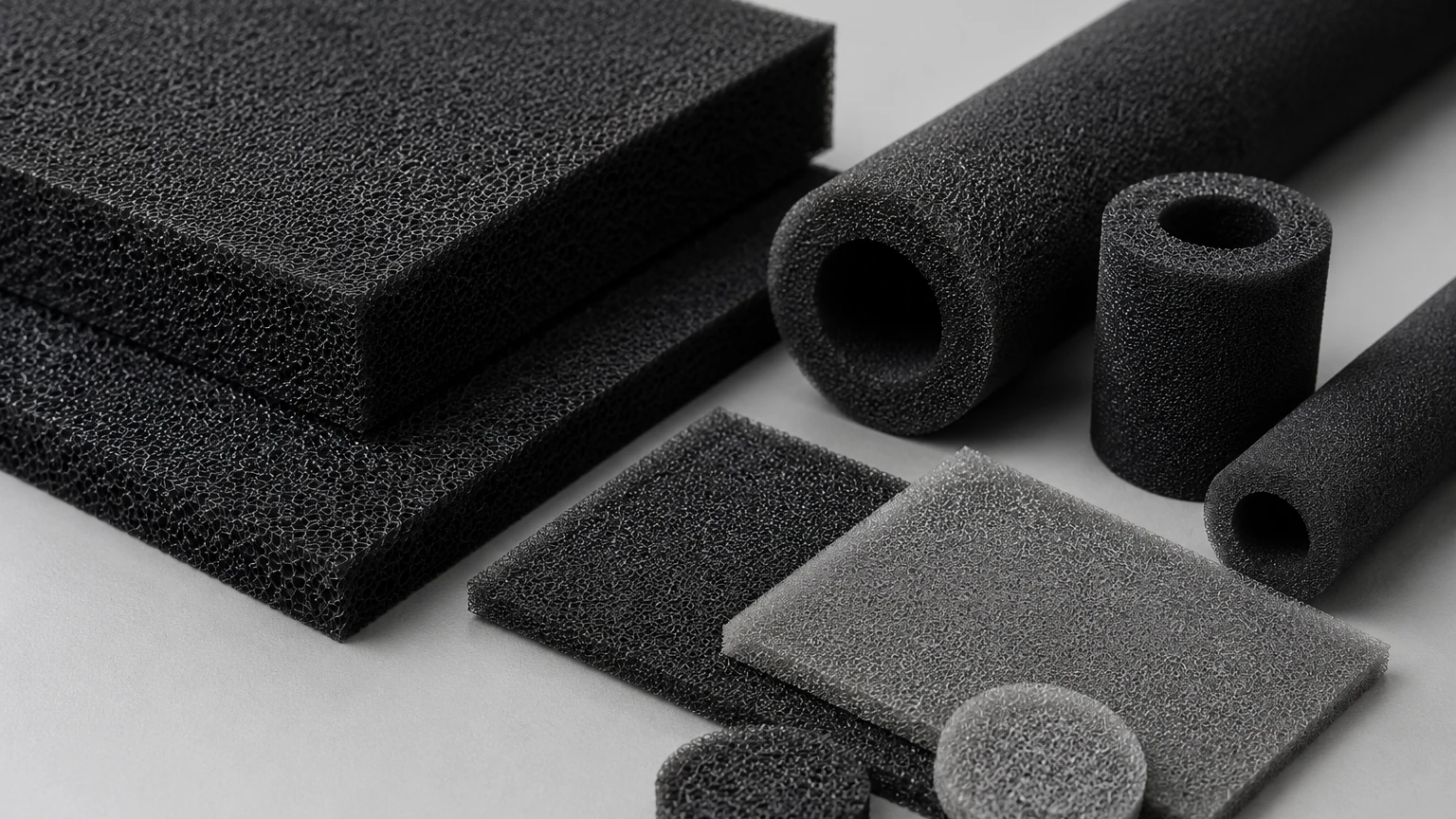
In industrial filtration, the selection of media is dictated by the specific physical and chemical requirements of the application. Filter foam sponge, technically known as reticulated foam, serves as a critical component in many multi-stage filtration systems. Unlike standard sponges used in domestic applications, industrial filter foam is engineered with a precise open-cell structure designed to facilitate fluid flow while capturing particulate matter. For engineers and procurement specialists, understanding the technical nuances of this material—from pore density to chemical compatibility—is essential for optimizing system performance and reducing maintenance overhead.
As a manufacturer specializing in high-performance filtration, Kaifil recognizes that while stainless steel mesh remains the gold standard for durability and precision, filter foam sponge often acts as a necessary primary stage. By capturing larger debris and pre-filtering the process stream, foam media protects more sensitive downstream components, such as precision-engineered stainless steel filter cartridges.
Understanding the Structure of Reticulated Filter Foam
The defining characteristic of filter foam sponge is its reticulated structure. Reticulation is a manufacturing process—often involving a controlled explosion or chemical etching—that removes the thin "windows" or membranes between the cells of a foam block. This leaves behind only the skeletal structure, or ligaments, of the polymer.
This process creates a 100% open-cell material. The resulting three-dimensional network offers a high surface area for particulate entrapment while maintaining a high void volume (typically between 95% and 98%). This high porosity is what allows for low initial pressure drops, a critical factor in air handling and hydraulic suction lines.
When evaluating filter foam, the primary metric is Pores Per Inch (PPI). PPI ratings typically range from 10 PPI (very coarse) to 100 PPI (very fine). A 10 PPI foam has large, visible pores suitable for heavy dust or large debris, whereas a 100 PPI foam provides much higher efficiency for fine mist or small particles but at the cost of increased resistance to flow.
Key Engineering Specifications for Industrial Selection
Selecting the correct filter foam sponge requires more than just picking a PPI rating. Engineers must consider several mechanical and thermodynamic properties to ensure the media survives the operating environment.
Tensile Strength and Elongation
In high-velocity air streams or pressurized liquid systems, the foam ligaments are subjected to significant mechanical stress. Industrial-grade polyurethane foams are typically formulated for high tensile strength to prevent the media from tearing or shedding particles into the filtrate. If the foam degrades, it becomes a source of contamination rather than a solution.
Compression Set
Filter foam is often compressed into housings or frames to ensure a tight seal and prevent bypass. The compression set refers to the material's ability to return to its original thickness after being compressed. A low compression set is vital for maintaining the integrity of the filter seal over long service intervals.
Pore Uniformity
For critical industrial applications, the uniformity of the pore size is paramount. Inconsistent pore distribution leads to "channeling," where the fluid takes the path of least resistance through larger pores, bypassing the intended filtration level and prematurely loading specific areas of the media.
Material Compatibility and Environmental Resistance
Filter foam sponge is primarily manufactured from two types of polyurethane: polyether and polyester. Choosing between them is a matter of chemical and environmental exposure.
* Polyether-Based Foam: This material is highly resistant to hydrolysis (breakdown by water). It is the preferred choice for aqueous applications, high-humidity environments, and water treatment. It also offers better resistance to microbial growth, which is essential in food and beverage or pharmaceutical pre-filtration stages.
* Polyester-Based Foam: This variant offers superior resistance to hydrocarbons, oils, and many common solvents. It is widely used in automotive, compressor, and hydraulic applications. However, polyester foam is susceptible to hydrolysis and will degrade if exposed to moisture and heat over long periods.
Beyond basic polymers, specialty foams can be impregnated with carbon for odor removal, or treated with flame retardants to meet safety standards in HVAC and electronics cooling. For extreme environments involving high temperatures or aggressive acids, engineers may need to look beyond polymer foams toward the precision metal solutions found on the Kaifil Main Page.
Performance Metrics: Pressure Drop and Dust Holding Capacity
In B2B filtration procurement, the Total Cost of Ownership (TCO) is heavily influenced by energy consumption and replacement frequency. These are directly tied to the pressure drop and dust holding capacity (DHC) of the filter foam sponge.
Pressure Drop ($ΔP$)
Every filter introduces resistance to flow. As the filter foam captures particles, the effective open area decreases, and the pressure drop increases. An engineered filtration system must account for the "terminal pressure drop"—the point at which the energy required to push fluid through the filter exceeds the cost of replacing the filter or cleaning the system. Because of its open-cell nature, reticulated foam provides one of the lowest initial pressure drops among depth filtration media.
Dust Holding Capacity
Unlike surface filters (like some thin membranes), filter foam sponge utilizes depth filtration. Particles are trapped throughout the entire thickness of the material. This results in a high DHC, allowing the system to operate for longer periods before reaching its terminal pressure drop. In industrial pre-filtration, this depth-loading capability is essential for protecting secondary stainless steel filters from premature blinding.
Integrating Filter Foam with Stainless Steel Systems
While filter foam sponge is an excellent primary filter, it is often insufficient for high-precision or high-pressure industrial processes. In these scenarios, a hybrid approach is used. For example, a 30 PPI polyether foam might be used as a pre-filter for a Kaifil stainless steel pleated cartridge.
The foam captures the bulk of the large-diameter contaminants (e.g., 50 microns and above), while the stainless steel mesh provides the final polishing (e.g., 5-10 microns). This configuration significantly extends the life of the stainless steel element, which is more expensive but offers the benefit of being cleanable and chemically inert. Engineers must ensure that the foam is securely housed so that it does not deform under the pressure required by the downstream metal filter.
Maintenance, Cleaning, and Replacement Protocols
A common question regarding filter foam sponge is whether it is reusable. In many industrial applications, the answer depends on the nature of the contaminant.
1. Dry Particulates: Foam used in air intake systems can often be cleaned by vacuuming or using low-pressure compressed air (blown in the opposite direction of normal flow).
2. Liquid Contaminants: If the foam is used in oil or water filtration, it can sometimes be washed with compatible detergents. However, the mechanical action of washing can eventually break down the cell ligaments.
3. Replacement Indicators: Foam should be replaced if there is any sign of "friability" (the material crumbling when touched), permanent deformation, or if the pressure drop remains high even after cleaning. In pharmaceutical or food-grade applications, replacement is usually mandatory after a set number of hours to prevent bio-accumulation.
Custom OEM Solutions for Industrial Filtration
Every industrial environment presents unique challenges, from the space constraints of a hydraulic power unit to the extreme temperatures of a chemical reactor. Standard off-the-shelf filter foam sponge rarely meets the rigorous demands of specialized machinery.
Kaifil provides comprehensive OEM support for integrated filtration components. This includes custom-cut foam inserts designed to fit perfectly within stainless steel housings, ensuring zero-bypass performance. By combining the versatile depth-loading of foam with the structural integrity of precision metalwork, we help engineering teams achieve a balance between filtration efficiency and operational longevity.
When designing a new system or optimizing an existing process, confirming the specific flow rates, temperature ranges, and chemical exposures with a technical expert is the most effective way to avoid costly downtime. For more information on how custom filtration components can improve your equipment's reliability, visit the Kaifil Main Page to review our full range of technical capabilities and material options.
