


Pleated Air Filters Packaging Design
In the industrial filtration sector, the performance of a pleated filter is determined not only by its media composition and pleat density but also by its structural integrity at the point of installation. For engineers and procurement professionals, pleated air filters packaging design is a critical technical consideration that directly influences the Total Cost of Ownership (TCO). Inadequate packaging can lead to pleat deformation, frame misalignment, or particulate contamination, rendering high-efficiency filters ineffective before they are even placed into service.
This guide examines the engineering requirements, material selections, and logistical strategies involved in professional packaging design for industrial filtration components, ensuring that precision-engineered products reach their destination in optimal condition.
The Role of Pleated Air Filters Packaging Design in Maintaining Performance
The primary function of pleated air filters packaging design is to preserve the mechanical geometry of the filter media. Pleated filters are designed with specific surface areas and pleat spacings to optimize airflow and dust-holding capacity. If the packaging allows for compression or impact during transit, the pleats may "bunch" or collapse.
When pleats collapse, the effective filtration area is reduced, leading to an immediate increase in initial pressure drop. For systems relying on precise MERV (Minimum Efficiency Reporting Value) or HEPA ratings, any physical alteration to the pleat structure can cause the filter to bypass air or fail prematurely. Therefore, packaging must be engineered to withstand vertical compression loads and lateral shifts. This is particularly important for stainless steel wire mesh filters and metal-framed cartridges, where structural rigidity must be maintained to prevent the metal mesh from deforming or the seals from cracking.
Engineering Requirements for Structural Protection
Effective packaging design for industrial filters must address three primary mechanical threats: compression, vibration, and shock.
Compression Resistance
In a B2B supply chain, filters are often palletized and stacked multiple layers high. The packaging design must incorporate a high Edge Crush Test (ECT) rating for the outer cartons. For larger industrial filters, double-wall or even triple-wall corrugated fiberboard is utilized to ensure that the bottom layer of filters does not bear the full weight of the stack, which could lead to frame warping.
Vibration Dampening
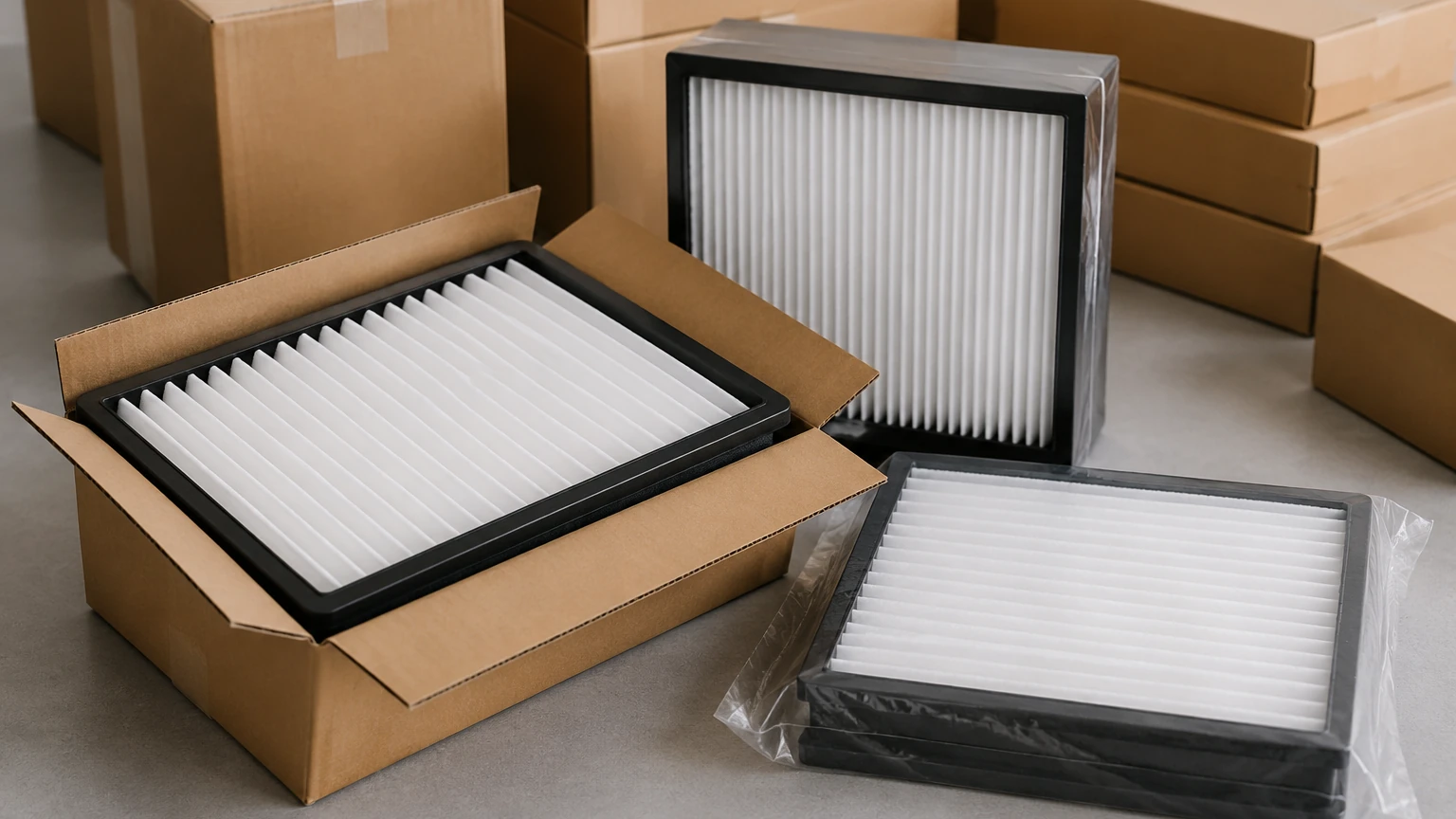
During long-distance freight, constant micro-vibrations can cause the filter media to rub against the internal frame or the packaging itself. This friction can lead to "media shedding," where small fibers are released from the filter, effectively contaminating the clean side of the filter before use. High-quality packaging designs utilize custom-fit inserts or poly-bagging to minimize movement within the box.
Shock Absorption
Drop protection is essential for smaller, high-value components like precision metal filter cartridges. Packaging engineers often specify expanded polystyrene (EPS) or molded pulp end-caps that suspend the filter in the center of the carton, creating a buffer zone that absorbs energy from accidental drops or rough handling during the unloading process.
Material Selection in Industrial Filter Packaging
The choice of materials in pleated air filters packaging design is dictated by the environment the filter will encounter and the sensitivity of the filtration media.
1. Corrugated Fiberboard: The standard for outer casing. For industrial environments, moisture-resistant coatings are often applied to prevent the cardboard from softening in humid warehouses.
2. Polyethylene (PE) Bagging: Most industrial filters are sealed in 2-mil to 4-mil PE bags. This serves as a barrier against moisture, oil vapors, and ambient dust. For cleanroom-grade filters, this bagging is often performed in a controlled environment to ensure zero baseline contamination.
3. VCI (Volatile Corrosion Inhibitor) Films: When shipping stainless steel or galvanized metal filters via sea freight, VCI packaging is used to prevent salt-air corrosion. This is a critical step for maintaining the surface integrity of custom metal filtration components.
4. ESD (Electrostatic Discharge) Shielding: For filters used in electronics manufacturing or sensitive chemical environments, anti-static packaging materials are required to prevent the buildup of charges that could damage the filter’s electrostatic media properties.
Logistics and Supply Chain Optimization
From a B2B perspective, packaging design is a major factor in logistics costs. Efficient pleated air filters packaging design balances protection with volume. Since air filters are inherently low-density, high-volume products, they are often billed based on dimensional weight (DIM weight) rather than actual weight.
Engineers work to minimize the "air space" inside the box without compromising the buffer zones needed for protection. This often involves nesting filters or using specialized rectangular configurations that maximize pallet utilization. For global OEMs, standardized packaging sizes allow for predictable container loading, reducing shipping costs per unit.
Furthermore, clear labeling is an integral part of the design. Industrial packaging should include clear indicators for "This Side Up," stack height limits, and QR codes for digital access to installation manuals and technical data sheets. This ensures that warehouse personnel handle the products according to engineering specifications.
Customization and OEM Considerations
For manufacturers like Kaifil, providing customized filtration solutions often requires bespoke packaging designs. Every industrial application has unique constraints—whether it is a specific footprint for a hydraulic system or a high-temperature chemical processing unit.
Custom packaging allows for:
* Kitting: Packaging multiple filter types (e.g., pre-filters and final filters) together for specific maintenance cycles.
* Private Labeling: For OEM partners, packaging is designed with specific branding and part numbering to integrate seamlessly into their spare parts distribution network.
* Specialized Inserts: For heavy-duty stainless steel cartridges, custom-cut foam or plastic cradles ensure that heavy metal components do not shift and damage delicate wire mesh surfaces.
As a professional manufacturer, Kaifil ensures that every custom filtration component is supported by engineering-grade packaging. You can Review product options and application support on our Main Page to see how our manufacturing expertise extends from the filter element to the final delivery state.
Contamination Control and Cleanliness Standards
In industries such as pharmaceuticals and food processing, the packaging is the final stage of the quality control process. If a filter is manufactured to meet stringent cleanliness standards but is packed in a dusty environment or in a box that sheds particulates, the filter's utility is compromised.
Advanced pleated air filters packaging design includes "double-bagging" protocols. The inner bag is removed just before the filter enters the clean zone, and the outer bag is removed at the point of installation. This ensures that the filter media remains pristine. Additionally, the use of low-outgassing adhesives in the packaging prevents chemical vapors from being absorbed by the carbon or HEPA media, which could otherwise degrade the filter's chemical adsorption capabilities.
Technical Checklist for Engineers and Purchasing Teams
Before finalizing a contract for industrial filters, technical professionals should confirm the following aspects of the packaging design with their supplier:
* Burst Strength/ECT Rating: Does the carton meet the requirements for the intended stack height in your facility?
* Seal Integrity: Are the filters hermetically sealed in poly-bags to prevent moisture ingress during long-term storage?
* Palletization Standards: Are the pallets heat-treated (ISPM 15 compliant) for international shipping, and is the load properly shrink-wrapped for stability?
* Material Compatibility: Are the packaging materials (foams, plastics, adhesives) compatible with the filter media? (e.g., ensuring no silicone contamination for paint booth filters).
* Disposal and Sustainability: Does the packaging design allow for easy recycling or disposal in compliance with local environmental regulations?
Conclusion
Pleated air filters packaging design is an essential extension of the filtration product itself. For B2B buyers, it represents a safeguard against transit damage, a tool for logistics efficiency, and a guarantee of out-of-the-box performance. By prioritizing structural integrity, contamination control, and material science in packaging, manufacturers ensure that their high-performance filters can meet the demanding requirements of industrial applications.
Whether you are sourcing standard wire mesh filters or complex custom cartridges, understanding the technical nuances of how these products are protected during their journey is vital for maintaining operational uptime and filtration efficiency. For more information on high-quality industrial filtration components and their technical specifications, visit the Kaifil Main Page.
