


Steamer Filter
In industrial and commercial environments, steam is a primary utility used for heat transfer, sterilization, and processing. However, the quality of steam is rarely perfect. As steam travels through carbon steel piping, it picks up rust, scale, and other particulate matter that can compromise the integrity of the end product or damage sensitive downstream equipment. A high-quality steamer filter acts as a critical barrier, ensuring that the steam used in food processing, pharmaceutical production, or industrial heating meets the required purity standards.
For engineers and procurement professionals, selecting the right filtration component requires a deep understanding of material science, fluid dynamics, and the specific thermal stresses inherent in steam systems. Kaifil, as a specialist in stainless steel filtration, provides the technical expertise and manufacturing precision necessary to produce filters that withstand these demanding conditions while maintaining consistent performance. To explore the full range of custom filtration capabilities, technical teams can visit the Main Page for detailed product specifications.
The Critical Role of Steamer Filters in Industrial Processes
Steam is often categorized into three grades: plant steam, culinary steam, and pure (or clean) steam. Each grade requires a different level of filtration to prevent contamination. Plant steam, used primarily for indirect heating, contains the highest level of impurities, including corrosion products from the boiler and piping. Without a robust steamer filter, these particles can clog valves, erode heat exchanger surfaces, and reduce the overall efficiency of the thermal system.
In the food and beverage industry, the requirements are significantly more stringent. Culinary steam comes into direct contact with the product, such as in the blanching of vegetables or the injection of steam into dairy products. In these applications, the filter must remove 95% of all particles larger than 2 microns to comply with 3-A Sanitary Standards. A stainless steel steamer filter is the preferred solution here because it does not shed fibers and can be easily cleaned and sterilized.
Furthermore, in pharmaceutical and healthcare settings, steam is used for sterilization in autoclaves. Any particulate matter in the steam can lead to "wet packs" or contaminated surgical instruments. High-precision metal filters provide the necessary reliability to ensure that the steam remains sterile and free of physical contaminants, protecting both the equipment and the end-users.
Material Engineering: Why Stainless Steel Dominates Steam Filtration
When designing or selecting a steamer filter, material compatibility is the first consideration. Steam systems operate at high temperatures and pressures, and they are subject to rapid thermal cycling. Traditional polymer-based filters are often unsuitable because they can degrade, soften, or release volatile organic compounds (VOCs) under high heat.
304 vs. 316L Stainless Steel
Kaifil utilizes high-grade stainless steel, primarily 304 and 316L, to manufacture steam filtration components.
* 304 Stainless Steel: This is the standard choice for general industrial steam applications. It offers excellent strength and good corrosion resistance at an economical price point.
* 316L Stainless Steel: For more aggressive environments or sanitary applications, 316L is the preferred material. The "L" stands for low carbon, which improves weldability and prevents intergranular corrosion in the heat-affected zones of the filter. The addition of molybdenum provides superior resistance to chlorides and pitting, which is essential if the steam contains boiler feed-water chemicals or if the filter is cleaned with harsh detergents.
Thermal Stability and Durability
Metal filters are inherently stable across a wide temperature range. Unlike synthetic media, stainless steel does not experience creep or deformation when exposed to continuous 250°F (121°C) or even 400°F (204°C) steam. This structural integrity ensures that the micron rating remains constant throughout the filter's service life, preventing "bypass" where contaminants leak through gaps created by material fatigue.
Comparing Filter Media: Sintered vs. Pleated Designs
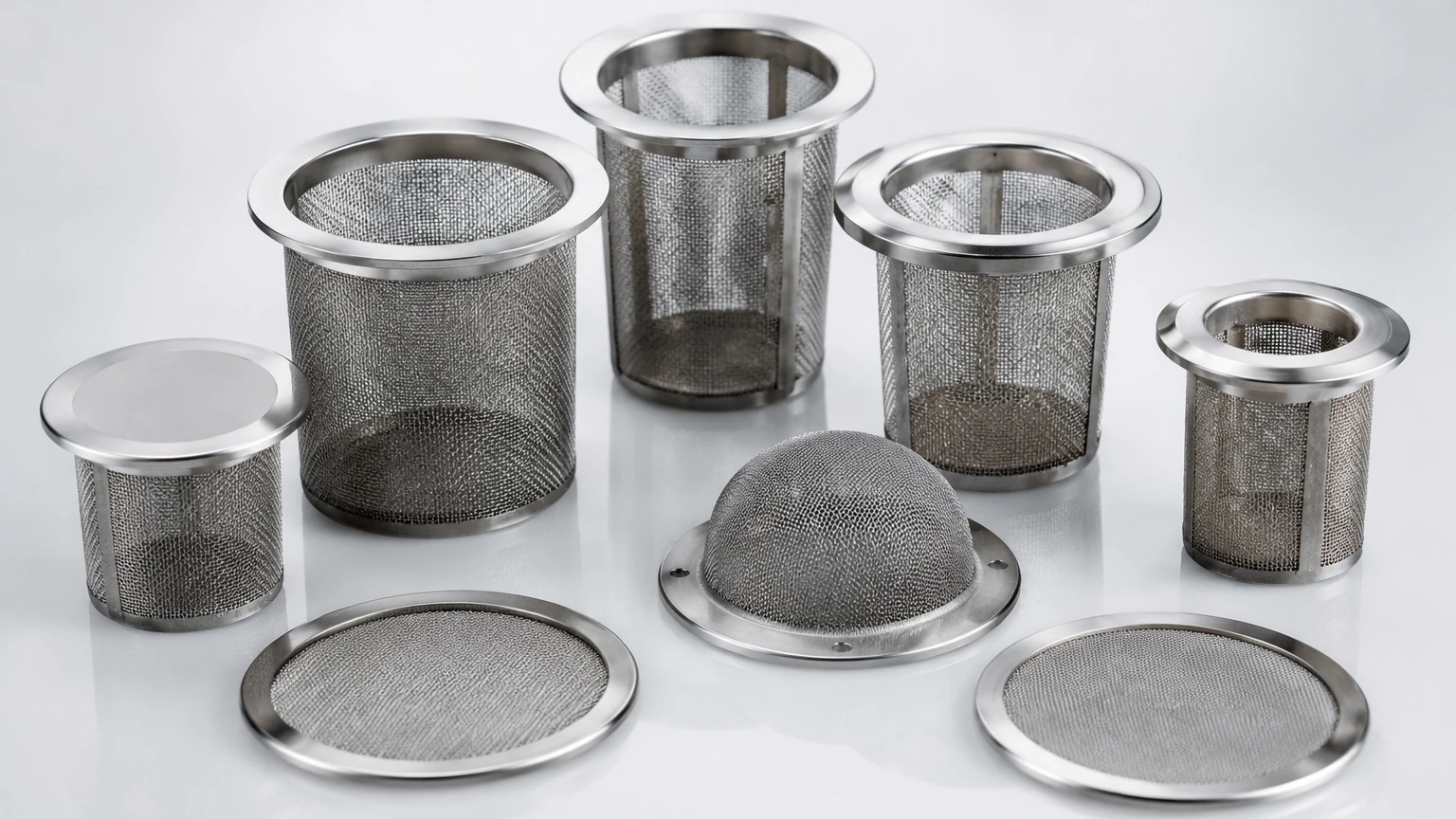
The internal structure of a steamer filter determines its dirt-holding capacity, pressure drop, and cleanability. Two primary designs dominate the industrial market: sintered metal mesh and pleated stainless steel wire cloth.
Sintered Metal Mesh
Sintered filters are created by bonding multiple layers of stainless steel wire mesh together using a high-temperature vacuum sintering process. This creates a rigid, porous structure where the wires are fused at every contact point.
* Advantages: Sintered media is incredibly robust and can withstand high differential pressures without collapsing. It is ideal for "culinary grade" steam where absolute filtration is required. Because the structure is fixed, there is zero risk of media migration.
* Cleaning: Sintered filters are highly receptive to ultrasonic cleaning and back-flushing, allowing them to be reused many times.
Pleated Stainless Steel Wire Cloth
In applications where high flow rates and low pressure drops are the priority, pleated designs are often used. By folding the wire mesh into a series of pleats, the effective surface area of the filter is increased by 3 to 5 times compared to a standard cylindrical element.
* Advantages: The increased surface area allows for longer intervals between cleanings and reduces the energy required to push steam through the system. This is particularly beneficial in large-scale industrial heating where high volumes of steam are moved constantly.
* Application: Pleated filters are excellent for removing larger scale and rust particles in plant steam systems where the particulate load is high.
Understanding Steam Quality Standards and Micron Ratings
Selecting a steamer filter without defining the target micron rating can lead to either insufficient filtration or excessive pressure drop. In the context of steam, the micron rating is usually defined as "absolute" or "nominal."
* Absolute Rating: This indicates that the filter will block 99.9% of all particles at the specified size. For culinary steam, an absolute rating of 2 microns is the industry benchmark.
* Nominal Rating: This is a more general measurement, indicating that the filter will stop a majority of particles (usually 60% to 90%) at that size. Nominal filters are often used as pre-filters to extend the life of more expensive absolute filters.
Engineers must also consider the "Steam Quality" or "Dryness Fraction." Steam that contains a high percentage of liquid water (wet steam) can cause erosion on the filter mesh through a process called droplet impingement. If the system produces wet steam, it is advisable to install a moisture separator upstream of the steamer filter to protect the mesh and ensure the filter only has to manage solid particulates.
Installation Best Practices for Optimal Filter Longevity
The performance of a steamer filter is heavily influenced by how it is integrated into the piping system. Improper installation can lead to premature failure, water hammer damage, or poor steam quality.
1. Condensate Management: Steam filters should always be installed with a steam trap located immediately upstream. This prevents condensate from pooling in the filter housing. If a "slug" of water hits the filter element at high velocity (water hammer), it can tear the wire mesh or deform the filter support core.
2. Orientation: Most industrial steam filters are designed for horizontal piping with the filter bowl hanging vertically downward. This allows any collected moisture or heavy particles to settle in the bottom of the housing where they can be drained.
3. Pressure Gauges: Installing differential pressure gauges before and after the filter is the only reliable way to monitor its condition. As the filter traps debris, the pressure drop (delta P) will increase. Once the delta P reaches a pre-defined limit (typically 5-10 psi), the filter must be cleaned or replaced.
4. Bypass Valves: For critical processes that cannot be shut down, a duplex filter arrangement or a bypass valve system should be installed. This allows the operator to divert steam flow through a secondary path while the primary steamer filter is being serviced.
Maintenance and Cleaning: Maximizing the Lifecycle of Metal Filters
One of the primary B2B advantages of a stainless steel steamer filter from Kaifil is its ability to be regenerated. Unlike disposable paper or plastic filters, metal elements represent a long-term capital investment rather than a recurring consumable cost.
Cleaning Procedures
* Back-flushing: In some systems, the filter can be cleaned in place (CIP) by reversing the flow of clean water or air through the element. This dislodges particles trapped on the surface of the mesh.
* Ultrasonic Cleaning: For deeply embedded particulates, the filter element can be removed and placed in an ultrasonic bath with a compatible cleaning solution. The high-frequency sound waves create microscopic bubbles that implode, scrubbing the pores of the mesh clean.
* Chemical Cleaning: If the filter is fouled with organic matter or mineral scale, a mild acid or alkaline wash can be used, provided the material is 316L stainless steel, which can withstand these chemicals.
Inspection Cycles
Regular inspection is vital. Technical teams should look for signs of "blinding" (permanent clogging), mechanical deformation, or corrosion. Even high-grade stainless steel can eventually suffer from erosion if the steam velocity is too high. Maintaining a spare set of filter elements ensures that the process remains operational during the cleaning cycle of the primary set.
Custom OEM Solutions for Specialized Steaming Equipment
Many industrial machines, such as commercial ovens, textile steamers, and sterilization units, have unique space constraints or flow requirements. Standard off-the-shelf filters may not always provide the optimal balance of filtration efficiency and physical fit.
Kaifil specializes in custom OEM filtration solutions. By working directly with equipment manufacturers, Kaifil can design a steamer filter that integrates seamlessly into the machine's architecture. Customization options include:
* Custom End Caps: Threaded, flanged, or bayonet-style connections to match existing piping.
* Variable Micron Layers: Combining different mesh densities to create a graduated filtration effect, which increases dirt-holding capacity.
* Reinforced Cores: For high-pressure applications where the filter must withstand extreme differential pressures.
By choosing a customized approach, engineers can optimize the total cost of ownership, reducing maintenance frequency and ensuring that the steaming equipment operates at peak performance. For more information on how custom metal components can improve your filtration process, visit the Main Page.
Conclusion
A steamer filter is more than just a consumable; it is a critical component in the safety and efficiency of industrial steam systems. From protecting food products to ensuring the longevity of expensive machinery, the choice of filter material and design has far-reaching implications. By prioritizing high-grade stainless steel construction, understanding the nuances of micron ratings, and following rigorous installation and maintenance protocols, industrial operators can achieve a reliable and cost-effective filtration solution. Kaifil remains a dedicated partner in this field, providing the engineering depth and manufacturing quality required to solve the most complex steam filtration challenges.
