


Pipeline Strainer
In industrial fluid handling systems, the presence of solid contaminants—ranging from pipe scale and weld beads to external debris—poses a significant risk to the longevity and efficiency of downstream equipment. A pipeline strainer is a critical mechanical component designed to remove these unwanted solids from liquid, gas, or steam lines by means of a perforated or wire mesh straining element. Unlike filters, which often remove much smaller particles and are frequently replaced, strainers are generally designed for the removal of larger particles and are intended to be cleaned and reused. For engineers and procurement teams, selecting the correct pipeline strainer involves a deep understanding of flow dynamics, material compatibility, and the specific requirements of the industrial process.
The Role of Pipeline Strainers in Industrial Systems
The primary function of a pipeline strainer is protection. In complex industrial environments such as chemical processing plants, refineries, and food production facilities, high-value components like pumps, meters, control valves, and steam traps are susceptible to damage or clogging from particulate matter. A single piece of debris can lead to seal failure in a pump or the seizure of a precision valve, resulting in costly downtime and emergency repairs.
By installing a pipeline strainer upstream of sensitive equipment, operators ensure that the fluid medium remains within the required cleanliness specifications. The straining process occurs as the fluid passes through the internal element. The solids are trapped within the mesh or basket, while the clean fluid continues through the outlet. This mechanical separation is essential for maintaining the "total cost of ownership" (TCO) by extending the service intervals of more expensive system components.
Common Types of Pipeline Strainers and Their Applications
Pipeline strainers are categorized by their configuration and the specific operational needs they serve. Choosing between them requires an analysis of the installation space, the frequency of cleaning required, and the nature of the fluid.
Y-Strainers
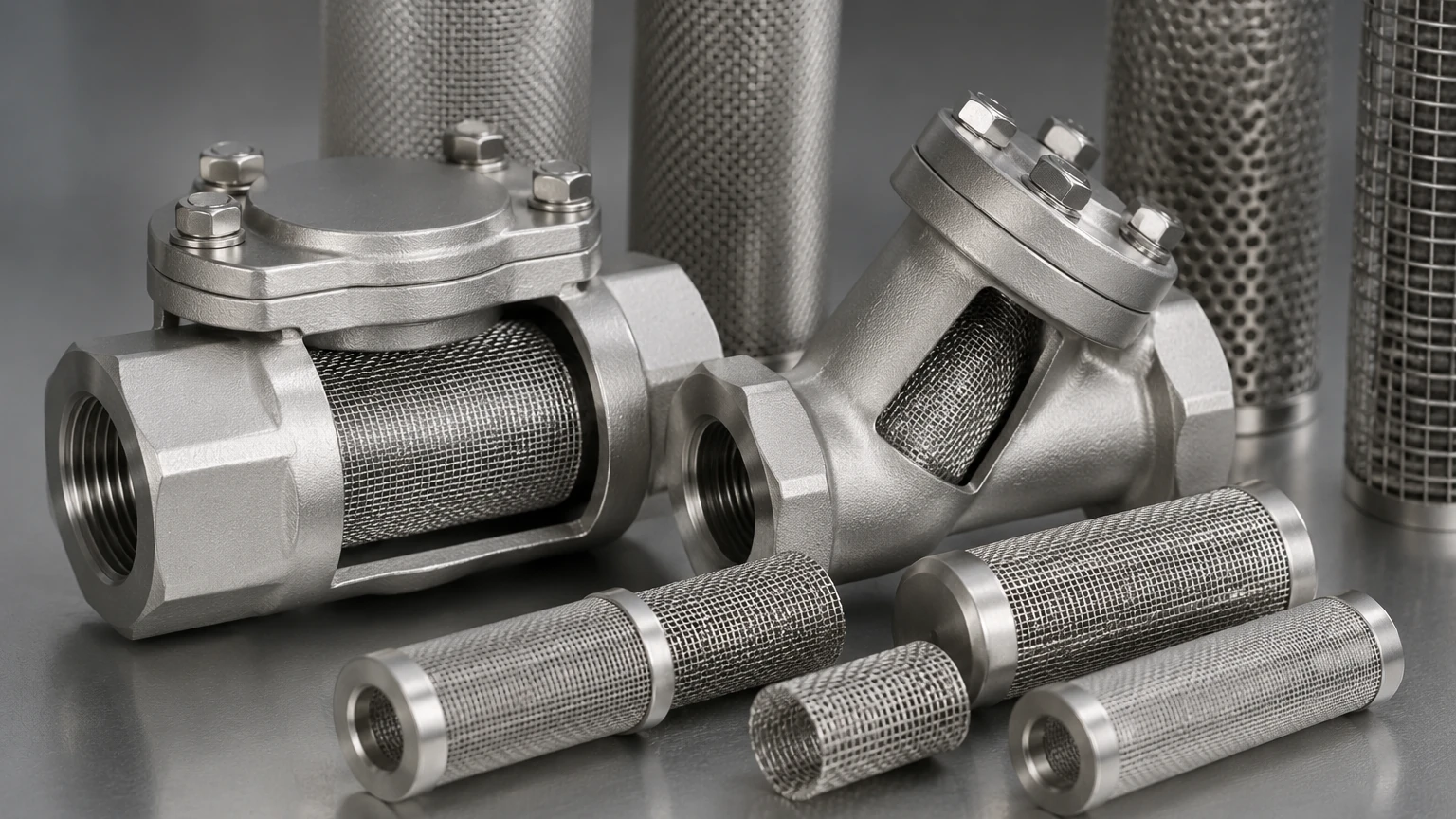
The Y-strainer is perhaps the most common configuration due to its compact design and versatility. It is characterized by a cylindrical body with a side-arm that houses the straining element at an angle, forming a "Y" shape.
* Applications: Y-strainers are typically used in high-pressure lines (liquid or gas) where the amount of debris to be removed is relatively low. They are frequently found in steam applications because they can withstand the high pressures inherent in steam systems.
* Installation: They can be installed in either horizontal or vertical positions, provided the "leg" of the Y points downward to collect debris effectively.
Basket (Simplex) Strainers
Basket strainers feature a vertical chamber that houses a larger, basket-shaped straining element. Because the basket offers a greater surface area than a Y-strainer element, it can hold more debris before requiring cleaning.
* Applications: These are preferred for liquid applications where high flow rates and higher solids loading are expected. They are commonly used in cooling water systems, chemical transfer lines, and suction-side pump protection.
* Maintenance: Basket strainers are generally easier to service than Y-strainers in horizontal lines, as the top cover can be removed to lift the basket out for cleaning.
Duplex Strainers
In processes that cannot be shut down for maintenance, a duplex strainer is required. This system consists of two separate strainer baskets connected by a diverting valve. When one basket becomes full, the flow is diverted to the second basket, allowing the first to be cleaned without interrupting the process.
* Applications: Critical lubrication systems, continuous chemical processing, and fuel lines for power generation.
T-Strainers
T-strainers (or bat-type strainers) feature a straight-through flow path with a perpendicular straining chamber. They offer a compact footprint and are often used in large-diameter pipelines where space is at a premium and a low pressure drop is required.
Technical Engineering Considerations for Selection
Selecting a pipeline strainer is not a matter of simply matching the pipe size. Engineers must evaluate several technical variables to ensure the component performs reliably under operational stresses.
Material Compatibility and Metallurgy
The choice of material for both the strainer body and the internal element is paramount. For many industrial applications, stainless steel is the standard due to its corrosion resistance and mechanical strength.
* 304 Stainless Steel: Suitable for general industrial use, water treatment, and mildly corrosive environments.
* 316/316L Stainless Steel: Provides superior resistance to chlorides and acids, making it the preferred choice for chemical processing, pharmaceutical manufacturing, and marine applications.
* Specialty Alloys: In highly aggressive environments, materials like Monel or Hastelloy may be necessary to prevent premature failure of the straining element.
Filtration Accuracy: Mesh vs. Perforation
The straining element is the heart of the pipeline strainer. It is usually constructed from perforated metal or wire mesh. The selection depends on the size of the particles that need to be removed.
1. Perforated Plate: Used for coarser straining. The holes are typically measured in fractions of an inch or millimeters.
2. Wire Mesh: For finer filtration, a wire mesh lining is added to the perforated plate. Mesh size is defined by the number of openings per linear inch. For example, a 100-mesh screen has 100 openings per inch, capable of removing particles down to approximately 140-150 microns.
Engineers must balance the need for fine filtration with the risk of rapid clogging. A mesh that is too fine will increase the frequency of maintenance and the pressure drop across the system.
Pressure Drop (Differential Pressure)
As fluid passes through the straining element, a loss of pressure occurs, known as the pressure drop or Delta P ($ΔP$). This is influenced by the fluid's velocity, viscosity, and the "open area ratio" of the strainer. The open area ratio is the relationship between the internal cross-sectional area of the pipe and the total area of the holes in the straining element. A common engineering standard is a 4:1 ratio, ensuring that the strainer does not become a bottleneck in the system.
Customization and OEM Capabilities
Standard off-the-shelf strainers often fail to meet the rigorous demands of specialized industrial processes. This is where custom manufacturing becomes essential. Kaifil specializes in providing high-performance, custom stainless steel filtration solutions tailored to specific engineering requirements.
Whether the application requires a non-standard flange connection, a specific micron rating for a pharmaceutical process, or a reinforced basket design for high-viscosity fluids, customized OEM solutions ensure that the filtration component integrates perfectly with the existing infrastructure. For a detailed look at available technical specifications and custom design support, engineers can review product options and application support on our Main Page.
Customization also extends to the internal components. Precision-engineered wire mesh filters and stainless steel filter cartridges can be designed to handle extreme pressure differentials or to meet stringent sanitary standards in the food and beverage industry. By working directly with a manufacturer, purchasing teams can ensure that the materials used are fully traceable and that the manufacturing processes meet international quality standards.
Maintenance, Cleaning, and Replacement Cycles
The effectiveness of a pipeline strainer is dependent on a proactive maintenance schedule. A clogged strainer increases the pressure drop, which can lead to reduced flow rates, cavitation in pumps, and even the collapse of the straining element itself.
Monitoring Performance
The most effective way to monitor a strainer is through the installation of differential pressure gauges upstream and downstream of the unit. When the pressure difference reaches a predetermined limit (typically 5-10 psi depending on the system), it indicates that the element requires cleaning.
Cleaning Procedures
For Y-strainers, a "blow-down" valve can often be installed on the drain port, allowing debris to be flushed out without opening the strainer body. For basket strainers, the system must be depressurized (unless it is a duplex model), the cover removed, and the basket manually cleaned. It is vital to inspect the gaskets and seals during every cleaning cycle to prevent external leaks.
Replacement Cycles
While stainless steel elements are durable, they are not infinite. Factors such as erosion from high-velocity particles, chemical attack, or mechanical fatigue from frequent pressure surges will eventually necessitate replacement. Keeping a stock of replacement baskets or mesh liners is a critical part of industrial risk management.
Total Cost of Ownership and Selection Logic
When evaluating pipeline strainers, the initial purchase price is only one component of the total cost. Engineers should consider:
* Energy Costs: A strainer with a high permanent pressure drop will force pumps to work harder, increasing electricity consumption over the life of the plant.
* Labor Costs: How long does it take to clean the unit? Does it require specialized tools or multiple technicians?
* Durability: A cheaper, low-quality strainer may suffer from bypass (where fluid leaks around the element) or corrosion, leading to the failure of expensive downstream equipment.
Investing in high-quality stainless steel construction and precision-engineered elements often yields a much higher ROI by reducing the frequency of replacements and protecting the integrity of the entire process line.
Conclusion: Selecting the Right Partner
A pipeline strainer is a small but vital investment in the safety and efficiency of industrial operations. By understanding the nuances of flow rates, mesh sizes, and material properties, engineers can select a solution that provides reliable protection for years to reach.
When standard solutions are insufficient, partnering with an experienced manufacturer like Kaifil allows for the development of bespoke filtration components that meet the exact needs of demanding applications. From chemical processing to hydraulic systems, the right strainer design ensures that your infrastructure remains operational, efficient, and protected against the risks of contamination.
