


Livewell Intake Screen
In industrial and marine fluid management, the integrity of a pump system is heavily dependent on the quality of its intake protection. A livewell intake screen serves as the primary defense mechanism for pumps, aerators, and circulation systems, preventing the ingress of debris while maintaining the required flow rates for sensitive aquatic environments. For engineers and procurement specialists, selecting the correct screen involves more than just choosing a size; it requires a deep understanding of material science, fluid dynamics, and mechanical design to ensure long-term operational efficiency.
As a specialized manufacturer of stainless steel filtration solutions, Kaifil provides precision-engineered components designed to withstand the rigors of continuous industrial use. Whether applied in large-scale aquaculture, marine research facilities, or industrial water intake systems, the livewell intake screen must be built to exacting standards to prevent system failure and reduce maintenance overhead.
Technical Fundamentals of Intake Filtration
The primary function of a livewell intake screen is to act as a physical barrier at the point of suction. In any hydraulic system, the intake is the most vulnerable point. Without adequate screening, particulate matter such as aquatic vegetation, sand, and small organisms can enter the pump housing, leading to impeller damage, clogged spray heads, and eventual motor burnout.
From an engineering perspective, the design of the screen must balance two competing factors: filtration efficiency and flow resistance. A mesh that is too fine will provide excellent protection but may cause a significant pressure drop, leading to pump cavitation. Cavitation occurs when the pressure at the pump inlet drops below the vapor pressure of the liquid, forming bubbles that collapse violently and erode metal surfaces. Conversely, a mesh that is too coarse may allow damaging debris to pass through. Achieving the optimal balance requires calculating the "open area" of the screen, ensuring that the total area of the openings is several times larger than the cross-sectional area of the intake pipe to minimize suction loss.
Material Selection for Marine and Industrial Environments
Material durability is the most critical factor in the longevity of a livewell intake screen. While plastic or low-grade alloy screens are available, they often fail under the mechanical stress of high-suction environments or degrade due to UV exposure and chemical corrosion. In industrial B2B applications, stainless steel is the industry standard for several reasons:
1. Corrosion Resistance: Marine environments are highly corrosive. Type 304 stainless steel offers good resistance, but for saltwater or brackish water applications, Type 316 or 316L is preferred. The addition of molybdenum in 316 stainless steel significantly enhances its resistance to pitting and crevice corrosion in chloride-rich environments.
2. Mechanical Strength: Unlike polymer alternatives, a stainless steel livewell intake screen can withstand physical impacts from debris and the structural loads imposed by high-velocity water flow. This prevents the screen from collapsing inward under the vacuum pressure of the pump.
3. Biocompatibility and Hygiene: In aquaculture and livewell applications, maintaining water chemistry is vital. Stainless steel is inert and does not leach chemicals into the water, ensuring the health of the aquatic life being supported.
4. Thermal Stability: Industrial processes often involve temperature fluctuations. Stainless steel maintains its structural integrity across a wide temperature range, ensuring consistent performance in both cold-water intakes and heated industrial bypasses.
Engineering the Optimal Livewell Intake Screen Design
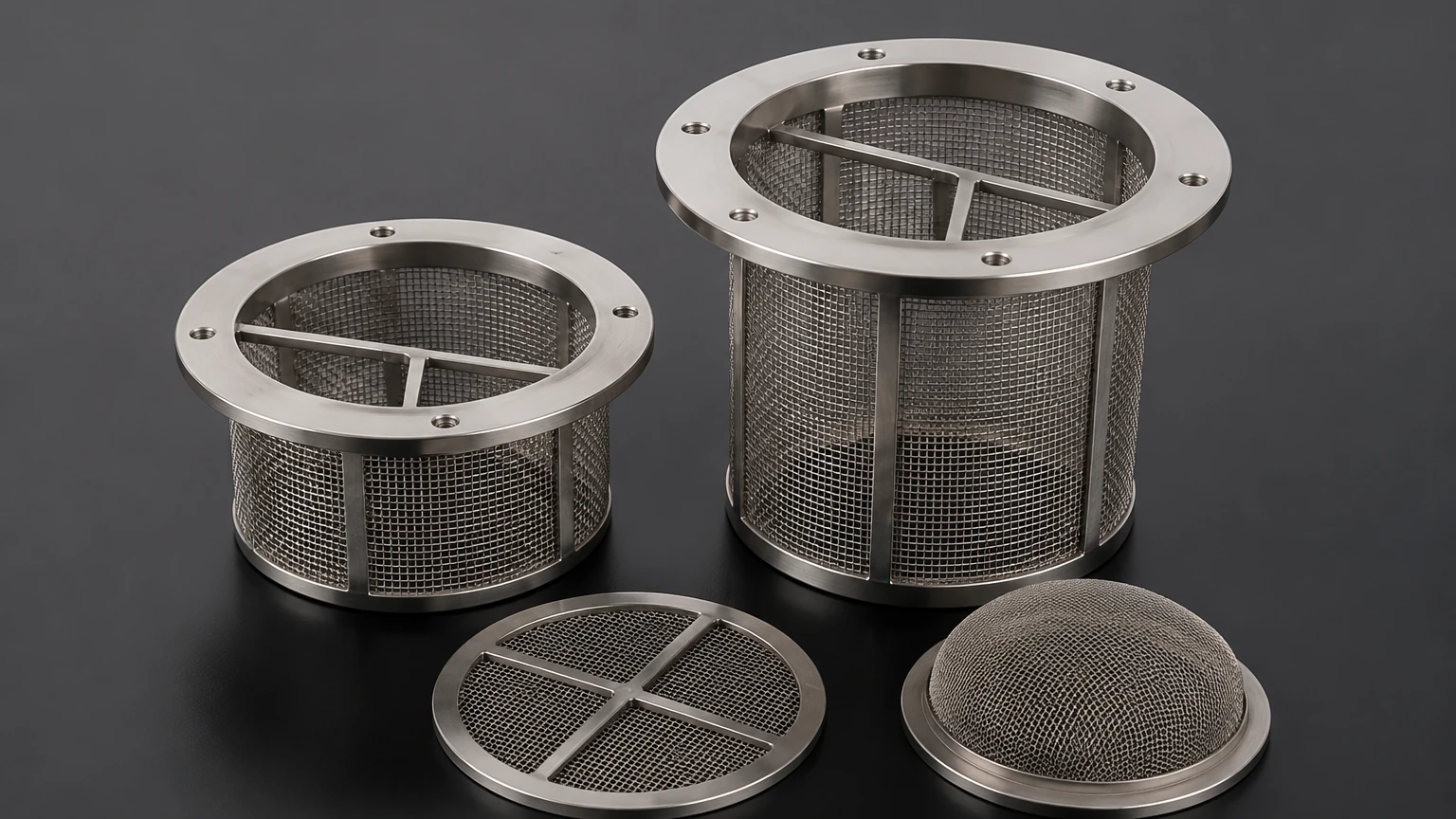
When specifying a livewell intake screen, engineers must consider the geometry of the filtration media. Kaifil utilizes advanced manufacturing techniques to produce various screen structures tailored to specific application needs.
Wire Mesh vs. Perforated Metal
Woven wire mesh is often utilized when high precision and a high percentage of open area are required. It allows for very fine filtration (measured in microns) while maintaining excellent flow characteristics. However, for applications requiring extreme ruggedness, perforated metal screens provide superior structural rigidity. Perforated screens are less likely to deform under heavy debris loading and can be manufactured with specific hole patterns to optimize flow distribution.
Mesh Count and Wire Diameter
The relationship between mesh count (the number of openings per linear inch) and wire diameter determines the screen's strength and transparency. A thicker wire increases the screen's lifespan and resistance to abrasion but reduces the total open area. Engineers must evaluate the specific debris profile of their environment to determine if a heavy-duty coarse screen or a fine-mesh precision screen is more appropriate.
Attachment and Housing Integration
A screen is only as effective as its seal. Common mounting options include NPT or BSP threaded connections, slip-on fittings with set screws, or custom flange mounts. Ensuring a secure, bypass-free connection is essential to prevent unfiltered water from leaking into the system around the edges of the screen.
Customization and OEM Manufacturing Capabilities
Standard off-the-shelf components rarely meet the exacting requirements of specialized industrial equipment. This is where custom manufacturing becomes a strategic advantage. Kaifil specializes in providing OEM solutions that integrate seamlessly into existing hardware designs.
Customization options for a livewell intake screen include:
* Dimensional Tailoring: Adjusting the length, diameter, and shape (cylindrical, conical, or flat) to fit specific pump housings or intake ports.
* Reinforcement Structures: For high-pressure suction applications, screens can be reinforced with internal perforated cores or external cages to prevent collapse.
* Specialized Coatings: While 316L stainless steel is inherently resistant, additional treatments such as electropolishing can further enhance corrosion resistance and reduce the adhesion of biofouling organisms.
* Integrated Fittings: Manufacturing the screen as a single unit with the necessary couplings simplifies the assembly process for equipment manufacturers and reduces potential points of failure.
By working closely with an experienced manufacturer, purchasing teams can ensure that their components meet the specific tolerances required for their proprietary systems. For more detailed technical specifications across our entire product range, you can return to our Main Page to review product options and application support.
Operational Maintenance and Performance Optimization
Even the highest quality livewell intake screen requires a maintenance strategy to ensure peak performance. In any water-based system, biofouling—the accumulation of algae, barnacles, or biofilm—is an inevitable challenge. As the screen becomes clogged, the pump must work harder to draw the same volume of water, leading to increased energy consumption and mechanical wear.
Cleaning Protocols
Stainless steel screens are advantageous because they can withstand rigorous cleaning methods. This includes high-pressure water jetting, mechanical scrubbing, and even ultrasonic cleaning for fine-mesh variants. In some industrial setups, backwashing systems are integrated, where the flow is momentarily reversed to flush debris away from the screen surface.
Monitoring for Failure
Engineers should monitor system pressure and flow rates as part of a predictive maintenance program. A gradual increase in vacuum pressure at the intake usually indicates a dirty screen. Conversely, a sudden drop in pressure might indicate that the screen has been bypassed or damaged. Regular inspection of the screen’s physical integrity ensures that small issues, such as a minor tear in the mesh, do not escalate into catastrophic pump failure.
Evaluating Total Cost of Ownership in Filtration Systems
When procuring filtration components, it is tempting to focus solely on the initial unit price. However, in a B2B context, the Total Cost of Ownership (TCO) is a much more accurate metric for success. A low-cost, low-quality livewell intake screen often results in higher long-term costs due to:
* Frequent Replacements: Cheaper materials fail faster in corrosive environments.
* Downtime: System shutdowns for screen replacement or pump repair can be incredibly costly in industrial and commercial operations.
* Energy Inefficiency: Clogged or poorly designed screens increase the load on pumps, raising electricity costs over time.
* Risk of Secondary Damage: The cost of replacing a damaged high-performance pump far exceeds the investment in a premium stainless steel intake screen.
Investing in precision-engineered stainless steel components from a reliable manufacturer like Kaifil ensures that the filtration system remains a robust part of the infrastructure rather than a recurring point of failure.
Conclusion
The livewell intake screen is a critical component that demands careful engineering and material selection. By prioritizing high-grade stainless steel, optimizing open area for flow efficiency, and utilizing custom OEM designs, industrial operators can protect their equipment and ensure the longevity of their fluid systems. Whether you are designing a new system or upgrading an existing intake, understanding the technical nuances of filtration media and structural design is the key to operational excellence.
For engineers and technical professionals seeking to optimize their filtration performance, selecting a manufacturing partner with deep expertise in metal mesh and custom fabrication is essential. By focusing on durability and precision, you can achieve a filtration solution that delivers consistent results in even the most demanding environments.
