


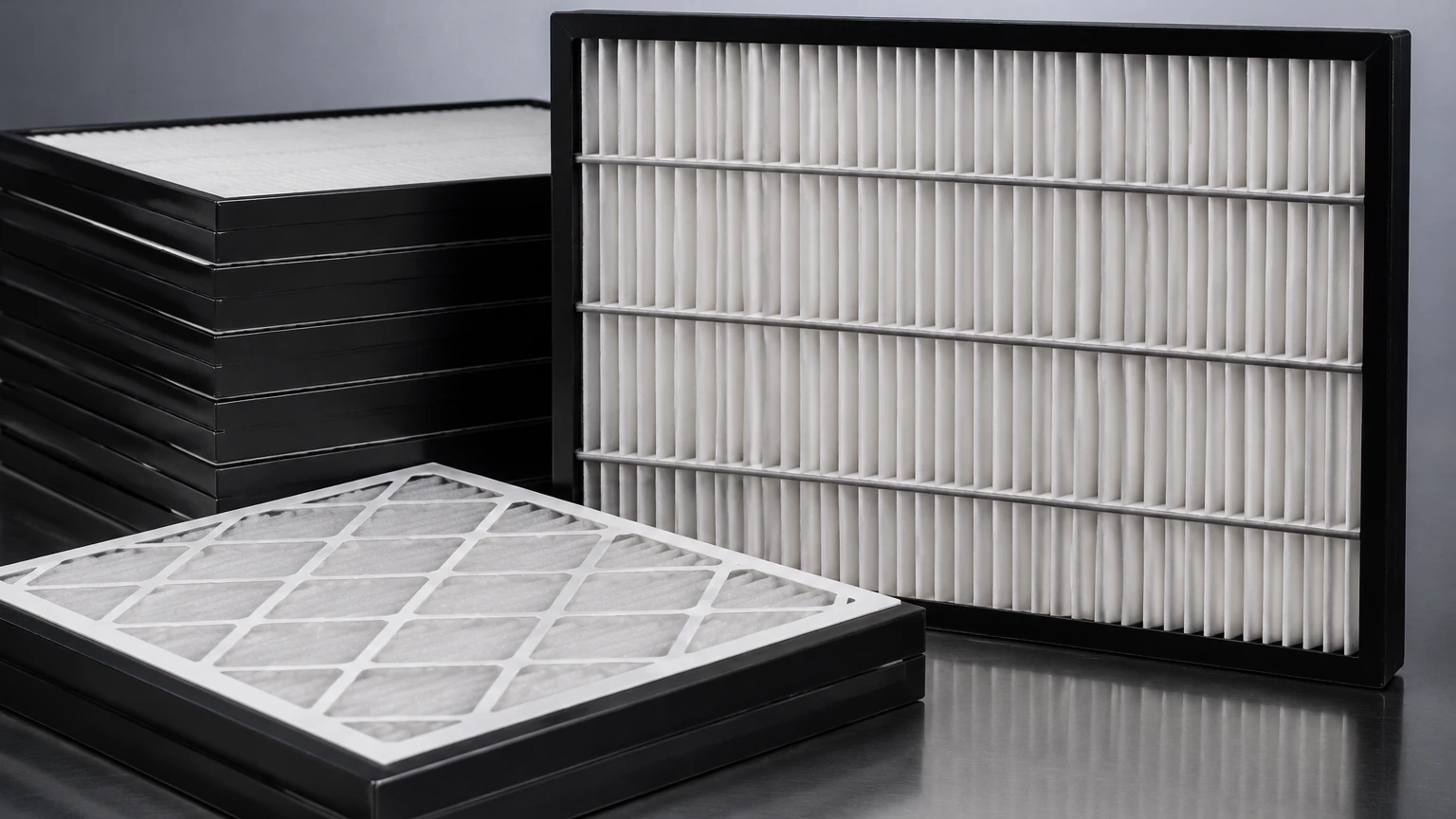
Merv 17 Hepa Filter
In the landscape of industrial air and gas filtration, the classification of filter efficiency is governed by rigorous standards that ensure process integrity and personnel safety. Among these, the MERV 17 HEPA filter represents a critical threshold where standard ventilation filtration transitions into high-efficiency particulate air (HEPA) performance. For engineers and facility managers operating in pharmaceutical, chemical, and high-precision manufacturing environments, understanding the technical nuances of MERV 17 is essential for optimizing system design and maintaining compliance with air quality regulations.
This guide examines the technical specifications, engineering considerations, and industrial applications of MERV 17 filtration, providing the factual foundation necessary for informed procurement and system integration.
Understanding the MERV 17 Classification
The Minimum Efficiency Reporting Value (MERV) is a scale developed by the American Society of Heating, Refrigerating and Air-Conditioning Engineers (ASHRAE) under Standard 52.2. While the MERV scale typically ranges from 1 to 16 for standard commercial and residential filters, ratings of 17 through 20 are categorized as HEPA or ULPA (Ultra-Low Penetration Air) grades.
A MERV 17 HEPA filter is engineered to capture at least 99.97% of particles as small as 0.3 microns in diameter. This specific particle size is utilized as the benchmark because it represents the "Most Penetrating Particle Size" (MPPS). Particles both larger and smaller than 0.3 microns are actually easier to capture due to different physical mechanisms, which makes the 0.3-micron efficiency rating the most conservative and reliable measure of a filter’s performance.
Efficiency Benchmarks by Particle Size
To be classified as MERV 17, a filter must meet or exceed the following efficiency thresholds across three particle size ranges:
1. E1 (0.3 to 1.0 µm): Greater than or equal to 95% (though HEPA standards specifically require 99.97% at the 0.3-micron mark).
2. E2 (1.0 to 3.0 µm): Greater than or equal to 95%.
3. E3 (3.0 to 10.0 µm): Greater than or equal to 95%.
In industrial practice, MERV 17 is often the baseline for cleanroom environments, sterile processing areas, and hazardous dust collection systems where sub-micron particulate control is non-negotiable.
Technical Engineering Considerations
Integrating a MERV 17 HEPA filter into an industrial system requires more than simple installation; it necessitates a comprehensive review of the system’s fluid dynamics and structural requirements. Because these filters utilize extremely dense media to achieve high efficiency, they impose significant physical demands on the filtration housing and the prime mover (fan or blower).
Static Pressure and Airflow Resistance
The primary engineering challenge associated with MERV 17 filters is the high initial pressure drop. Due to the tight weave of the filter media—often composed of sub-micron glass fibers or expanded PTFE—the resistance to airflow is substantially higher than that of lower-rated filters.
Engineers must ensure that the HVAC or process air system has sufficient static pressure capacity to overcome this resistance without compromising the required air change rates. Failure to account for the pressure drop can lead to motor strain, reduced airflow, and localized heating within the ductwork. Typically, a MERV 17 filter will have an initial resistance between 0.5 and 1.0 inches of water gauge (w.g.), which increases as the filter loads with particulate matter.
The Role of Pre-Filtration
To protect the investment in high-efficiency media, MERV 17 filters are rarely used as the primary stage of filtration. In industrial settings, a multi-stage approach is standard. Coarser pre-filters, such as stainless steel wire mesh filters or MERV 8-11 pleated filters, are installed upstream to capture larger debris and aerosols.
By utilizing durable components like stainless steel mesh for pre-filtration, facilities can significantly extend the service life of the MERV 17 HEPA filter. This strategy reduces the total cost of ownership by protecting the more expensive high-efficiency stage from premature loading and physical damage. For detailed specifications on how various filtration stages interact, engineers should consult the technical resources available on the Main Page.
Material Selection and Construction
The physical construction of a MERV 17 HEPA filter is as critical as the media itself. In demanding industrial environments, the choice of frame and sealant materials determines the filter's longevity and reliability.
Media Composition
Most MERV 17 filters utilize micro-glass fiber paper. The fibers are arranged in a random mat structure that facilitates three primary capture mechanisms:
* Interception: Particles following a line of flow come within one particle radius of a fiber and adhere to it.
* Impaction: Larger particles, unable to adjust to the abrupt changes in airflow around fibers, strike the fiber directly.
* Diffusion: The smallest particles (under 0.1 microns) move erratically due to Brownian motion, increasing the likelihood of colliding with a fiber.
Structural Integrity and Gasketing
In B2B applications involving corrosive chemicals, high humidity, or extreme temperatures, standard galvanized steel or wood frames may be insufficient. Stainless steel frames (Grade 304 or 316) are frequently specified for their corrosion resistance and ability to withstand rigorous cleaning protocols.
Furthermore, the seal between the filter media and the frame—and between the frame and the housing—must be airtight. Any bypass air, even in minute quantities, will negate the efficiency of the MERV 17 rating. Common sealing methods include polyurethane foam gaskets, fluid seals (gel seals), and mechanical clamping systems.
Industrial Applications for MERV 17 Filtration
The deployment of MERV 17 HEPA filters is standard practice in sectors where particulate contamination can lead to catastrophic product failure or health risks.
Pharmaceutical and Biotech Manufacturing
In the production of injectable drugs and biologics, air purity is governed by ISO cleanroom standards. MERV 17 filters are used in terminal ceiling modules and laminar flow hoods to maintain ISO Class 5 to Class 8 environments. They effectively remove bacteria, fungal spores, and viral carriers, ensuring aseptic conditions during filling and packaging processes.
Chemical and Petrochemical Processing
Chemical plants often deal with fine catalysts or hazardous powders that must be recovered or contained. MERV 17 filters serve as the final stage in dust collection systems, preventing the release of toxic substances into the atmosphere and ensuring compliance with environmental discharge permits.
Electronics and Semiconductor Fabrication
Micro-electronics fabrication requires an almost complete absence of airborne particles. Even a single sub-micron particle can bridge the gap between traces on a silicon wafer, causing a short circuit. MERV 17 and higher-rated filters are the backbone of the air handling units (AHUs) serving these facilities.
Performance Evaluation and Maintenance
Maintaining the integrity of a MERV 17 HEPA filter system requires a structured approach to monitoring and testing. Unlike lower-efficiency filters, a visual inspection is insufficient to determine if a HEPA filter is functioning correctly.
Differential Pressure Monitoring
Industrial filtration systems should be equipped with differential pressure gauges (manometers) to monitor the pressure drop across the filter bank. This data provides a real-time indication of filter loading. Most MERV 17 filters have a recommended final resistance—the point at which they must be replaced—typically around 1.5 to 2.0 inches w.g. Replacing filters based on pressure data rather than a fixed calendar schedule optimizes filter life and energy consumption.
In-Situ Leak Testing
For critical applications, "integrity testing" or "leak testing" is performed upon installation and at regular intervals (usually every 6 to 12 months). This involves introducing a challenge aerosol, such as dispersed PAO (Polyalphaolefin) oil, upstream of the filter and scanning the downstream face with an aerosol photometer. This process identifies pinhole leaks in the media or failures in the gasket seal that would allow unfiltered air to bypass the system.
Common Risks and Procurement Guidance
When specifying MERV 17 HEPA filters, B2B buyers should be aware of common pitfalls that can compromise system performance.
1. Bypass Air: The most common failure in high-efficiency systems is not the filter media itself, but the installation. Even a 0.01% gap in the framing can drop the effective efficiency of the entire bank significantly below the MERV 17 threshold.
2. Incompatible Housings: Ensure that the filter housing is designed for HEPA-grade filters. Standard commercial filter tracks often lack the clamping force required to compress HEPA gaskets properly.
3. Environmental Factors: High humidity can cause glass fiber media to weaken or promote microbial growth if the system is not properly managed. In such cases, antimicrobial treatments or synthetic PTFE media may be required.
4. Counterfeit or Uncertified Products: Always verify that filters have been tested according to ASHRAE 52.2 or EN 1822 standards. Reputable manufacturers provide individual test reports (COAs) for each HEPA filter, documenting its actual efficiency and pressure drop at its rated airflow.
Conclusion
The MERV 17 HEPA filter is a cornerstone of modern industrial contamination control. By providing 99.97% efficiency at the most penetrating particle size, it enables the safe and efficient operation of critical processes across the pharmaceutical, chemical, and electronics sectors. However, the successful implementation of this technology depends on careful engineering, including the selection of robust stainless steel support structures, the implementation of effective pre-filtration, and a rigorous maintenance schedule.
For technical professionals seeking to optimize their filtration systems, focusing on the total cost of ownership—rather than just the initial purchase price—is vital. This includes evaluating energy costs associated with pressure drop and the durability of the filter housing in specific operating environments. For more information on customized filtration components and engineering support, visit our Main Page.
