


Mesh Liquid Filter Bag
In industrial process engineering, the selection of filtration media is a critical decision that directly impacts product purity, equipment longevity, and operational overhead. The mesh liquid filter bag represents a specialized category of surface filtration designed to remove oversized contaminants from a liquid stream with high precision. Unlike depth filtration media, which trap particles within a complex tortuous path, mesh bags utilize a precise, woven structure to intercept solids at the surface.
For engineers and procurement professionals, understanding the technical nuances of mesh construction, material compatibility, and flow dynamics is essential for optimizing filtration performance. As a manufacturer specializing in precision filtration, Kaifil provides the technical expertise required to navigate these variables, ensuring that filtration components meet the rigorous demands of modern industrial applications. Detailed product information and engineering support can be found on the Main Page of our technical resource center.
Understanding the Mechanics of Surface Filtration
The primary function of a mesh liquid filter bag is surface filtration. This mechanism relies on a fixed pore size created by the intersection of horizontal and vertical strands (the warp and the weft). When a liquid passes through the mesh, any particle larger than the pore opening is mechanically blocked.
This method offers several distinct advantages in industrial settings:
1. Predictable Performance: Because the pore size is fixed by the weave, the filtration efficiency is highly predictable.
2. Low Pressure Drop: Mesh structures typically offer a high open area, which minimizes resistance to flow (Delta P) compared to dense felt or depth media.
3. Washability and Reusability: Especially in the case of stainless steel or high-strength synthetic monofilaments, mesh bags can often be cleaned and returned to service, reducing the total cost of ownership.
However, surface filtration is best suited for applications where the contaminant load consists of non-deformable solids or where the goal is to remove a specific size fraction from the fluid. If the fluid contains high concentrations of gelatinous or deformable particles, a mesh bag may blind (clog) more rapidly than depth media.
Material Selection: Synthetic vs. Metal Mesh
The performance of a mesh liquid filter bag is largely dictated by its material composition. Selecting the correct material requires an analysis of the fluid's chemical properties, operating temperature, and the required mechanical strength.
Synthetic Mesh (Nylon, Polypropylene, Polyester)
Synthetic meshes are widely used for general-purpose industrial filtration.
* Nylon Monofilament (NMO): Known for its excellent abrasion resistance and compatibility with many solvents. It is a common choice in the paint and coatings industry due to its lack of fiber shedding.
* Polypropylene (PEM): Offers broad chemical resistance, particularly to acids and alkalis. It is often used in water treatment and chemical processing where aggressive fluids are present.
* Polyester (PEMO): Provides good resistance to oxidation and is stable at higher temperatures than polypropylene, making it suitable for certain food and beverage applications.
Stainless Steel Wire Mesh
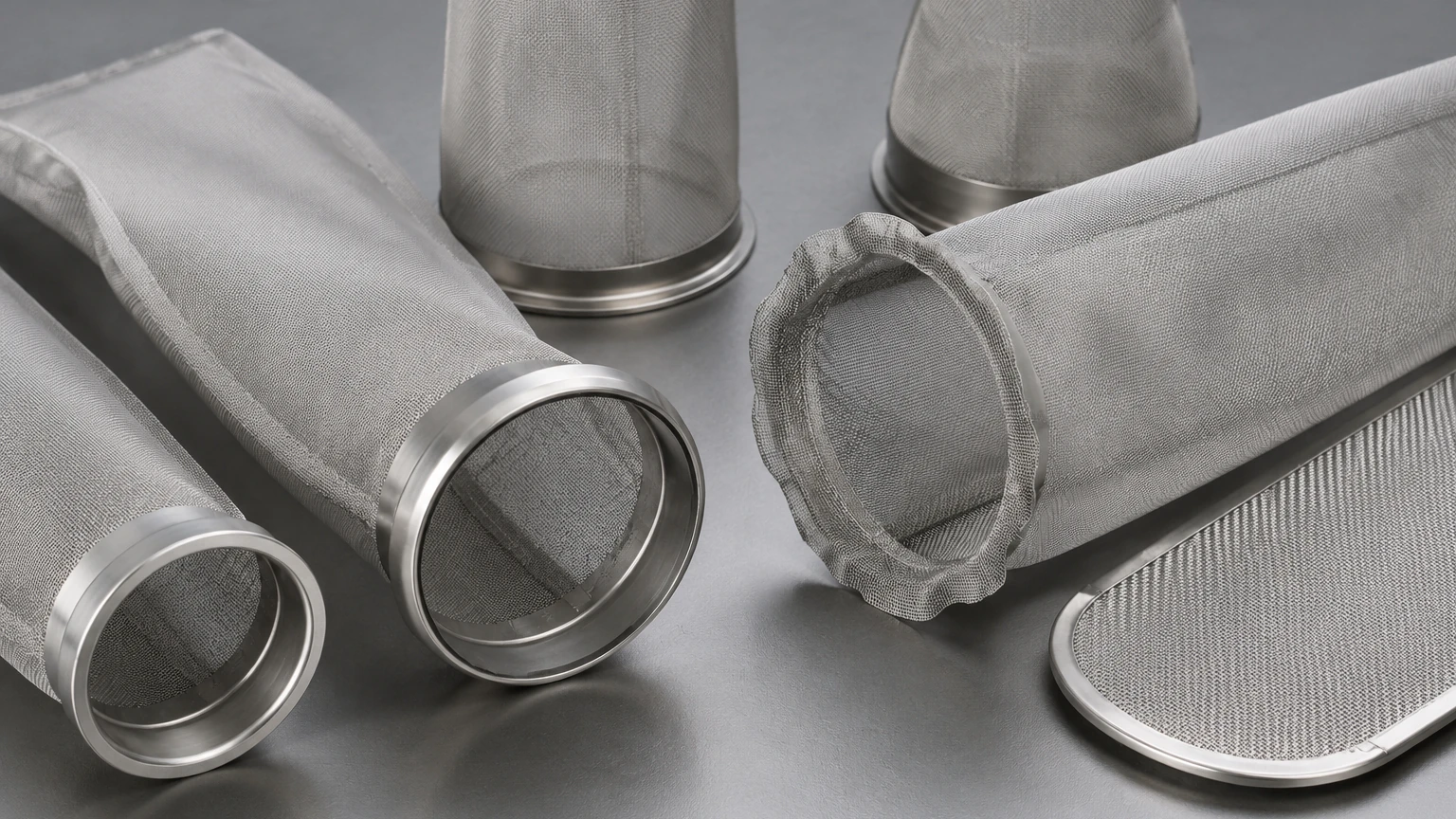
For the most demanding industrial environments, stainless steel wire mesh—specifically Grade 304 or 316L—is the gold standard. As a specialist in custom stainless steel filtration solutions, Kaifil emphasizes the use of metal mesh for applications involving high temperatures (exceeding 200°C), high-pressure differentials, or strict hygiene requirements. Stainless steel mesh liquid filter bags are non-shedding, highly durable, and compatible with almost all industrial chemicals. They are particularly valuable in the pharmaceutical and food processing sectors where material integrity is paramount.
Technical Specifications: Weave Types and Micron Ratings
The geometry of the weave determines both the strength of the filter and its filtration accuracy. In the context of a mesh liquid filter bag, two primary weave types are prevalent:
Monofilament Weave
Monofilament mesh is constructed from single, continuous strands of material. Each intersection is often heat-bonded or precisely woven to prevent strand migration. This results in a very accurate and consistent pore size. Monofilament bags are preferred when "absolute" filtration is required, meaning the filter must reliably stop 100% of particles above a specific micron rating. They are also easier to clean because the smooth surface of the strands prevents particles from becoming deeply embedded.
Multifilament Weave
Multifilament mesh uses strands made of multiple twisted fibers. While this increases the surface area and provides a degree of depth filtration, the pore sizes are less precise than monofilament. Multifilament bags are typically used for coarser filtration or as a low-cost alternative for non-critical applications where nominal filtration is sufficient.
Micron Ratings and Precision
Mesh liquid filter bags are available in a wide range of micron ratings, typically from 5 microns up to 1000 microns or more. It is important for engineers to distinguish between "nominal" and "absolute" ratings. A nominal rating indicates that the filter will trap a majority of particles at that size, whereas an absolute rating (common in high-quality monofilament mesh) guarantees the retention of all particles of that size under specified test conditions.
Operational Efficiency: Flow Dynamics and Pressure Management
Designing a filtration system around a mesh liquid filter bag requires a balance between flow rate and pressure drop. The "clean pressure drop" is the initial resistance the fluid encounters when passing through a new filter. As particles accumulate on the mesh surface, the pressure drop increases.
Factors Influencing Flow Rate
* Viscosity: Higher viscosity fluids (such as oils or resins) require larger surface areas or coarser mesh to maintain a viable flow rate.
* Open Area: This is the percentage of the total mesh area that consists of holes. A higher open area allows for higher flow rates but may reduce the mechanical strength of the mesh.
* Filter Size: Industrial filter bags are standardized into sizes (e.g., Size 1, Size 2, Size 3, Size 4). Selecting a larger bag size increases the available surface area, which slows down the face velocity and extends the time between cleaning cycles.
Monitoring Delta P
Engineers should specify a maximum allowable pressure drop (typically 15-25 PSI for synthetic bags, higher for reinforced stainless steel) before the bag must be replaced or cleaned. Exceeding these limits can lead to "bypass," where the pressure forces contaminants through the mesh or causes the bag to rupture, potentially damaging downstream equipment like pumps or precision nozzles.
Customization and Engineering Specifications for OEM Applications
Standard off-the-shelf filter bags do not always meet the unique requirements of specialized industrial machinery. Customization is often necessary to ensure a perfect fit within a proprietary housing or to handle unique fluid characteristics. Kaifil specializes in these customized designs, offering engineering support for OEM applications.
Sealing Arrangements
The seal between the filter bag and the housing is the most common point of failure. Options include:
* Steel or Stainless Steel Rings: These are sewn into the top of the bag and rely on a heavy-duty mechanical fit. They are robust and suitable for high-temperature applications.
* Plastic Flanges (Sentinel/Polyloc): These molded plastic tops provide a bypass-free seal through pressure-actuated compression. They are ideal for critical applications where zero bypass is mandatory.
* Custom Gaskets: For high-pressure environments, O-ring seals or custom-machined flanges can be integrated into the filter design.
Structural Reinforcements
In high-flow or high-pressure systems, a mesh liquid filter bag may require internal or external support. This can include a perforated metal basket or a secondary layer of coarse mesh to prevent the primary filter from distending or tearing under load. As a manufacturer of precision metal filter components, Kaifil can integrate these structural elements directly into the filter design to ensure long-term reliability.
Maintenance, Cleaning, and Replacement Protocols
To maintain the efficiency of a mesh liquid filter bag, a standardized maintenance protocol is required. Unlike felt bags, which are almost always disposable, many mesh bags—especially those made of nylon or stainless steel—allow for cleaning.
Cleaning Methods
* Backwashing: Reversing the flow of fluid through the mesh can dislodge surface-bound particles.
* Ultrasonic Cleaning: For stainless steel mesh, ultrasonic baths are highly effective at removing microscopic particles trapped within the weave intersections.
* Chemical Cleaning: Using compatible solvents or detergents to dissolve organic or chemical buildup.
Determining Replacement Cycles
While reusability is a benefit, it is not infinite. Over time, mechanical stress can lead to "pore enlargement" or fatigue in the strands. Regular inspection for thinning mesh, broken strands, or deformed seals is necessary. In critical pharmaceutical or food processes, a strict replacement schedule is often mandated by regulatory bodies (such as the FDA) to prevent any risk of cross-contamination or material failure.
Conclusion: Selecting the Right Filtration Partner
The selection of a mesh liquid filter bag is more than a simple procurement task; it is an engineering decision that affects the entire production chain. By considering material science, weave precision, and operational dynamics, technical teams can significantly improve process efficiency and product quality.
Whether you are designing a new filtration system or optimizing an existing one, partnering with a manufacturer that understands the complexities of industrial filtration is vital. Kaifil's commitment to quality and durability ensures that every filtration component, from standard mesh bags to custom stainless steel cartridges, performs reliably in demanding environments. For further technical guidance and to explore our full range of custom filtration solutions, please visit our Main Page.
