


Metal Filter Material
In industrial filtration, the selection of the correct metal filter material is a critical engineering decision that directly impacts the efficiency, longevity, and safety of a process. Unlike polymer or paper-based media, metallic materials offer a unique combination of mechanical strength, thermal stability, and chemical resistance. For engineers and procurement teams, understanding the nuances of various alloys and structural formats is essential for optimizing system performance in demanding environments such as chemical processing, pharmaceutical manufacturing, and hydraulic systems.
Industrial filtration often involves high pressures, extreme temperatures, and corrosive fluids. In these scenarios, the choice of metal filter material determines whether a filter will maintain its structural integrity or fail prematurely. This guide examines the technical properties, selection criteria, and engineering considerations for metallic filtration media.
Understanding the Role of Metal Filter Material in Industrial Systems
Metal filter materials are primarily utilized when operating conditions exceed the capabilities of synthetic media. While synthetic filters are often disposable and cost-effective for low-temperature, non-corrosive applications, metallic media provide a reusable and durable alternative. The primary advantage of using metal is its ability to withstand mechanical stress without deformation, ensuring that the filtration rating (micron rating) remains consistent throughout the service life.
In sectors like the food and beverage industry, metal filter material must also meet strict hygienic standards. Stainless steel, for instance, is non-leaching and can be sterilized using high-pressure steam or aggressive chemical cleaning agents. Furthermore, the high thermal conductivity of metals allows for efficient heat transfer, which is vital in processes involving molten polymers or hot gas filtration.
Common Alloys and Chemical Compatibility
The chemical environment is the first factor an engineer must evaluate when selecting a metal filter material. The most common alloys used in industrial filtration include:
Stainless Steel 304 and 304L
Grade 304 is the standard "18/8" stainless steel. It offers good corrosion resistance and is suitable for most atmospheric conditions and many organic and inorganic chemicals. However, it is susceptible to chloride pitting. The "L" variant (low carbon) is preferred for welded components to prevent intergranular corrosion in the heat-affected zone.
Stainless Steel 316 and 316L
For more aggressive environments, 316 stainless steel is the industry benchmark. The addition of molybdenum (2-3%) significantly improves resistance to pitting and crevice corrosion in chloride-rich environments. 316L is widely used in the pharmaceutical and chemical industries where purity and corrosion resistance are paramount. Many high-performance Main Page solutions leverage 316L for its versatility and reliability.
Specialty Alloys: Hastelloy, Monel, and Inconel
In extreme cases where standard stainless steels fail, specialty alloys are required:
* Hastelloy: Known for exceptional resistance to strong acids, including hydrochloric and sulfuric acids.
* Monel: Primarily composed of nickel and copper, it is excellent for seawater applications and hydrofluoric acid.
* Inconel: Retains its strength at very high temperatures and is resistant to oxidation and carburization, making it ideal for hot gas filtration.
Structural Variations of Metal Filter Material
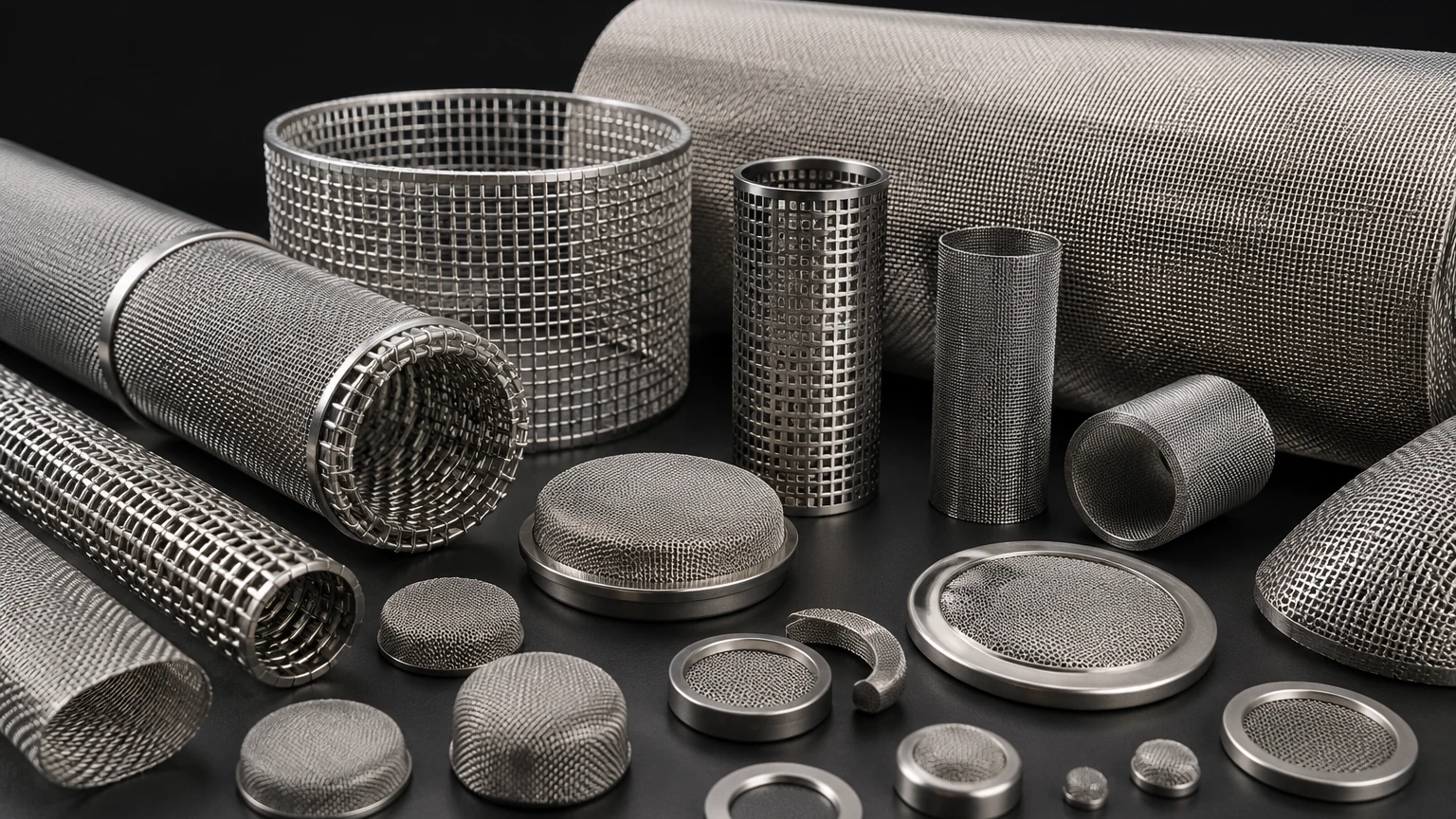
The performance of a filter is not only defined by its chemistry but also by its physical structure. Metal filter material is manufactured in several distinct forms, each offering different flow characteristics and filtration mechanisms.
Woven Wire Mesh
This is the most common form of metal filter material. It consists of wires woven into various patterns, such as plain weave, twill weave, or Dutch weave. Woven mesh provides a precise pore size and is relatively easy to clean. Dutch weaves, in particular, offer high strength and fine filtration by using a higher density of smaller wires in the shute (weft) direction.
Sintered Metal Fiber Felt
Sintered fiber felt is produced by non-woven stainless steel fibers that are randomly laid and then sintered (bonded by heat and pressure). This creates a highly porous structure with high permeability and high dirt-holding capacity. It is particularly effective for depth filtration, where particles are trapped within the thickness of the media rather than just on the surface.
Sintered Metal Powder
In this process, metal powder is pressed into a shape and sintered. The resulting material is rigid and has a tortuous path for fluid flow, providing excellent filtration for fine particles. Sintered powder filters are highly robust and can withstand significant differential pressures, though they generally have lower permeability than fiber felt or mesh.
Perforated and Expanded Metal
These materials are typically used as support layers or coarse pre-filters. Perforated metal provides a rigid skeleton for finer mesh layers, preventing the mesh from collapsing under high pressure. Expanded metal offers a high open area and is often used in air filtration or as a protective outer cage.
Engineering Criteria for Material Selection
When specifying a metal filter material, engineers must balance several competing factors to ensure the filter meets the application's requirements without over-engineering, which can lead to unnecessary costs.
Filtration Accuracy and Micron Rating
Filtration accuracy is defined by the smallest particle size the material can reliably capture. This is often expressed as an "absolute" or "nominal" rating. For critical applications, an absolute rating is required, ensuring that 99.9% of particles above a certain size are retained. The choice of material structure (mesh vs. sintered) is the primary driver of this rating.
Pressure Drop (Delta P)
Every filter introduces a resistance to flow, known as pressure drop. A high initial pressure drop increases energy consumption and reduces the available flow rate. Metal filter materials with high porosity, such as sintered fiber felt, generally offer a lower pressure drop for a given micron rating compared to sintered powder.
Mechanical Strength and Fatigue
Filters in hydraulic or high-pressure gas systems are subject to cyclic loading. The metal filter material must have sufficient fatigue strength to withstand these cycles without cracking. Engineers must also consider the "collapse pressure"—the maximum differential pressure the filter can withstand before structural failure occurs.
Thermal Expansion
In high-temperature applications, the thermal expansion coefficient of the metal must be compatible with the filter housing. Significant differences in expansion can lead to seal failure or mechanical stress on the filter element connections.
Evaluating Life Cycle and Maintenance Requirements
One of the primary reasons B2B buyers choose metal filter material is the potential for a lower total cost of ownership (TCO) through reuse. However, achieving this requires a clear understanding of maintenance protocols.
Cleanability and Regeneration
Unlike disposable filters, metal filters can often be regenerated. Common cleaning methods include:
* Backwashing: Reversing the flow of fluid to dislodge particles from the surface.
* Ultrasonic Cleaning: Using high-frequency sound waves in a cleaning solvent to remove deeply embedded contaminants.
* Chemical Cleaning: Using acids, alkalis, or solvents to dissolve specific types of fouling.
* Thermal Cleaning (Burn-off): Heating the filter to high temperatures to oxidize organic contaminants.
Engineers should confirm the recommended cleaning method with the manufacturer, as some methods (like aggressive chemicals) may be incompatible with certain alloys or brazing materials used in the filter's construction.
Replacement Cycles
While metal filters are durable, they are not infinite. Fatigue, erosion from high-velocity particles, and gradual chemical degradation will eventually necessitate replacement. Monitoring the pressure drop over time is the most effective way to determine when a filter has reached the end of its functional life. If the pressure drop does not return to baseline levels after cleaning, the media is likely permanently fouled or structurally compromised.
Procurement and Customization Considerations
For OEM applications, standard off-the-shelf filters may not suffice. Customization of the metal filter material is often necessary to fit specific housing dimensions or to achieve a particular flow-to-surface-area ratio.
OEM and Customized Designs
When working with a manufacturer, it is vital to provide detailed process data, including fluid viscosity, operating temperature, peak pressure, and the nature of the contaminants. This allow the manufacturer to recommend the optimal combination of mesh layers, support structures, and alloys. For those seeking specialized industrial filtration components, reviewing product options and application support on the Main Page can provide insights into available manufacturing capabilities.
Quality Assurance and Standards
In industries like aerospace or pharmaceuticals, material traceability is mandatory. Buyers should ensure that the metal filter material comes with Mill Test Reports (MTRs) that verify the chemical composition of the alloy. Furthermore, the manufacturing process should adhere to ISO standards to ensure consistency in pore size and structural integrity across different production batches.
Conclusion
Selecting the right metal filter material is a technical process that requires a deep understanding of both the material properties and the application environment. By evaluating chemical compatibility, structural format, and mechanical requirements, engineers can specify filtration solutions that offer high performance and long-term reliability. Whether the goal is to protect sensitive downstream equipment or to ensure the purity of a final product, the durability and versatility of metallic media remain unsurpassed in the industrial sector.
