


Sinterbronzefilter Sfi B
In industrial filtration and pneumatic systems, the selection of porous media is critical for ensuring equipment longevity and process efficiency. The sinterbronzefilter sfi b represents a specific category of depth filtration components manufactured through powder metallurgy. These components are widely utilized for their ability to manage fluid flow, reduce noise, and capture particulate matter in demanding environments. For engineers and procurement specialists, understanding the technical nuances of sintered bronze—and how it compares to alternative materials like stainless steel—is essential for optimizing system performance.
Sintered bronze filters are characterized by their rigid, porous structure, which provides high mechanical strength and predictable filtration accuracy. Unlike surface filters, such as fine wire mesh, sintered bronze functions as a depth filter, trapping contaminants within the intricate labyrinth of its internal pores. This article examines the technical specifications, application logic, and engineering considerations surrounding the sinterbronzefilter sfi b and its role in modern industrial systems.
Understanding the Fundamentals of Sintered Bronze Filtration
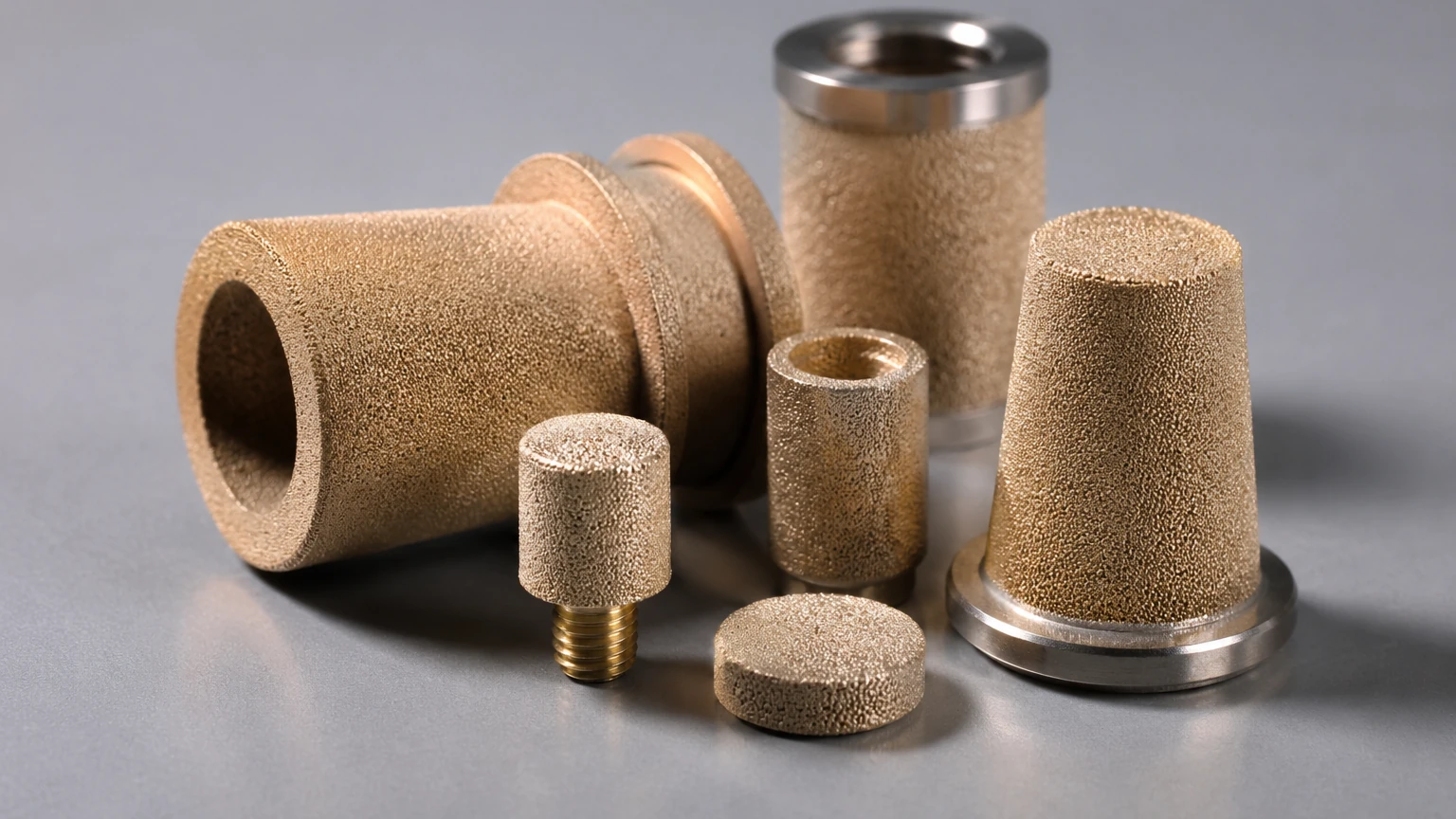
The production of a sinterbronzefilter sfi b begins with the selection of high-quality spherical bronze powder. This powder is typically an alloy of copper and tin. The manufacturing process involves gravity-filling a mold with the powder and then subjecting it to a sintering furnace. During sintering, the temperature is raised to a point just below the alloy's melting point. This causes the individual powder particles to fuse at their contact points through a process of molecular diffusion.
The resulting structure is a coherent metal component that retains the interstitial spaces between the original spheres. These spaces form the pore network. Because the powder particles are spherical and carefully graded by size, the resulting pores are highly uniform. This uniformity is what allows for precise micron ratings, ranging from as small as 5 microns to over 100 microns.
One of the primary advantages of this material is its self-supporting nature. Unlike paper or fabric filters, a sintered bronze element does not require an internal cage or external support structure to withstand pressure differentials. This makes it an ideal choice for compact pneumatic components, such as silencers, breather vents, and pressure regulators.
Technical Specifications and the Sfi B Designation
The "Sfi B" designation typically refers to a specific configuration or series within the broader landscape of industrial sintered components. In many engineering contexts, this nomenclature identifies the filter's geometry, thread type, and filtration grade. While specific manufacturers may have slight variations in their Sfi B catalogs, the series generally adheres to standardized industrial dimensions to ensure compatibility with pneumatic and hydraulic fittings.
Key technical parameters for these filters include:
* Filtration Grade (Micron Rating): This defines the size of the smallest particle the filter is designed to retain. For Sfi B components, common grades include 10, 20, 40, and 70 microns.
* Permeability: This measures how easily a fluid (liquid or gas) can pass through the filter. Higher permeability results in a lower pressure drop across the element.
* Maximum Operating Temperature: Sintered bronze generally maintains its structural integrity up to approximately 200°C (392°F). Beyond this point, the mechanical properties of the bronze alloy may begin to degrade.
* Chemical Compatibility: Bronze is highly resistant to atmospheric corrosion and is suitable for use with many oils, fuels, and neutral gases. However, it is susceptible to corrosion from strong acids, ammonia, and certain sulfur compounds.
Material Comparison: Sintered Bronze vs. Stainless Steel
When evaluating a sinterbronzefilter sfi b, engineers often compare it against stainless steel filtration solutions. While bronze is cost-effective and excellent for general-purpose pneumatic applications, stainless steel offers distinct advantages in more aggressive environments.
Corrosion Resistance
Stainless steel (particularly 316L grade) provides superior resistance to oxidation and a wider range of chemical agents. In food and beverage or pharmaceutical applications, stainless steel is often the mandatory choice due to its non-reactive nature and ease of sterilization. Bronze, while durable, can develop a patina or react with certain process fluids, which may be unacceptable in high-purity environments.
Temperature Thresholds
If an application involves temperatures exceeding 200°C, stainless steel is the preferred material. Sintered stainless steel components can often operate in environments up to 450°C or higher, depending on the specific alloy and atmospheric conditions. This makes stainless steel the standard for steam filtration and high-temperature exhaust gas treatment.
Mechanical Strength and Durability
Both materials offer high collapse pressure resistance. However, stainless steel generally exhibits higher tensile strength and better resistance to mechanical impact. In high-pressure hydraulic systems where pressure spikes are common, the added robustness of a stainless steel filter cartridge may justify the higher initial investment.
For organizations seeking the highest level of durability and precision, reviewing specialized options is recommended. You can Review product options and application support on the Kaifil Main Page to determine if a custom stainless steel solution or a standard bronze component best suits your technical requirements.
Engineering Criteria for Selecting Sinterbronzefilter Sfi B
Selecting the correct filter involves more than just matching a thread size. Engineers must calculate the balance between filtration efficiency and system energy consumption. A filter that is too fine will provide excellent protection but will cause a significant pressure drop, forcing pumps or compressors to work harder and increasing operational costs.
Determining the Micron Rating
The micron rating should be chosen based on the sensitivity of the downstream components. For example, a standard pneumatic cylinder may only require a 40-micron filter to prevent large debris from damaging seals. In contrast, a high-precision pneumatic logic valve might require a 10-micron or 5-micron filter to prevent clogging of small orifices.
Flow Velocity and Pressure Drop
As fluid passes through the sinterbronzefilter sfi b, it encounters resistance. This resistance is expressed as a pressure drop (ΔP). The pressure drop is a function of the fluid's viscosity, the flow velocity, and the filter's permeability. It is standard engineering practice to size the filter so that the initial pressure drop does not exceed 1-2% of the total system pressure. If the ΔP is too high at the start, the filter's service life will be significantly shortened as it accumulates contaminants.
Housing and Installation
The Sfi B series is often designed for direct installation into ports. Proper installation requires ensuring that the threads are compatible (e.g., BSP, NPT, or Metric) and that the seal is airtight. Because sintered bronze is a porous metal, it should be handled with care to avoid crushing the pore structure, which would permanently alter its filtration characteristics.
Performance Evaluation: Flow Rate and Pressure Drop
To accurately evaluate the performance of a sinterbronzefilter sfi b, engineers utilize flow curves provided by the manufacturer. These curves plot the flow rate (typically in liters per minute for air or gallons per minute for liquids) against the pressure drop.
In pneumatic systems, the Sfi B filter often serves a dual purpose as a silencer. As compressed air exhausts through the porous bronze, the turbulent air is broken into thousands of small streams. This diffusion significantly reduces the decibel level of the exhaust, helping facilities meet OSHA noise regulation standards. However, the muffling effect must be balanced against the backpressure. If the filter becomes clogged, the backpressure can interfere with the cycle time of pneumatic actuators, leading to production delays.
In liquid applications, the depth filtration mechanism of the sintered bronze allows it to hold a significant volume of particulate matter before the pressure drop reaches the terminal limit. This "dirt-holding capacity" is a key metric for determining the total cost of ownership, as it dictates how often the filter must be cleaned or replaced.
Maintenance, Cleaning, and Service Life Considerations
One of the primary benefits of metal filters, including the sinterbronzefilter sfi b, is that they are often cleanable and reusable. Unlike disposable paper or polymer cartridges, sintered bronze can be restored to near-original performance through several cleaning methods:
1. Ultrasonic Cleaning: This is the most effective method. The filter is submerged in a cleaning solvent, and high-frequency sound waves create cavitation bubbles that dislodge particles from deep within the pore structure.
2. Backflushing: Directing a high-pressure flow of clean fluid or gas in the opposite direction of the normal flow can remove surface-level contaminants.
3. Chemical Cleaning: Soaking the filter in a compatible solvent can dissolve accumulated oils or resins. It is vital to ensure the chemical agent does not react with the bronze alloy.
Despite their cleanability, these filters have a finite service life. Repeated cleaning cycles can eventually lead to "pore blinding," where sub-micron particles become permanently lodged in the structure. Furthermore, if the filter is used in a corrosive environment, the thinning of the bronze bridges between the sintered spheres can weaken the component, eventually leading to structural failure. Regular inspection schedules should be established based on the criticality of the application.
Common Risks and Procurement Hazards
When sourcing sinterbronzefilter sfi b components, purchasing teams should be aware of several common risks that can impact performance:
* Inconsistent Pore Distribution: Lower-quality sintered products may have "thin spots" where the powder was not evenly distributed in the mold. This creates paths of least resistance that allow oversized particles to pass through.
* Material Impurities: The use of recycled or low-grade bronze powder can introduce impurities that accelerate corrosion or lead to premature mechanical failure.
* Incorrect Micron Labeling: Some suppliers may label filters based on "nominal" ratings rather than "absolute" ratings. An absolute rating guarantees that 99.9% of particles above the specified size will be captured, whereas a nominal rating is much less precise.
To mitigate these risks, it is essential to confirm the manufacturer’s quality control processes and material certifications. For critical industrial applications where failure is not an option, many engineers pivot toward custom-engineered stainless steel solutions that offer higher traceability and tighter tolerances.
Sourcing Custom Industrial Filtration Solutions
While the sinterbronzefilter sfi b is a versatile and cost-effective component for many standard industrial tasks, complex or high-stakes environments often require a more tailored approach. Customization allows for the optimization of alloy selection, geometry, and filtration efficiency to meet the exact demands of a specific process.
Manufacturers like Kaifil specialize in these types of precision metal filtration components. By focusing on stainless steel and other high-performance alloys, they provide solutions that bridge the gap between standard off-the-shelf parts and high-end engineering requirements. Whether you are dealing with extreme temperatures, corrosive chemicals, or the need for ultra-precise filtration accuracy, selecting the right partner is the first step toward system optimization.
Before finalizing a purchase or design specification, technical teams should confirm the following:
* The exact fluid properties (viscosity, temperature, and chemical composition).
* The required cleanliness level of the downstream system.
* The physical space constraints for the filter assembly.
* The expected maintenance interval and cleaning capabilities of the facility.
By carefully weighing these factors against the capabilities of the sinterbronzefilter sfi b, organizations can ensure they are implementing a filtration strategy that is both reliable and cost-effective. For more information on advanced metal filtration and to explore a wider range of custom industrial solutions, you may visit the Main Page to consult with engineering experts.
