


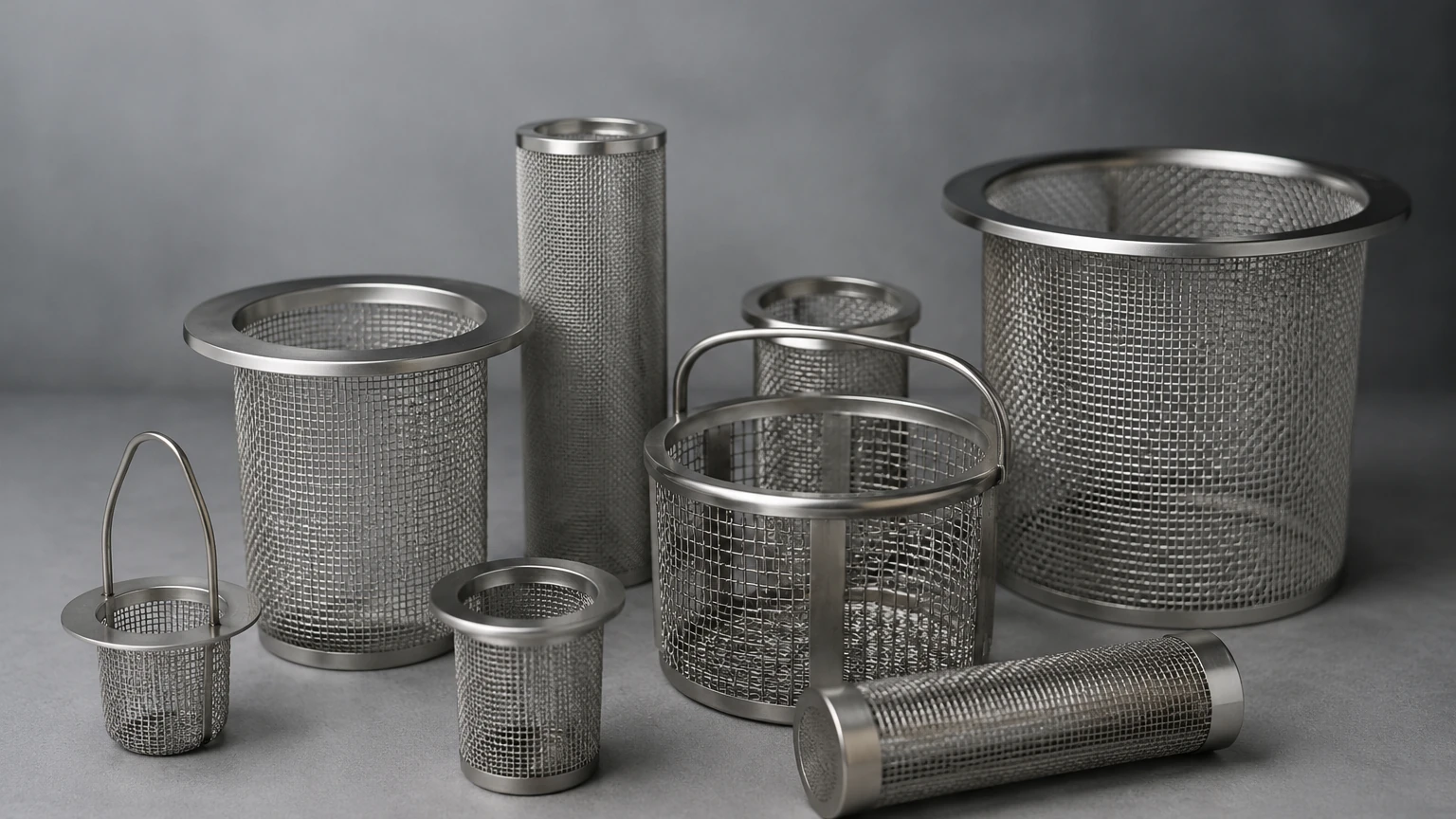
Pipeline Basket
In industrial fluid handling, the integrity of downstream equipment—such as pumps, valves, flow meters, and heat exchangers—is paramount to operational efficiency and safety. The pipeline basket, often referred to as a basket strainer or basket filter, serves as the primary mechanical barrier against solid contaminants. Unlike temporary strainers used during system start-up, a pipeline basket is a permanent component designed for high-capacity debris collection and ease of maintenance.
For engineers and procurement professionals, selecting the correct pipeline basket involves more than matching pipe diameters. It requires a deep understanding of fluid dynamics, material compatibility, and the specific filtration requirements of the process. As a specialist in custom stainless steel filtration, Kaifil provides precision-engineered components that ensure these systems operate within their designed parameters. For more information on our full range of industrial filtration solutions, visit our Main Page.
The Role of Pipeline Baskets in Industrial Fluid Systems
A pipeline basket is typically installed in horizontal piping runs where the fluid flow is directed into a removable basket-shaped element. The primary function is to remove relatively large particles that could cause mechanical wear or blockages in sensitive downstream components.
In chemical processing, food and beverage production, and pharmaceutical manufacturing, the cost of downtime caused by a failed pump or a clogged nozzle far exceeds the investment in a high-quality filtration system. The pipeline basket provides a larger surface area compared to Y-strainers, which results in a lower pressure drop and longer intervals between cleaning. This makes them ideal for high-flow applications or fluids with a higher concentration of solids.
Engineering Specifications and Material Selection
The performance and longevity of a pipeline basket are heavily dependent on the materials used in its construction. Stainless steel is the industry standard due to its mechanical strength and resistance to corrosion.
Stainless Steel Grades
* Grade 304: Suitable for general industrial applications, water treatment, and mildly corrosive environments. It offers excellent durability and cost-effectiveness.
* Grade 316/316L: Preferred for pharmaceutical, food and beverage, and chemical applications. The addition of molybdenum enhances resistance to pitting and crevice corrosion, particularly in chloride-rich environments. 316L (low carbon) is specifically chosen when welding is required to prevent carbide precipitation.
Structural Reinforcement
In high-pressure or high-viscosity applications, the basket element must withstand significant differential pressure without collapsing. Engineering teams often specify reinforced baskets that utilize a perforated metal backup tube or a heavy-duty wire mesh cage. This structural integrity ensures that the filtration media remains intact even when the basket is heavily loaded with debris.
Understanding Filtration Efficiency and Mesh Sizing
One of the most critical decisions in specifying a pipeline basket is determining the correct mesh size or micron rating. If the mesh is too coarse, harmful particles will pass through; if it is too fine, the basket will clog prematurely, leading to frequent maintenance and potential system shutdowns.
Mesh Count vs. Micron Rating
* Mesh Count: Refers to the number of openings per linear inch. A higher mesh count indicates finer filtration.
* Micron Rating: Defines the size of the smallest particle the filter is designed to retain.
Engineers must balance the "Open Area Ratio" (OAR). The OAR is the relationship between the total area of the basket's openings and the cross-sectional area of the inlet pipe. A high-quality pipeline basket typically offers an OAR of at least 6:1. This ratio ensures that even as the basket begins to fill with solids, the pressure drop remains within acceptable limits, preventing cavitation in downstream pumps.
Design Configurations: Simplex vs. Duplex Systems
The choice between a simplex and a duplex pipeline basket depends entirely on the requirement for continuous operation.
Simplex Pipeline Baskets
Simplex designs are used in batch processes or systems where the flow can be safely interrupted for cleaning. These units consist of a single chamber and basket. Maintenance requires the system to be depressurized and the flow stopped before the basket can be removed.
Duplex Pipeline Baskets
In critical applications where flow cannot be stopped—such as cooling water for power plants or continuous chemical production—a duplex system is required. A duplex pipeline basket consists of two separate chambers connected by a diversion valve (often a plug or ball valve). When one basket becomes clogged, the operator can switch the flow to the clean chamber without interrupting the process. The dirty basket can then be cleaned and prepared for the next cycle.
Operational Considerations and Pressure Drop Management
The efficiency of a pipeline basket is monitored through differential pressure ($ΔP$). This is the difference in pressure between the inlet and the outlet of the strainer.
Calculating Delta P
Initial pressure drop is a function of the fluid's viscosity, specific gravity, and flow rate, as well as the open area of the basket. As the basket collects debris, the effective open area decreases, and the $ΔP$ increases. Engineers typically set a "clean" pressure drop target (e.g., 2 psi) and a "dirty" pressure drop limit (e.g., 10 psi) at which point the basket must be cleaned.
Sealing and Gaskets
The integrity of the basket-to-body seal is vital. If the seal fails, fluid will bypass the basket, allowing contaminants to move downstream. Common gasket materials include EPDM for water, Viton for chemicals and high temperatures, and PTFE for aggressive solvents. Selecting the right seal material is as important as selecting the metal grade for the basket itself.
Maintenance and Risk Mitigation
Neglecting the maintenance of a pipeline basket can lead to catastrophic system failures. If the differential pressure exceeds the structural limit of the basket, the element may burst, releasing all collected debris and fragments of the basket itself into the downstream equipment.
Cleaning Procedures
Most pipeline baskets are designed for manual cleaning. The process involves:
1. Isolating the strainer (or switching chambers in a duplex unit).
2. Venting the pressure and draining the fluid.
3. Removing the cover and extracting the basket.
4. Cleaning the basket via high-pressure air, water, or ultrasonic cleaning, depending on the nature of the contaminants.
For applications involving hazardous fluids, automated blow-down systems or self-cleaning filters may be more appropriate to minimize operator exposure.
Customization and OEM Solutions for Specialized Applications
Standard pipeline baskets do not always meet the rigorous demands of specialized industrial processes. Customization allows engineers to tailor the filtration solution to the specific nuances of their application. At Kaifil, we specialize in manufacturing custom wire mesh filters and precision metal components that fit seamlessly into existing pipeline infrastructures.
Tailored Engineering
Customization options include:
* Unique Dimensions: Designing baskets for non-standard housing sizes or specific height restrictions.
* Multi-Layer Sintered Mesh: For applications requiring high precision and extreme structural strength, sintered mesh provides a rigid filtration media that does not migrate.
* Magnetic Inserts: Adding magnetic rods to the basket to capture fine ferrous particles that might otherwise pass through the mesh.
* Specialized Coatings: Applying PTFE or other coatings to prevent sticky substances from adhering to the basket surface.
By working closely with an experienced manufacturer, purchasing teams can ensure that their pipeline basket is optimized for the total cost of ownership, balancing initial acquisition costs with long-term durability and ease of maintenance. For technical support and product inquiries, please refer to our Main Page.
Conclusion: Selecting the Right Partner
A pipeline basket is a critical investment in the longevity of industrial infrastructure. The selection process should be guided by technical data, including flow rates, particle size distribution, and chemical compatibility. By prioritizing high-quality stainless steel construction and precise engineering, facilities can reduce maintenance overhead and prevent expensive equipment failures.
Whether you are designing a new system or looking to optimize an existing process, understanding the nuances of pipeline basket design is essential for achieving reliable, long-term filtration performance. Kaifil remains committed to providing the technical expertise and manufacturing quality required to meet these demanding industrial standards.
