


Pool Filter Sizes
In industrial and commercial water treatment, selecting the correct filtration dimensions is a critical engineering decision that impacts system longevity, energy consumption, and water quality. While the term "pool filter sizes" is often associated with residential maintenance, the underlying principles of hydraulic flow, surface area, and particulate loading are fundamental to large-scale industrial filtration. For engineers and facility managers, understanding the relationship between filter capacity and system requirements is essential for optimizing performance and minimizing the total cost of ownership.
At Kaifil, we specialize in high-performance stainless steel filtration solutions that provide superior durability compared to standard plastic or fiberglass alternatives. When evaluating filter dimensions for demanding applications, technical professionals must look beyond simple volume measurements and focus on the effective filtration area and the material's structural integrity. For a comprehensive overview of our custom capabilities, you can visit our Main Page to explore our engineering resources.
The Engineering Fundamentals of Pool Filter Sizes
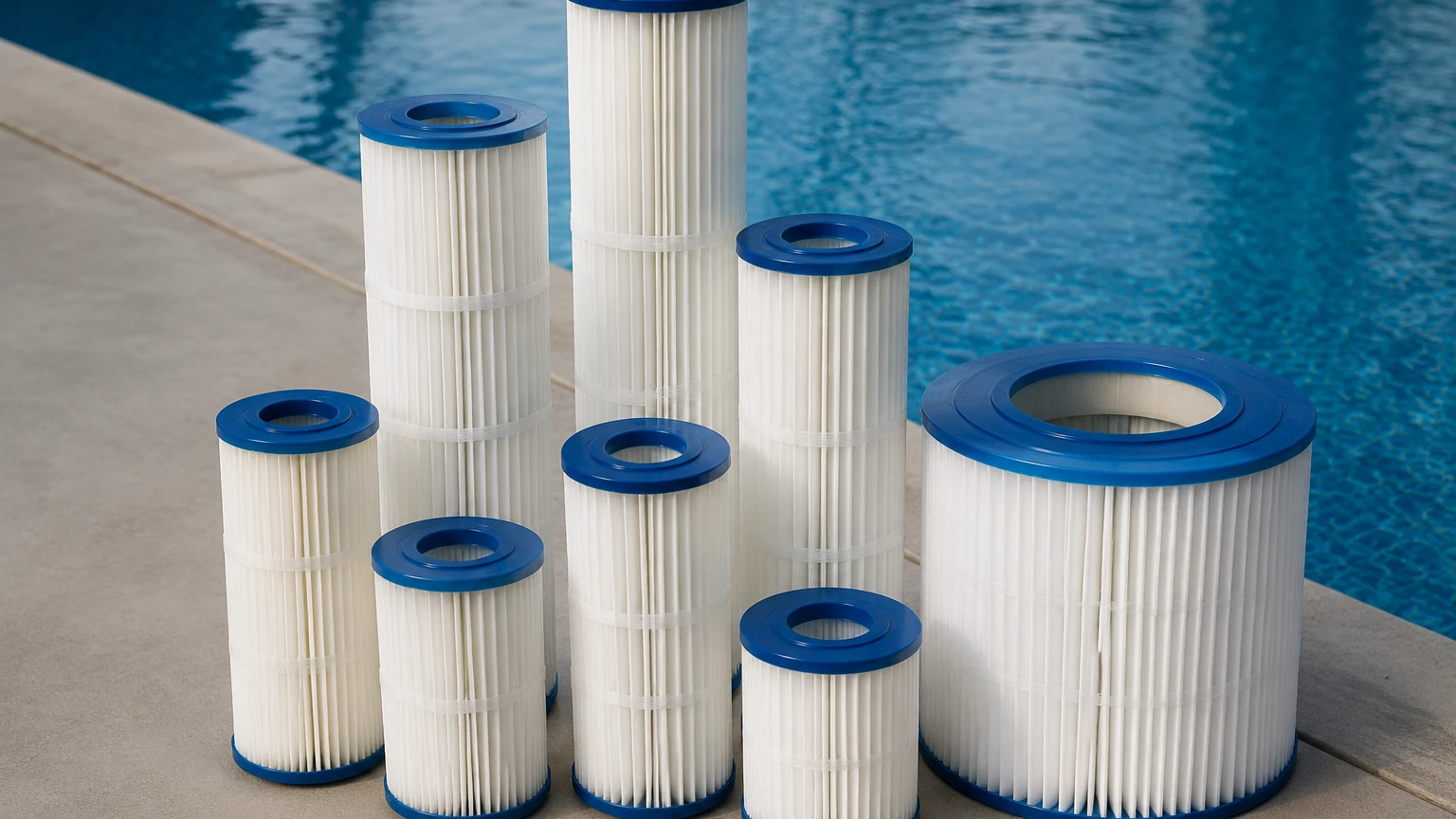
When discussing pool filter sizes, the most important metric is the effective filtration area, typically measured in square feet (sq. ft.). This area dictates how much water can pass through the medium at a given time without exceeding the design velocity. In industrial contexts, this is often referred to as the "flux rate."
There are three primary types of filtration systems, each with different sizing standards:
1. Cartridge Filters: These offer the largest surface area relative to their physical footprint. Because the media is often pleated, a compact housing can contain hundreds of square feet of filtration material. Stainless steel cartridge filters are particularly valued in industrial settings for their ability to withstand high temperatures and corrosive environments.
2. Sand Filters: These rely on depth filtration. Sizing is based on the diameter of the tank, which determines the surface area of the sand bed. The flow rate is generally lower per square foot compared to cartridge systems.
3. Diatomaceous Earth (D.E.) Filters: These provide the highest level of clarity but require precise sizing to ensure the D.E. cake remains adhered to the internal grids or elements.
For industrial applications, the choice often leans toward stainless steel mesh or pleated cartridges due to their precise micron ratings and ease of cleaning. When determining the appropriate pool filter sizes for a commercial facility, engineers must calculate the turnover rate—the time required to circulate the entire volume of the pool through the filtration system.
Calculating Required Filtration Area
To select the correct equipment, a systematic calculation is required. The process involves determining the required flow rate and then applying the design filtration rate specific to the media being used.
Step 1: Determine the Flow Rate (GPM)
The flow rate is calculated based on the total volume of the pool and the required turnover time. In many commercial jurisdictions, the turnover time is mandated by health codes (e.g., 6 hours for public pools).
Formula:
`Flow Rate (GPM) = Total Volume (Gallons) / (Turnover Time (Hours) x 60)`
For example, a 100,000-gallon commercial pool with a 6-hour turnover requirement requires a flow rate of approximately 277 GPM.
Step 2: Apply the Design Filtration Rate
Each filter type has a maximum recommended flow rate per square foot of media. For cartridge filters, this is typically between 0.375 and 0.5 GPM/sq. ft. for residential use, but in industrial applications using stainless steel mesh, this can be adjusted based on the particulate load and the desired pressure drop.
Formula:
`Required Filter Area (sq. ft.) = Flow Rate (GPM) / Design Filtration Rate`
Using the 277 GPM example, a cartridge system with a design rate of 0.375 GPM/sq. ft. would require approximately 738 square feet of filtration area. This calculation highlights why choosing the right pool filter sizes is vital; under-sizing leads to excessive pressure and frequent maintenance.
Material Selection and Structural Integrity
The material of the filter element significantly influences the effective pool filter sizes needed for a project. While synthetic fibers and plastics are common, they are prone to deformation under high differential pressure. In contrast, stainless steel filters manufactured by Kaifil offer several technical advantages:
* Pressure Resistance: Stainless steel 304 and 316L can handle significantly higher operating pressures without the risk of media migration or structural collapse.
* Precision Mesh: Custom wire mesh allows for exact micron ratings, ensuring that the filter size is optimized for the specific particulate size found in the process water.
* Thermal Stability: In industrial heat recovery or high-temperature water treatment, metal filters maintain their dimensions and filtration efficiency where plastics would fail.
By utilizing pleated stainless steel designs, engineers can achieve a high surface area within a small physical envelope. This is particularly beneficial in mechanical rooms where space is at a premium but high-capacity pool filter sizes are required to meet turnover targets.
The Impact of Micron Ratings on Sizing
Micron rating and filter size are inversely related when considering the lifecycle of the filter. A "tighter" filter (lower micron rating) will capture smaller particles but will also clog faster, leading to a rapid increase in differential pressure (ΔP).
When engineers specify pool filter sizes, they must balance the desired water clarity with the cleaning interval. If a 10-micron filter is selected for a high-load environment, the total surface area should be increased (over-sized) to compensate for the faster accumulation of debris. This prevents the system from reaching its terminal pressure drop too quickly, which would otherwise trigger frequent backwashing or manual cleaning cycles.
Common Risks of Improperly Sized Filtration Systems
Selecting incorrect pool filter sizes—whether too small or unnecessarily large—creates operational inefficiencies.
Risks of Under-sizing
* Shortened Pump Life: A filter that is too small creates high backpressure, forcing the pump to work harder and increasing energy consumption.
* Poor Water Quality: High-velocity flow through an undersized filter can cause "channeling," where contaminants are forced through the media rather than being captured.
* Frequent Maintenance: Small filters reach their dirt-holding capacity quickly, requiring constant intervention from maintenance staff.
Risks of Over-sizing
* Inadequate Backwashing: In sand or D.E. systems, if the filter is too large for the pump's backwash flow rate, the media will not be properly lifted and cleaned, leading to calcification or "mud-balling."
* Capital Waste: Unnecessarily large pool filter sizes increase the initial equipment cost and the footprint of the installation without providing a proportional benefit in water quality.
Customization and OEM Solutions
For many industrial applications, off-the-shelf pool filter sizes do not meet the specific constraints of the project. This is where custom manufacturing becomes essential. At Kaifil, we work with engineers to design filter cartridges and components that fit existing housings while optimizing the internal geometry for maximum flow.
Customization options include:
* Variable Pleat Density: Adjusting the number of pleats to maximize surface area for specific fluid viscosities.
* Reinforced Cores: For high-pressure applications where standard cores might buckle.
* End Cap Configurations: Ensuring compatibility with various industrial housing standards (e.g., Code 7, 222, 226).
By focusing on the specific needs of the application, we help purchasing teams identify the most cost-effective pool filter sizes that provide long-term reliability. Our expertise in stainless steel fabrication ensures that even in the most demanding chemical or thermal environments, the filtration system performs according to the design specifications.
Maintenance and Total Cost of Ownership
The total cost of ownership (TCO) of a filtration system is heavily influenced by the initial sizing. A properly sized system using durable stainless steel components may have a higher upfront cost but significantly lower operational expenses. Stainless steel filters are cleanable and reusable, eliminating the recurring cost of replacing disposable synthetic cartridges.
When evaluating pool filter sizes, engineers should also consider the ease of access for maintenance. A larger filter housing may require more overhead clearance for element removal, which must be factored into the facility's architectural plan. Providing adequate space for gauges and sensors is also critical for monitoring the differential pressure, which is the primary indicator of when a filter requires cleaning.
Conclusion
Selecting the right pool filter sizes is a multi-faceted engineering challenge that requires a deep understanding of hydraulics, material science, and the specific demands of the application. By calculating the required flow rates, choosing appropriate materials like stainless steel, and accounting for particulate loading, technical professionals can ensure efficient and reliable water treatment.
Kaifil remains committed to providing the technical expertise and high-quality components necessary for these critical systems. Whether you are designing a new industrial water treatment plant or upgrading an existing commercial facility, our team can assist in developing customized filtration solutions that exceed performance expectations. For more information on our products and engineering support, please visit our Main Page.
