


Pulse Jet Dust Collectors
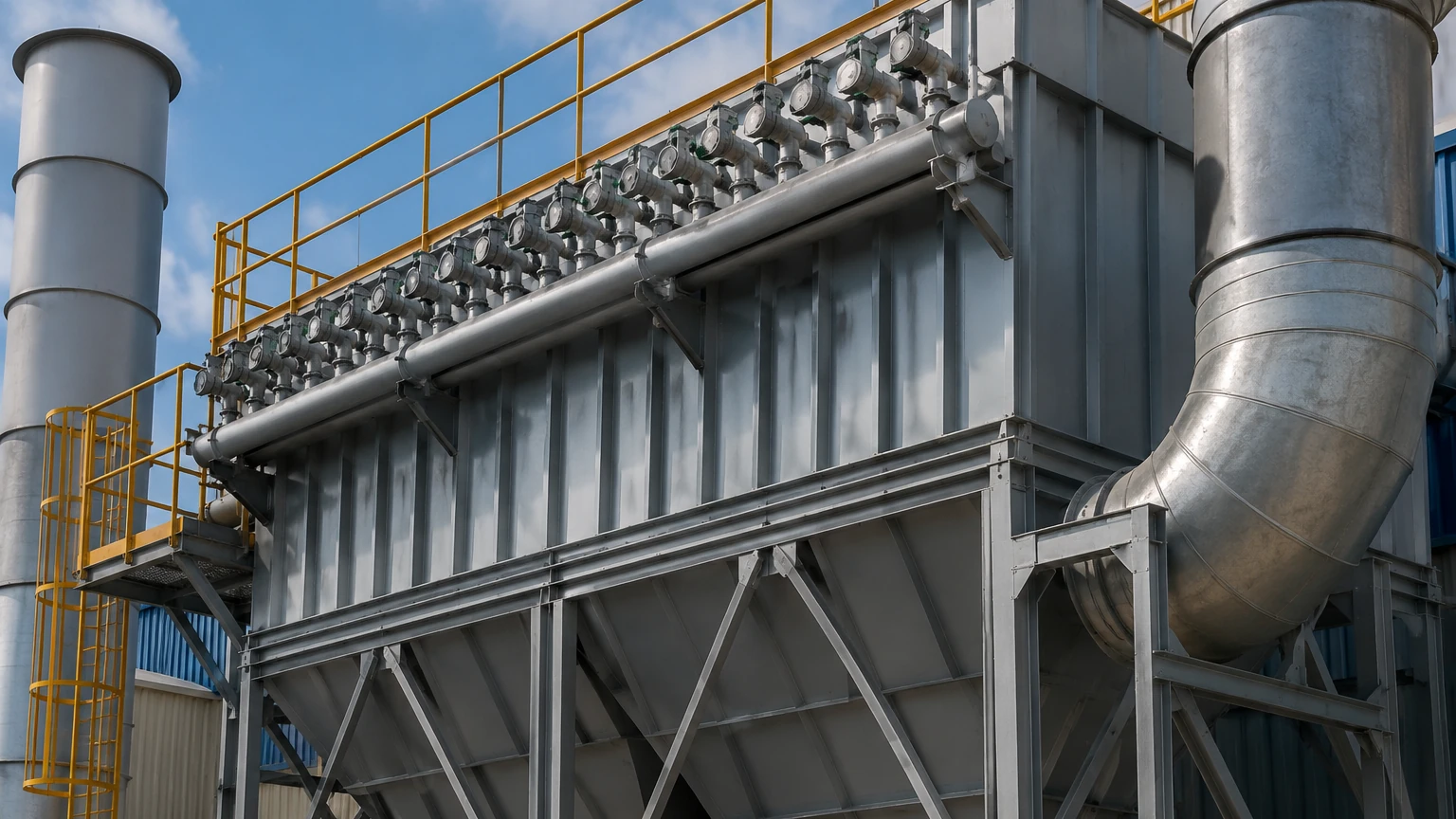
Pulse jet dust collectors represent a cornerstone technology in industrial air pollution control and process material recovery. As a self-cleaning dry filtration system, the pulse jet collector is designed to remove particulate matter from gas streams with high efficiency while maintaining continuous operation. Unlike older shaker-style or reverse-air systems, pulse jet technology utilizes high-pressure compressed air to dislodge the dust cake from the filter media, allowing for a constant pressure drop and higher air-to-cloth ratios.
For engineers and procurement professionals, selecting the right pulse jet dust collector—and more importantly, the correct internal filtration components—is critical for operational uptime and regulatory compliance. This guide examines the technical mechanics, engineering considerations, and the role of specialized filtration media in optimizing these systems for demanding industrial environments.
Understanding Pulse Jet Dust Collection Systems
The fundamental objective of a pulse jet dust collector is to separate solid particles from a gas stream, typically air. The process begins as dust-laden air enters the collector housing. Depending on the design, the air may pass through a baffle plate to drop out heavier particles before reaching the filter elements. The air then passes through the filter media (bags or cartridges), where the dust is captured on the exterior surface, and the cleaned air exits through the top plenum.
The defining characteristic of these systems is the cleaning mechanism. A pulse jet system uses a manifold and blowpipes positioned above the filter elements. Periodically, a diaphragm valve opens to release a short burst (pulse) of compressed air. This pulse creates a shockwave and a momentary reversal of airflow that flexes the filter media, causing the accumulated dust cake to fracture and fall into the collection hopper below.
The Mechanics of Pulse Jet Cleaning
The efficiency of the cleaning cycle depends on several variables that engineers must calibrate during the system design and commissioning phases.
Pulse Duration and Pressure
Typically, the pulse duration lasts between 0.1 and 0.2 seconds. The air pressure is generally maintained between 60 and 100 psi. If the pressure is too low, the dust cake will not be effectively dislodged, leading to a rapid rise in differential pressure. Conversely, excessive pressure can cause premature wear on the filter media or even drive fine particles deeper into the substrate, a phenomenon known as "bleeding" or "blinding."
The Venturi Effect
Many pulse jet dust collectors incorporate a venturi at the top of each filter element. The venturi is a tapered component that accelerates the compressed air pulse and induces additional clean air from the plenum into the filter. This maximizes the volume of air used for cleaning and ensures that the shockwave reaches the full length of the filter element.
Cleaning Control Strategies
There are two primary methods for triggering the cleaning cycle:
1. Continuous/Timed Cleaning: The system pulses at fixed intervals regardless of the dust load. While simple, this can lead to excessive compressed air consumption and unnecessary wear on the filters.
2. On-Demand Cleaning: The system monitors the differential pressure across the filters. Cleaning only begins when the pressure drop reaches a high setpoint and stops when it hits a low setpoint. This is the preferred method for modern industrial applications as it extends filter life and reduces energy costs.
Engineering Considerations for Filter Media Selection
While the housing and mechanical components of pulse jet dust collectors are robust, the performance of the system is ultimately dictated by the filter media. In standard applications, fabric bags made of polyester or aramid are common. However, in high-performance or specialized industrial processes, these materials often fail to meet the required durability or chemical resistance standards.
Temperature and Chemical Compatibility
In chemical processing, pharmaceutical manufacturing, and food production, the gas stream may contain corrosive vapors or operate at temperatures exceeding the limits of synthetic fibers. For example, standard polyester bags are typically limited to 135°C (275°F). For applications involving higher temperatures or aggressive solvents, engineers must turn to metal filtration solutions.
Stainless steel wire mesh and sintered metal filter cartridges provide a significant advantage in these environments. These components can withstand temperatures upwards of 500°C and offer superior resistance to oxidation and chemical degradation. When evaluating a system, engineers should confirm the pH levels and moisture content of the gas stream to determine if stainless steel 304, 316L, or more exotic alloys are required.
Filtration Efficiency and Micron Ratings
The required filtration efficiency is often dictated by environmental regulations (such as EPA standards) or the value of the material being recovered. Pulse jet collectors can achieve efficiencies of 99.9% or higher for sub-micron particles. The choice between a surface-loading medium (like a membrane-coated fabric or a fine wire mesh) and a depth-loading medium depends on the particle size distribution and the tendency of the dust to agglomerate.
Advantages of Stainless Steel Filtration in Pulse Jet Systems
In many demanding B2B sectors, the transition from traditional fabric bags to custom stainless steel filtration components is driven by the need for longevity and reliability. Kaifil specializes in manufacturing these high-performance components, which are often integrated into pulse jet systems where standard media fails.
Mechanical Strength and Durability
Pulse jet cleaning is inherently violent. The constant flexing of fabric bags leads to mechanical fatigue and eventual tearing. Stainless steel filter elements, particularly those using reinforced wire mesh or sintered structures, are rigid. They do not flex in the same manner as fabric; instead, the pulse clears the surface pores through high-velocity air displacement. This rigidity eliminates the risk of bag collapse and significantly extends the replacement cycle.
Cleanability and Reusability
Unlike synthetic bags, which are usually disposed of once blinded, stainless steel filter cartridges can often be cleaned and returned to service. In industries like food and beverage or pharmaceuticals, the ability to ultrasonically clean or chemically wash a filter element is a major factor in reducing the total cost of ownership. This aligns with the broader industrial trend toward sustainable and low-waste manufacturing processes.
Precision Engineering for OEM Integration
For manufacturers of pulse jet dust collectors, sourcing high-quality OEM components is essential. Customization options—such as specific flange designs, lengths, and diameter configurations—ensure that the filtration media fits perfectly within the collector's plenum. Professionals looking for reliable manufacturing partners can Review product options and application support to see how custom metal filters can be tailored to specific system geometries.
Critical Performance Metrics and Maintenance
To ensure the long-term success of pulse jet dust collectors, technical teams must monitor several key performance indicators (KPIs).
Differential Pressure (DP)
The DP is the most critical metric. A stable DP indicates that the cleaning system is effectively balancing the dust arrival rate with the cleaning rate. A sudden drop in DP may indicate a ruptured filter, while a steady increase suggests that the media is becoming blinded or the compressed air system is failing.
Air-to-Cloth Ratio (Filtering Velocity)
This is the ratio of the volume of air being filtered to the total surface area of the filter media. For pulse jet systems, this ratio typically ranges from 3:1 to 6:1. If the ratio is too high (too much air through too little media), the dust will be driven into the substrate, making it impossible to clean via the pulse jet mechanism.
Compressed Air Quality
The pulse jet system requires clean, dry compressed air. Moisture in the air lines can lead to the formation of "mud" on the filter surface, which hardens and prevents airflow. Similarly, oil contamination from the compressor can ruin synthetic filter media. Installing high-quality dryers and oil separators is a prerequisite for any pulse jet installation.
Common Risks and Mitigation Strategies
Even well-designed pulse jet dust collectors face operational risks. Identifying these early can prevent costly downtime.
1. Dew Point Excursion: If the gas stream temperature drops below its dew point, moisture will condense inside the collector. This causes dust to stick to the filters and can lead to corrosion of the housing. Insulation and trace heating are common engineering solutions for this risk.
2. Hopper Bridging: If the collected dust is not discharged from the hopper promptly, it can back up into the filter area. This not only chokes the airflow but can also damage the filter elements. Level sensors and rotary valves are essential for automated discharge.
3. Solenoid/Diaphragm Failure: The valves that control the air pulse are high-cycle components. Failure of a single valve means a row of filters is no longer being cleaned. Regular inspection of the electrical signals and the integrity of the diaphragms is a mandatory maintenance task.
Customization and Integration for Industrial Applications
Every industrial process has unique requirements. A pulse jet collector used in a woodshop faces different challenges than one used in a chemical reactor's vent system. Customization is often the bridge between a standard piece of equipment and a high-performance solution.
Engineers should confirm the following before finalizing a filter specification:
* Material Selection: Is the alloy compatible with the process gas?
* End Cap Design: Does the filter require a specific gasket or mechanical seal to prevent bypass?
* Support Structures: For long filters, are internal cages or external supports necessary to maintain alignment during the pulse cycle?
By focusing on these technical details, purchasing teams can move beyond simple price-per-unit comparisons and evaluate the total value of the filtration solution. High-quality components from a professional manufacturer like Kaifil ensure that the pulse jet system operates at peak efficiency with minimal intervention.
For more information on specialized stainless steel filtration components and how they integrate into industrial systems, visit the Kaifil Main Page.
Conclusion
Pulse jet dust collectors are essential for maintaining clean, safe, and efficient industrial environments. However, the system is only as effective as its cleaning mechanism and its filter media. By understanding the physics of the pulse jet cycle and selecting the appropriate materials—such as stainless steel wire mesh for extreme conditions—engineers can ensure their systems deliver reliable performance over a long service life. Whether for material recovery or emission control, the right combination of engineering and high-quality filtration components is the key to industrial operational excellence.
