


Water Well Screens
In the field of groundwater extraction and industrial water management, the selection of water well screens is a critical engineering decision that directly impacts the efficiency, longevity, and operational costs of a well system. As the primary interface between the aquifer and the pump, the screen must perform two conflicting tasks: it must prevent the ingress of sand and sediment while simultaneously allowing for the maximum possible flow of water with minimal resistance. For engineers and procurement professionals, understanding the technical nuances of screen design, material properties, and hydraulic performance is essential for optimizing well performance.
Kaifil, as a specialist in custom stainless steel filtration solutions, provides high-precision components designed to meet the rigorous demands of industrial water treatment and extraction. By focusing on the engineering principles behind filtration, this guide explores the technical considerations necessary for selecting the appropriate water well screens for diverse geological and industrial environments.
The Role of Screens in Groundwater Management
A water well screen is a filtering device used at the bottom of a well to support the borehole structure and allow groundwater to enter the well while keeping the surrounding formation material (sand, gravel, and silt) out. The efficiency of this component is measured by its ability to minimize "well loss"—the energy required to move water from the aquifer into the well casing.
In industrial applications, such as chemical processing or large-scale water treatment, the screen's performance determines the sustainability of the water source. A poorly designed screen can lead to sand pumping, which causes premature wear on pump impellers, clogs downstream filtration systems, and can eventually lead to the structural failure of the well itself. Therefore, the screen is not merely a pipe with holes; it is a precision-engineered filtration component.
Engineering Specifications: Slot Size and Open Area
The two most critical factors in screen design are slot size and the percentage of open area. These parameters are determined by the geological characteristics of the aquifer, typically identified through a sieve analysis of the formation samples.
Slot Size Selection
Slot sizes must be calculated based on the grain size distribution of the aquifer material or the artificial filter pack (gravel pack). If the slots are too large, the well will pump sand. If they are too small, the screen will experience excessive friction loss and may become prematurely clogged by fine particles or mineral encrustation. In a naturally developed well, the slot size is typically chosen to retain approximately 40% to 50% of the formation material. For gravel-packed wells, the slot size is usually designed to retain 90% or more of the filter pack material.
Maximizing Open Area
The "open area" refers to the total area of the openings in the screen relative to its total surface area. A high percentage of open area is desirable because it reduces the entrance velocity of the water. Lower entrance velocities minimize friction losses, which in turn reduces drawdown and energy consumption for the pump. Furthermore, low velocities (typically recommended at less than 0.1 feet per second or 0.03 meters per second) prevent the transport of sand and reduce the rate of corrosion and encrustation.
Structural Integrity and Mechanical Requirements
Water well screens are subject to significant mechanical stresses, including hydrostatic pressure, the weight of the casing string, and the lateral forces exerted by the surrounding earth. Engineers must evaluate the following mechanical properties during the selection process:
1. Collapse Strength: This is the ability of the screen to resist external pressure. As the well is pumped and the water level drops (drawdown), the external pressure increases. The screen must be designed to withstand the maximum expected pressure differential without deforming.
2. Tensile Strength: In deep wells, the screen must support the weight of the entire casing string below it during installation. The joints and the screen body must have sufficient tensile strength to prevent separation.
3. Column Strength: The screen must resist the compressive forces encountered during installation, particularly if it is being pushed into a pre-drilled hole or if the formation settles over time.
Comparing Screen Types: Wedge Wire vs. Alternative Designs
While several types of screens exist—including bridge slot, perforated pipe, and shutter screens—wedge wire (also known as V-wire) is widely considered the gold standard for industrial and high-capacity water wells.
Wedge Wire Screens
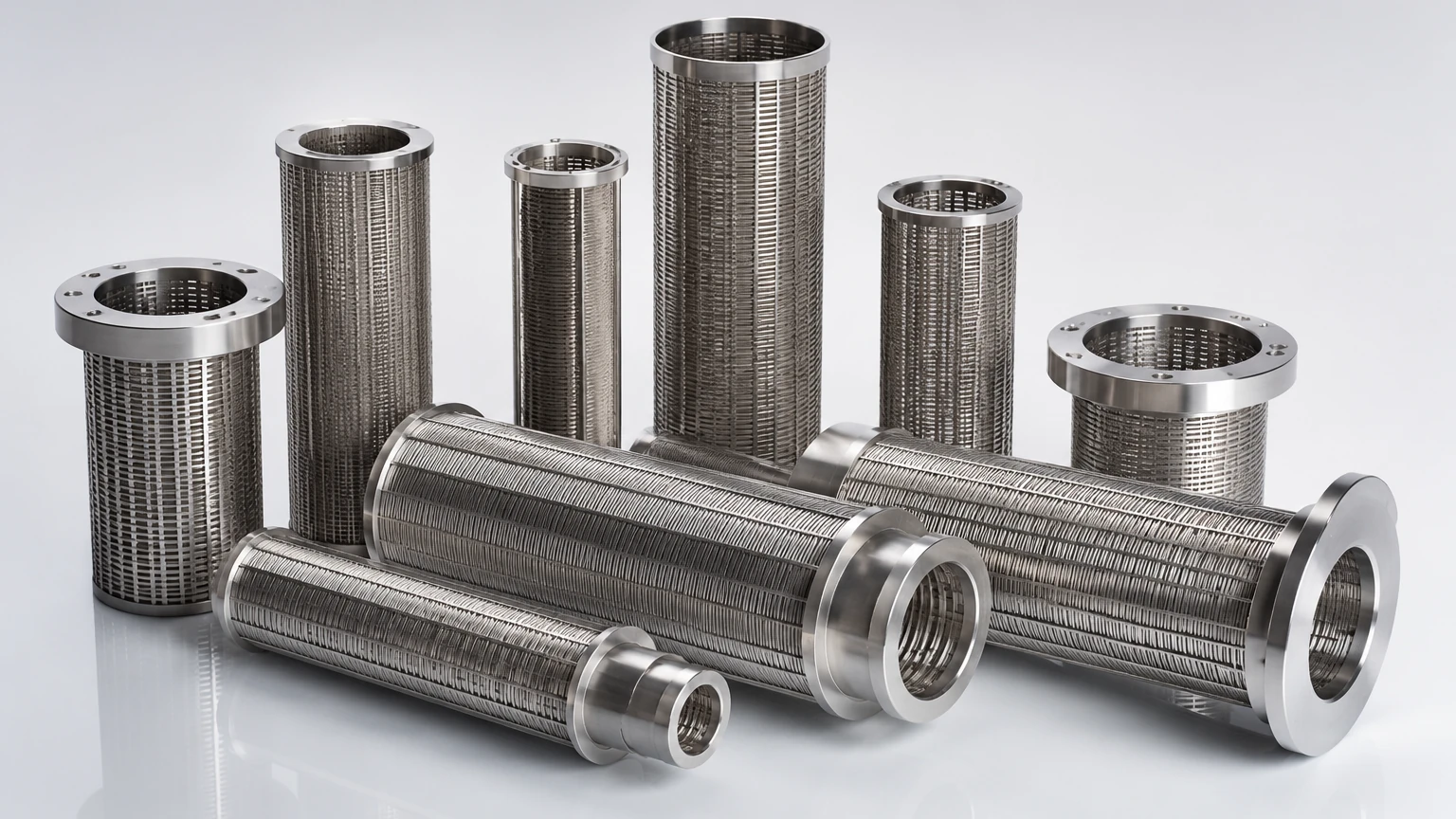
Wedge wire screens are manufactured by wrapping a triangular-shaped wire around a circular array of internal support rods. This design offers several technical advantages:
* Non-Clogging Geometry: The V-shaped profile of the wire creates an opening that widens inward. This means that any particle small enough to pass the outer edge of the slot will continue through the screen without becoming wedged.
* Continuous Slot Design: Unlike perforated pipes, wedge wire provides a continuous opening around the circumference of the screen, significantly increasing the total open area.
* Customization: The gap between the wires can be adjusted with micrometer precision during the manufacturing process to match specific aquifer requirements.
For engineers seeking specialized technical data or specific product configurations, visiting the Main Page provides access to Kaifil’s full range of custom metal filtration components and manufacturing capabilities.
Material Selection for Longevity and Chemical Compatibility
The chemical environment of the aquifer is a primary driver for material selection. While carbon steel may be sufficient for some temporary or low-budget applications, industrial standards increasingly favor stainless steel due to its superior durability and resistance to various forms of degradation.
Stainless Steel 304 and 316L
Stainless steel is the preferred material for water well screens because it resists corrosion from dissolved oxygen, carbon dioxide, and hydrogen sulfide.
* Type 304: Suitable for most freshwater applications where the chloride content is relatively low.
* Type 316L: Contains molybdenum, which provides enhanced resistance to pitting and crevice corrosion, making it the standard for brackish water, high-chloride environments, or wells where aggressive chemical cleaning (acidizing) is expected.
Using high-quality stainless steel ensures that the slot dimensions remain consistent over decades of service. In contrast, if a screen corrodes, the slots will widen, leading to sand ingress, or the screen may fail structurally, necessitating an expensive well replacement.
Performance Evaluation and Selection Methods
When selecting water well screens, technical professionals should follow a systematic evaluation process:
1. Hydraulic Analysis: Calculate the required flow rate and determine the necessary screen length and diameter to keep entrance velocities within the recommended limits.
2. Geological Alignment: Match the slot size to the sieve analysis results. If the formation is highly non-uniform, a gravel-packed design may be necessary to stabilize the aquifer.
3. Chemical Assessment: Test the groundwater for pH, total dissolved solids (TDS), and the presence of corrosive gases to determine whether 304, 316L, or more exotic alloys are required.
4. Installation Depth: Verify that the collapse strength of the chosen screen exceeds the hydrostatic pressure at the installation depth by a safe margin (typically a factor of 2.0).
Total Cost Considerations and Maintenance
The initial purchase price of a water well screen is only one component of the total cost of ownership. High-efficiency screens, such as those manufactured by Kaifil, contribute to long-term savings in several ways:
* Energy Efficiency: A higher open area reduces drawdown, meaning the pump does not have to work as hard to lift water to the surface. Over the life of a well, the savings in electricity costs often far exceed the initial cost of a premium screen.
* Reduced Pump Maintenance: By effectively excluding sand, high-quality screens protect the pump's internal components from abrasive wear, extending the interval between pump overhauls.
* Well Longevity: Durable materials and robust construction prevent well collapse and the need for premature decommissioning.
Maintenance and Rehabilitation
Over time, all well screens may experience some degree of encrustation due to mineral precipitation or biofouling. Stainless steel screens are particularly advantageous during rehabilitation because they can withstand aggressive mechanical brushing and chemical treatments (such as hydrochloric or sulfamic acid) that would destroy carbon steel or plastic alternatives.
Conclusion
Water well screens are a fundamental component of efficient groundwater extraction systems. For the industrial sector, the choice of screen involves a complex balance of hydraulic performance, mechanical strength, and chemical durability. By selecting high-precision, stainless steel wedge wire solutions, engineers can ensure that their well systems remain productive and cost-effective for their intended service life.
Kaifil’s expertise in custom filtration components allows for the development of tailored screening solutions that address the specific challenges of different aquifers and industrial processes. From material selection to precise slot manufacturing, the focus remains on delivering reliability in demanding environments. For more information on customized filtration designs and technical specifications, professionals are encouraged to review the resources available on the Kaifil Main Page.
