


Self Clean Filter
In modern industrial processing, the transition from batch operations to continuous production has necessitated advancements in filtration technology. Manual cleaning of filter elements often results in significant downtime, increased labor costs, and potential exposure of operators to hazardous materials. The self clean filter has emerged as a critical solution to these challenges, providing a method to maintain system flow and filtration efficiency without interrupting the process. For engineers and procurement teams, understanding the mechanical principles, material requirements, and selection criteria of these systems is essential for optimizing plant performance.
Understanding Self-Cleaning Filtration Technology
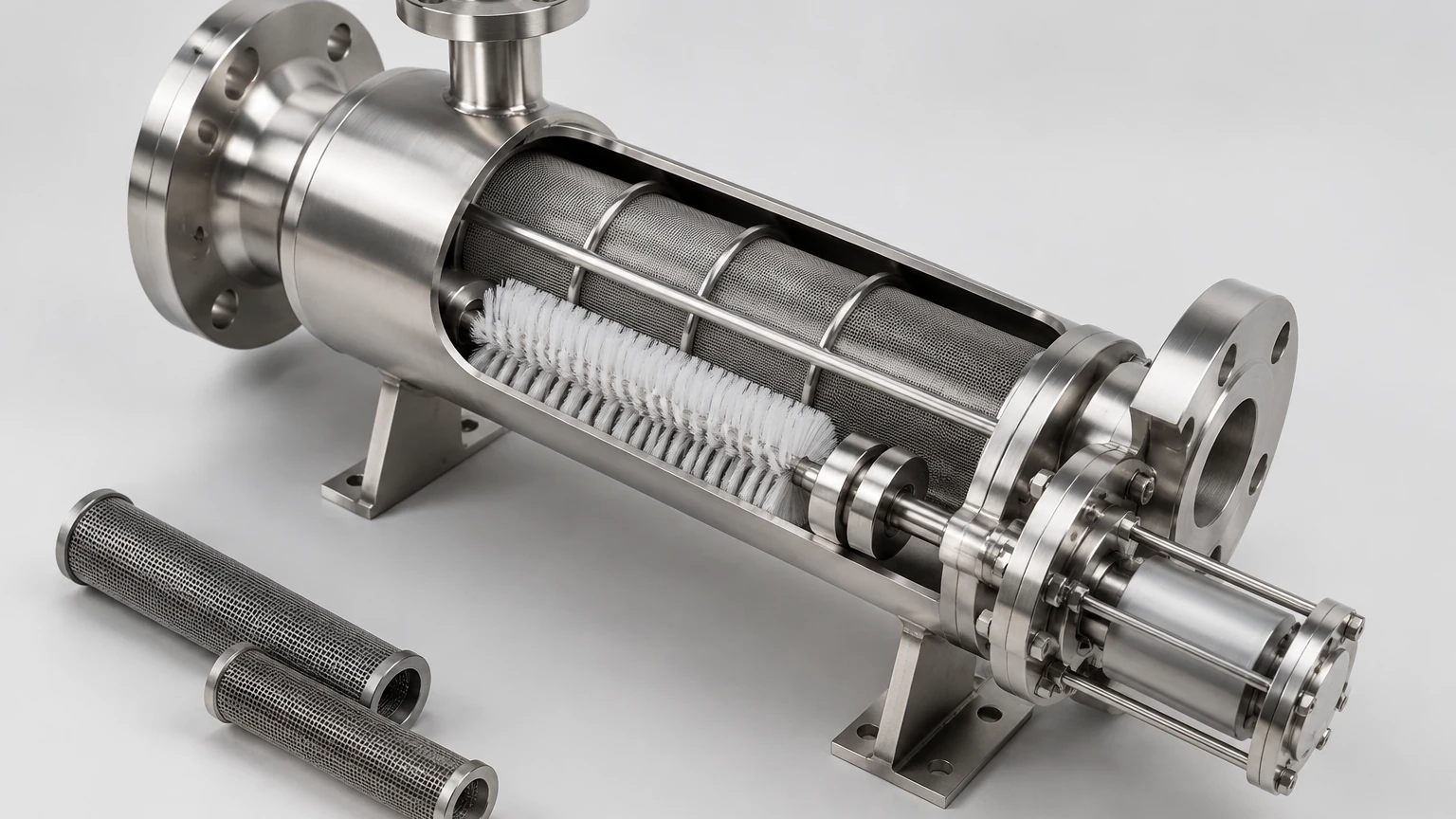
A self clean filter is an automated system designed to remove suspended solids from liquids while simultaneously cleaning the filter medium. Unlike traditional bag or cartridge filters that require manual replacement once they become clogged, a self-cleaning system utilizes a cleaning mechanism—such as scraping, backwashing, or suction—to clear the debris from the filter surface.
This technology is particularly vital in industries where fluid quality is paramount but the solids loading is high enough to make disposable media economically unfeasible. By integrating these systems, facilities can achieve a consistent differential pressure across the filter, ensuring that downstream equipment is protected and product quality remains uniform. The heart of these systems often relies on high-precision stainless steel components, which provide the structural integrity needed to withstand the mechanical stresses of the cleaning cycle.
Core Mechanisms of a Self Clean Filter
The effectiveness of a self-cleaning system depends largely on its cleaning mechanism. Depending on the nature of the contaminants and the viscosity of the fluid, different mechanical approaches are employed:
Mechanical Scraping Systems
In these systems, a scraper blade (made of metal or high-performance plastic) moves across the surface of the filter element. As the blade passes over the mesh or wedge wire, it physically removes the accumulated "filter cake." This debris then settles into a collection chamber at the bottom of the housing, where it can be purged through a blow-down valve. Mechanical scraping is highly effective for viscous fluids or sticky contaminants that would not easily be dislodged by fluid pressure alone.
Backwashing Systems
Backwashing involves reversing the flow of the filtrate through a portion of the filter medium. This reverse flow lifts the contaminants off the surface and flushes them out of the system through a dedicated waste line. Many modern backwash filters use a rotating arm or nozzle to clean small sections of the filter at a time, allowing the rest of the filter to continue its forward-flow operation. This ensures there is no interruption to the process flow.
Suction Scanning
Suction scanning is a variation of backwashing where a vacuum nozzle moves across the filter screen. The pressure differential between the internal fluid and the atmospheric pressure in the waste line creates a high-velocity suction effect at the nozzle tip, localized to a small area of the screen. This method is highly efficient in water treatment applications where the contaminants are non-cohesive.
Material Selection and Engineering Specifications
The durability of a self clean filter is dictated by the materials used in its construction, particularly the filter element itself. As a specialist in stainless steel filtration solutions, Kaifil emphasizes the use of high-grade alloys to ensure longevity and chemical compatibility.
1. Stainless Steel Grades: 304 and 316L stainless steel are the industry standards. 316L is preferred for applications involving corrosive chemicals, brine, or pharmaceutical-grade products due to its superior resistance to pitting and crevice corrosion.
2. Filter Media Types:
* Wedge Wire: Known for its "V" shaped profile, wedge wire is exceptionally strong and resistant to clogging. It is the preferred choice for scraping mechanisms because the flat surface of the wire provides a smooth path for the scraper blade.
* Sintered Wire Mesh: For finer filtration requirements (down to 1-5 microns), multi-layer sintered mesh provides a rigid and precise filtration surface that can withstand high differential pressures without deforming.
3. Filtration Accuracy: Engineers must specify the micron rating based on the smallest particle that needs to be removed. Over-specifying (choosing a micron rating that is too fine) can lead to excessive cleaning cycles and unnecessary wear on the system.
Key Evaluation Criteria for Engineers
When selecting a self clean filter for an industrial application, several technical parameters must be evaluated to ensure the system will perform as expected over its service life.
Flow Rate and Pressure Drop
The system must be sized to handle the maximum peak flow of the application. Engineers should look at the "clean pressure drop" and the "terminal pressure drop" (the point at which a cleaning cycle is triggered). A system that is undersized will clean too frequently, leading to premature wear of seals and moving parts.
Solids Loading and Particle Characteristics
The concentration of solids (measured in PPM or percentage by weight) determines how much waste the system will generate. Furthermore, the nature of the particles—whether they are hard, abrasive, soft, or fibrous—will dictate the type of cleaning mechanism required. For instance, abrasive sand might require hardened scraper blades, while fibrous organic matter might be better handled by a backwash system.
Maintenance and Consumables
While self-cleaning filters reduce the need for disposable media, they are not maintenance-free. Seals, gaskets, and scraper blades are wear items. Engineers should confirm the ease of access to these components. A well-designed system allows for the replacement of internal parts without removing the entire filter housing from the piping.
Common Operational Risks and Mitigation
Despite their automated nature, self-cleaning filters can face operational challenges if not correctly specified or maintained.
* Seal Failure: The dynamic seals that separate the clean side from the waste side are subject to friction. Using high-quality elastomers like Viton or PTFE, and ensuring the filter surface is polished, can mitigate this risk.
* Mesh Blinding: If the cleaning mechanism is not aggressive enough for the type of contaminant, a film can build up over time that the standard cleaning cycle cannot remove. This may require periodic chemical cleaning or manual intervention.
* Pressure Spikes: Rapid changes in system pressure can damage delicate wire mesh. Incorporating pressure relief valves or choosing a more robust wedge wire element can protect the integrity of the filter.
Customization and OEM Solutions
Many industrial applications have unique constraints, such as limited floor space, specific inlet/outlet orientations, or the need to integrate with existing SCADA (Supervisory Control and Data Acquisition) systems. Customization is often necessary to ensure the filter fits the process, rather than forcing the process to fit the filter.
Kaifil provides extensive OEM capabilities, allowing for the design and manufacture of precision metal filter components that meet exact engineering drawings. Whether the requirement is for a specific flange type, a reinforced filter cartridge for high-pressure hydraulics, or a custom-sized wedge wire screen for a proprietary self-cleaning housing, tailored solutions ensure that the filtration performance is optimized for the specific environment. For more information on available configurations and technical support, professionals are encouraged to visit the Main Page to review product options and application support.
Total Cost of Ownership (TCO) Considerations
While the initial capital expenditure for a self clean filter is higher than that of a manual filter housing, the Total Cost of Ownership is often significantly lower when evaluated over a three-to-five-year period. The primary cost savings include:
* Elimination of Disposable Media: No ongoing costs for filter bags or cartridges.
* Reduced Labor: Automated cleaning removes the need for manual intervention.
* Minimized Product Loss: Efficient cleaning cycles and concentrated waste streams ensure that more of the valuable fluid stays in the process.
* Energy Efficiency: Maintaining a low differential pressure reduces the load on system pumps, leading to lower electricity consumption.
Conclusion
The implementation of a self clean filter is a strategic move for any industrial facility aiming to improve efficiency and reduce operational overhead. By focusing on the mechanical suitability of the cleaning system, the quality of the stainless steel components, and the specific requirements of the fluid being processed, engineers can ensure a reliable filtration solution. As industrial demands continue to evolve, the partnership between plant engineers and experienced manufacturers like Kaifil remains essential in developing the high-performance filtration components required for the most demanding environments.
