


What Does a Coalescer Do in Filtration
In the realm of industrial separation and purification, the term "filtration" often brings to mind the removal of solid particulates from a liquid or gas stream. However, many industrial processes face a more complex challenge: the presence of finely dispersed liquid droplets within another immiscible liquid or a gas. This is where coalescing technology becomes essential. Understanding what does a coalescer do in filtration requires a deep dive into fluid dynamics, surface chemistry, and mechanical engineering.
Unlike standard particulate filters that rely on size exclusion to trap solids, a coalescer is designed to merge small droplets into larger ones, facilitating their removal through gravity or specialized drainage. This process is critical in protecting downstream equipment, ensuring product purity, and meeting environmental regulations across industries ranging from petrochemical processing to food and beverage production.
The Fundamental Principles of Coalescence
To answer the question of what does a coalescer do in filtration, one must first understand the physics of coalescence. In a typical emulsion or aerosol, the dispersed phase consists of microscopic droplets (often less than 1 micron in size) that are suspended in a continuous phase. Due to their small size and Brownian motion, these droplets may never settle on their own.
A coalescer functions through a three-stage mechanical process: interception, attachment, and coalescence.
1. Interception: As the contaminated fluid passes through the coalescing media—which is often a dense matrix of fibers or wire mesh—the small droplets come into contact with the media fibers. This is achieved through direct impaction or diffusion.
2. Attachment: Once a droplet hits a fiber, it must adhere to it. The surface properties of the media (hydrophilic vs. hydrophobic or oleophilic vs. oleophobic) play a vital role here. The media is engineered to attract the dispersed phase while allowing the continuous phase to pass through.
3. Coalescence: As more droplets are intercepted and attached, they migrate along the fibers and collide with one another. These collisions cause the small droplets to merge into larger globules. Once these globules reach a sufficient mass, the forces of gravity or the flow of the fluid overcome the surface tension holding them to the media, causing them to fall into a collection sump or rise to the top for removal.
Primary Functions: What Does a Coalescer Do in Filtration?
The primary role of a coalescer is the phase separation of immiscible fluids. In industrial environments, this translates into several critical operational benefits.
Removal of Water from Hydrocarbons
In the oil and gas industry, water is a common contaminant in fuels, lubricants, and process streams. If not removed, water can cause corrosion, promote microbial growth, and damage precision components like fuel injectors or turbines. A coalescer effectively strips water from diesel, jet fuel, or hydraulic oil, ensuring the fluid meets stringent ISO cleanliness standards.
Aerosol Removal from Gas Streams
In compressed air and gas systems, oil aerosols and moisture can compromise the quality of the final product or damage pneumatic tools. What does a coalescer do in filtration in this context? It acts as a high-efficiency mist eliminator, capturing sub-micron liquid particles that standard filters would miss. This is particularly important in the food and beverage industry, where oil-free air is a safety requirement.
Protection of Downstream Equipment
Sensitive equipment such as compressors, membranes, and catalysts are highly susceptible to liquid carryover. For instance, in a natural gas pipeline, liquid hydrocarbons can "slug" a compressor, leading to catastrophic mechanical failure. Coalescers serve as a protective barrier, removing these liquids before they can reach critical components.
Types of Coalescence: Liquid-Liquid vs. Gas-Liquid
The design and material of a coalescer depend heavily on the phases being separated. Engineers must distinguish between liquid-liquid and gas-liquid applications to select the correct media.
Liquid-Liquid Coalescers
These are used to separate two immiscible liquids, such as oil and water. They are frequently found in wastewater treatment plants, where they separate oil from water before discharge, or in chemical refineries to recover valuable solvents. The media in these systems is often multi-layered, utilizing different materials to handle varying droplet sizes and surface tensions. For those seeking high-quality components for these systems, reviewing the options on the Main Page of a specialized manufacturer like Kaifil can provide insights into the stainless steel structures required for durability in harsh chemical environments.
Gas-Liquid Coalescers
Also known as coalescing silencers or mist extractors, these units remove liquid droplets from a gas stream. They are essential in refrigeration cycles, vacuum pump exhausts, and natural gas processing. The challenge in gas-liquid coalescence is preventing "re-entrainment," where the high velocity of the gas picks up the coalesced droplets and carries them downstream again. Specialized internal baffles and drainage layers are used to mitigate this risk.
Engineering Considerations: Material Selection and Design
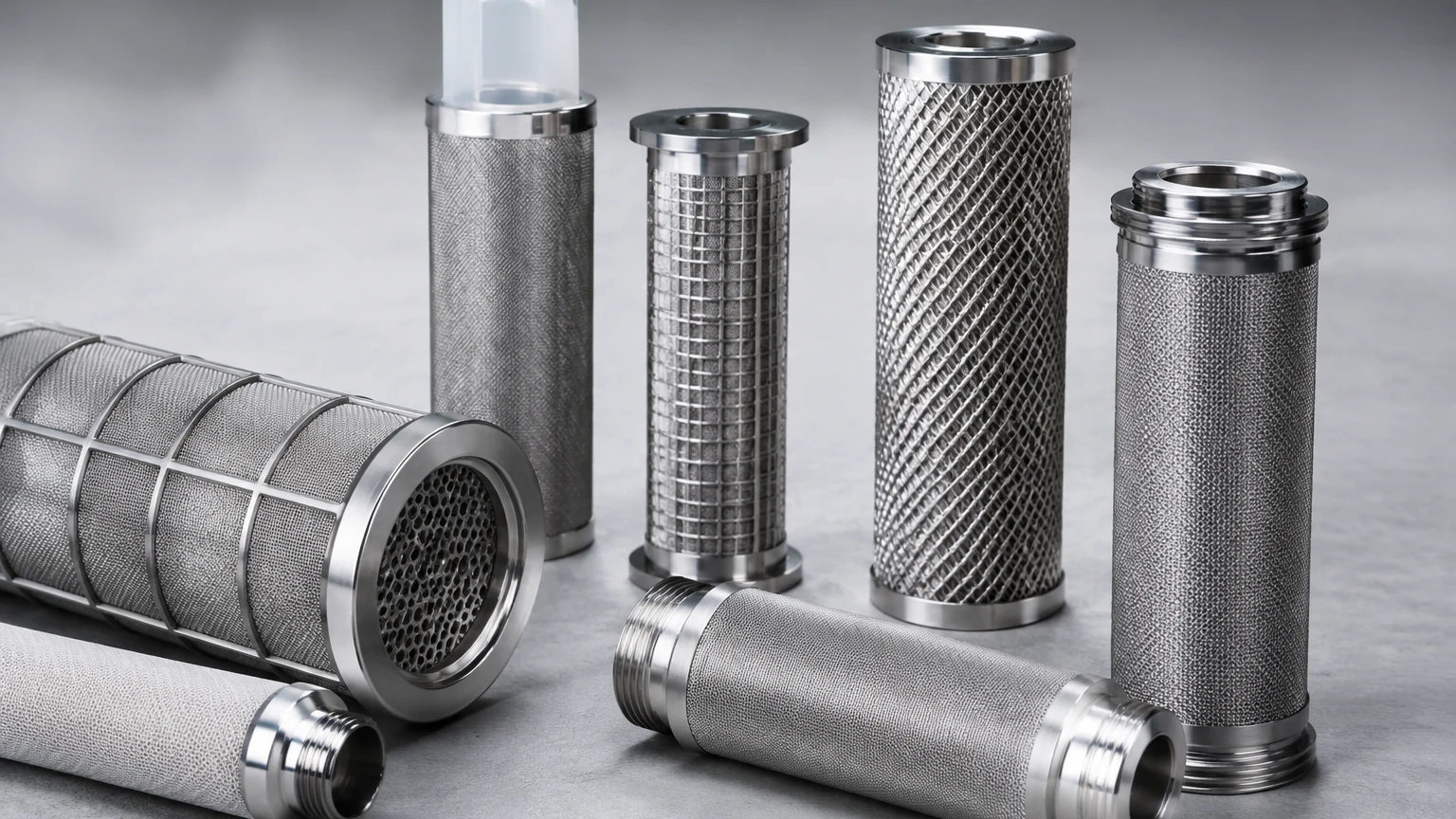
When asking what does a coalescer do in filtration, it is equally important to ask how it is built to withstand the application. The choice of media is the most critical engineering decision. Common materials include fiberglass, pleated paper, and synthetic polymers. However, for high-temperature, high-pressure, or corrosive environments, stainless steel wire mesh and sintered metal components are preferred.
Stainless Steel Media
Stainless steel provides several advantages in coalescing applications:
* Chemical Compatibility: It resists corrosion from acidic or alkaline process fluids.
* Structural Integrity: Unlike fiberglass, stainless steel mesh does not shed fibers into the fluid stream, which is vital for pharmaceutical and food-grade applications.
* Cleanability: Metal coalescer elements can often be cleaned and reused, reducing the total cost of ownership compared to disposable cartridges.
Kaifil specializes in the manufacturing of these precision metal components, ensuring that the structural support and the primary coalescing media can handle the rigors of industrial use. The engineering of the pore size and the weave pattern of the wire mesh is tailored to the specific surface tension of the liquids involved.
Evaluating Performance and Efficiency
To determine if a coalescer is performing its job correctly, engineers monitor several key metrics. The most common is the "Beta Ratio" for particulates, but for coalescing, the focus is on "separation efficiency" and "downstream ppm (parts per million)."
* Separation Efficiency: This is the percentage of the dispersed phase removed from the stream. High-performance coalescers can achieve efficiencies of 99.9% or higher.
* Differential Pressure (ΔP): As the coalescer captures liquids and any incidental solids, the resistance to flow increases. Monitoring the pressure drop across the element is essential for determining when maintenance is required. A sudden drop in ΔP might indicate a "channeling" effect where the fluid has bypassed the media, while a rapid increase suggests heavy particulate loading.
* Surface Tension and Viscosity: These physical properties of the fluid dictate how easily droplets will coalesce. Low surface tension fluids (less than 20 dynes/cm) are notoriously difficult to separate and require specialized "high-surface-area" media designs.
Maintenance and Operational Best Practices
Understanding what does a coalescer do in filtration also involves knowing how to maintain it. Because coalescers are often the last line of defense for expensive downstream equipment, their failure can be costly.
1. Pre-filtration: Coalescers are not designed to handle high loads of solid particulates. Solids can plug the fine pore structure of the coalescing media, preventing droplets from merging. Installing a dedicated particulate filter upstream of the coalescer significantly extends the life of the coalescing element.
2. Monitoring Sump Levels: In liquid-liquid separation, the coalesced phase collects in a sump. If this sump is not drained regularly (either manually or via an automatic drain valve), the collected liquid can back up into the main flow, causing a massive carryover event.
3. Regular Element Replacement: Even the best coalescing elements have a finite lifespan. Over time, surfactants (chemicals that reduce surface tension) can "disarm" the media, making it less effective at attracting droplets. Regular testing of the effluent quality is necessary to ensure the media is still active.
Why Coalescence is Essential for Modern Industry
As industrial processes become more refined and environmental regulations become stricter, the demand for high-efficiency separation technology continues to grow. Whether it is removing oil from steam condensate in a power plant or ensuring the purity of hydrogen in a fuel cell application, the coalescer remains a cornerstone of process engineering.
By focusing on the specific mechanics of how droplets interact with media, engineers can optimize their systems for maximum throughput and minimum contamination. The question of what does a coalescer do in filtration is answered by its ability to transform a difficult-to-manage emulsion into two distinct, manageable phases.
For purchasing teams and engineers looking to integrate these solutions, it is vital to partner with a manufacturer that understands the technical nuances of metal filtration. From selecting the right alloy to designing a custom cartridge geometry, the expertise provided by a professional manufacturer ensures that the filtration system performs reliably under pressure. To explore a wide range of custom stainless steel filtration solutions and technical specifications, you can visit the Main Page of Kaifil’s product catalog.
In summary, a coalescer is much more than a simple filter. It is a sophisticated separation tool that leverages the physical properties of fluids to achieve levels of purity that standard filtration cannot reach. By merging the microscopic into the macroscopic, coalescers protect equipment, enhance product quality, and provide a sustainable solution for complex industrial separation challenges.
