


What Is a Sparger in Bioreactor
In the field of bioprocessing and industrial fermentation, the efficiency of a bioreactor is largely determined by its ability to maintain an optimal environment for microbial or cellular growth. One of the most critical components in achieving this environment is the sparger. For engineers and procurement teams involved in the design or maintenance of bioprocess equipment, understanding what is a sparger in bioreactor systems is essential for optimizing gas transfer rates, ensuring cell viability, and maximizing yield.
A sparger is a specialized device used to introduce gas—typically air, oxygen, carbon dioxide, or nitrogen—into the liquid medium within a bioreactor. While it may appear to be a simple gas inlet, its design and material composition significantly influence the mass transfer coefficient ($k_La$), which is the primary metric for measuring how effectively oxygen is dissolved into the culture medium. As a manufacturer of precision filtration and aeration components, Kaifil provides high-performance stainless steel spargers designed to meet the rigorous demands of the pharmaceutical and chemical industries.
The Fundamental Role of a Sparger in Bioprocessing
The primary function of a sparger is to facilitate gas-liquid mass transfer. In aerobic fermentation, microorganisms require a constant supply of dissolved oxygen (DO) to carry out metabolic processes. Conversely, in certain cell cultures, the sparger may be used to introduce carbon dioxide for pH control or nitrogen for stripping unwanted dissolved gases.
When asking what is a sparger in bioreactor applications, it is important to look beyond the simple introduction of gas. The sparger's role is to break the incoming gas stream into discrete bubbles. The size and distribution of these bubbles are paramount. Smaller bubbles provide a much higher surface-area-to-volume ratio than larger bubbles, which significantly increases the rate at which oxygen can diffuse from the gas phase into the liquid phase.
In industrial-scale bioreactors, the sparger is usually located at the bottom of the vessel, often positioned directly beneath the bottom impeller. This placement allows the impeller's mechanical shear to further break down the bubbles and distribute them throughout the tank, increasing the gas residence time and enhancing the overall oxygen transfer efficiency.
Types of Sparger Designs and Engineering Differences
There is no universal sparger design that fits every application. The choice of sparger depends on the sensitivity of the biological culture, the required oxygen transfer rate, and the scale of the operation. The following are the most common types used in modern bioreactors:
1. Porous or Sintered Metal Spargers
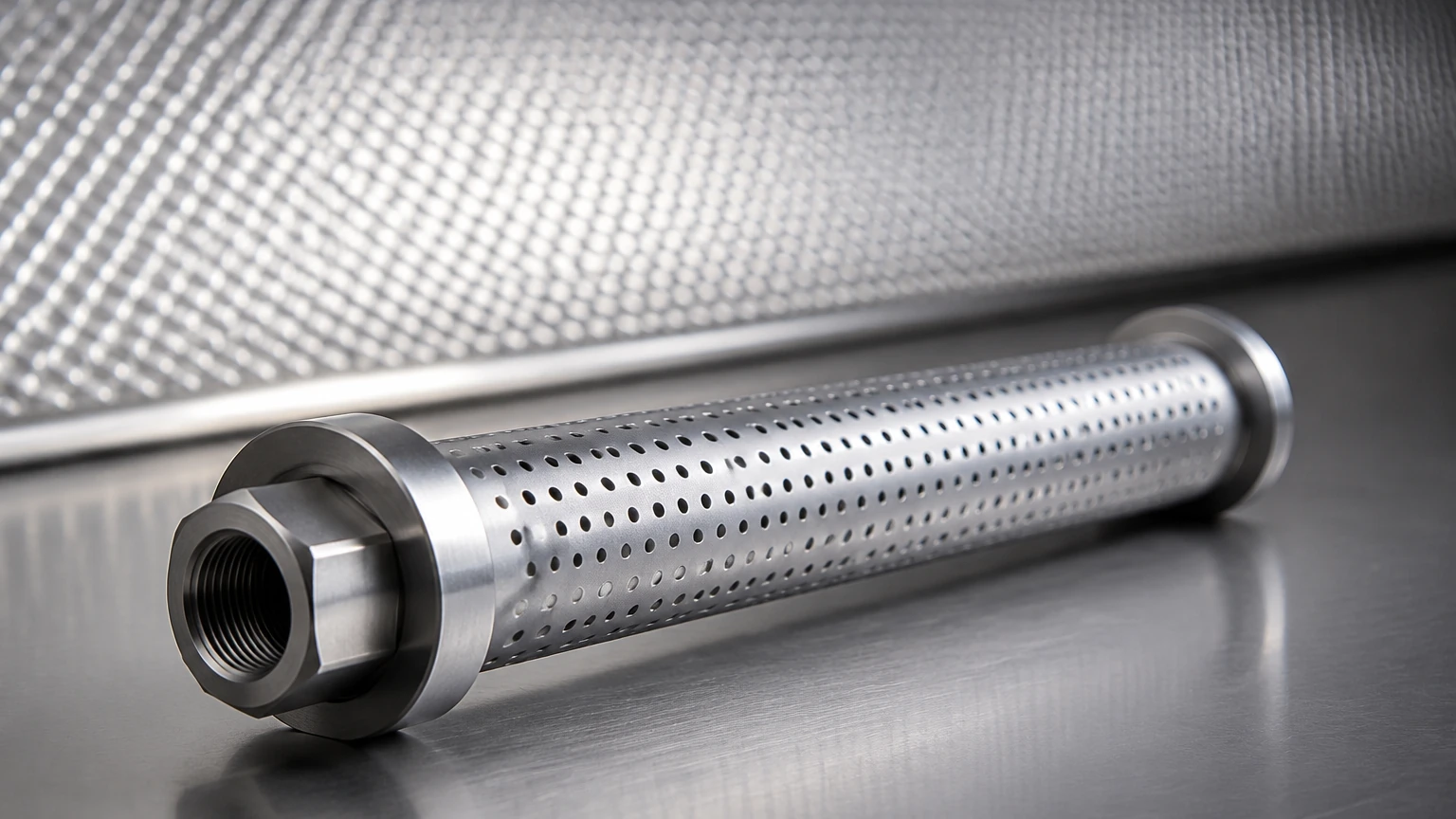
Often referred to as micro-spargers, these are constructed from sintered stainless steel powder or multi-layer wire mesh. These components feature a controlled pore structure that produces extremely fine bubbles, typically in the range of 10 to 100 microns.
Sintered metal spargers are preferred for mammalian cell cultures where high oxygen transfer is required but mechanical agitation must be kept low to avoid shear damage to the cells. The high density of small bubbles allows for efficient aeration without the need for high-speed impellers. For more information on specialized metal components, you can visit the Main Page of our technical resource center.
2. Orifice Spargers (Drilled Pipe)
An orifice sparger consists of a pipe or ring with a series of precisely drilled holes. These are commonly used in large-scale microbial fermentations where the organisms (such as yeast or bacteria) are robust and can withstand high levels of mechanical agitation. The bubbles produced are generally larger than those from porous spargers, but the design is less prone to clogging and easier to clean.
3. Nozzle Spargers
A nozzle sparger utilizes a single opening to introduce gas at high velocity. This design is often paired with high-power impellers that handle the primary task of bubble dispersion. While simple, nozzle spargers are highly effective in systems where the gas flow rate is very high and the risk of fouling must be minimized.
The Physics of Gas Transfer: Understanding $k_La$
To truly answer what is a sparger in bioreactor systems, one must understand the mass transfer coefficient, $k_La$. This value represents the efficiency of oxygen transfer from the gas to the liquid. The equation is generally expressed as:
*OTR = k_La (C* – C_L)*
Where:
* OTR is the Oxygen Transfer Rate.
* C* is the saturated dissolved oxygen concentration.
* C_L is the actual dissolved oxygen concentration in the broth.
The sparger directly influences the "a" in $k_La$, which stands for the specific interfacial area. By producing smaller bubbles, a sintered metal sparger increases the value of "a," thereby increasing the OTR. For engineers, selecting a sparger with a specific micron rating is a calculated decision based on the oxygen demand of the specific strain and the volume of the bioreactor.
Material Selection and Engineering Standards
In the B2B bioprocessing environment, material integrity is non-negotiable. Spargers must be compatible with both the biological process and the rigorous cleaning protocols required in pharmaceutical manufacturing.
Stainless Steel 316L
Stainless steel 316L is the industry standard for bioreactor spargers. It offers superior corrosion resistance, particularly against the salts and organic acids found in culture media. Furthermore, 316L can withstand the high temperatures and pressures associated with Steam-in-Place (SIP) and Autoclave sterilization cycles.
Surface Finish and Ra Values
The surface finish of a sparger is critical for preventing biofouling and ensuring effective Clean-in-Place (CIP) procedures. For pharmaceutical applications, spargers are often electropolished to achieve a specific roughness average (Ra), typically less than 0.4 µm. A smooth surface prevents proteins and cellular debris from adhering to the sparger, which could otherwise lead to pore blockage and localized contamination.
Challenges: Shear Stress and Biofouling
While high gas transfer is desirable, it comes with engineering trade-offs. Two of the most significant challenges involving spargers are shear stress and biofouling.
Shear Stress
When bubbles burst at the surface of the liquid, they release energy that can damage sensitive cell membranes, such as those of Chinese Hamster Ovary (CHO) cells used in monoclonal antibody production. While smaller bubbles from a micro-sparger are better for gas transfer, engineers must balance the bubble size and gas flow rate to minimize "cell kill" caused by bubble rupture. In some cases, anti-foaming agents or shear-protectants like Pluronic F-68 are added to the medium to mitigate this effect.
Biofouling and Pore Clogging
Porous spargers, while efficient, are susceptible to clogging over time. As cells grow and metabolic byproducts accumulate, proteins can precipitate within the fine pores of a sintered metal sparger. This increases the pressure drop across the sparger and can eventually lead to uneven gas distribution. Regular maintenance and validated cleaning cycles are necessary to ensure the longevity of these components.
Selection Criteria for Industrial Spargers
When specifying a sparger for a new bioreactor or as a replacement part, technical professionals should evaluate the following criteria:
1. Gas Flow Requirements: Ensure the sparger can handle the maximum required gas flow rate without excessive pressure drop.
2. Pore Size (Micron Rating): Choose a micron rating that balances oxygen transfer efficiency with the risk of fouling and shear sensitivity.
3. Connection Type: Common connections include NPT threads, flange mounts, or tri-clamp fittings for sanitary applications.
4. Mechanical Strength: The sparger must be able to withstand the hydraulic forces generated by the impellers in a stirred-tank reactor.
5. Customization: Often, standard spargers do not fit the specific geometry of a custom vessel. Working with a manufacturer that offers OEM customization for length, diameter, and mounting configuration is often necessary.
Maintenance and Replacement Cycles
A sparger is a consumable engineering component. Even with the best CIP/SIP protocols, the accumulation of mineral scales or denatured proteins can eventually degrade performance. Monitoring the pressure required to maintain a specific gas flow rate is a reliable way to track sparger health. A significant increase in backpressure usually indicates that the sparger requires deep cleaning (such as ultrasonic cleaning or acid washing) or replacement.
In high-stakes pharmaceutical production, many facilities opt for a scheduled replacement cycle to prevent unexpected downtime during a production run. Ensuring a reliable supply of high-quality replacement spargers is a key responsibility for procurement teams.
Conclusion
Understanding what is a sparger in bioreactor systems is more than just identifying a gas inlet; it is about understanding the intersection of fluid dynamics, mass transfer, and materials science. Whether you are scaling up a fermentation process or optimizing a high-density cell culture, the sparger is a foundational component that dictates the success of the bioprocess.
By selecting high-quality sintered stainless steel spargers and precision-engineered aeration components, facilities can achieve higher yields, better process control, and reduced operational risks. For engineers looking to optimize their filtration and aeration systems, Kaifil offers the technical expertise and manufacturing capabilities to deliver customized solutions that meet the most stringent industrial standards. To explore our full range of stainless steel filtration and sparging solutions, please visit our Main Page.
