


What Is Heat Transfer By Direct Contact
In industrial engineering and thermal management, understanding the mechanisms of energy exchange is critical for optimizing process efficiency and equipment longevity. One of the most fundamental yet complex methods is direct contact heat transfer. This process occurs when two substances at different temperatures exchange thermal energy without the presence of a physical barrier or separating wall. Unlike indirect heat transfer, where a conductive plate or tube wall separates the two media, direct contact allows for immediate interaction, often resulting in higher heat transfer coefficients and reduced equipment footprints.
For technical professionals and engineers, the question of what is heat transfer by direct contact extends beyond basic physics; it encompasses the selection of materials, the management of fluid dynamics, and the integration of high-precision filtration components to maintain system integrity. As industries move toward more energy-efficient designs, the role of direct contact mechanisms in chemical processing, power generation, and food production continues to expand.
Understanding the Mechanisms of Direct Contact Heat Transfer
To define what is heat transfer by direct contact accurately, one must distinguish between the different physical states involved. In most industrial scenarios, this transfer occurs in two primary ways: conduction between two solid surfaces and direct contact heat exchange between two fluids (liquid-liquid, gas-liquid, or gas-gas).
Conduction: The Solid-State Perspective
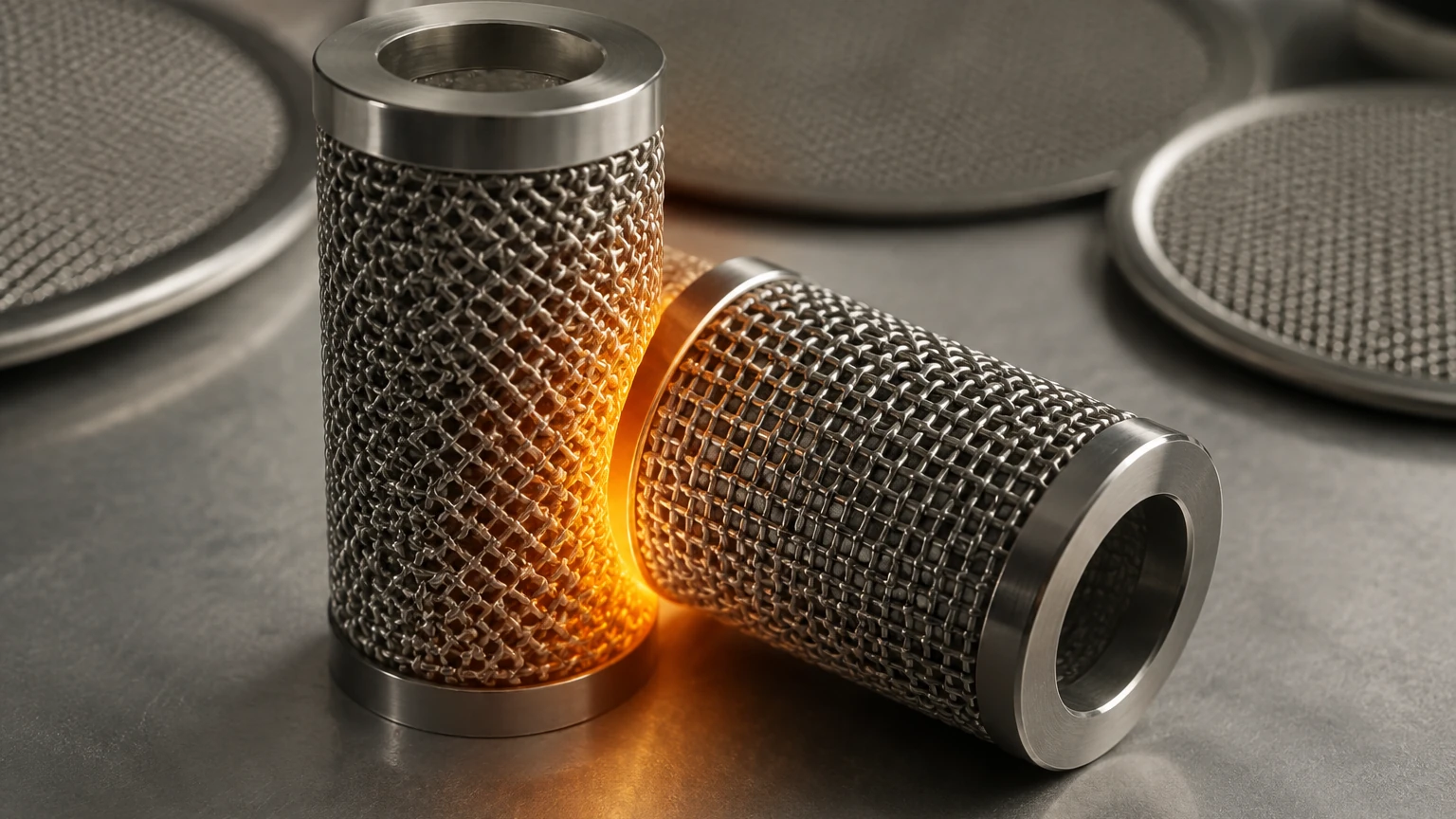
Thermal conduction is the most common form of direct contact heat transfer in solid materials. It involves the transfer of kinetic energy between atoms or molecules through physical contact. In industrial filtration systems, such as those manufactured by Kaifil, conduction plays a vital role in how filter media responds to extreme temperatures. When a hot fluid passes through a stainless steel wire mesh, the heat is transferred directly to the metal structure. The efficiency of this transfer is governed by Fourier’s Law, which states that the rate of heat transfer is proportional to the material's thermal conductivity and the temperature gradient.
Fluid-to-Fluid Direct Contact Exchange
In many process industries, direct contact heat exchange refers to the mixing of two fluids. Because there is no solid interface (like a tube wall) to provide thermal resistance, the heat transfer rate is exceptionally high. Examples include steam injection into a liquid or the use of cooling towers where air and water interact directly. While efficient, this method introduces the risk of cross-contamination, which necessitates the use of advanced filtration solutions to ensure that the resulting mixture meets purity standards.
Industrial Applications of Direct Contact Systems
The implementation of direct contact heat transfer is widespread across various sectors, each requiring specific engineering considerations for performance and safety.
Cooling Towers and Evaporative Cooling
In power plants and large-scale HVAC systems, cooling towers are a primary example of direct contact heat transfer. Hot water is sprayed into a stream of air. As the water droplets come into direct contact with the air, heat is transferred through both sensible heat exchange and latent heat of evaporation. To prevent the spray nozzles from clogging and to maintain the efficiency of the fill material, high-quality stainless steel filters are essential for removing particulates from the circulating water.
Quenching in Metallurgical Processes
Quenching involves the rapid cooling of a metal part by immersing it directly into a liquid medium, such as oil, water, or a polymer solution. This is a classic case of direct contact heat transfer. The rate of cooling determines the final microstructure and mechanical properties of the metal. Maintaining the cleanliness of the quenching medium is critical; accumulated scale or carbon deposits can interfere with the heat transfer rate, leading to uneven cooling and structural defects.
Steam Injection and Condensation
In the food and beverage industry, direct steam injection is often used for rapid heating or sterilization. The steam collapses and condenses directly into the product, transferring its latent heat. This process requires the steam to be of culinary grade, necessitating the use of precision metal filter components to remove any boiler carryover or pipe scale before contact occurs.
Material Selection and Thermal Conductivity in Filtration
When designing systems that involve direct contact heat transfer, material selection is paramount. Stainless steel is often the material of choice for filtration components in these environments due to its unique combination of thermal and mechanical properties. For those evaluating technical specifications, the Main Page of Kaifil offers detailed insights into how different grades of stainless steel perform under industrial stresses.
Thermal Conductivity of Stainless Steel
While stainless steel has lower thermal conductivity compared to copper or aluminum, its ability to maintain structural integrity at high temperatures makes it indispensable. In direct contact conduction scenarios, the thickness and weave of the wire mesh must be engineered to balance filtration accuracy with the necessary thermal response. For instance, in high-temperature gas filtration, the filter must withstand the direct thermal shock of the gas stream without losing its pore geometry.
Corrosion and Oxidation Resistance
Direct contact often involves aggressive fluids or high-temperature steam. Standard materials may succumb to oxidation or chemical attack, which can contaminate the process and degrade the heat transfer efficiency. Using high-grade stainless steel (such as 316L or 904L) ensures that the filtration media does not become a source of contamination itself, even when subjected to the rigors of direct thermal exchange.
Challenges in Direct Contact Heat Transfer: Fouling and Contamination
One of the primary drawbacks of direct contact systems is the potential for fouling. Because the two media are in physical contact, any impurities in one will inevitably affect the other. Fouling is the accumulation of unwanted material on solid surfaces, which can drastically reduce heat transfer efficiency.
1. Particulate Accumulation: In cooling towers or quenching tanks, suspended solids can settle on heat exchange surfaces. This creates an insulating layer that hinders the "direct contact" efficiency.
2. Biological Growth: Direct contact with air in cooling towers can introduce organic matter, leading to biofilm formation. This not only impedes heat transfer but also poses health risks.
3. Chemical Scaling: In systems where water is evaporated, the concentration of minerals increases, leading to scale formation.
To mitigate these risks, engineers must implement a robust filtration strategy. Utilizing stainless steel filter cartridges and precision wire mesh filters allows for the continuous removal of these contaminants, ensuring that the direct contact surfaces remain clean and the thermal exchange remains optimal.
Engineering Selection Criteria for Filtration in Thermal Systems
When integrating filtration into a system defined by what is heat transfer by direct contact, several technical factors must be evaluated to ensure the total cost of ownership is minimized while performance is maximized.
Filtration Accuracy vs. Pressure Drop
In any thermal system, the movement of fluids requires energy. A filter that is too restrictive will cause a significant pressure drop, increasing the load on pumps and fans. Engineers must select a filtration micron rating that is fine enough to protect the heat transfer surfaces but coarse enough to maintain efficient flow. Kaifil’s custom wire mesh solutions allow for precise control over these variables.
Temperature Stability
In direct contact applications involving molten salts, high-pressure steam, or cryogenic fluids, the filter media must be rated for the operating temperature. Unlike polymer-based filters, stainless steel components do not soften or off-gas at elevated temperatures, making them the reliable choice for industrial thermal management.
Cleanability and Maintenance Cycles
Direct contact systems are often critical to the overall plant operation. Therefore, downtime for maintenance must be minimized. Stainless steel filters offer the advantage of being cleanable—either through backwashing, ultrasonic cleaning, or chemical treatment. This longevity is a key factor in reducing the total cost of ownership compared to disposable filtration options.
Optimizing Performance and Total Cost of Ownership
Understanding what is heat transfer by direct contact allows engineers to design more compact and efficient systems. However, the success of these systems depends on the reliability of every component. In direct contact heat exchange, the absence of a barrier means that the fluid quality is the only safeguard for the equipment.
By investing in high-performance stainless steel filtration, companies can achieve:
* Enhanced Thermal Efficiency: Clean fluids ensure maximum contact and heat exchange.
* Extended Equipment Life: Reducing fouling protects expensive heat exchange surfaces and pumps.
* Reduced Operational Costs: Cleanable filters reduce the need for frequent replacements and disposal costs.
For engineers and purchasing teams, the selection of filtration components should be based on a thorough analysis of the thermal environment and the specific requirements of the direct contact process. Whether it is a custom-designed wire mesh for a quenching tank or a high-pressure filter cartridge for steam injection, the quality of the filtration directly impacts the efficiency of the heat transfer.
In conclusion, direct contact heat transfer is a powerful tool in the industrial arsenal, offering high efficiency and rapid thermal response. By addressing the inherent challenges of contamination and fouling through precision engineering and high-quality materials, industries can fully leverage the benefits of this mechanism. For those seeking to optimize their filtration systems to support these demanding thermal processes, exploring the technical capabilities and product ranges available on the Main Page is a vital step toward achieving reliable, long-term performance.
