


20 Perforated Gi Metal Tiles
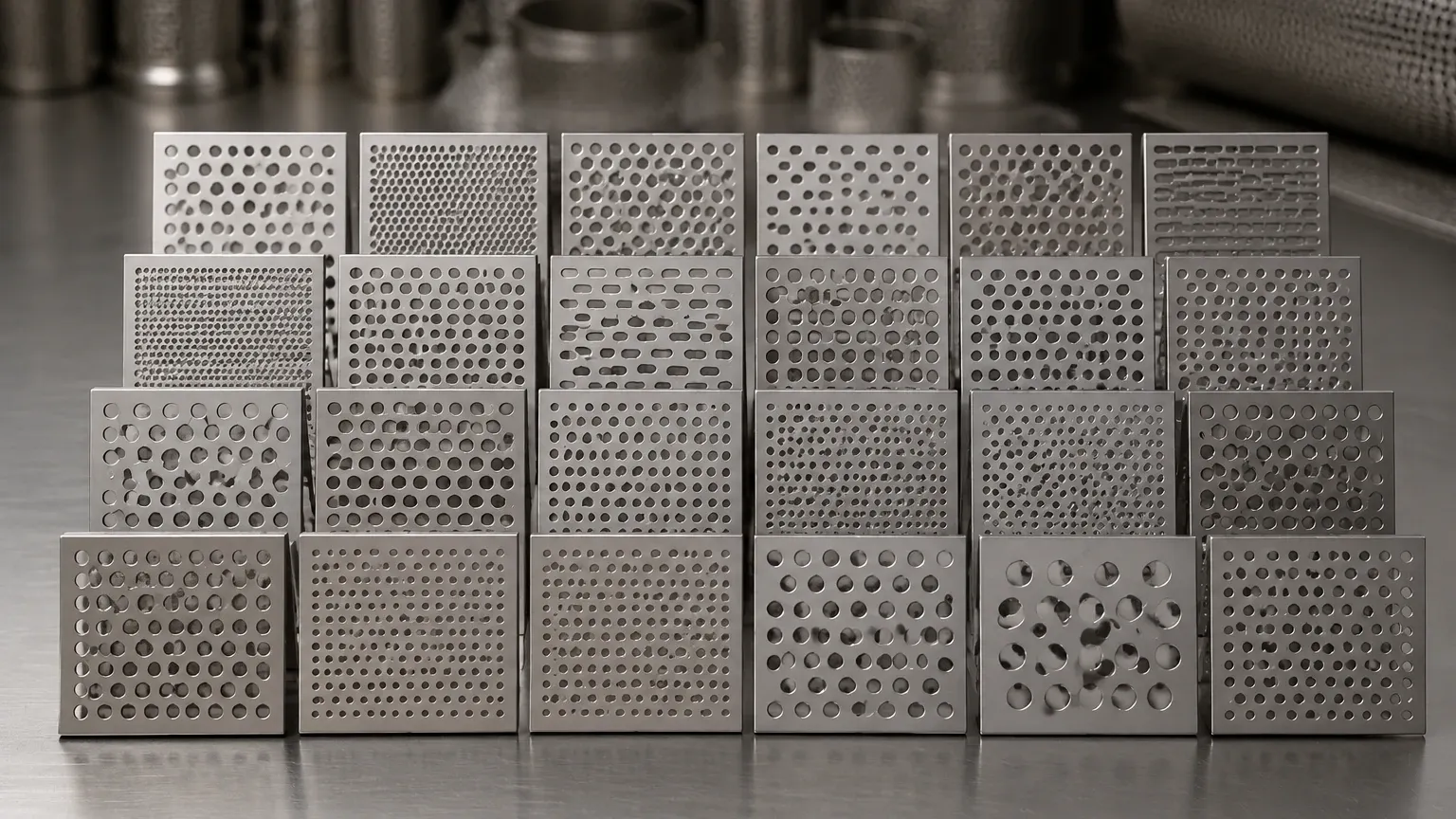
In industrial and architectural engineering, the selection of materials for surface management, filtration support, and environmental control requires a precise balance between structural integrity and functional permeability. Among the most versatile specifications utilized in these sectors are 20 perforated gi metal tiles. These components, typically fabricated from 20-gauge galvanized iron (GI), serve as a critical interface in HVAC systems, acoustic dampening, and industrial filtration frameworks.
Understanding the technical nuances of these tiles—ranging from the metallurgical properties of the galvanized substrate to the geometric precision of the perforation patterns—is essential for engineers and procurement specialists. This guide examines the engineering standards, performance metrics, and application logic associated with Perforated & Expanded Metal solutions, focusing on the specific utility of 20-gauge galvanized materials.
Understanding the Specifications of 20-Gauge Galvanized Iron
The term "20-gauge" refers to the thickness of the metal sheet before the perforation process. In the standard Manufacturer's Gauge for sheet steel, 20-gauge corresponds to a nominal thickness of approximately 0.0359 inches (0.91 mm). This thickness is widely regarded as a "sweet spot" in industrial design; it is light enough to be easily formed and installed as tiles or panels, yet thick enough to maintain rigid structural profiles under moderate mechanical stress.
The Galvanization Process
Galvanized Iron (GI) is carbon steel that has been coated with a protective layer of zinc. For industrial tiles, this is usually achieved through a hot-dip galvanizing process. The zinc coating acts as a sacrificial anode, protecting the underlying steel from oxidation and corrosion. In B2B procurement, it is vital to specify the coating weight, often denoted as G60 or G90.
* G60: Contains 0.60 oz of zinc per square foot, suitable for indoor environments with standard humidity.
* G90: Contains 0.90 oz of zinc per square foot, providing enhanced protection for outdoor or high-moisture industrial settings.
When 20 perforated gi metal tiles are manufactured, the perforation occurs after the steel has been galvanized (pre-galvanized) or the entire tile is dipped after punching (post-galvanized). Pre-galvanized sheets are more common for standard tiles, though the exposed edges of the holes may require additional treatment if used in highly corrosive environments.
The Role of Perforation Patterns in Industrial Performance
The performance of a perforated metal tile is dictated by its "open area" percentage. This metric determines how much air, light, or fluid can pass through the medium. For 20-gauge materials, the hole size and pitch (the distance between the centers of adjacent holes) must be calculated to ensure the tile does not lose its structural stability.
Common Perforation Geometries
1. Round Holes: The most common and economical pattern. Round holes offer the highest structural strength-to-weight ratio. They are typically arranged in a 60-degree staggered pattern, which provides the most efficient use of space and uniform open area.
2. Square Holes: Often selected for aesthetic reasons in architectural tiles or when a higher open area is required for maximum airflow. However, square holes can create stress concentration points at the corners, which may lead to fatigue in high-vibration environments.
3. Slotted Holes: Used primarily for specialized filtration or sorting applications where elongated particles or specific flow directions must be managed.
Calculating Open Area
For a standard 60-degree staggered round hole pattern, the formula for open area percentage is:
% Open Area = (D² × 90.69) / P²
Where *D* is the hole diameter and *P* is the pitch. For 20 perforated gi metal tiles used in acoustic or HVAC applications, an open area between 30% and 50% is standard, providing a balance between transparency and durability.
Comparing Perforated and Expanded Metal Solutions
While perforated metal is created by punching holes into a solid sheet, expanded metal is produced by simultaneously slitting and stretching the material. Both are integral parts of the Perforated & Expanded Metal category, but they serve different engineering needs.
Perforated Metal Tiles
* Precision: Offers exact hole sizes and spacing, critical for filtration and specific airflow requirements.
* Flatness: Perforated tiles are generally flatter and easier to integrate into standard ceiling grids or equipment housings.
* Customization: Allows for "margins" (solid borders around the perforated area), which simplifies welding and installation.
Expanded Metal Tiles
* Material Efficiency: No metal is lost during production (no slugs), making it a cost-effective alternative for large-scale barriers.
* Traction and Grip: The raised diamonds of expanded metal provide natural slip resistance, though this is less relevant for ceiling tiles and more relevant for industrial walkways.
* Weight: Generally lighter than perforated sheets of the same overall dimensions due to the stretching process.
For 20-gauge GI applications, perforated tiles are usually preferred when precise filtration or specific acoustic absorption coefficients are required.
Engineering Considerations for 20 Perforated GI Metal Tiles
When integrating 20-gauge perforated tiles into a project, engineers must account for several mechanical and environmental factors to ensure long-term reliability.
Load-Bearing and Deflection
Although 20-gauge steel is durable, the perforation process removes a significant portion of the material's mass. This reduces the moment of inertia and the overall stiffness of the tile. If the tiles are used as suspended ceiling components or as support for filtration media, the maximum span between supports must be calculated to prevent sagging (deflection). In many industrial designs, the edges of the tiles are "flanged" or bent to provide additional structural rigidity.
Acoustic Management
In B2B environments like data centers, manufacturing plants, or commercial offices, 20 perforated gi metal tiles are often used as the face of acoustic panels. The perforations allow sound waves to pass through the metal and into an absorbent material (such as mineral wool) behind the tile. The diameter of the holes and the open area percentage directly influence the Noise Reduction Coefficient (NRC) of the assembly.
Burr Side vs. Smooth Side
The punching process creates a "burr" on the exit side of the hole. For high-end architectural applications or filtration systems where laminar flow is required, these burrs must be minimized through leveling and deburring processes. Specifying the "smooth side" for the visible or flow-facing surface is a standard requirement in professional procurement.
Applications in Filtration and Environmental Control
20 perforated gi metal tiles are not limited to architectural use; they play a vital role in industrial filtration and fluid dynamics. Kaifil, as a specialist in custom filtration solutions, often utilizes perforated metal as a support structure for finer wire mesh layers.
Filtration Support
In high-pressure hydraulic or chemical processing systems, fine filter mesh lacks the structural strength to withstand flow velocity. A 20-gauge perforated GI plate serves as a robust "cage" or support core, ensuring the filter element maintains its shape under pressure. The galvanized coating provides the necessary resistance to moisture-induced corrosion in water treatment or HVAC air filtration units.
Airflow and Heat Dissipation
In electronics enclosures and server rooms, heat management is critical. Perforated metal tiles allow for passive and active cooling. The 20-gauge thickness ensures that the enclosures remain secure and tamper-resistant while maintaining the necessary airflow to prevent component failure.
Quality Standards and Customization in Metal Fabrication
Procuring industrial metal components requires adherence to international standards to ensure consistency across global supply chains. When ordering 20 perforated gi metal tiles, technical teams should confirm compliance with standards such as ASTM A653 (for galvanized steel) and IPA (Industrial Perforators Association) guidelines for tolerances.
Customization Options
Standard tiles often come in 24" x 24" or 600mm x 600mm dimensions to fit T-bar ceiling grids. However, industrial projects frequently require custom configurations, including:
* Variable Margins: Solid areas around the perimeter for mounting holes or specialized framing.
* Complex Geometries: Non-standard hole shapes for specific aesthetic or functional flow requirements.
* Secondary Finishes: While the GI coating provides base protection, tiles can be powder-coated in specific RAL colors to match corporate branding or to provide an additional chemical barrier.
Total Cost of Ownership (TCO)
While stainless steel offers superior corrosion resistance, 20-gauge galvanized iron is a more cost-effective solution for many industrial applications where the environment is controlled or the lifecycle of the equipment matches the durability of the GI coating. By selecting the correct gauge and open area, engineers can optimize the balance between material cost and operational performance.
Conclusion
The utility of 20 perforated gi metal tiles extends across a vast spectrum of B2B sectors, from heavy industrial filtration to precision architectural design. By focusing on the technical specifications of 20-gauge galvanized steel and the mathematical precision of perforation patterns, engineering teams can ensure that their selection meets the rigorous demands of their specific application. Whether used as a support structure in a filtration assembly or as a functional component in an HVAC system, these tiles represent a reliable, versatile, and cost-effective solution in the broader field of Perforated & Expanded Metal manufacturing. For those seeking specialized filtration components or custom metal fabrications, partnering with a manufacturer that understands the nuances of material science and precision engineering is the key to project success.
