


3 4 #9 Expanded Metal Dimensions
In industrial engineering and filtration design, selecting the correct structural media is critical for ensuring both mechanical integrity and operational efficiency. Among the various specifications available, the 3/4 #9 designation is one of the most widely utilized configurations for heavy-duty applications. Understanding the precise 3 4 #9 expanded metal dimensions is essential for engineers who must calculate flow rates, structural loads, and compatibility with secondary filtration layers.
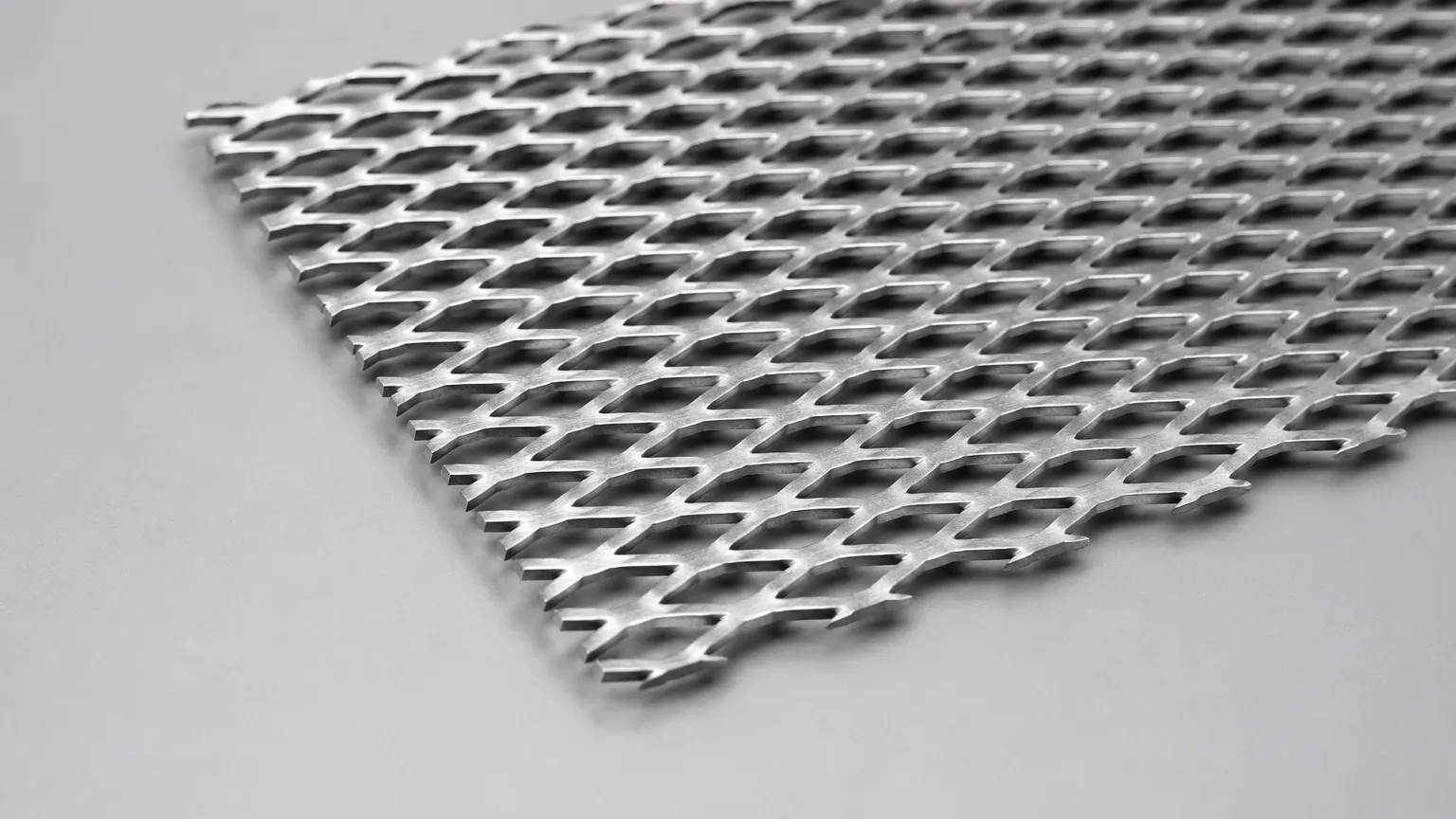
Expanded metal is produced by shearing and stretching a solid metal sheet to create a diamond-shaped pattern. Unlike perforated metal, which involves punching out material, expanded metal is formed through a process that results in no material waste and a high strength-to-weight ratio. For technical professionals sourcing Perforated & Expanded Metal, the 3/4 #9 specification represents a balance of rigidity and open area suitable for support cores, protective grilles, and industrial screens.
Deconstructing the 3/4 #9 Designation
To accurately interpret 3 4 #9 expanded metal dimensions, one must understand the two primary components of the nomenclature: the diamond size and the material gauge.
The "3/4" Component (Short Way of Design)
In the expanded metal industry, the first number in the specification generally refers to the nominal width of the diamond opening, measured from the center of one bond to the center of the next bond along the Short Way of the Design (SWD). For a 3/4 #9 sheet, the nominal SWD is 0.75 inches, though the actual dimension typically measures closer to 0.923 inches depending on the specific manufacturing standard (such as EMMA or ASTM).
The "#9" Component (Thickness and Weight)
The second number, #9, refers to the thickness of the material. In carbon steel, this traditionally corresponds to 9-gauge steel. However, it is more accurately defined by the weight per square foot and the resulting strand thickness. For standard (raised) 3/4 #9 expanded metal, the strand thickness is approximately 0.108 inches, providing significant structural rigidity compared to lighter gauges like #13 or #18.
Comprehensive Dimensional Analysis: Standard vs. Flattened
When evaluating 3 4 #9 expanded metal dimensions, engineers must distinguish between "Standard" (raised) and "Flattened" varieties, as their physical profiles and thicknesses differ substantially.
Standard (Raised) 3/4 #9 Dimensions
Standard expanded metal is the product as it comes off the expanding machine. The strands and bonds are set at a uniform angle to the plane of the sheet, giving the material a three-dimensional texture and added strength.
* Short Way of Design (SWD): 0.923"
* Long Way of Design (LWD): 2.00" – 2.10"
* Short Way of Opening (SWO): 0.688"
* Long Way of Opening (LWO): 1.562"
* Strand Width: 0.150"
* Strand Thickness: 0.108"
* Overall Thickness: Approximately 0.450"
* Open Area: ~63%
Flattened 3/4 #9 Dimensions
Flattened expanded metal is produced by passing the standard expanded sheet through a cold-roll reducing mill. This process flattens the strands and bonds into a single plane, reducing the overall thickness and creating a smooth surface. This is often preferred in filtration applications where the expanded metal serves as a support for a fine wire mesh, as the flat surface prevents the mesh from being abraded or punctured by raised edges.
* Short Way of Design (SWD): 1.00"
* Long Way of Design (LWD): 2.10"
* Short Way of Opening (SWO): 0.650"
* Long Way of Opening (LWO): 1.750"
* Strand Width: 0.165"
* Strand Thickness: 0.095"
* Overall Thickness: 0.095"
* Open Area: ~68%
Engineering Performance: Open Area and Flow Dynamics
For engineers designing filtration systems or fluid handling equipment, the open area percentage is perhaps the most critical dimension. The open area determines the pressure drop (delta P) across the screen and the velocity of the fluid passing through the media.
With an open area of approximately 63% to 68%, 3/4 #9 expanded metal offers high throughput while maintaining the structural integrity required to withstand high differential pressures. In a multi-stage filtration assembly, this material often acts as the outermost or innermost support layer (the "skeleton") for stainless steel wire mesh or sintered fiber felt.
When calculating flow dynamics, the angularity of the strands in the "Standard" version must be considered. The raised strands can create micro-turbulence, which may be beneficial in certain mixing applications but could increase resistance in high-velocity gas filtration. Conversely, the flattened version provides a more predictable, linear flow path.
Material Selection for Industrial Filtration
While the 3 4 #9 expanded metal dimensions define the geometry, the material composition defines the chemical compatibility and longevity. Kaifil specializes in stainless steel solutions, which are preferred in demanding B2B environments such as chemical processing, food and beverage production, and pharmaceutical manufacturing.
1. 304 Stainless Steel: The industry standard for general corrosion resistance. Suitable for water treatment and most organic chemicals.
2. 316L Stainless Steel: Contains molybdenum for enhanced resistance to pitting and crevice corrosion, particularly in chloride-rich environments. This is the preferred material for marine applications and aggressive chemical filtration.
3. Carbon Steel: Often used for structural grates or indoor machinery guards where corrosion is not a primary concern, typically finished with powder coating or galvanization.
Selecting the right alloy ensures that the 3/4 #9 dimensions remain constant over the service life of the component, as excessive corrosion would thin the strands and compromise the structural calculations.
Manufacturing Tolerances and Quality Control
In precision engineering, "nominal" dimensions are rarely sufficient. When sourcing 3/4 #9 expanded metal, it is vital to confirm the manufacturer's tolerances. Standard industry tolerances for expanded metal include:
* SWD and LWD: Typically +/- 1/4" per 12" of width.
* Strand Width: +/- 10%.
* Strand Thickness: Subject to standard mill tolerances for the base material.
* Squareness: Out-of-square ends should not exceed 1/16" per foot of width.
For filtration applications, especially when the expanded metal must fit into a machined housing or a filter cartridge end cap, tighter tolerances may be required. Kaifil’s manufacturing process focuses on maintaining high dimensional accuracy to ensure that custom-fabricated components integrate seamlessly into larger industrial systems.
The Role of 3/4 #9 in Composite Filter Elements
In many industrial filtration scenarios, expanded metal is not the primary filtering medium but a critical support component. For instance, in high-pressure hydraulic filters, a layer of fine stainless steel wire mesh is pleated together with a layer of 3/4 #9 expanded metal.
The expanded metal provides the "pleat support," preventing the fine mesh from collapsing under the force of the fluid. The specific 3 4 #9 expanded metal dimensions—particularly the strand width and opening size—are chosen to ensure that the mesh has maximum support while leaving enough open area for the fluid to reach the entire surface of the filter media.
Selection Guide for Engineering Teams
Before finalizing a specification for 3/4 #9 expanded metal, engineering and purchasing teams should confirm the following technical details:
1. Orientation of Diamonds: Does the application require the SWD or LWD to run parallel to the length of the sheet? This affects both the strength and the aesthetic of the final product.
2. Surface Requirement: Is a flattened surface necessary to protect secondary media, or is the added rigidity of a raised surface preferred?
3. Edge Conditions: Should the sheet have "random sheared" edges (where the diamonds are cut through) or "bond sheared" edges (where the cut occurs at the bond, leaving a closed diamond)? Bond shearing is safer for handling and easier to weld into frames.
4. Total Cost Considerations: While stainless steel has a higher upfront cost than carbon steel, its durability in corrosive environments often results in a lower total cost of ownership by extending replacement cycles and reducing downtime.
Conclusion
Precision in 3 4 #9 expanded metal dimensions is the foundation of reliable industrial design. Whether used as a protective barrier, a structural walkway, or a support core for high-performance filtration, this specification offers a versatile solution for demanding environments. By understanding the nuances between standard and flattened profiles, and selecting the appropriate material grade, engineers can optimize their systems for both performance and longevity.
For technical assistance in selecting the right Perforated & Expanded Metal for your specific application, or to request custom-fabricated filtration components, consult with manufacturing experts who understand the rigors of industrial filtration. Accurate material selection and dimensional precision are the keys to achieving efficient, durable, and cost-effective results in any B2B filtration project.
