


6×12 Expanded Metal
In industrial filtration and structural engineering, the selection of media is dictated by the balance between mechanical strength, open area, and material longevity. Among the various configurations of Perforated & Expanded Metal, the 6×12 expanded metal format—typically referring to large-format 6-foot by 12-foot sheets—represents a critical component for large-scale industrial applications. These dimensions are frequently sought for heavy-duty filtration support, architectural screening, and protective enclosures where minimizing seams and maximizing structural integrity are paramount.
For engineers and procurement specialists, understanding the technical nuances of expanded metal is essential. Unlike perforated metal, which is produced by punching holes and creating scrap, expanded metal is manufactured by simultaneously slitting and stretching the base material. This process creates a continuous, jointless mesh that retains the inherent strength of the original metal while providing a high strength-to-weight ratio. When specified in a 6×12 format, this material offers unique advantages in terms of installation efficiency and structural uniformity.
Technical Geometry and Specification Standards
To effectively integrate 6×12 expanded metal into a filtration system or industrial structure, one must understand the geometric parameters that define its performance. The "6×12" designation usually refers to the overall sheet size, but the performance of the mesh itself is determined by the diamond dimensions, strand width, and thickness.
LWD and SWD Measurements
The geometry of expanded metal is defined by the Long Way of the Diamond (LWD) and the Short Way of the Diamond (SWD). The LWD is the distance from a point on a diamond to the corresponding point on the next diamond across the long axis. The SWD is the distance across the short axis. For large 6×12 sheets, the orientation of these diamonds is critical. Typically, the LWD runs parallel to the length of the sheet (12 feet), providing maximum rigidity along the longest span.
Strand Width and Thickness
The strand width refers to the amount of metal between the openings, while the thickness (or gauge) refers to the thickness of the base material. In industrial filtration, these two factors determine the "open area" percentage. A higher open area allows for lower pressure drops and higher flow rates, whereas thicker strands provide the mechanical support necessary to withstand high-differential pressures in hydraulic or chemical processing environments.
Material Selection for Demanding Environments
At Kaifil, the focus is on providing durable filtration solutions that can withstand aggressive industrial conditions. The choice of material for 6×12 expanded metal is perhaps the most significant factor in determining the total cost of ownership and replacement cycles.
Stainless Steel (304, 316, and 316L)
For the chemical processing, pharmaceutical, and food and beverage industries, stainless steel is the standard.
* Grade 304: Offers excellent corrosion resistance and is suitable for most general industrial applications.
* Grade 316: Contains molybdenum, which provides superior resistance to chlorides and pitting, making it ideal for marine environments or acidic chemical filtration.
* Grade 316L: The low-carbon version of 316, preferred for components that require extensive welding to prevent carbide precipitation and maintain corrosion resistance at the weld joints.
Carbon Steel and Aluminum
While stainless steel is preferred for filtration, carbon steel expanded metal is often used for structural supports or safety guards where corrosion is not a primary concern or where protective coatings (like galvanization) are applied. Aluminum offers a lightweight alternative for aerospace or transportation applications where weight reduction is a priority.
Applications in Industrial Filtration and Support
6×12 expanded metal serves as a versatile substrate in complex filtration assemblies. Its primary role is often as a "support cage" or "drainage layer" for finer filtration media, such as stainless steel wire mesh or non-woven fabrics.
Support for Pleated Filter Elements
In high-pressure hydraulic systems, pleated filter elements require internal and external support to prevent the pleats from collapsing under flow. Expanded metal provides a rigid, high-open-area framework that maintains the integrity of the pleats while allowing fluid to pass through with minimal resistance.
Pre-Filtration and Coarse Strainers
In water treatment and intake systems, 6×12 sheets are used to create large-scale basket strainers or debris guards. The expanded pattern is effective at capturing large particulates and organic matter before they reach more sensitive downstream equipment like pumps or fine membrane filters.
Centrifuge Backing Screens
In chemical and food processing centrifuges, expanded metal acts as a backing screen for fine mesh liners. The large 6×12 sheet size allows for the fabrication of large-diameter centrifuge baskets with fewer vertical seams, which are often the points of mechanical failure under high centrifugal force.
Engineering Advantages of Large-Format 6×12 Sheets
Specifying 6×12 expanded metal over standard 4×8 sheets offers several engineering and economic benefits, particularly in large-scale industrial projects.
1. Reduced Seam Count: In large filtration housings or architectural facades, using 6×12 sheets reduces the number of welds or mechanical fasteners required. Fewer seams mean fewer potential points of failure, lower labor costs during assembly, and a more uniform distribution of stress across the surface.
2. Structural Rigidity: Large panels provide better structural continuity. When used as a walkway or a protective barrier in an industrial plant, a 12-foot span can often be supported with fewer intermediate structural members compared to shorter sheets.
3. Material Optimization: For manufacturers like Kaifil, producing custom filter components from larger sheets can often lead to better nesting of parts, reducing material waste and lowering the per-unit cost for the end user.
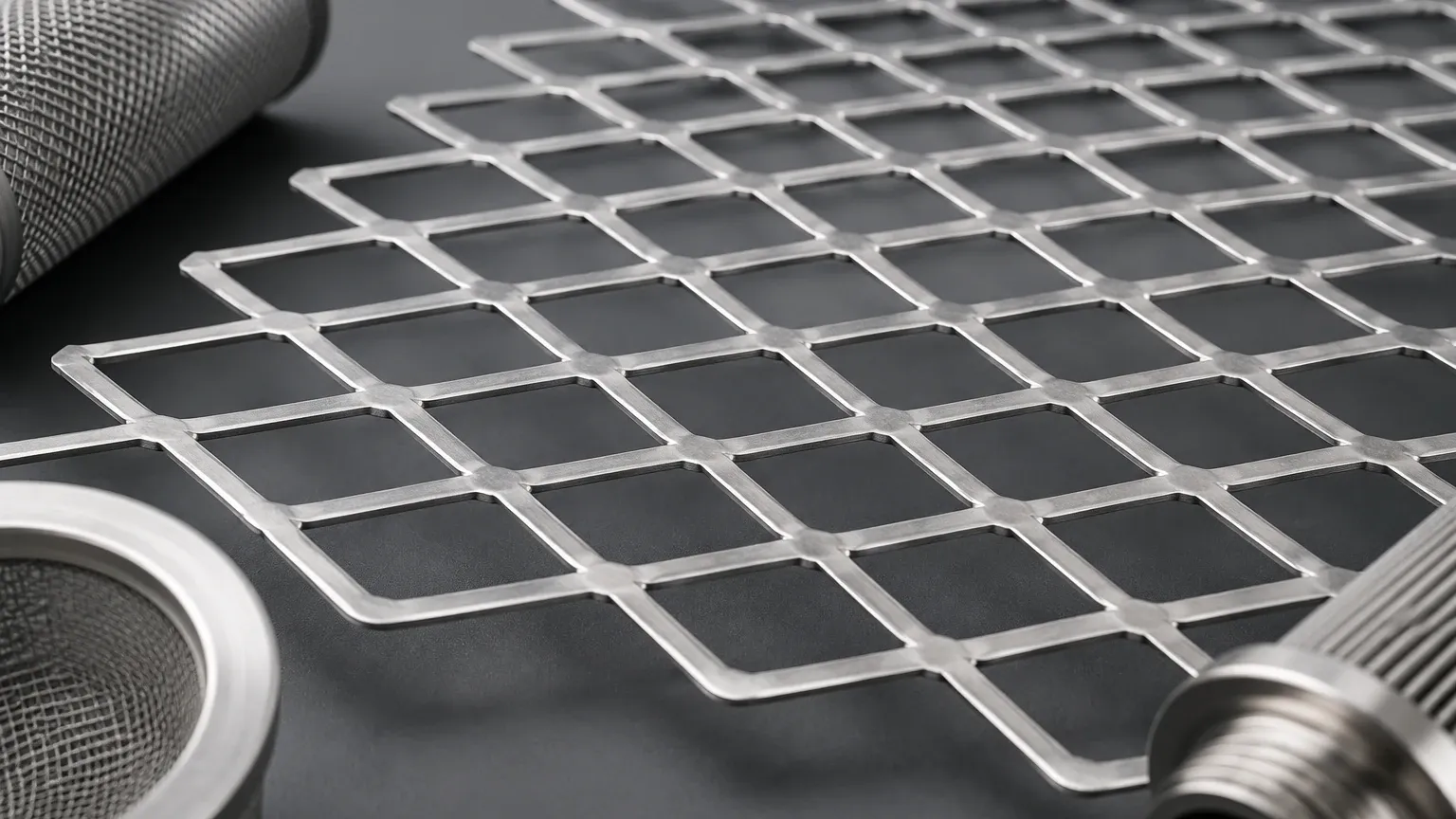
Customization: Raised vs. Flattened Expanded Metal
When ordering 6×12 expanded metal, engineers must specify whether the material should be "raised" or "flattened."
* Raised Expanded Metal: This is the standard product as it comes off the expanding machine. The strands are set at an angle to the plane of the sheet. This creates a 3D texture that provides excellent grip (for walkways) and increases the overall stiffness of the panel. In filtration, raised metal can create turbulence, which may be desirable in certain mixing or heat-exchange applications.
* Flattened Expanded Metal: After the expansion process, the sheet is passed through a cold-rolling mill. This flattens the strands back into the same plane as the sheet, creating a smooth, level surface. Flattened 6×12 expanded metal is easier to clean and is often used as a support layer for fine wire mesh to prevent the mesh from being damaged by the sharp edges of raised strands.
Selection Criteria and Procurement Considerations
Before finalizing a purchase order for 6×12 expanded metal, technical teams should evaluate the following criteria to ensure the component meets the application's demands:
Filtration Accuracy and Open Area
What is the required flow rate? The open area percentage of the expanded metal must be calculated to ensure it does not become a bottleneck in the system. While the expanded metal may not be the primary filtering layer, its presence will affect the total pressure drop across the filter assembly.
Compatibility and Corrosion
Is the material chemically compatible with the process fluid? In pharmaceutical or food-grade applications, the surface finish of the 6×12 expanded metal is also vital. Electropolishing or passivation may be required to ensure the surface is free of contaminants and resistant to bacterial growth.
Total Cost of Ownership
While carbon steel is cheaper upfront, the longevity of stainless steel in corrosive environments often results in a lower total cost of ownership. Engineers should consider the replacement cycle; a filter support that lasts five years is significantly more cost-effective than one that requires replacement every 12 months due to corrosion or mechanical fatigue.
Custom Fabrication Requirements
Does the 6×12 sheet need to be rolled into a cylinder, framed, or welded to a flange? Kaifil specializes in these secondary operations. Providing technical drawings that specify tolerances and weld types (such as TIG or plasma welding) ensures that the final component integrates seamlessly into the existing industrial equipment.
Conclusion
The use of 6×12 expanded metal in industrial settings provides a robust solution for filtration support and structural protection. By selecting the appropriate material grade, diamond geometry, and finish, engineers can optimize their systems for performance and durability. Whether used as a protective cage for a delicate filter element or as a heavy-duty strainer in a chemical plant, the inherent strength and versatility of expanded metal make it an indispensable material in modern industrial engineering.
For those seeking precision-engineered solutions, reviewing the available options for Perforated & Expanded Metal is the first step toward achieving efficient and reliable filtration performance. By partnering with a manufacturer that understands the complexities of material science and filtration mechanics, purchasing teams can ensure they receive components that meet the most demanding specifications.
