


Expanded Metal 7503
In the landscape of industrial filtration and structural support, selecting the precise material specification is critical for operational efficiency and equipment longevity. Expanded metal 7503 represents a specific technical configuration often utilized in demanding environments where a balance of structural rigidity, open area, and material economy is required. As a specialized manufacturer of filtration solutions, Kaifil provides technical insights into how this material performs within complex industrial systems.
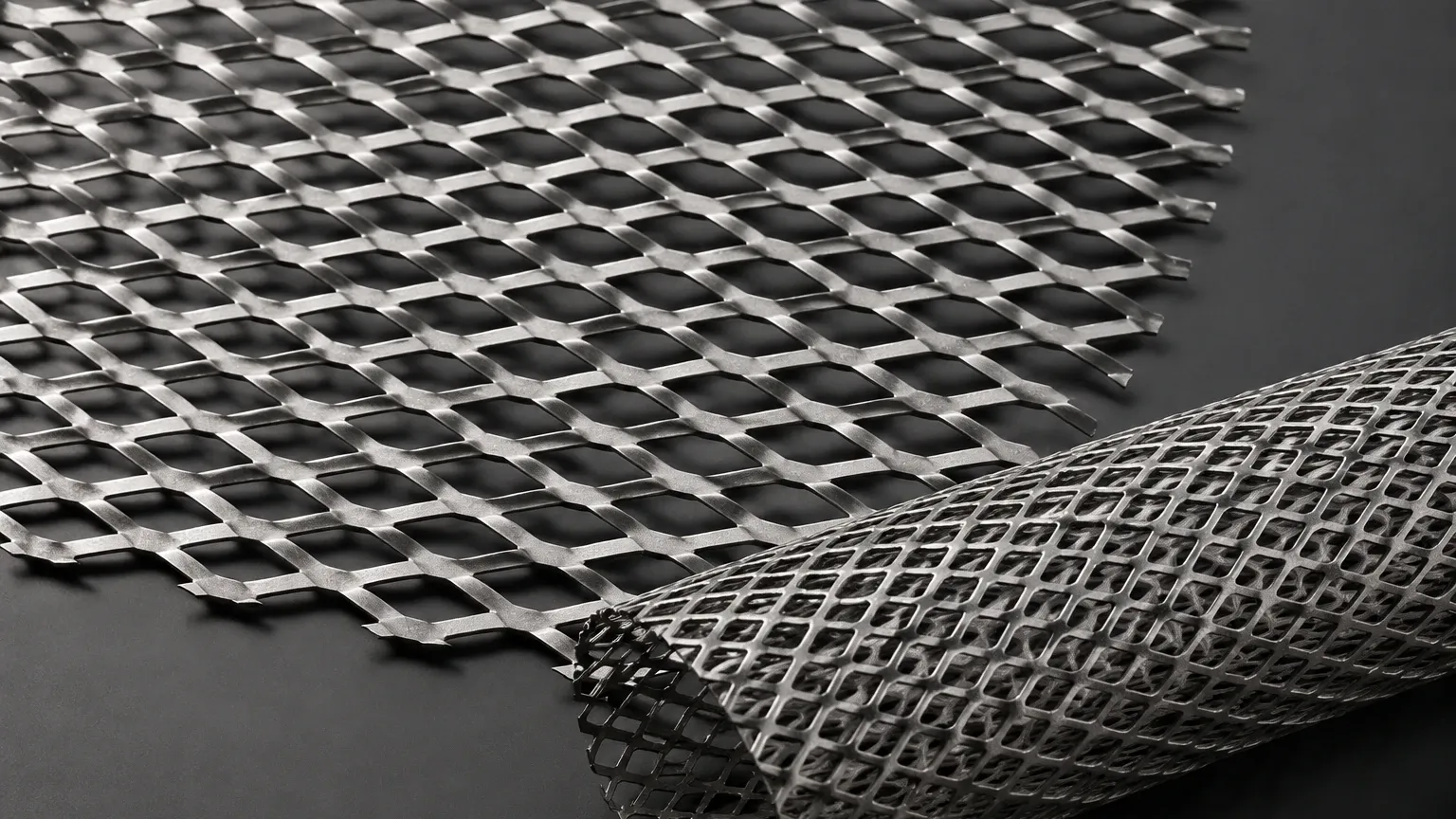
Expanded metal is produced by simultaneously slitting and stretching a solid sheet of metal, creating a diamond-shaped pattern without the waste associated with traditional perforation. The designation "7503" typically refers to a specific set of dimensions regarding the diamond size and the gauge of the material. Understanding these parameters is essential for engineers and procurement teams tasked with integrating Perforated & Expanded Metal into filtration cartridges, hydraulic systems, or chemical processing units.
Technical Specifications of Expanded Metal 7503
To evaluate the suitability of expanded metal 7503 for a specific application, one must look closely at the geometric and mechanical properties defined by the manufacturing process. Unlike woven wire mesh, expanded metal is a single-piece structure that does not unravel, making it inherently stable for high-pressure applications.
Geometric Parameters
The performance of expanded metal 7503 is dictated by four primary measurements:
1. Short Way of Diamond (SWD): The distance from the center of a bond to the center of the next bond across the short axis of the diamond.
2. Long Way of Diamond (LWD): The distance across the long axis of the diamond.
3. Strand Width: The amount of metal fed into the expanding machine between slits.
4. Strand Thickness: The original thickness of the base metal sheet.
In the 7503 specification, these dimensions are calibrated to provide a specific percentage of open area. For filtration purposes, the open area determines the flow rate and pressure drop across the medium. Engineers must ensure that the expanded metal 7503 selected provides enough structural support to withstand the differential pressure of the system while maintaining the required throughput.
Material Composition
While expanded metal can be produced from various alloys, stainless steel is the standard for industrial filtration. Kaifil specializes in utilizing high-grade stainless steel, such as 304 and 316L, for expanded metal 7503 production.
* Stainless Steel 304: Offers excellent corrosion resistance for general industrial applications and food processing.
* Stainless Steel 316L: Provides superior resistance to chlorides and acidic environments, making it the preferred choice for marine, pharmaceutical, and chemical processing industries.
The Role of Expanded Metal 7503 in Filtration Systems
In the context of industrial filtration, expanded metal 7503 rarely acts as the primary filtration medium for fine particles. Instead, it serves a vital role as a support structure or a coarse pre-filter. Its unique structural properties make it indispensable in several configurations.
Support for Fine Wire Mesh
High-precision filtration often requires fine wire mesh or sintered metal fibers. These materials, while effective at capturing microscopic contaminants, lack the mechanical strength to withstand high flow velocities or pressure surges. Expanded metal 7503 is frequently used as an outer cage or an inner core for stainless steel filter cartridges. By providing a rigid framework, it prevents the fine mesh from collapsing or deforming under stress, thereby extending the service life of the filter element.
Coarse Filtration and Debris Removal
In heavy-duty hydraulic systems or water treatment intakes, expanded metal 7503 serves as a primary barrier against large debris. Its diamond-shaped openings are effective at catching scale, wood chips, or large metal fragments that could otherwise damage downstream pumps and sensitive filtration components. The angular nature of the strands in expanded metal also helps in breaking up laminar flow, which can be beneficial in certain mixing or heat exchange applications.
Structural Rigidity and Weight Efficiency
One of the primary engineering advantages of expanded metal 7503 is its strength-to-weight ratio. Because the metal is stretched rather than punched, the resulting mesh is often stronger than the original flat sheet. This allows engineers to reduce the overall weight of filtration assemblies without compromising structural integrity, which is a key consideration in aerospace, mobile hydraulic, and portable industrial equipment.
Engineering Considerations for Selection
When specifying expanded metal 7503, engineers must look beyond the basic dimensions and consider the physical state of the material and its impact on the final assembly.
Raised vs. Flattened Expanded Metal
Expanded metal is naturally produced in a "raised" or "standard" state, where the strands are at an angle to the plane of the sheet. This creates a three-dimensional surface that provides excellent grip and high rigidity. However, for many filtration applications, "flattened" expanded metal is preferred.
Flattened expanded metal 7503 is passed through a cold-rolling mill after expansion. This process smooths the surface, making it flush with the original sheet thickness. Flattened metal is easier to weld into cylindrical shapes for filter cores and reduces the risk of the sharp edges of the strands piercing the finer filter media layered against it.
Flow Dynamics and Pressure Drop
The orientation of the expanded metal 7503 diamonds relative to the fluid flow can significantly affect performance. In a cylindrical filter cartridge, the LWD is typically oriented around the circumference to facilitate easier rolling and welding. However, if the fluid flow is perpendicular to the angled strands of raised expanded metal, it can create turbulence. Technical teams must confirm the expected pressure drop (∆P) across the expanded metal layer to ensure it does not exceed the system's operational limits.
Common Risks and Quality Assurance
Poorly manufactured expanded metal can introduce several risks into an industrial process. Procurement teams should be aware of the following potential issues when sourcing expanded metal 7503:
1. Burrs and Sharp Edges: The slitting process can leave micro-burrs on the strands. In filtration, these burrs can break off and become downstream contaminants (media migration) or damage delicate synthetic filter layers.
2. Inconsistent Diamond Size: Variations in the expansion process can lead to uneven diamond shapes, which affects both the aesthetic and the functional open area of the material.
3. Material Stress: Improper expansion can introduce internal stresses into the metal, leading to cracking or premature failure in high-vibration environments.
To mitigate these risks, Kaifil employs rigorous quality control measures, ensuring that every sheet of expanded metal 7503 meets precise dimensional tolerances and surface finish requirements. Proper degreasing and ultrasonic cleaning are also essential steps to remove manufacturing oils before the components are integrated into pharmaceutical or food-grade systems.
Customization and OEM Capabilities
Every industrial application has unique requirements that standard off-the-shelf components may not meet. Customization is often necessary to optimize filtration performance. When working with a manufacturer like Kaifil, engineers can specify several variables for their expanded metal 7503 components:
* Custom Dimensions: Tailoring the SWD and LWD to match specific particle size requirements or support needs.
* Specialty Alloys: Utilizing Monel, Inconel, or Hastelloy for extreme temperature or highly corrosive environments where standard stainless steel would fail.
* Secondary Processing: Providing pre-cut circles, cylinders, or pleated forms to simplify the customer's assembly process.
* Surface Treatments: Including electropolishing or passivating to enhance corrosion resistance and ensure a sterile surface for medical and food-grade applications.
Total Cost of Ownership and Procurement
While the initial purchase price of expanded metal 7503 is an important factor, the total cost of ownership (TCO) is a more accurate metric for industrial operations. TCO includes the cost of the material, the frequency of replacement, the labor required for maintenance, and the potential costs associated with system downtime.
Choosing high-quality stainless steel expanded metal 7503 reduces the frequency of filter replacements and prevents catastrophic failures that could lead to expensive equipment repairs. Furthermore, because expanded metal is produced with virtually no scrap, it is often more cost-effective than perforated metal for large-scale projects, providing a sustainable and economical solution for high-volume OEM requirements.
Information to Confirm Before Ordering
Before finalizing a specification for expanded metal 7503, technical professionals should confirm the following details with their supplier:
* Exact Alloy Grade: Ensure the material is compatible with the chemical profile of the process fluid.
* State of Finish: Specify whether raised or flattened metal is required.
* Dimensional Tolerances: Define the allowable variance in diamond size and sheet thickness.
* Quantity and Lead Time: Confirm production capacity for large-scale OEM orders.
By focusing on these technical details, engineers can ensure that the expanded metal 7503 they integrate into their systems will provide reliable, long-term performance in even the most demanding industrial environments.
For more information on selecting the right materials for your filtration needs, explore our full range of Perforated & Expanded Metal solutions and consult with our engineering team for customized design support.
