


#7 Expanded Metal
In the landscape of industrial filtration and structural support, the selection of materials often dictates the long-term efficiency and durability of a system. Among the various options available to engineers, #7 expanded metal stands out as a versatile, cost-effective, and structurally sound choice. Unlike traditional woven wire or perforated sheets, expanded metal is produced through a unique process of slitting and stretching, creating a seamless mesh that maintains its structural integrity even when cut.
For technical professionals and purchasing teams, understanding the specific properties of #7 expanded metal—particularly when fabricated from high-grade stainless steel—is essential for optimizing filtration performance and ensuring mechanical reliability in demanding environments such as chemical processing, food production, and hydraulic systems.
Understanding the Fundamentals of #7 Expanded Metal
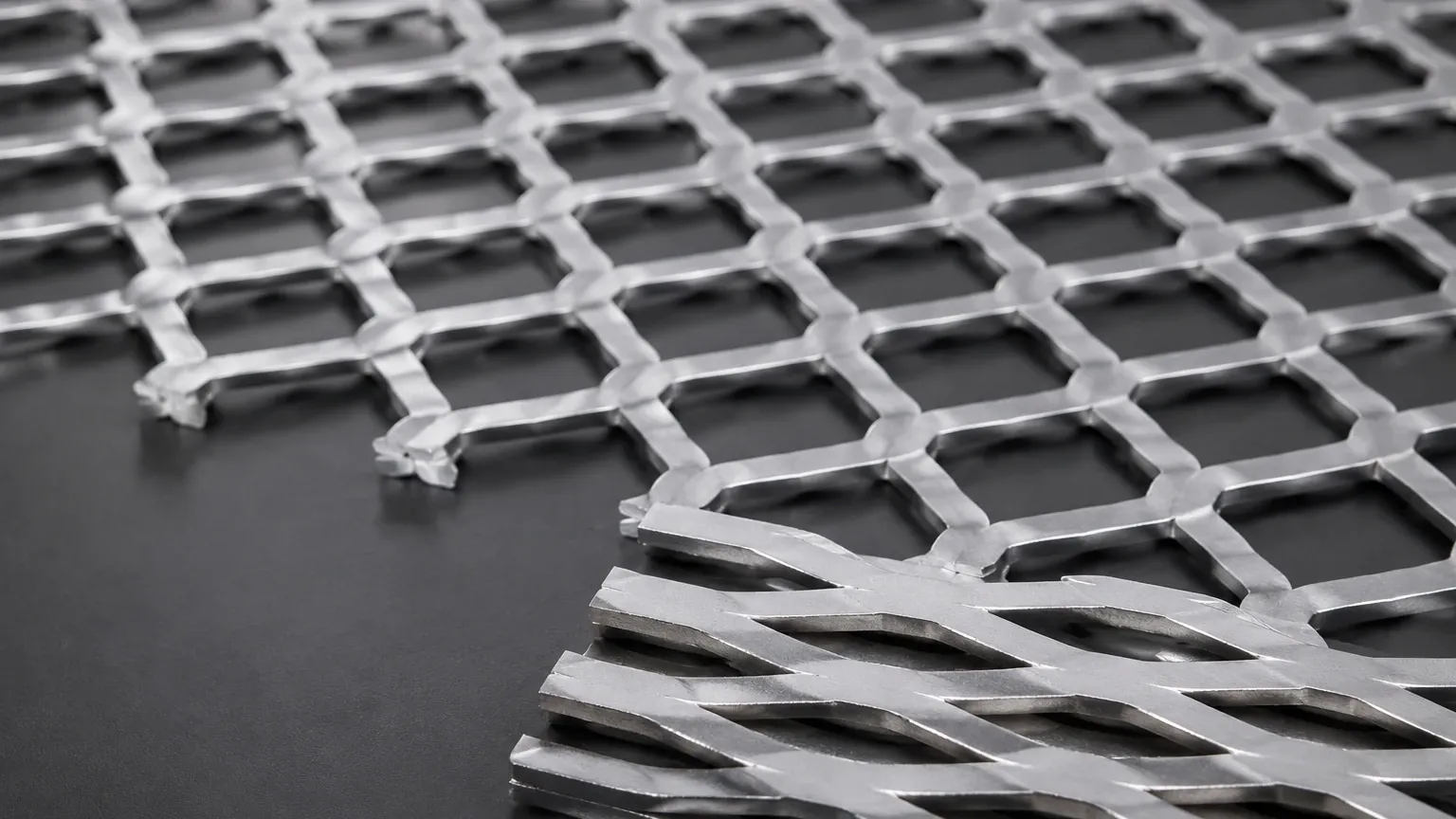
Expanded metal is an industrial material created by feeding a metal sheet through a machine that simultaneously slits and stretches the material. This process transforms a solid sheet into a diamond-patterned mesh. The designation "#7" typically refers to a specific gauge or weight classification within industrial standards, often associated with a particular thickness and opening size tailored for light-to-medium duty applications.
One of the primary advantages of this material is its monolithic structure. Because it is made from a single piece of metal, there are no welds, joints, or weaves that can unravel or corrode at the contact points. When evaluating Perforated & Expanded Metal for industrial use, engineers must distinguish between the two primary forms: standard (raised) and flattened.
Standard vs. Flattened #7 Expanded Metal
- Standard Expanded Metal: This is the material as it comes off the expanding machine. The strands and bonds are set at a sharp angle to the plane of the sheet. This provides maximum strength-to-weight ratio and excellent anti-skid properties, but the raised profile may not be suitable for all filtration support roles.
- Flattened Expanded Metal: In this secondary process, the standard expanded sheet is passed through a cold-roll reducing mill. This flattens the strands and bonds into a single plane, creating a smooth, level surface. For filtration applications where the expanded metal serves as a support for a fine wire mesh or a synthetic filter membrane, flattened #7 expanded metal is often preferred to prevent the sharp edges of the strands from puncturing the primary filtration layer.
Key Technical Specifications for Engineering Evaluation
When specifying #7 expanded metal, engineers must look beyond the simple designation and confirm four critical dimensions that define the mesh’s performance:
1. SWD (Short Way of Diamond): The distance from the center of one bond to the center of the next bond measured across the short diamond diagonal.
2. LWD (Long Way of Diamond): The distance from the center of one bond to the center of the next bond measured across the long diamond diagonal.
3. Strand Width: The amount of metal fed into the machine between the slits, which determines the width of the individual "wires" in the mesh.
4. Strand Thickness: The original thickness of the base metal sheet.
For #7 expanded metal, these dimensions are calibrated to provide a specific open area percentage. The open area is a critical calculation for filtration engineers, as it directly impacts flow rate and pressure drop across the filter element. A higher open area reduces resistance to flow but may compromise the structural rigidity required to withstand high-pressure differentials.
Material Selection: Why Stainless Steel Dominates Industrial Applications
While expanded metal can be produced from carbon steel or aluminum, industrial filtration solutions almost exclusively demand stainless steel. Kaifil specializes in utilizing 304 and 316L stainless steel for expanded metal components due to their superior performance in harsh environments.
Corrosion Resistance
In chemical processing and water treatment, the filter media is often exposed to corrosive agents or high-salinity fluids. 316L stainless steel, with its molybdenum content, provides exceptional resistance to pitting and crevice corrosion. This ensures that the #7 expanded metal support structure does not degrade and introduce metallic contaminants into the filtrate.
Thermal Stability
Industrial processes often operate at elevated temperatures. Stainless steel maintains its mechanical properties at temperatures where synthetic or lower-grade metal supports would fail. This is particularly important in steam filtration or high-temperature gas separation.
Hygiene and Cleanability
In the food, beverage, and pharmaceutical industries, the ability to sanitize equipment is paramount. Stainless steel #7 expanded metal offers a non-porous surface that resists bacterial growth and can withstand aggressive Clean-in-Place (CIP) chemicals and high-pressure washing.
Comparing Perforated & Expanded Metal for Filtration Support
Engineers often face a choice between perforated metal and expanded metal for filter cores and support cages. While both fall under the category of Perforated & Expanded Metal, they offer different mechanical advantages.
Material Efficiency: The expansion process is inherently more sustainable and cost-effective than perforation. Perforating a sheet involves punching out "slugs" of metal, which results in significant material waste (often 30% to 60%). Expanding, however, involves no waste; the original sheet is simply stretched to a larger area. This makes #7 expanded metal a more economical choice for large-scale projects without sacrificing strength.
Structural Integrity: Perforated metal allows for more precise hole geometries (round, square, or slotted). However, the expansion process creates a diamond truss-like structure that is exceptionally strong for its weight. In applications where the filter must withstand high external pressure (such as in hydraulic suction filters), the rigidity of expanded metal provides a reliable backbone for the pleats of the filter media.
Industrial Applications of #7 Expanded Metal
The #7 designation is frequently utilized in several specific industrial contexts where a balance of light weight and structural support is required.
1. Support Cores for Filter Cartridges
In many industrial filter cartridges, the primary filtration media (such as pleated paper or fine wire mesh) lacks the strength to resist the flow of fluid. A cylinder of flattened #7 expanded metal is used as an internal core or an outer wrap to prevent the media from collapsing or bursting under pressure.
2. Pre-Filtration and Strainers
In water treatment or cooling systems, #7 expanded metal acts as a primary strainer to remove large debris before the fluid reaches more sensitive downstream components. Its diamond pattern is particularly effective at trapping irregular solids that might pass through a simple slotted screen.
3. Flame Arrestors and Spark Guards
The high surface area of expanded metal makes it an excellent heat sink. In gas exhaust systems, layers of stainless steel expanded metal can be used to dissipate heat and prevent the passage of sparks or flames, providing a safety barrier in volatile environments.
4. Acoustic Dampening and Diffusion
In pneumatic systems, #7 expanded metal is used in the construction of silencers and mufflers. It helps diffuse high-velocity air, reducing noise levels while maintaining low backpressure.
Engineering Checklist: Factors to Confirm Before Specification
To ensure the successful integration of #7 expanded metal into a filtration system, purchasing teams and engineers should confirm the following technical details with their manufacturer:
* Material Grade: Is 304 sufficient, or does the chemical environment require 316L?
* Form Factor: Is the application better served by standard (raised) or flattened mesh?
* Dimensional Tolerances: What are the allowable variances in SWD and LWD for your specific housing?
* Surface Finish: Does the part require electropolishing to ensure a burr-free surface, especially for pharmaceutical or food-grade applications?
* Direction of Expansion: For cylindrical components, the orientation of the diamonds (parallel or perpendicular to the axis) can affect the ease of rolling and the final strength of the tube.
Maintenance and Longevity in Demanding Environments
The total cost of ownership for a filtration system is heavily influenced by the replacement cycle of its components. #7 expanded metal, when correctly specified in stainless steel, offers a long service life. However, maintenance teams should monitor for "blinding" or "clogging" of the mesh.
Because of the diamond shape, particles can sometimes become wedged in the corners of the openings. In systems with high solids loading, engineers should consider whether the flow velocity is sufficient to provide a self-cleaning effect or if periodic ultrasonic cleaning is required. Unlike woven wire, which can shift and change its pore size over time, the fixed geometry of expanded metal ensures consistent performance throughout its lifespan.
Conclusion
#7 expanded metal represents a sophisticated balance of engineering efficiency and mechanical strength. Whether used as a protective outer layer, a structural core, or a primary screening element, its unique diamond structure provides advantages that perforated or woven materials often cannot match. By focusing on material grade, specific diamond dimensions, and the choice between standard and flattened finishes, engineers can specify a solution that enhances the reliability of their industrial filtration systems.
As a specialist in custom stainless steel filtration, Kaifil provides the technical expertise necessary to navigate these specifications. From material selection to precision manufacturing, the goal is to deliver Perforated & Expanded Metal components that meet the rigorous demands of modern industry, ensuring that every filter performs exactly as designed under the most challenging conditions.
