


Expanded Metal 8×4
In industrial manufacturing and structural engineering, the specification of "expanded metal 8×4" refers to a standard sheet size of 8 feet by 4 feet. This dimension has become a benchmark in the industry due to its compatibility with standard transport modules, ease of handling on-site, and alignment with common architectural and engineering grids. While the dimensions of the sheet are fixed, the technical characteristics of the mesh itself—ranging from the diamond size to the material thickness—vary significantly depending on the intended application.
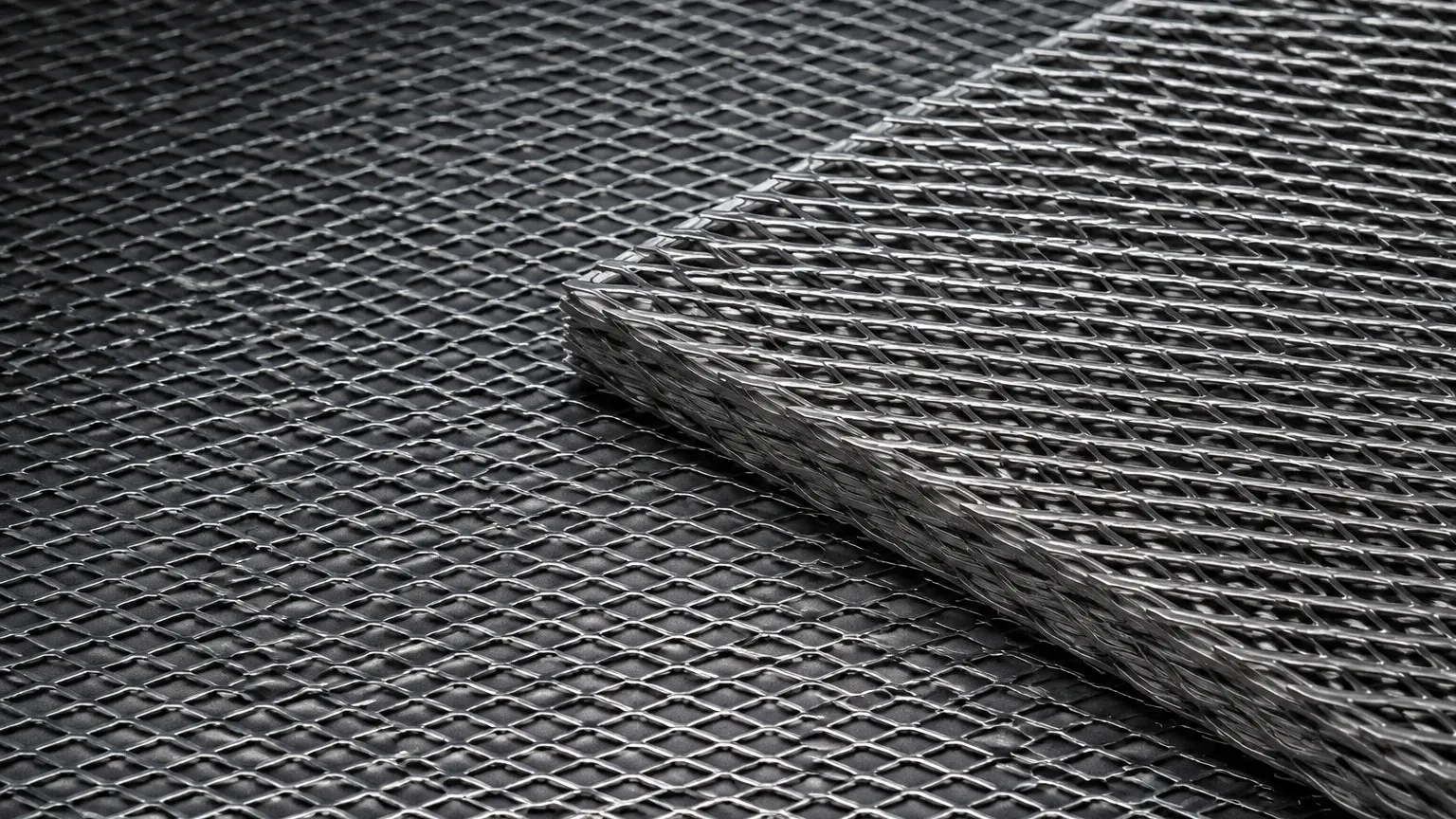
Expanded metal is produced by simultaneously slitting and stretching a solid sheet of metal. This process creates a diamond-shaped pattern of openings, resulting in a single-piece construction that is stronger and lighter than the original plate. For engineers and procurement teams, understanding the nuances of Perforated & Expanded Metal is critical for selecting components that meet specific filtration, support, or safety requirements.
Technical Anatomy of Expanded Metal Sheets
When specifying expanded metal 8×4, technical professionals must look beyond the external dimensions of the sheet. The performance of the mesh is defined by several key geometric parameters:
SWD and LWD (Short Way of Design and Long Way of Design)
These terms refer to the distances between the centers of the diamonds. SWD is the distance across the short axis of the diamond, while LWD is the distance across the long axis. These measurements are fundamental in determining the open area percentage and the structural rigidity of the sheet. In an 8×4 sheet, the orientation of these diamonds (whether the LWD runs parallel to the 8ft side or the 4ft side) can affect how the material behaves under load.
Strand Width and Thickness
The "strand" is the metal portion of the mesh. The thickness is generally the thickness of the original base metal, while the strand width is the amount of metal fed into the machine between slits. By adjusting these two variables, manufacturers can create a heavy-duty mesh for industrial walkways or a fine, lightweight mesh for precision filtration supports.
Raised vs. Flattened Expanded Metal
* Raised (Standard): The strands and bonds are set at a uniform angle to the plane of the sheet. This provides maximum strength and rigidity, as well as a skid-resistant surface.
* Flattened: The raised mesh is passed through a cold-roll reducing mill, which flattens the strands and bonds into a single plane. This results in a smoother surface, which is often preferred for filter media support to prevent abrasion or for applications where a flush surface is required for safety.
Material Selection for Demanding Environments
In industrial sectors such as chemical processing, pharmaceutical manufacturing, and food production, the choice of material for an expanded metal 8×4 sheet is governed by corrosion resistance and hygiene standards.
Stainless Steel (304, 316, 316L)
Stainless steel is the primary choice for high-performance filtration and industrial components. Grade 304 offers excellent resistance to many atmospheric environments and corrosive media, making it suitable for general industrial use. Grade 316, containing molybdenum, provides superior resistance to chlorides and acids, which is essential in chemical processing and marine applications. For components requiring welding, 316L (low carbon) is often specified to prevent carbide precipitation and maintain corrosion resistance at the weld sites.
Specialty Alloys and Coatings
Beyond stainless steel, expanded metal can be produced from aluminum for lightweight applications or galvanized steel for cost-effective outdoor structural use. However, in the context of Kaifil’s focus on precision filtration, stainless steel remains the authoritative standard due to its durability and ability to withstand rigorous cleaning cycles.
Engineering Considerations: Load, Flow, and Filtration
Engineers must evaluate several performance metrics when integrating expanded metal 8×4 into a system design.
Open Area and Pressure Drop
The percentage of open area determines how much fluid or air can pass through the mesh. In filtration applications, a higher open area reduces pressure drop across the system, improving energy efficiency. However, this must be balanced against the need for structural integrity. An expanded metal support with too much open area may fail to provide adequate backing for fine wire mesh or filter membranes.
Load-Bearing Capacity
Expanded metal is an inherently strong material because it is made from a single piece of metal without joins or welds. When used as a floor grating or a heavy-duty support, the LWD should typically span the distance between supports to maximize the material's structural strength. Engineers should consult load tables to ensure the selected strand thickness and width can handle the anticipated point loads or distributed loads.
Filtration Efficiency
While expanded metal itself is often used for coarse filtration (such as intake screens or debris guards), its most common role in precision filtration is as a support structure. It provides a rigid skeleton for finer filter media, ensuring that the media does not collapse under high-pressure differentials. The diamond pattern allows for multi-directional flow, which can help in distributing the fluid evenly across the secondary filter layer.
Comparison: Expanded Metal vs. Perforated Metal
Choosing between expanded and perforated metal is a frequent decision point for purchasing teams. While both fall under the category of Perforated & Expanded Metal, their manufacturing processes and physical properties differ.
1. Material Waste: Perforated metal is created by punching holes in a sheet, which generates scrap material. Expanded metal is slit and stretched, meaning there is virtually no material waste. This often makes expanded metal more cost-effective, especially when using expensive alloys like 316L stainless steel.
2. Structural Integrity: Because expanded metal is not punched, the structural continuity of the metal remains intact. The bonds where the diamonds meet are solid metal, providing high strength-to-weight ratios.
3. Aesthetics and Function: Perforated metal offers a wider variety of hole shapes (round, square, slotted), which may be necessary for specific technical screening requirements. Expanded metal is generally limited to diamond or hexagonal shapes but offers a three-dimensional profile (in its raised form) that perforated metal lacks.
Industrial Applications for 8×4 Sheets
The 8×4 sheet size is utilized across various sectors due to its versatility.
Chemical and Petrochemical Processing
In these environments, expanded metal 8×4 sheets are used as catalyst supports in reactors and as protective guards for sensitive instrumentation. The high corrosion resistance of stainless steel ensures that the mesh does not contaminate the process stream or fail prematurely due to chemical attack.
Food and Beverage Industry
Hygiene is paramount in food processing. Stainless steel expanded metal is used for drying trays, sorting screens, and machine safety guards. The ease of cleaning and the ability to withstand high-temperature sterilization makes it an ideal material for these applications.
Water Treatment and Hydraulics
In water treatment plants, expanded metal serves as the first line of defense in intake systems, preventing large debris from entering pumps and filtration units. In hydraulic systems, smaller sections of expanded metal are often used as protective sleeves for high-pressure filter cartridges, preventing mechanical damage to the pleated media.
Procurement and Customization: What to Confirm
Before finalizing a purchase of expanded metal 8×4, procurement teams and engineers should confirm several technical details with the manufacturer to ensure the product is fit for purpose:
* Dimensional Tolerances: While 8×4 is the nominal size, confirm the exact tolerances for length, width, and squareness. This is especially important if the sheets are to be fitted into a pre-existing frame.
* Edge Conditions: Specify whether the sheet should have "random sheared" edges (where the diamonds are cut through) or "bond sheared" edges (where the cut is made through the solid bond). Bond shearing provides a safer, smoother edge for handling.
* Surface Finish: For pharmaceutical or food-grade applications, the surface finish (e.g., 2B, electropolished) must be specified to ensure it meets sanitary standards.
* Flatness Requirements: If the expanded metal is to be used as a support for a fine membrane, the degree of flatness is critical to prevent localized stress points on the membrane.
Kaifil provides extensive OEM and customization capabilities, allowing for the production of expanded metal that meets specific industrial standards. Whether the requirement is for a standard 8×4 sheet for structural use or a custom-cut component for a complex filtration assembly, focusing on material quality and manufacturing precision is essential for long-term reliability.
Maintenance and Total Cost of Ownership
The durability of stainless steel expanded metal often leads to a lower total cost of ownership compared to cheaper materials that require frequent replacement. Maintenance typically involves regular inspection for mechanical damage or clogging, especially in filtration applications. In corrosive environments, periodic cleaning to remove surface contaminants can prevent pitting and extend the service life of the component.
When the mesh eventually reaches the end of its life—indicated by thinning strands, significant deformation, or loss of structural integrity—the 8×4 format allows for straightforward replacement, as most industrial frameworks are designed around these standard dimensions. By selecting a high-quality manufacturer like Kaifil, engineers can ensure that their filtration and support components provide consistent performance in even the most demanding industrial environments.
