


7 Gauge Expanded Metal
In the realm of industrial manufacturing and filtration, material selection is dictated by the balance between structural integrity and functional performance. 7 gauge expanded metal represents a heavy-duty solution for engineers and procurement professionals who require high mechanical strength without the excessive weight of solid plate. Measuring approximately 0.1793 inches (4.55 mm) in thickness, this specific gauge is a staple in demanding environments where filtration systems, protective guards, and structural components must withstand significant pressure or abrasive conditions.
At Kaifil, understanding the nuances of Perforated & Expanded Metal is essential for developing reliable filtration components. This guide explores the technical characteristics, application logic, and engineering considerations of 7 gauge expanded metal to assist technical teams in making informed specification decisions.
The Fundamentals of 7 Gauge Expanded Metal
Expanded metal is produced through a unique process of slitting and stretching a single sheet of metal. Unlike perforated metal, which involves punching holes and generating scrap material, expanded metal is manufactured with zero waste. This makes it a cost-effective alternative for large-scale industrial projects.
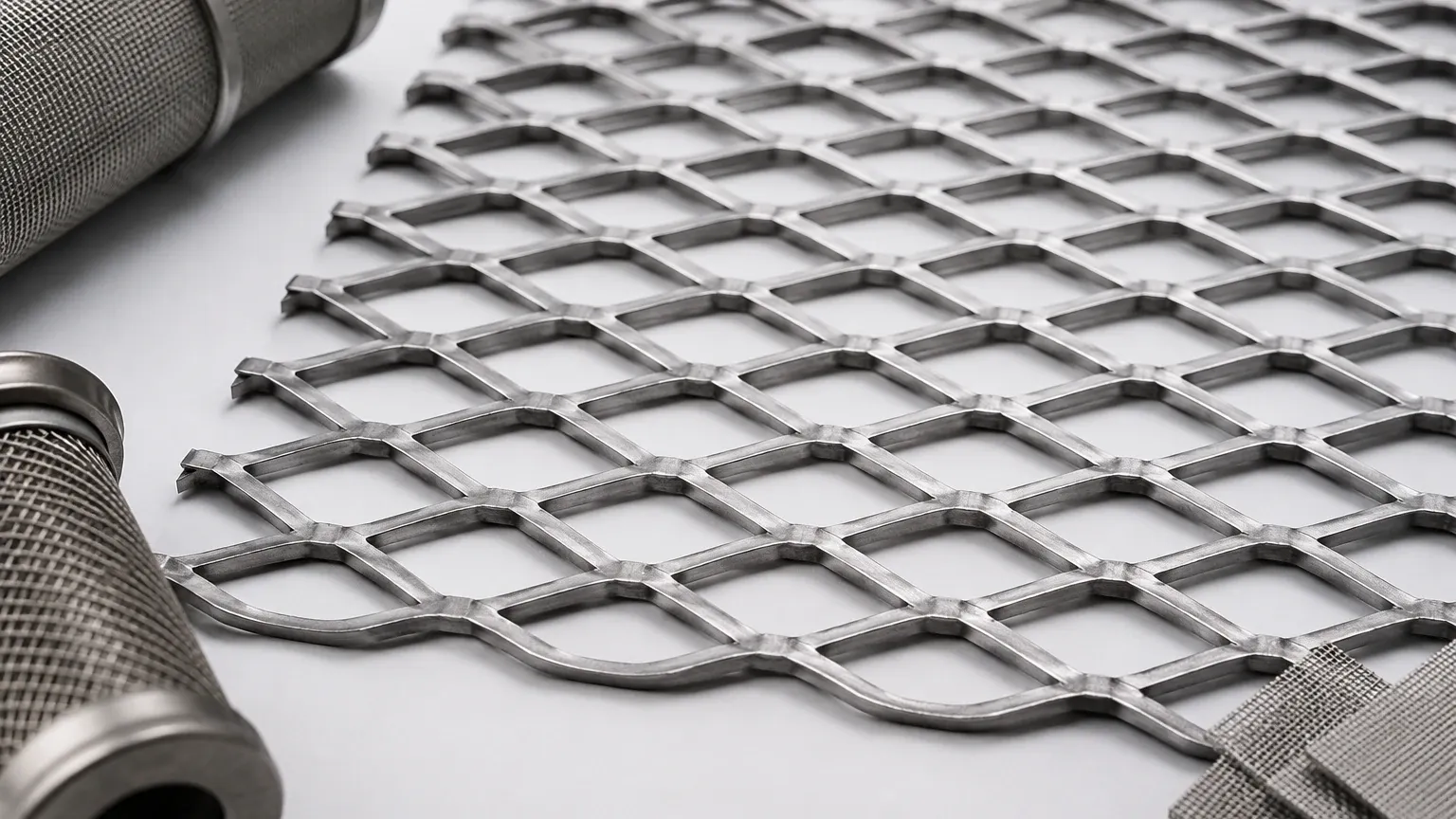
When we specify "7 gauge," we are referring to the thickness of the base metal. In the U.S. Standard Gauge system for steel, 7 gauge is substantial—nearly 3/16 of an inch. When this heavy-duty sheet is expanded, the resulting mesh inherits the rigidity of the base material while gaining the open-area benefits of a diamond pattern. The manufacturing process creates a series of interconnected strands and bonds, which distribute loads more efficiently than woven wire mesh or thin-gauge perforated sheets.
For industrial filtration, 7 gauge expanded metal is typically sourced in stainless steel (such as 304 or 316L) or carbon steel, depending on the chemical compatibility and environmental exposure of the application. Its thickness makes it particularly resistant to deformation under hydraulic surges or high-velocity gas flows.
Raised vs. Flattened: Selecting the Right Profile
One of the most critical decisions an engineer must make when specifying 7 gauge expanded metal is whether to use the "Raised" (Standard) or "Flattened" variety. Each profile offers distinct advantages for industrial processing.
Raised Expanded Metal
In its natural state after expansion, the strands are set at an angle to the plane of the sheet. This creates a three-dimensional surface. For filtration applications, raised 7 gauge expanded metal provides:
* Maximum Rigidity: The angled strands act as structural trusses, providing high resistance to bending.
* Enhanced Turbulence: In certain fluid dynamics applications, the raised profile can promote localized turbulence, which may be desirable for specific mixing or heat exchange processes.
* Superior Grip: If used for maintenance walkways or internal support structures where slip resistance is needed, the raised edges provide mechanical traction.
Flattened Expanded Metal
Flattened expanded metal is produced by passing the raised sheet through a cold-roll reducing mill. This process levels the strands and bonds into the same plane, resulting in a smooth, flat surface. For the filtration industry, flattened 7 gauge expanded metal is often preferred because:
* Media Protection: A flat surface prevents the sharp edges of the strands from puncturing or abrading delicate secondary filter media, such as fine wire mesh or synthetic membranes.
* Uniform Thickness: Flattening ensures a consistent profile height, which is critical when the metal is used as a support core within a tight-tolerance filter housing.
* Ease of Cleaning: The absence of angled crevices makes flattened metal easier to sanitize in food-grade or pharmaceutical applications.
Key Technical Specifications: SWD, LWD, and Open Area
When ordering 7 gauge expanded metal for a custom project, the gauge is only one part of the equation. Engineers must define the diamond geometry to ensure the material meets the flow and filtration requirements of the system.
1. SWD (Short Way of Diamond): The distance from the center of one bond to the center of the next bond measured across the short axis of the diamond.
2. LWD (Long Way of Diamond): The distance across the long axis of the diamond.
3. Strand Width: The amount of metal fed into the expander between slits. For 7 gauge material, a wider strand increases strength but reduces the open area.
4. Percentage of Open Area: This is the most vital metric for filtration. It determines the flow rate and the pressure drop (delta P) across the component. A 7 gauge sheet with a large diamond pattern may offer 60-70% open area, while a tighter pattern for heavy-duty support might drop to 40%.
Accurate measurement of these parameters ensures that the expanded metal will interface correctly with other filtration components, such as end caps and internal seals.
The Role of 7 Gauge Expanded Metal in Industrial Filtration Systems
In the context of Kaifil’s expertise in stainless steel filtration, 7 gauge expanded metal serves several critical roles beyond simple screening. Its primary function is often as a Structural Support Core or an Outer Protective Cage.
Internal Support Cores
In high-pressure hydraulic or chemical filtration, the primary filter media (such as pleated wire mesh) lacks the structural integrity to withstand the pressure differential as contaminants build up. A 7 gauge expanded metal core provides the "backbone" of the cartridge. Because of its thickness, it can resist collapsing even when the filter is nearing its terminal pressure drop.
Outer Guarding and Pre-Filtration
For large-scale water intake systems or industrial sumps, 7 gauge expanded metal acts as a robust pre-filter. It prevents large debris—such as rocks, wood, or industrial waste—from reaching and damaging more sensitive downstream equipment. Its mass and thickness allow it to withstand physical impacts that would shred lighter materials.
Diffusers and Flow Distributors
In large vessel filtration, expanded metal can be used to break up high-velocity fluid streams, distributing the flow evenly across the entire surface of the filter bed. This prevents "channeling," where fluid takes the path of least resistance, leading to premature localized clogging of the filter media.
Material Selection for Corrosive and High-Temperature Environments
While 7 gauge expanded metal is available in various alloys, industrial applications usually demand specific material properties to ensure a long service life.
* Stainless Steel 304: The standard choice for general industrial use. It offers excellent corrosion resistance and is suitable for most water treatment and food-processing applications.
* Stainless Steel 316L: Specified for marine environments, chemical processing, and pharmaceutical applications. The addition of molybdenum provides superior resistance to chlorides and pitting corrosion.
* Carbon Steel: Often used in hydraulic oil systems or applications where the metal is constantly submerged in non-corrosive fluids. It is often galvanized or powder-coated to prevent oxidation during storage or intermittent exposure.
* High-Nickel Alloys: For extreme temperatures (above 1000°F) or highly acidic environments, specialized alloys may be required to maintain the structural integrity of the 7 gauge strands.
Engineering Evaluation: Strength, Pressure Drop, and Compatibility
Before integrating 7 gauge expanded metal into a design, engineers should perform a rigorous evaluation of the following factors:
Mechanical Load Calculations
Will the expanded metal be subject to static or dynamic loads? In a filtration vessel, the load is often a result of the pressure differential. Engineers must calculate the "yield strength" of the expanded pattern to ensure it does not deform under maximum operating pressure.
Flow Velocity and Pressure Drop
The diamond pattern of expanded metal creates a tortuous path for fluids compared to straight-hole perforated metal. This can lead to a slightly higher pressure drop. It is essential to model the flow velocity to ensure that the 7 gauge support does not become a bottleneck in the system.
Fabrication Compatibility
7 gauge material is relatively thick, which impacts how it can be fabricated. It requires heavy-duty rolling equipment to form into cylinders and high-output welding (TIG or Plasma) to ensure secure longitudinal seams. Engineers must confirm that the chosen manufacturer has the capability to work with this thickness while maintaining tight tolerances on the final diameter.
Procurement Checklist: What Engineers Must Confirm Before Ordering
To avoid project delays and technical failures, the following details should be confirmed during the quoting and design phase:
* Edge Conditions: Do you require "Random Sheared" edges (where diamonds are cut mid-pattern) or "Bond Sheared" edges (where the cut follows the solid metal bonds)? For filter cores, bond shearing is often preferred to eliminate sharp, protruding points.
* Flattening Requirements: If the metal is being used as a support for fine mesh, specify the maximum allowable thickness of the flattened sheet to ensure it fits within the assembly.
* Surface Finish: For pharmaceutical or food applications, does the metal require electropolishing or passivation to remove surface contaminants and improve corrosion resistance?
* Tolerances: Standard commercial tolerances for expanded metal can be broad. If your filtration housing has strict clearances, specify exact tolerances for the LWD, SWD, and overall sheet dimensions.
* Material Certification: Request Mill Test Reports (MTRs) to verify the chemical composition and physical properties of the 7 gauge base metal, ensuring it meets ASTM or ISO standards.
By focusing on these technical parameters, procurement teams can ensure they receive a product that meets the rigorous demands of industrial filtration. 7 gauge expanded metal remains one of the most reliable materials for balancing cost, weight, and extreme structural durability in the field of metal filtration solutions.
