


7503 Expanded Metal
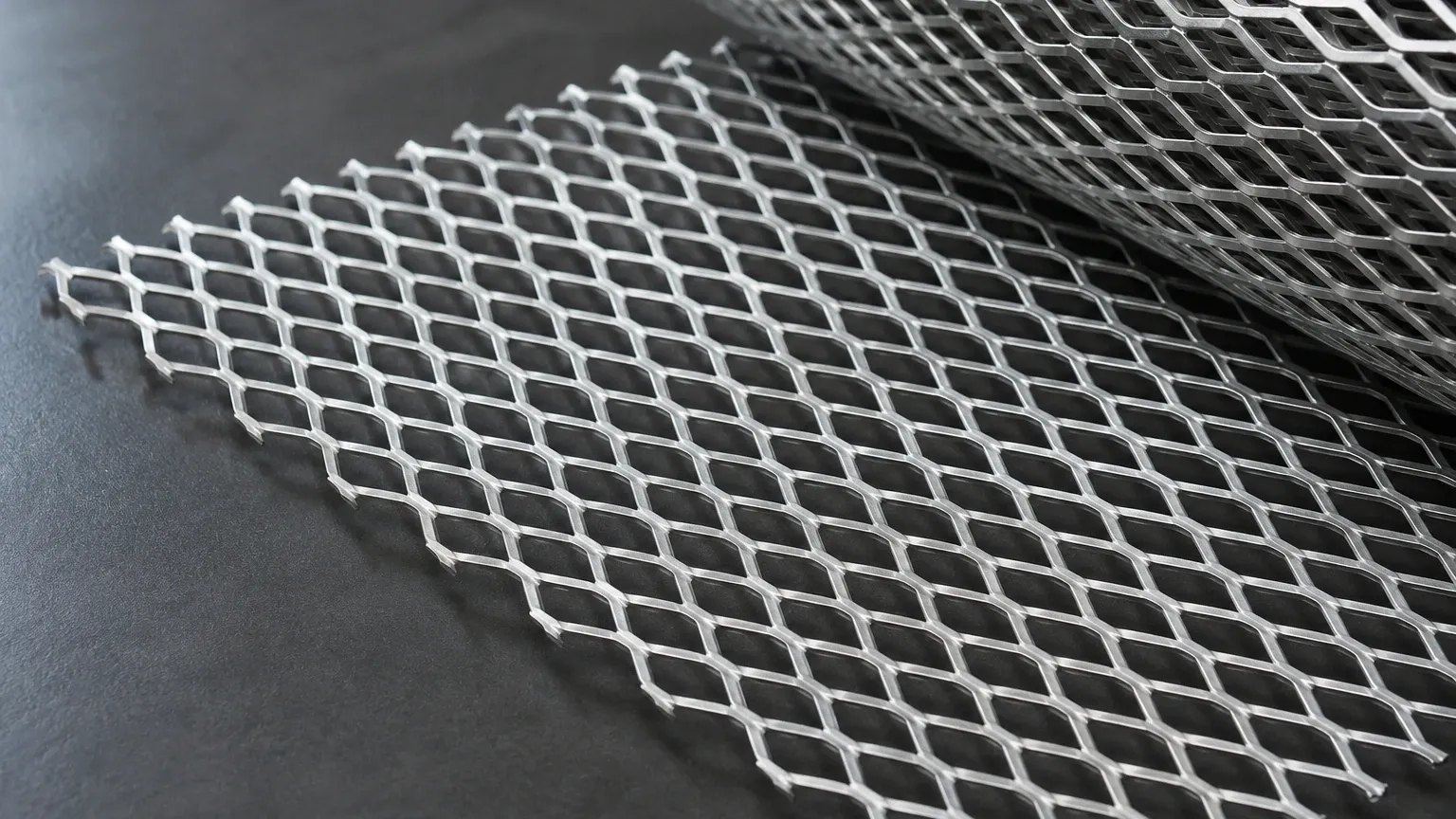
In the landscape of industrial filtration and structural support, material selection is dictated by the precise balance of mechanical strength, open area, and chemical compatibility. Among the various specifications used in heavy-duty applications, 7503 expanded metal stands out as a critical component for engineers and procurement specialists. This specific designation refers to a standardized mesh pattern produced through a process of slitting and stretching metal sheets, resulting in a diamond-shaped aperture that offers unique structural advantages over traditional woven or perforated materials.
For industries ranging from chemical processing to hydraulic systems, understanding the technical nuances of 7503 expanded metal is essential for optimizing filtration efficiency and ensuring the longevity of equipment. As a specialized manufacturer, Kaifil integrates these components into complex Perforated & Expanded Metal solutions, providing the necessary rigidity for demanding industrial environments.
The Geometry and Manufacturing of 7503 Expanded Metal
The production of 7503 expanded metal involves a precision expansion process where a solid metal sheet is simultaneously slit and cold-stretched. Unlike perforated metal, which involves punching holes and creating scrap material, the expansion process is "no-waste," making it a highly cost-effective and sustainable manufacturing method.
The "7503" designation typically follows specific industrial standards (often seen in JIS or regional architectural and industrial catalogs) that define the dimensions of the diamond opening. The geometry is defined by four primary measurements:
1. Long Way of Opening (LWO): The distance from the center of a bond to the center of the next bond across the long axis of the diamond.
2. Short Way of Opening (SWO): The distance across the short axis of the diamond.
3. Strand Width: The amount of metal fed into the machine between the slits, which determines the thickness of the "ribs" of the mesh.
4. Strand Thickness: The original thickness of the base metal sheet.
In the 7503 pattern, the resulting mesh provides a high strength-to-weight ratio. Because the metal is not cut but rather stretched, the structural integrity of the original sheet is maintained throughout the continuous bonds. This makes 7503 expanded metal an excellent choice for applications requiring rigid reinforcement without the weight of solid plate steel.
Material Compatibility in Industrial Environments
Selecting the correct alloy for 7503 expanded metal is as important as the physical dimensions of the mesh. In industrial filtration, the environment often involves exposure to corrosive chemicals, high temperatures, or high-pressure differentials. Kaifil specializes in manufacturing these components from a variety of high-performance materials:
* Stainless Steel (304 and 316L): These are the most common materials for filtration applications. Grade 304 offers excellent general-purpose corrosion resistance, while 316L is preferred for marine environments or pharmaceutical and food-grade applications where resistance to pitting and chloride-induced corrosion is paramount.
* Carbon Steel: Often used in hydraulic systems or structural supports where the mesh is protected by oils or coatings, providing a cost-effective solution for high-strength requirements.
* Aluminum: Selected for lightweight applications or environments where non-sparking and non-magnetic properties are required.
* Specialty Alloys: For extreme conditions involving high heat or aggressive acids, alloys like Monel or Inconel can be utilized in the expansion process.
When specifying 7503 expanded metal, engineers must confirm the chemical composition of the fluid being filtered to prevent premature failure due to stress corrosion cracking or general oxidation.
Structural Support in Multi-Layer Filter Cartridges
One of the primary roles of 7503 expanded metal in the B2B sector is providing internal or external support for filter media. In high-pressure filtration systems, fine wire mesh or synthetic filter fabrics lack the inherent rigidity to withstand the force of the flow.
Internal Core Support
As an internal core, the expanded metal prevents the filter media from collapsing inward under the pressure of the fluid moving from the outside in. The 7503 pattern is particularly effective here because its diamond-shaped openings provide a consistent surface area for the media to rest against, minimizing the risk of tearing or "blind-off" (where the support structure blocks too much of the filter's surface area).
External Protection (Outer Cages)
When used as an outer cage, 7503 expanded metal protects the delicate inner filtration layers from mechanical damage during installation, maintenance, or backwashing cycles. Its rigid structure acts as a shield against large debris or turbulent flow that could otherwise compromise the integrity of the filter cartridge.
Comparing Perforated & Expanded Metal for High-Pressure Applications
Engineers often face the choice between Perforated & Expanded Metal for their filtration housings and supports. While both serve similar purposes, 7503 expanded metal offers distinct advantages in specific scenarios:
* Strength-to-Weight Ratio: Expanded metal is generally stronger than a perforated sheet of the same weight. The "truss-like" structure created by the expanded strands distributes loads more efficiently than a flat perforated sheet.
* Open Area Characteristics: Perforated metal has a fixed open area based on the hole pattern. Expanded metal can be produced in "raised" or "flattened" versions. Raised expanded metal (the standard form) has strands angled to the plane of the sheet, which can actually help direct flow or create turbulence where needed. Flattened expanded metal is passed through a cold-rolling mill to create a smooth, level surface, which is ideal when the mesh needs to be flush against a delicate filter membrane.
* Cost Efficiency: Because there is no material waste in the expansion process, 7503 expanded metal is often significantly less expensive than perforated metal with similar open area percentages, especially when using high-cost alloys like stainless steel.
Engineering Considerations: Open Area and Flow Dynamics
In any filtration system, the goal is to achieve the required level of particle retention while minimizing pressure drop. The open area of 7503 expanded metal is a critical calculation for any engineering team.
The open area percentage determines the velocity of the fluid as it passes through the support structure. If the open area is too small, the velocity increases, which can lead to:
1. Increased Pressure Drop: Requiring more pump energy and increasing operational costs.
2. Erosion: High-velocity fluid can erode the strands of the mesh over time, leading to structural failure.
3. Premature Clogging: If the support structure itself begins to trap particles, the entire filter element will reach its terminal pressure drop faster than intended.
Kaifil's engineering team works with clients to calculate the effective open area of the 7503 pattern, ensuring it complements the flow characteristics of the primary filter media. This technical alignment is vital for maintaining the "Total Cost of Ownership" (TCO) by extending the interval between filter cleanings and replacements.
Customization and Quality Control in Manufacturing
Standard 7503 expanded metal may not always meet the exact requirements of a specialized industrial application. Customization is often necessary to ensure a perfect fit within existing filter housings or to meet specific structural tolerances. Kaifil provides extensive OEM capabilities for expanded metal components, including:
* Custom Slitting and Shearing: Cutting the mesh to precise widths and lengths to fit specific cartridge dimensions without jagged edges.
* Forming and Welding: Rolling the expanded metal into cylinders or cones and performing high-precision TIG or spot welding to create seamless support structures.
* Surface Finishing: Options such as electropolishing, pickling, or powder coating to improve corrosion resistance or meet sanitary standards in food and pharmaceutical applications.
Quality control is paramount. For 7503 expanded metal used in critical filtration, checks must be performed on strand consistency, bond integrity, and dimensional accuracy. Any variation in the expansion process can lead to weak spots that might fail under the cyclic loading of high-pressure industrial pumps.
Maintenance, Cleaning, and Lifecycle Management
The durability of 7503 expanded metal makes it a long-term investment, but its lifecycle is heavily dependent on proper maintenance. Unlike disposable synthetic filters, stainless steel expanded metal components are designed to be cleaned and reused.
Cleaning Protocols
In applications like food processing or oil filtration, the expanded metal support may accumulate a buildup of "filter cake" or biological films. Cleaning methods include:
* Ultrasonic Cleaning: Highly effective for removing fine particulates trapped in the junctions of the diamond mesh.
* Chemical Cleaning: Using mild acids or bases to dissolve deposits, provided the alloy (such as 316L) is compatible with the cleaning agent.
* Backwashing: Designing the system to reverse the flow, using the structural strength of the 7503 mesh to hold the media in place while debris is flushed away.
Inspection for Replacement
While expanded metal is robust, it is not indestructible. Engineers should inspect for "strand thinning" (corrosion) or "bond cracking" (fatigue). In high-vibration environments, the points where the mesh is welded to the end caps of a filter are the most common failure points. Regular inspection ensures that a support failure does not lead to a catastrophic bypass of unfiltered fluid into sensitive downstream equipment.
Conclusion: Selecting the Right Support for Your Application
7503 expanded metal is more than just a mesh; it is a precision-engineered component that ensures the reliability of industrial filtration systems. By providing a high-strength, cost-effective, and versatile support structure, it allows for the efficient operation of complex processes in the chemical, hydraulic, and water treatment sectors.
When sourcing these materials, it is vital to partner with a manufacturer that understands the technical demands of the industry. Kaifil’s expertise in Perforated & Expanded Metal ensures that every component is manufactured to the highest standards of accuracy and durability. Whether you are designing a new filtration system or seeking a more reliable replacement for existing components, confirming the material grade, open area requirements, and structural tolerances of your 7503 expanded metal is the first step toward optimized performance.
