


7502 Expanded Metal
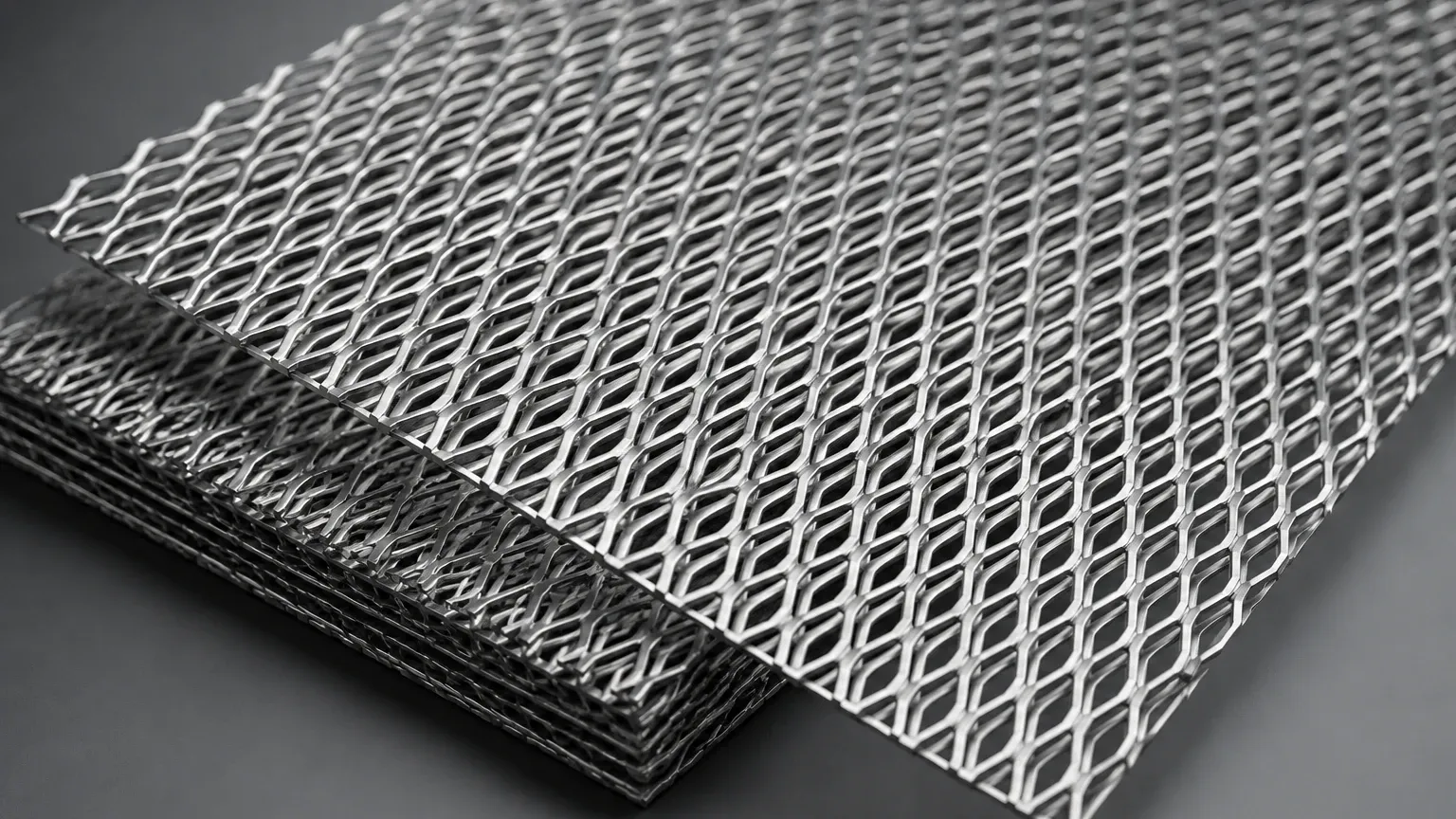
In the landscape of industrial filtration and structural support, material selection is dictated by the precise balance of mechanical strength, open area, and chemical resistance. Among the various configurations of Perforated & Expanded Metal, the 7502 expanded metal specification has emerged as a critical component for engineers designing high-performance filtration systems. This specific pattern, characterized by its small diamond apertures and robust strand geometry, serves as a versatile solution for applications ranging from hydraulic fluid filtration to chemical processing supports.
Understanding the technical nuances of 7502 expanded metal is essential for procurement teams and design engineers who must ensure that their filtration components can withstand the rigors of high-pressure environments while maintaining precise flow characteristics. This article provides a technical deep dive into the specifications, material considerations, and application-specific advantages of this expanded metal configuration.
Understanding the Technical Specifications of 7502 Expanded Metal
Expanded metal is manufactured through a process of simultaneous slitting and stretching of metal sheets. Unlike perforated metal, which involves punching holes and creating scrap, expanded metal is produced with zero waste, making it a cost-effective alternative for many industrial applications. The "7502" designation typically refers to a specific set of dimensional parameters within an industrial catalog, often signifying a fine-mesh pattern suitable for precision tasks.
Key Dimensional Parameters
To evaluate 7502 expanded metal for an engineering project, four primary measurements must be confirmed:
1. Long Way of Diamond (LWD): This is the distance from the center of one bond to the center of the next bond across the long axis of the diamond. In 7502 patterns, the LWD is optimized to provide structural rigidity while allowing for a high density of openings.
2. Short Way of Diamond (SWD): This measurement across the short axis dictates the primary filtration threshold if the expanded metal is used as a standalone screen. For 7502 configurations, the SWD is typically small, often falling within the range of 2.0mm to 5.0mm, depending on the specific manufacturer's standard.
3. Strand Width: The amount of metal between the openings. This dimension is critical for determining the overall strength and the percentage of open area.
4. Strand Thickness: This refers to the thickness of the original base material. For industrial filtration, stainless steel thicknesses for 7502 patterns usually range from 0.5mm to 1.5mm.
Calculating Open Area
The open area of 7502 expanded metal is a vital metric for engineers calculating flow rates and pressure drops. Because the expansion process tilts the strands, the "effective" open area can vary depending on whether the material is used in its "raised" or "flattened" state. Generally, 7502 patterns offer an open area between 40% and 60%, providing an excellent balance between throughput and structural support for finer filter media like woven wire mesh.
Material Selection and Chemical Compatibility
The performance of 7502 expanded metal is heavily dependent on the alloy from which it is fabricated. Since these components are often integrated into filter cartridges used in aggressive environments, material science plays a leading role in the selection process.
Stainless Steel 304 vs. 316L
* Grade 304: This is the standard industrial choice for general-purpose applications. It offers excellent formability and welding characteristics, making it ideal for the cylindrical shaping required in filter cartridge manufacturing. It is suitable for food and beverage applications and many water treatment processes.
* Grade 316L: For chemical processing, pharmaceutical manufacturing, or marine environments, 316L is the preferred specification. The addition of molybdenum provides superior resistance to pitting and crevice corrosion in chloride-rich environments. The "L" (Low Carbon) designation is particularly important for 7502 expanded metal that will undergo extensive welding, as it minimizes carbide precipitation and maintains corrosion resistance at the weld joints.
Specialty Alloys
In extreme cases, such as high-temperature petrochemical refining or highly acidic chemical synthesis, 7502 patterns may be produced using Hastelloy, Monel, or Inconel. These alloys are selected when standard stainless steels would fail due to thermal oxidation or rapid chemical degradation. When specifying these materials, engineers must account for the different expansion ratios and mechanical properties compared to standard carbon or stainless steels.
Raised vs. Flattened: Mechanical Performance in Filtration
One of the most important decisions when specifying 7502 expanded metal is choosing between the raised (standard) and flattened finishes. Each has distinct mechanical properties that impact the final filtration assembly.
Raised (Standard) Expanded Metal
In its raised state, the strands of the 7502 pattern are set at an angle to the plane of the sheet. This creates a three-dimensional surface that offers several advantages:
* Enhanced Rigidity: The angled strands act like structural trusses, providing high resistance to bending and crushing. This is particularly useful for internal support cores in high-pressure hydraulic filters.
* Improved Turbulence: In certain liquid filtration applications, the raised profile can induce controlled turbulence, which may help prevent the rapid buildup of a filter cake on the primary media layer.
* Mechanical Grip: The textured surface provides an excellent substrate for bonding or over-molding with polymer components.
Flattened Expanded Metal
Flattened 7502 expanded metal is produced by passing the raised sheet through a cold-rolling reducing mill. This process levels the strands into a single plane, resulting in a smooth, flat surface. The benefits include:
* Uniform Thickness: Flattening ensures a consistent thickness across the entire sheet, which is critical for precision fitment within tight-tolerance filter housings.
* Media Protection: When used as an outer protective sleeve or an inner support for delicate wire mesh or pleated paper, the smooth surface of flattened expanded metal prevents abrasion and puncturing of the primary filtration media.
* Ease of Cleaning: For reusable filters, the flat surface is significantly easier to backwash or mechanically clean compared to the recessed pockets of a raised pattern.
The Role of 7502 Expanded Metal in Industrial Filtration Systems
While 7502 expanded metal can be used for ventilation grilles or security screening, its primary B2B application is within industrial filtration assemblies. Here, it typically performs one of three roles: support, protection, or coarse filtration.
Filter Core Support
In high-pressure applications, such as hydraulic systems or oil-gas separation, the primary filtration media (often a fine stainless steel wire mesh) lacks the structural integrity to withstand the differential pressure. 7502 expanded metal is rolled into a cylinder and welded to form a rigid inner core. The small diamond pattern provides frequent support points for the mesh, preventing it from collapsing or deforming under load.
Protective Outer Sleeves
For filter cartridges used in rugged environments, an outer sleeve of expanded metal protects the delicate pleated media from handling damage during installation and from large debris in the process stream. The 7502 pattern is often chosen because its opening size is small enough to block significant contaminants while maintaining a high enough open area to ensure it does not become the primary point of pressure drop.
Pre-Filtration and Coarse Screening
In water treatment and pulp and paper processing, 7502 expanded metal may serve as a standalone coarse screen. It is effective at removing large particulates, scale, and organic matter before the fluid reaches more expensive, fine-filtration stages. Its monolithic construction (no moving parts or woven wires that can shift) ensures a consistent filtration threshold over long service cycles.
Engineering Evaluation: Flow Dynamics and Pressure Drop
When integrating 7502 expanded metal into a system, engineers must look beyond simple dimensions and consider the fluid dynamics involved. The geometry of the expanded metal significantly influences the flow path of the medium.
Pressure Drop (ΔP) Considerations
The pressure drop across a layer of 7502 expanded metal is a function of the fluid velocity, viscosity, and the effective open area of the mesh. Because expanded metal strands are aerodynamic in one direction but offer resistance in another (due to the angle of the strands), the orientation of the mesh relative to the flow can impact ΔP. In precision applications, it is common to perform CFD (Computational Fluid Dynamics) modeling to ensure that the support structure does not introduce parasitic power losses to the pumping system.
Structural Integrity Under Differential Pressure
In a filtration cycle, as the media becomes loaded with contaminants, the differential pressure across the filter increases. The 7502 expanded metal support must be engineered to withstand the maximum expected ΔP without permanent deformation. Engineers should confirm the "collapse pressure" rating of the expanded metal core, which is determined by the material grade, strand thickness, and the diameter of the finished cylinder.
Quality Control and Customization Standards
Procuring 7502 expanded metal for industrial use requires strict adherence to quality standards to ensure consistency across production batches. Variations in strand width or thickness can lead to catastrophic failures in high-pressure systems.
Manufacturing Tolerances
Standard industrial tolerances for expanded metal often allow for slight variations in LWD and SWD. However, for filtration-grade components, tighter tolerances are required. Buyers should specify tolerances for:
* Camber: The bow in the sheet or strip.
* Out-of-Square: The deviation of the diamond pattern relative to the edges.
* Flattening Uniformity: Ensuring no "high spots" exist that could damage secondary media.
Customization Options
Manufacturers like Kaifil provide extensive customization for 7502 patterns to meet specific OEM requirements. This includes:
* Custom Slitting: Providing the material in precise strip widths for continuous tube-welding machines.
* Annealing: Stress-relieving the metal to improve ductility for complex forming operations.
* Surface Finishes: Electropolishing or passivating stainless steel components to enhance corrosion resistance and meet sanitary standards for food and pharmaceutical applications.
Conclusion: Selecting the Right Partner for Expanded Metal Solutions
The 7502 expanded metal specification is more than just a mesh pattern; it is a critical engineering component that ensures the reliability and efficiency of industrial filtration systems. By carefully considering material grades, the choice between raised and flattened profiles, and the specific mechanical demands of the application, engineers can optimize their designs for both performance and longevity.
When sourcing these components, it is essential to work with a manufacturer that understands the technical rigors of industrial filtration. From material traceability to precision manufacturing, the quality of the expanded metal directly impacts the total cost of ownership of the filtration system. For technical teams looking to integrate high-performance materials into their projects, it is advisable to Review product options and application support to ensure the selected 7502 configuration aligns with the specific engineering requirements of the task at hand.
