


.75 Expanded Metal
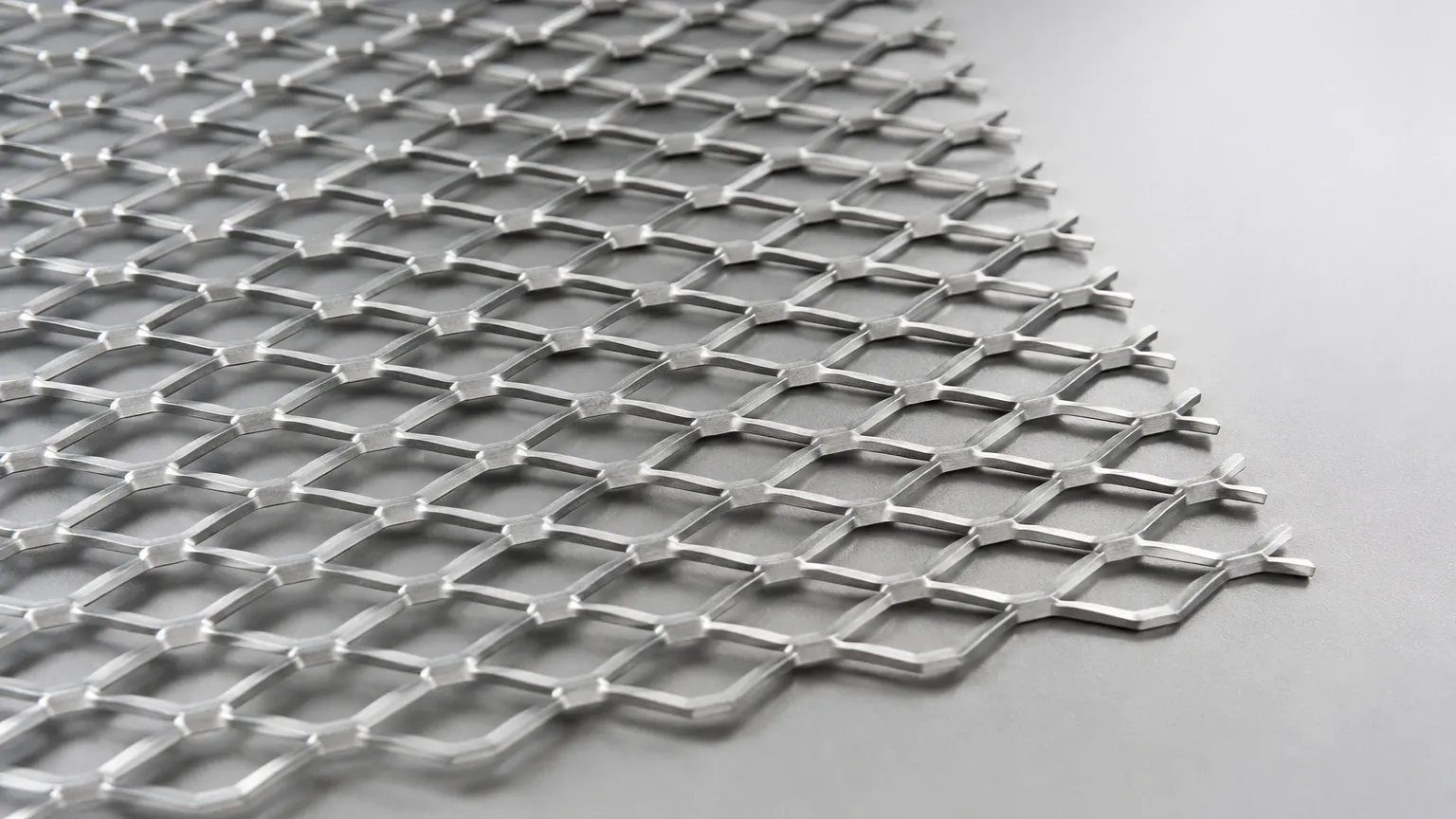
In the realm of industrial filtration and structural support, .75 expanded metal—commonly referred to as 3/4-inch expanded metal—represents one of the most versatile and widely utilized specifications. This material is characterized by its diamond-shaped openings, created through a process of simultaneously slitting and stretching solid metal sheets. For engineers and procurement professionals, understanding the technical nuances of .75 expanded metal is essential for ensuring structural integrity, filtration efficiency, and long-term durability in demanding environments.
Kaifil specializes in providing high-performance Perforated & Expanded Metal solutions tailored to specific industrial requirements. Whether used as a protective outer cage for filter elements or a rigid support structure for fine wire mesh, the selection of the correct expanded metal specification directly impacts the performance of the final assembly.
Understanding the Geometry of .75 Expanded Metal
The designation ".75" or "3/4-inch" refers to the nominal width of the diamond opening, but it does not tell the whole story. To specify this material accurately for an engineering project, one must understand the two primary directional measurements: the Short Way of the Diamond (SWD) and the Long Way of the Diamond (LWD).
SWD and LWD Explained
* Short Way of the Diamond (SWD): This is the distance from the center of one bond to the center of the next bond, measured across the short axis of the diamond. For standard .75 expanded metal, the SWD typically ranges from 0.923 inches to 1.0 inch, depending on the specific style (e.g., #9 vs. #13).
* Long Way of the Diamond (LWD): This is the distance measured across the long axis of the diamond. In .75 specifications, the LWD is generally approximately 2.0 inches to 2.1 inches.
The orientation of these diamonds is critical during the fabrication of filter cartridges. Often, the LWD is oriented parallel to the length of the cylinder to provide maximum hoop strength, which is vital for withstanding internal or external pressure differentials.
Strand Dimensions
The performance of .75 expanded metal is further defined by the strand width and strand thickness. The strand width refers to the amount of metal fed into the precision dies between slits, while the thickness refers to the gauge of the original base metal. By varying these dimensions, manufacturers like Kaifil can produce "Lightweight" (#16), "Standard" (#13), or "Heavy Duty" (#9) versions of the .75 opening size.
Standard vs. Flattened .75 Expanded Metal
When selecting .75 expanded metal, engineers must choose between two primary physical forms: Standard (Raised) and Flattened. Each offers distinct advantages depending on the application.
Standard (Raised) Expanded Metal
Standard expanded metal is the product as it comes off the expanding machine. The strands and bonds are set at a uniform angle to the plane of the sheet. This creates a three-dimensional surface that provides:
* High Strength-to-Weight Ratio: The angled strands provide inherent structural rigidity.
* Enhanced Grip and Turbulence: In fluid dynamics, the raised edges can induce beneficial turbulence or act as a primary coarse screen to deflect larger debris.
* Maximum Rigidity: It is significantly stiffer than a flat sheet of the same weight.
Flattened Expanded Metal
Flattened expanded metal is produced by passing the standard expanded sheet through a cold-roll reducing mill. This process flattens the strands and bonds into a single plane, resulting in a smooth, level surface. For filtration applications, flattened .75 expanded metal is often preferred because:
* Surface Protection: The smooth surface prevents the expanded metal from abrading or puncturing delicate inner layers of fine wire mesh or synthetic filter media.
* Precise Thickness: The rolling process ensures a consistent overall thickness, which is critical when the material must fit into tight tolerances within a filter housing or end cap.
* Ease of Cleaning: Without the recessed angles of the raised version, flattened metal is easier to sanitize in food-grade or pharmaceutical applications.
Material Selection for Industrial Filtration Environments
The choice of material for .75 expanded metal is dictated by the chemical environment, temperature, and mechanical stress of the application. While carbon steel is common for general industrial use, Kaifil’s expertise lies in stainless steel and specialty alloys for high-performance filtration.
Stainless Steel (304 and 316L)
Stainless steel is the gold standard for expanded metal in the chemical processing, pharmaceutical, and food and beverage industries.
* Type 304: Offers excellent corrosion resistance and strength for most water treatment and general industrial applications.
* Type 316L: Contains molybdenum, providing superior resistance to chlorides and pitting. It is the preferred choice for marine environments and aggressive chemical filtration.
Carbon Steel
For hydraulic oil filtration or structural supports where corrosion is not a primary concern, carbon steel provides a cost-effective solution. It can be further protected through galvanizing or powder coating, though these coatings must be evaluated for compatibility with the process fluid.
Aluminum
In applications where weight reduction is a priority—such as aerospace filtration or portable equipment—aluminum .75 expanded metal offers a high strength-to-weight ratio and natural atmospheric corrosion resistance.
Engineering Considerations: Open Area and Pressure Drop
One of the most critical factors for an engineer to calculate when using .75 expanded metal is the Percentage of Open Area. This value determines the flow capacity and the pressure drop (delta P) across the filter element.
For a standard .75 expanded metal specification (such as 3/4" #9), the open area typically falls between 60% and 75%. However, this varies based on the strand width.
* High Open Area: Minimizes flow resistance and energy consumption of pumps. It is ideal for high-flow systems where the expanded metal acts primarily as a guard.
* Lower Open Area: Increases the structural strength of the component. If the .75 expanded metal is serving as the primary support for a high-pressure hydraulic filter, a wider strand (resulting in lower open area) may be necessary to prevent the filter media from collapsing under pressure.
Engineers must balance the need for structural support against the allowable pressure drop. Kaifil provides technical data to help determine the optimal balance for custom filtration designs.
Structural Applications and Filter Support
In industrial filtration, .75 expanded metal rarely acts alone. It is usually a component of a multi-layer system. Its role is primarily structural, serving as the "skeleton" of the filter.
Inner and Outer Cores
In large cylindrical filter cartridges, .75 expanded metal is rolled into a tube. As an outer cage, it protects the pleated media from mechanical damage during handling and installation. As an inner core, it provides the necessary collapse strength to resist the pressure of the fluid flowing from the outside in.
Support for Fine Mesh
When using high-precision wire mesh (which can be as thin as a few microns), the mesh lacks the structural integrity to hold its shape under flow. A layer of .75 expanded metal provides a rigid backing. The 3/4-inch opening size is particularly effective because it provides large windows for fluid passage while maintaining enough contact points to support the mesh uniformly.
Debris Protection
In water intake systems or heavy industrial strainers, .75 expanded metal serves as a coarse pre-filter. It prevents large objects—such as stones, wood, or large biological matter—from reaching and damaging more sensitive downstream equipment or finer filter stages.
Procurement Checklist for .75 Expanded Metal
When ordering .75 expanded metal for a B2B project, providing vague specifications can lead to costly errors. Procurement teams should confirm the following details with the manufacturer:
1. Style Designation: Specify the weight (e.g., 3/4" #9, 3/4" #13, or 3/4" #16).
2. Standard vs. Flattened: Explicitly state if a smooth surface is required.
3. Material Grade: Confirm the exact alloy (e.g., SS316L vs. SS304).
4. Sheet or Coil Dimensions: Define the required width and length. If the material is being used for automated filter assembly, coil form may be preferred.
5. Direction of Diamond: Specify if the SWD or LWD should run parallel to the length of the sheet.
6. Edge Conditions: Do you require "Bond Sheared" edges (closed diamonds) or "Random Sheared" edges (open diamonds)? Bond shearing is generally safer for handling and provides a cleaner weld point.
7. Surface Finish: For stainless steel, specify if pickling, passivation, or electropolishing is required to ensure maximum corrosion resistance.
Quality Control and Manufacturing Standards
At Kaifil, the production of .75 expanded metal is governed by strict quality control protocols. Because these components are often used in critical industrial processes, dimensional accuracy is paramount.
* Flatness Tolerances: For flattened metal, ensuring the sheet remains within a specified flatness range is vital for subsequent laser cutting or welding processes.
* Strand Uniformity: Inconsistent strand width can lead to weak points in the mesh, which may fail under high-pressure pulses in a hydraulic system.
* Material Certification: Factual verification of material chemistry through Mill Test Reports (MTRs) ensures that the stainless steel provided meets the corrosion resistance requirements of the application.
Conclusion
.75 expanded metal is a foundational material in industrial filtration, offering a unique combination of strength, open area, and versatility. By understanding the technical differences between standard and flattened styles, and by carefully selecting the appropriate material grade and strand dimensions, engineers can optimize their filtration systems for both performance and longevity.
As a professional manufacturer, Kaifil is committed to delivering precision-engineered filtration components that meet the most demanding specifications. For technical consultation on incorporating expanded metal into your next filtration project, Review product options and application support to ensure your design achieves the highest standards of durability and efficiency.
