


Expanded Metal Din 791
In the landscape of industrial filtration and structural engineering, standardization is the cornerstone of reliability and precision. For engineers and procurement specialists dealing with metal mesh components, the DIN 791 standard serves as the primary technical reference for expanded metal. Understanding the nuances of expanded metal din 791 is essential for ensuring that filtration media, support structures, and protective screens meet the rigorous demands of chemical processing, water treatment, and hydraulic applications.
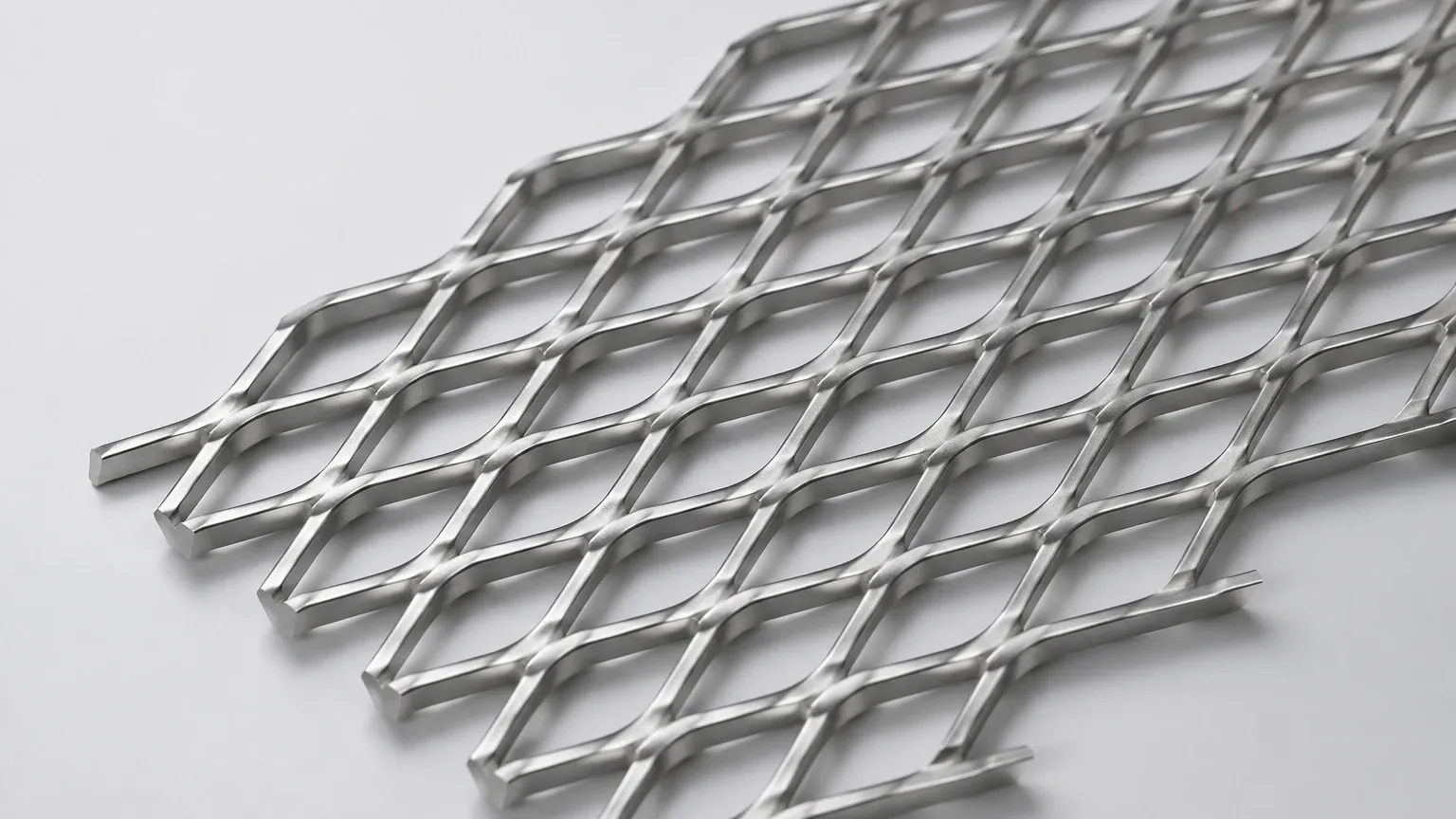
Expanded metal is produced by simultaneously slitting and stretching a solid sheet of metal, creating a diamond-shaped pattern of openings. Unlike perforated metal, which involves punching out material, expanded metal is formed without waste, maintaining the structural integrity of the original sheet while providing a high strength-to-weight ratio. When these components are specified for industrial use, adhering to DIN 791 ensures that dimensional tolerances and terminology are consistent across global supply chains.
The Role of DIN 791 in Industrial Expanded Metal Specification
DIN 791 is a German standard that provides a comprehensive framework for the terminology, dimensions, and delivery conditions of expanded metal. For B2B buyers and engineers, this standard eliminates ambiguity during the design and procurement phases. When a project requires Perforated & Expanded Metal for a high-pressure filtration system, referencing DIN 791 ensures that the manufacturer and the end-user are operating with the same technical definitions.
The standard categorizes expanded metal based on its geometry and the method of production. It distinguishes between "raised" expanded metal, where the strands are turned at an angle to the plane of the sheet, and "flattened" expanded metal, which has been cold-rolled to create a smooth, level surface. In filtration applications, this distinction is critical; raised mesh provides more turbulence and surface area, while flattened mesh is often preferred for support layers where a thin profile and smooth contact surface are required to prevent damage to fine filter membranes.
Technical Parameters and Geometry Defined by DIN 791
To accurately specify expanded metal under the DIN 791 framework, several key measurements must be defined. These parameters dictate the mechanical strength, open area, and filtration efficiency of the component.
1. Mesh Length (LWD – Long Way of Diamond): This is the distance from the center of one bond to the center of the next bond across the long axis of the diamond. In DIN 791 terminology, this is often referred to as the *Maschenlänge*.
2. Mesh Width (SWD – Short Way of Diamond): The distance from the center of one bond to the center of the next bond across the short axis. This is known as the *Maschenbreite*.
3. Strand Width: The amount of metal between the openings, measured perpendicular to the strand. This determines the overall density and weight of the mesh.
4. Strand Thickness: The thickness of the original base material. For stainless steel filtration solutions, maintaining precise strand thickness is vital for ensuring the mesh can withstand differential pressures without deforming.
5. Overall Thickness: In raised expanded metal, the total thickness of the finished product is significantly greater than the base material thickness due to the angle of the strands.
By utilizing the expanded metal din 791 standard, engineers can calculate the percentage of open area with high accuracy. This calculation is fundamental to determining flow rates and pressure drops in industrial filtration systems. A higher open area reduces resistance to flow but may sacrifice structural rigidity, requiring a balanced engineering approach based on the specific application environment.
Material Selection for Stainless Steel Expanded Metal
While DIN 791 focuses on dimensions and geometry, the choice of material is equally important for industrial performance. In the sectors served by Kaifil—such as pharmaceutical, food and beverage, and chemical processing—stainless steel is the preferred material due to its corrosion resistance and thermal stability.
* AISI 304/304L: The most common grade for general industrial use. It offers excellent formability and resistance to atmospheric corrosion and many organic and inorganic chemicals.
* AISI 316/316L: Contains molybdenum, which provides superior resistance to pitting and crevice corrosion, particularly in chloride-rich environments or marine applications. This is the standard choice for pharmaceutical and high-purity chemical filtration.
* High-Nickel Alloys: For extreme environments involving high temperatures or highly aggressive acids, specialized alloys may be used in conjunction with DIN 791 dimensional specifications.
Selecting the right material ensures that the expanded metal component does not introduce contaminants into the process stream and maintains its structural integrity over long operational cycles. For engineers, confirming material certifications (MTRs) alongside DIN 791 compliance is a standard part of the quality assurance process.
Integration into Industrial Filtration Systems
Expanded metal is rarely used in isolation within a filtration system. Instead, it typically serves as a critical component in a multi-layered filter assembly. Its primary roles include:
Support for Fine Filter Media
In pleated filter cartridges or high-precision wire mesh filters, the fine filtration layer is often too delicate to withstand high-pressure flow on its own. Expanded metal din 791 compliant sheets are used as inner or outer support cores. The diamond pattern provides a rigid skeleton that prevents the fine mesh from collapsing or migrating under pressure.
Coarse Pre-Filtration
In water treatment and hydraulic systems, expanded metal acts as a primary strainer to remove large debris before the fluid reaches finer downstream components. The robust nature of expanded metal makes it ideal for capturing heavy particles that might tear or clog finer woven wire meshes.
Flow Diffusion and Turbulence Generation
In certain chemical reactors and heat exchangers, the raised strands of expanded metal are used to create controlled turbulence. This promotes better mixing of fluids or more efficient heat transfer. The precise geometry defined by DIN 791 allows engineers to model these flow characteristics during the design phase.
Evaluating Performance: Flow Rate and Structural Integrity
When evaluating expanded metal for a specific project, engineers must look beyond simple dimensions. The performance of the mesh is a result of the interaction between its geometry and the fluid dynamics of the application.
Pressure Drop (ΔP): The resistance offered by the expanded metal to the fluid flow. This is influenced by the strand angle and the percentage of open area. DIN 791 provides the dimensional consistency needed to perform repeatable pressure drop calculations.
Mechanical Stability: Expanded metal has a unique property where it is stiffer in one direction than the other. The "long way" of the diamond typically offers more structural rigidity. When designing cylindrical filter cartridges, the orientation of the mesh (whether the LWD runs circumferentially or axially) significantly affects the burst strength and collapse pressure of the cartridge.
Cleaning and Maintenance: In the food and beverage industry, cleanability is paramount. Flattened expanded metal is often easier to clean in place (CIP) because it lacks the crevices found in raised mesh where bacteria or particles could become trapped. Engineers must specify the surface finish and the "flattened" designation within the DIN 791 framework to meet these hygiene standards.
Customization and Procurement Considerations for Engineers
Purchasing industrial filtration components requires a clear understanding of customization options. While DIN 791 provides the standard, many applications require tailored solutions to fit specific housing dimensions or performance targets. When working with a manufacturer like Kaifil, engineers should be prepared to confirm several details before moving to production:
1. Tolerances: While DIN 791 defines standard tolerances, some high-precision applications in the aerospace or pharmaceutical sectors may require tighter limits on strand width or mesh opening.
2. Edge Conditions: Expanded metal can be supplied with "random sheared" edges or "bond sheared" edges. For filter cartridges, smooth edges are often necessary to ensure a proper seal with end caps and to prevent damage to outer wraps.
3. Surface Treatment: Depending on the application, the expanded metal may require electropolishing, pickling, or passivating to enhance corrosion resistance and remove surface impurities introduced during the expanding process.
4. Quantity and Form Factor: Specify whether the material is needed in flat sheets, slit-to-width coils, or pre-formed cylinders. Custom fabrication at the source reduces waste and assembly time for the end-user.
By focusing on these technical details, procurement teams can avoid common risks such as material fatigue, premature clogging, or chemical incompatibility. The total cost of ownership (TCO) for a filtration system is significantly reduced when the components are engineered for durability and precise fitment from the outset.
Conclusion: The Value of Standardized Precision
Adhering to the expanded metal din 791 standard is more than a matter of compliance; it is a commitment to engineering excellence. For the industries that rely on precise filtration—from the purity of a pharmaceutical batch to the reliability of a hydraulic power unit—the quality of the expanded metal support structure is fundamental.
By combining the dimensional rigor of DIN 791 with high-grade stainless steel and advanced manufacturing techniques, Kaifil provides the dependable filtration components required for today’s demanding industrial environments. Whether you are designing a new system or looking to optimize an existing process, understanding the technical boundaries of expanded metal ensures that your filtration solution will perform as expected, session after session. For those seeking to explore specific configurations or technical data sheets, it is advisable to Review product options and application support to find the optimal match for your engineering requirements.
