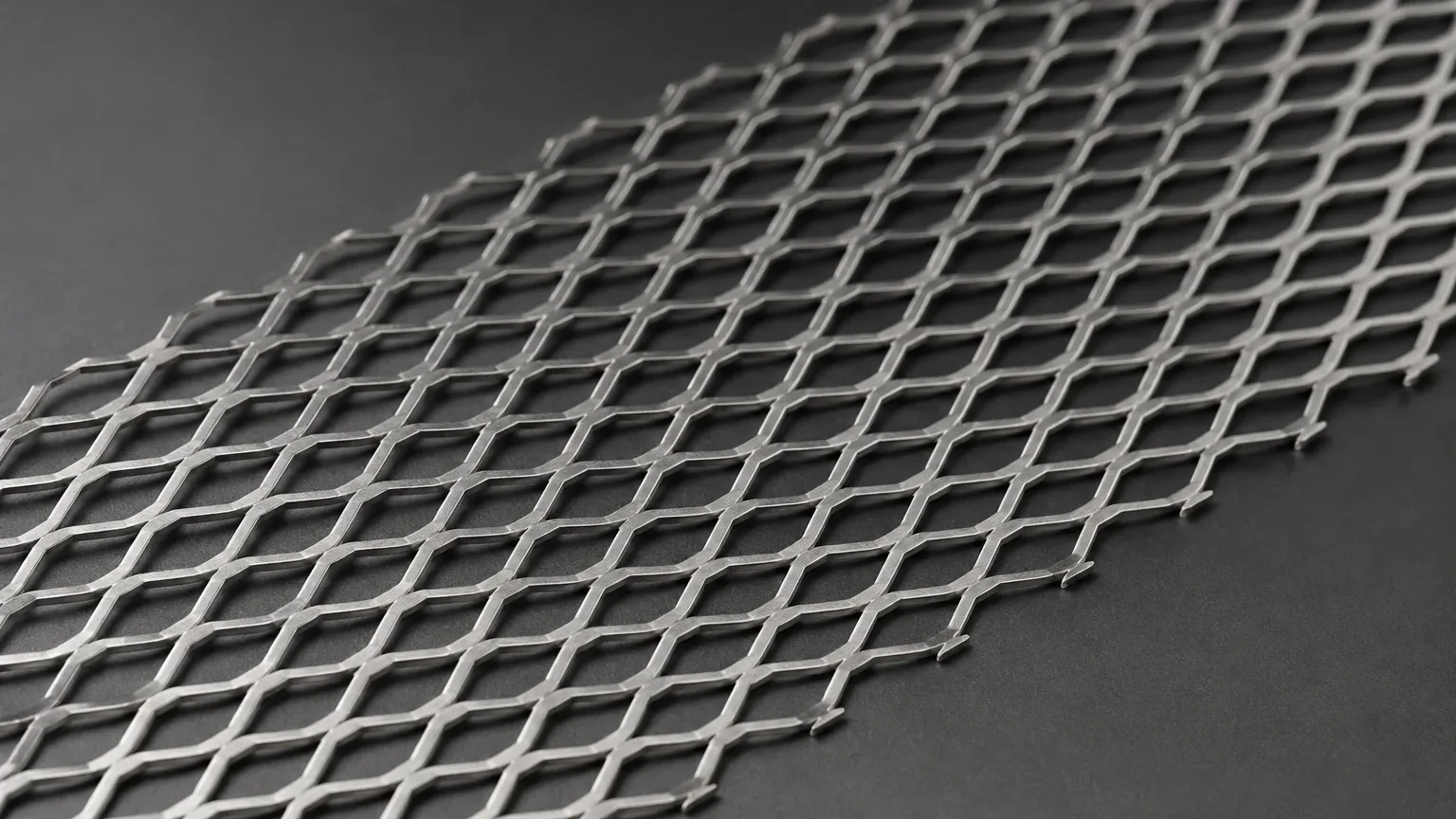
#9 3 4 Expanded Metal
In the landscape of industrial filtration and structural support, #9 3/4 expanded metal stands as one of the most versatile and robust materials available to engineers. Characterized by its specific diamond-shaped openings and heavy-duty gauge, this material is frequently utilized as a foundational component in high-pressure filtration systems, protective guards, and structural reinforcements. Understanding the technical nuances of this specific designation—and how it integrates into broader Perforated & Expanded Metal solutions—is essential for procurement teams and design engineers aiming to optimize equipment longevity and performance.
Defining the Specifications: What Does #9 3/4 Mean?
The nomenclature of expanded metal can be confusing for those outside the metal fabrication industry. The term "#9 3/4" refers to two distinct measurements that define the physical properties and the geometry of the mesh.
The "#9" Designation
The number 9 refers to the nominal thickness or gauge of the base material before it is expanded. In the context of carbon steel, #9 gauge typically represents a thickness of approximately 0.134 inches (3.4mm). However, when dealing with stainless steel expanded metal—the primary focus for high-performance industrial filtration—the weight per square foot and the actual strand thickness may vary slightly depending on whether the material is flattened or raised. In filtration applications, the #9 gauge provides significant structural rigidity, making it suitable for high-flow environments where thinner materials might succumb to mechanical stress.
The "3/4" Designation
The 3/4 fraction refers to the Short Way of Design (SWD). This is the distance measured from the center of one bond to the center of the next bond across the short axis of the diamond opening. In a standard #9 3/4 expanded metal sheet, the Long Way of Design (LWD) is typically around 2.0 inches. This diamond geometry determines the open area of the mesh, which is a critical factor in calculating flow rates and pressure drops in filtration assemblies.
Structural Variations: Raised vs. Flattened
When specifying #9 3/4 expanded metal for industrial projects, engineers must choose between raised (standard) and flattened finishes. This choice significantly impacts the mechanical behavior of the filter or support structure.
Raised Expanded Metal
Raised expanded metal is the immediate product of the expanding press. The strands and bonds are set at a uniform angle to the plane of the sheet. This creates a three-dimensional surface that offers several advantages:
* Maximum Rigidity: The angled strands provide superior strength-to-weight ratios compared to flat sheets.
* Enhanced Grip and Turbulence: In some filtration applications, the raised edges can help break up laminar flow, though they may also increase resistance.
* Deflection: The 3D structure is excellent at deflecting debris in protective guard applications.
Flattened Expanded Metal
Flattened expanded metal is produced by passing the raised sheet through a cold-roll reducing mill. This process levels the strands and bonds into a single plane. For the filtration industry, flattened #9 3/4 expanded metal is often preferred for:
* Filter Media Support: It provides a smooth, level surface for fine wire mesh or synthetic membranes to rest against, preventing the media from being punctured or abraded by raised edges.
* Uniform Thickness: Flattened metal is easier to integrate into tight housings where tolerances are minimal.
* Ease of Cleaning: The smooth surface reduces the likelihood of particulate entrapment on the support structure itself.
Material Selection for Demanding Environments
While #9 3/4 expanded metal is available in carbon steel and aluminum, industrial filtration applications—particularly in chemical processing, food and beverage, and pharmaceuticals—almost exclusively demand stainless steel. Kaifil specializes in providing these components in alloys that withstand corrosive environments.
1. Stainless Steel 304: The standard choice for general industrial use. It offers excellent corrosion resistance and weldability, making it ideal for water treatment and general hydraulic applications.
2. Stainless Steel 316/316L: Specified for environments involving high salt concentrations, acids, or pharmaceutical-grade requirements. The addition of molybdenum enhances resistance to pitting and crevice corrosion.
3. Specialty Alloys: For extreme temperatures or highly aggressive chemical baths, alloys like Monel or Inconel may be used, though these are typically reserved for specialized OEM filtration components.
Applications in Industrial Filtration Systems
#9 3 4 expanded metal is rarely a standalone filter; instead, it serves as a critical structural member in complex filtration assemblies. Its role is primarily one of containment and support.
Support Cores for Filter Cartridges
In high-pressure hydraulic or process fluid systems, the primary filter media (such as fine stainless steel wire mesh) lacks the structural integrity to withstand high differential pressures. A cylinder of #9 3/4 expanded metal acts as an internal core, preventing the media from collapsing inward under the force of the fluid flow.
Outer Guards and Baskets
Conversely, expanded metal is used as an outer cage to protect delicate filter elements from large debris or mechanical damage during installation and maintenance. In large-scale basket strainers, the #9 3/4 specification provides the necessary "backbone" to hold several kilograms of captured solids without deforming.
Pre-Filtration and Scalping
In systems dealing with heavy particulate loads, the 3/4" SWD opening acts as a primary "scalping" screen, capturing large stones, metal shards, or wood chips before they can reach and damage the finer secondary filtration stages.
Engineering Considerations: Open Area and Pressure Drop
One of the most critical calculations for any engineer using #9 3/4 expanded metal is the percentage of open area. For a standard #9 3/4 raised sheet, the open area typically hovers around 65% to 75%.
Why Open Area Matters:
* Flow Velocity: A higher open area allows for lower fluid velocity through the mesh, which reduces the risk of shearing sensitive fluids or causing excessive turbulence.
* Pressure Drop (ΔP): Every component in a filtration system contributes to the total pressure drop. Using a heavy-duty mesh like #9 gauge ensures durability, but the engineer must balance this with the need for sufficient open area to maintain system efficiency.
* Effective Filtration Area (EFA): When used as a support for fine mesh, the bonds of the expanded metal block a portion of the fine mesh. Engineers must calculate the "blinded" area to ensure the filter still meets its flow requirements.
Customization and OEM Capabilities
In B2B procurement, off-the-shelf expanded metal rarely meets the exact needs of a specialized filtration project. Customization is where manufacturers like Kaifil provide the most value. When ordering #9 3/4 expanded metal for industrial use, the following secondary processes are often required:
* Precision Shearing: Ensuring the "diamonds" are cut cleanly at the edges to allow for perfect seam welding when forming cylinders.
* Cylindrical Rolling: Rolling heavy #9 gauge metal requires industrial-grade equipment to maintain perfect circularity without stressing the bonds of the diamonds.
* Surface Passivation: For stainless steel components, chemical passivation is essential to remove surface iron and enhance the chromium oxide protective layer, ensuring the filter does not rust in process environments.
* Welding and Integration: Welding expanded metal to solid end caps or flanges requires technical expertise to ensure the structural integrity of the bond without burning through the strands.
Selecting the Right Partner for Expanded Metal Solutions
Choosing a supplier for #9 3/4 expanded metal involves more than just comparing price per square foot. For engineers and purchasing managers, the following factors should be confirmed before initiating a project:
1. Tolerance Standards: Does the supplier adhere to EMMA (Expanded Metal Manufacturers Association) standards for thickness and diamond dimensions?
2. Material Traceability: Can the manufacturer provide Mill Test Reports (MTRs) to verify the grade of stainless steel?
3. Filtration Expertise: Does the supplier understand how the expanded metal will interact with other layers of a filter cartridge?
As a professional manufacturer of custom filtration solutions, Kaifil provides the technical guidance necessary to select the correct Perforated & Expanded Metal specifications for any industrial application. Whether you require #9 3/4 expanded metal as a rugged outer guard for a marine strainer or as a precision-rolled internal support for a chemical process filter, focusing on material quality and geometric accuracy is the key to operational success.
Conclusion
#9 3 4 expanded metal is a workhorse of the industrial world. Its combination of #9 gauge strength and the 3/4" diamond opening provides an ideal balance of structural rigidity and open-flow area. By understanding the differences between raised and flattened options, selecting the appropriate stainless steel alloy, and accounting for the mechanical requirements of the filtration system, engineers can ensure their equipment remains reliable under the most demanding conditions.