


Ace Hardware Expanded Metal
In the procurement landscape for metal components, the choice between retail-grade materials and industrial-specification products is a critical decision for engineers and purchasing managers. While products like ace hardware expanded metal serve a vital role in general maintenance, light construction, and DIY projects, industrial applications—particularly those involving filtration, chemical processing, and high-pressure environments—require a more rigorous approach to material selection and manufacturing precision.
Understanding the technical distinctions between standard retail offerings and professional-grade Perforated & Expanded Metal is essential for ensuring the longevity, safety, and efficiency of industrial systems. This guide examines the specifications, material properties, and engineering considerations that differentiate consumer-grade expanded metal from the precision components required in heavy-duty industrial sectors.
Understanding Expanded Metal: Retail vs. Industrial Grade
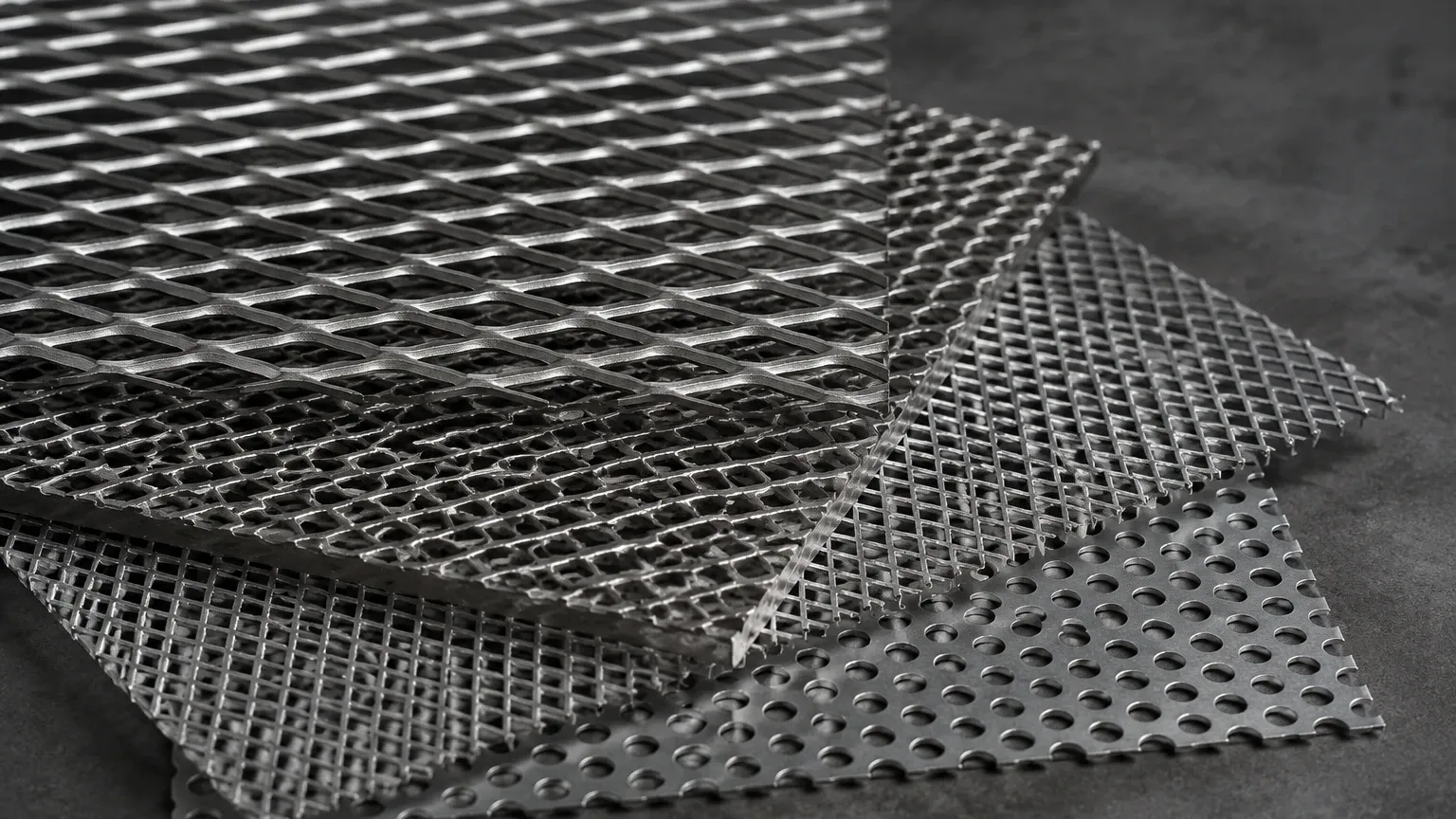
Expanded metal is a versatile material produced by simultaneously slitting and stretching a solid sheet of metal. This process creates a diamond-shaped pattern of openings, resulting in a product that is lightweight yet structurally rigid. When searching for ace hardware expanded metal, buyers are typically looking for small-format sheets intended for residential repairs, decorative grilles, or basic security screening. These products are often available in standard sizes (e.g., 12" x 24" or 24" x 36") and limited material types, such as aluminum or low-carbon steel.
In contrast, industrial-grade expanded metal is engineered for specific performance metrics. In B2B environments, such as chemical plants or pharmaceutical manufacturing facilities, the material must adhere to strict metallurgical standards and dimensional tolerances. Industrial manufacturers like Kaifil specialize in producing expanded metal that serves as the backbone for complex filtration systems, where the uniformity of the diamond openings directly impacts flow rates and pressure drops.
Key Differences in Manufacturing Standards
1. Material Traceability: Industrial suppliers provide material test reports (MTRs) ensuring the chemical composition of the alloy (e.g., SS316L), whereas retail products may lack detailed metallurgical documentation.
2. Dimensional Precision: Industrial production allows for tighter tolerances on the SWD (Short Way of Design) and LWD (Long Way of Design) dimensions, which is critical for components that must fit into precise assemblies.
3. Edge Finishing: Retail sheets often have "random sheared" edges that may be sharp or uneven. Industrial OEM solutions offer bonded edges or custom shearing to ensure safe handling and seamless integration into filter housings.
Technical Specifications of Perforated & Expanded Metal
To make an informed purchasing decision, engineers must evaluate several technical parameters. Whether you are considering a stock item like ace hardware expanded metal for a quick fix or a custom-engineered solution for a production line, the following specifications are paramount.
1. The Geometry of the Opening
The diamond pattern is defined by two primary measurements: the Short Way of Design (SWD) and the Long Way of Design (LWD).
* SWD: The distance from the center of a bond to the center of the next bond measured across the short diamond diagonal.
* LWD: The distance from the center of a bond to the center of the next bond measured across the long diamond diagonal.
In filtration applications, the SWD and LWD determine the size of the particles that can be captured if the expanded metal is used as a primary screen, or the level of support it provides to a finer wire mesh layer.
2. Strand Width and Thickness
The strand refers to the metal that forms the sides of the diamond opening. The thickness of the original base sheet and the width of the strand determine the overall strength and weight of the mesh. For industrial use, calculating the cross-sectional area of the strands is necessary to ensure the material can withstand mechanical stresses, such as the hydraulic pressure found in liquid filtration systems.
3. Raised vs. Flattened Expanded Metal
* Raised (Standard): The strands are set at an angle to the plane of the sheet. This provides maximum rigidity and a high strength-to-weight ratio. It also creates a slip-resistant surface, often used in industrial walkways or heavy-duty filter baskets.
* Flattened: The raised mesh is passed through a cold-rolling reducing mill, which flattens the strands and bonds into a single plane. This results in a smooth surface and a slightly reduced thickness. Flattened Perforated & Expanded Metal is preferred when the component must be layered against other materials without causing abrasion or when a low-profile assembly is required.
Material Selection for Demanding Environments
One of the primary limitations of retail-sourced ace hardware expanded metal is the narrow range of available materials. Most retail outlets stock aluminum, galvanized steel, or plain carbon steel. While these are sufficient for atmospheric conditions, they often fail in industrial settings.
Stainless Steel (304 and 316L)
For industries such as food and beverage or pharmaceutical manufacturing, stainless steel is the standard. Grade 304 offers excellent corrosion resistance for general use, while Grade 316L contains molybdenum, providing superior resistance to chlorides and acidic environments. Kaifil focuses on these high-performance alloys to ensure that the filtration components do not contaminate the process fluid or degrade prematurely.
Specialty Alloys
In high-temperature or highly corrosive chemical processing, even standard stainless steel may be insufficient. Industrial manufacturers can produce expanded metal from Hastelloy, Monel, or Titanium. These materials maintain their structural integrity at temperatures exceeding 1000°F and resist aggressive chemical attacks that would dissolve standard retail metal products.
Applications in Industrial Filtration and Support
In the B2B sector, expanded metal is rarely a standalone product; it is typically an integral component of a larger system. Its primary role in filtration is providing structural support for more delicate media.
Filter Cartridge Support
Stainless steel filter cartridges often utilize a cylinder of expanded metal as an inner core or outer guard. This structure prevents the pleated filter media from collapsing under high differential pressure. The open area of the expanded metal must be maximized to ensure it does not impede flow, yet the strands must be strong enough to resist deformation.
Strainer Baskets
In water treatment and chemical processing, expanded metal is fabricated into baskets to capture large debris. Unlike woven wire mesh, expanded metal does not unravel when cut, making it an exceptionally durable choice for heavy-duty straining. The choice between a retail-grade ace hardware expanded metal and a custom-fabricated industrial basket often comes down to the required flow rate and the chemical compatibility of the basket material with the fluid being processed.
Diffusion and Heat Exchange
The three-dimensional nature of raised expanded metal can be used to promote turbulence in fluid flow, which is beneficial in certain heat exchange and diffusion applications. This level of engineering application goes far beyond the typical utility uses of retail metal sheets.
Evaluating Total Cost of Ownership (TCO)
When procurement teams evaluate ace hardware expanded metal vs. industrial OEM solutions, the initial purchase price is only one factor. The Total Cost of Ownership (TCO) provides a more accurate picture of value.
1. Replacement Frequency: Retail-grade galvanized steel may rust within months in a coastal or industrial environment. Investing in 316L stainless steel expanded metal from a professional manufacturer may have a higher upfront cost but can last for years, reducing downtime and replacement labor.
2. System Efficiency: In filtration, the "open area" percentage is critical. Industrial expanded metal can be custom-engineered to provide the exact open area needed to minimize energy consumption in pumps and compressors. Retail products with suboptimal open areas can lead to higher operational costs.
3. Risk Mitigation: In regulated industries like pharmaceuticals, using non-certified materials can lead to catastrophic compliance failures. Sourcing Perforated & Expanded Metal with full documentation ensures that the facility meets ISO and FDA standards.
Customization: The Advantage of Industrial Manufacturing
Perhaps the most significant difference between retail and B2B sourcing is the ability to customize. Retailers sell what is on the shelf; manufacturers build what the application requires.
* Custom Dimensions: Rather than cutting down standard sheets and wasting material, industrial orders can be produced to the exact width and length required for a production run.
* Variable Patterns: Manufacturers can adjust the expansion ratio to create unique diamond sizes that balance weight, strength, and transparency.
* Secondary Operations: Industrial suppliers like Kaifil offer value-added services such as degreasing (essential for oxygen service or cleanroom use), annealing, painting, or welding the expanded metal into finished components.
Conclusion: Making the Right Choice for Your Project
While ace hardware expanded metal is an excellent resource for general-purpose utility and small-scale repairs, it is rarely the correct choice for industrial engineering projects. The demands of modern manufacturing—ranging from chemical compatibility and high-pressure resistance to strict regulatory compliance—necessitate a partnership with a specialized manufacturer.
When selecting Perforated & Expanded Metal, engineers should prioritize material certification, dimensional accuracy, and application-specific designs. By focusing on these technical parameters, companies can ensure that their filtration and structural components provide reliable performance, minimize operational risks, and deliver long-term value in the most demanding industrial environments.
For technical professionals seeking to optimize their filtration systems or develop custom metal components, consulting with a manufacturer who understands the nuances of industrial expanded metal is the first step toward achieving superior results.
