


Aluminum Expanded Metal Near Me
In the industrial procurement landscape, sourcing the right materials involves a balance between logistical efficiency and technical precision. For engineers and purchasing managers, searching for "aluminum expanded metal near me" is often the first step in addressing an immediate need for lightweight, corrosion-resistant mesh. However, the requirements for industrial filtration and structural support often exceed the capabilities of local general-purpose metal suppliers.
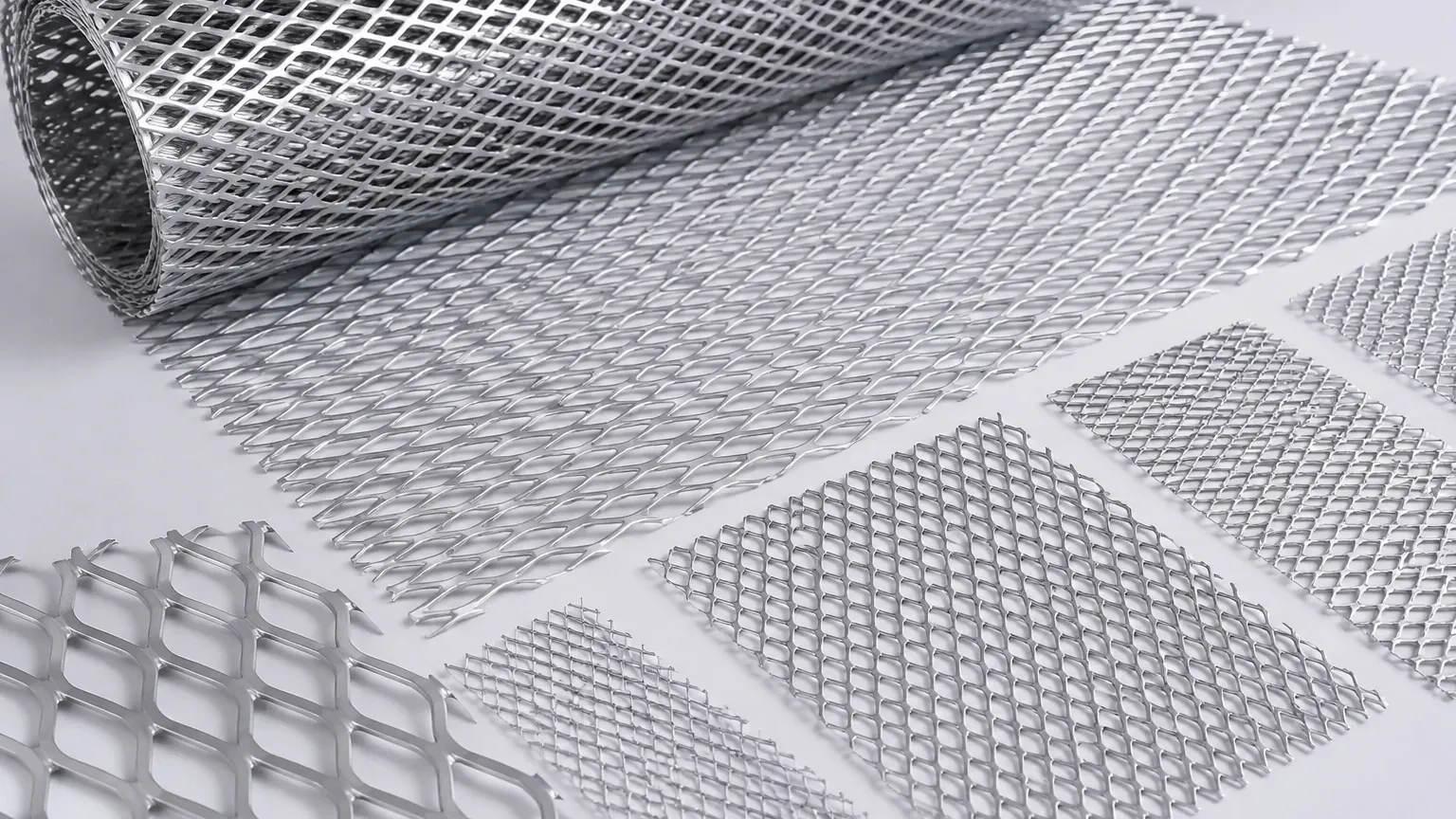
Aluminum expanded metal is a versatile material produced by simultaneously slitting and stretching a solid sheet of aluminum. This process creates a diamond-shaped pattern of openings, resulting in a single-piece construction that maintains structural integrity without the need for welds or joins. Understanding the technical nuances of this material is essential for selecting a supplier that can meet the rigorous demands of chemical processing, aerospace, and water treatment sectors.
Technical Specifications of Expanded Metal
When evaluating Perforated & Expanded Metal for industrial applications, engineers must define several critical dimensions that dictate the material's performance. Unlike woven wire mesh, expanded metal is characterized by its rigid structure and specific geometric terminology.
SWD and LWD
* Short Way of Design (SWD): This is the distance from the center of one bond to the center of the next bond measured across the short diamond diagonal.
* Long Way of Design (LWD): This is the distance from the center of one bond to the center of the next bond measured across the long diamond diagonal.
These measurements define the size of the diamond opening and are crucial for determining the filtration accuracy or the level of mechanical protection the mesh provides.
Strand Width and Thickness
* Strand Width: The amount of metal fed into the expanding machine for each stroke.
* Strand Thickness: The thickness of the original base metal sheet.
In aluminum applications, the strand dimensions significantly influence the weight-to-strength ratio. Because the expansion process does not remove any material (unlike perforation), it is a highly cost-effective and sustainable manufacturing method.
Why Engineers Search for Aluminum Expanded Metal Near Me
The intent behind searching for "aluminum expanded metal near me" usually stems from three primary operational requirements: lead time reduction, freight cost management, and the need for physical sample verification.
Logistical Efficiency
For standard architectural or general industrial projects, local availability can reduce the lead time from weeks to days. Aluminum is a lightweight material, but when ordered in large sheets or heavy-duty gauges, shipping costs can become a significant portion of the total cost of ownership. Regional sourcing helps mitigate these expenses.
Quality Verification
Engineers often require physical samples to test the rigidity and finish of the expanded metal. Proximity allows for faster prototyping cycles. However, for specialized applications such as high-precision filtration, the technical capability of the manufacturer often outweighs the benefits of geographical proximity. In these cases, a manufacturer with dedicated OEM capabilities, such as Kaifil, provides the necessary expertise in material selection and filtration performance that a local general distributor may lack.
Evaluating Perforated & Expanded Metal for Industrial Filtration
In the context of industrial filtration, expanded metal serves two primary roles: as a primary filter medium for coarse particles and as a structural support for finer filter media like stainless steel wire mesh or non-woven fabrics.
Structural Support and Reinforcement
In high-pressure hydraulic or chemical processing environments, fine mesh filters can collapse under the force of the fluid flow. Aluminum expanded metal provides a rigid skeleton that maintains the shape of the filter cartridge or panel. Its high open-area percentage ensures that it does not significantly increase the pressure drop across the filtration system.
Pre-Filtration and Debris Shielding
Expanded metal is frequently used in HVAC systems and intake vents to capture large debris, insects, or airborne contaminants before they reach the secondary, more delicate filter layers. The diamond pattern is particularly effective at breaking up laminar flow and inducing turbulence, which can improve the capture rate of certain particles.
Material Selection: Choosing the Right Aluminum Grade
Not all aluminum expanded metal is created equal. The alloy selected must align with the environmental conditions of the application. Common grades include:
1. Aluminum 3003-H14: The most common grade for expanded metal. It offers excellent workability and corrosion resistance, making it suitable for general industrial use and food-grade applications.
2. Aluminum 5052-H32: Known for its superior corrosion resistance in marine environments and high fatigue strength. This is the preferred choice for offshore filtration and chemical processing where exposure to salt spray or harsh chemicals is expected.
3. Aluminum 6061-T6: Used when high structural strength is the priority. While more difficult to expand than the 3000 series, it provides the rigidity necessary for heavy-duty load-bearing applications.
When sourcing "aluminum expanded metal near me," it is vital to confirm that the supplier can provide material certifications (MTRs) to ensure the alloy meets the required ASTM or ISO standards.
Customization and OEM Capabilities in Metal Filtration
Standard off-the-shelf expanded metal rarely meets the exact needs of precision engineering projects. Customization is often required in several areas:
Flattened vs. Raised Expanded Metal
* Raised (Standard): The strands are canted at an angle to the plane of the sheet. This provides maximum strength and a slip-resistant surface.
* Flattened: The raised sheet is passed through a cold-roll reducing mill, which flattens the strands into the same plane as the sheet. This is essential for filtration applications where a smooth surface is required to prevent damage to adjacent filter layers or to facilitate easy cleaning.
Precision Slitting and Die-Cutting
For manufacturers of filter cartridges, the expanded metal must be cut to precise tolerances to ensure a perfect fit within the housing. Advanced manufacturing facilities use CNC slitting and die-cutting to provide components that are ready for immediate assembly, reducing labor costs for the end-user.
Surface Treatments
Aluminum's natural oxide layer provides good corrosion resistance, but certain industrial environments require additional protection. Options include anodizing (for increased hardness and corrosion resistance), powder coating (for aesthetic or chemical resistance), and chromate conversion coatings.
Total Cost of Ownership and Procurement Strategies
While the initial price per square foot is a key metric, B2B buyers must consider the total cost of ownership (TCO). This includes the cost of secondary processing, waste generated from poorly sized sheets, and the longevity of the material in the field.
Avoiding Common Risks
When sourcing from non-specialized local suppliers, buyers may encounter issues such as:
* Burrs and Sharp Edges: Poorly maintained tooling during the expansion process can leave hazardous burrs that damage other filter components or injure personnel.
* Inconsistent Openings: Variations in the expansion stroke can lead to inconsistent SWD/LWD dimensions, affecting the flow rate and filtration efficiency.
* Camber and Bow: Large sheets that are not properly leveled can be difficult to work with in automated assembly lines.
Partnering with a dedicated manufacturer like Kaifil ensures that these technical risks are managed through rigorous quality control protocols. For critical applications, it is often more cost-effective to source from a specialized manufacturer with a proven track record in Perforated & Expanded Metal than to rely solely on the convenience of a local generalist.
Conclusion: Making an Informed Sourcing Decision
Finding "aluminum expanded metal near me" is a logical starting point for many procurement tasks, but the search should not end there. For industrial filtration and precision engineering, the focus must remain on technical specifications, material integrity, and the manufacturer's ability to provide customized solutions. By understanding the nuances of SWD/LWD, material grades, and the benefits of flattened versus raised mesh, engineers can select filtration components that offer the best balance of performance, durability, and cost-effectiveness. Whether for structural support or primary filtration, high-quality aluminum expanded metal remains a cornerstone of modern industrial design.
