


Aluminum Expanded Metal Size Chart
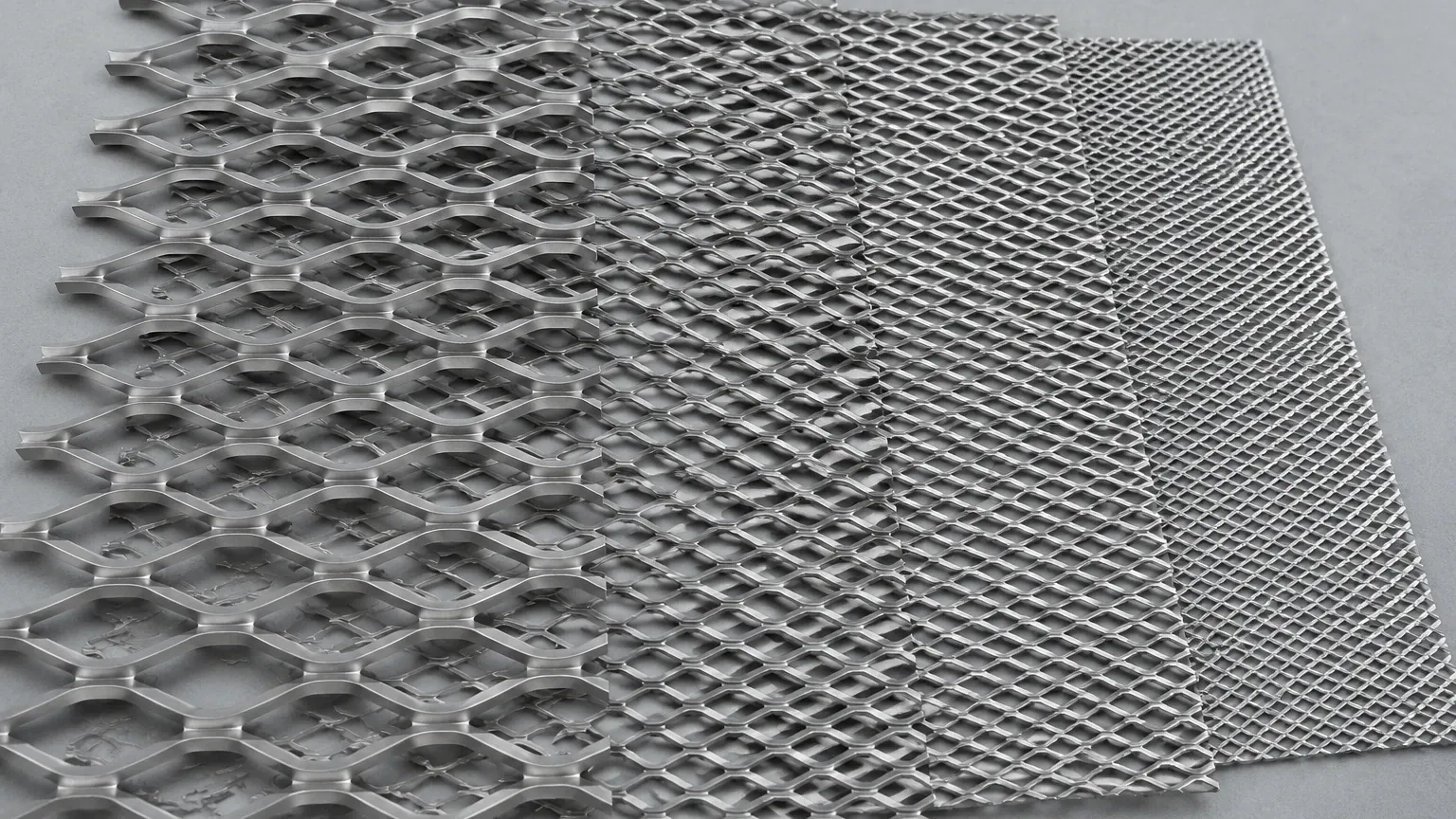
In industrial filtration and structural engineering, selecting the correct material specifications is the difference between a high-performance system and a premature mechanical failure. Aluminum expanded metal is a versatile material produced by simultaneously slitting and stretching a solid aluminum sheet, creating a continuous mesh with diamond-shaped openings. Unlike woven wire mesh, expanded metal is a single piece of material without joins or welds, offering superior structural integrity and a high strength-to-weight ratio.
For engineers and procurement teams, an aluminum expanded metal size chart is an essential technical reference. It provides the necessary data to calculate flow rates, pressure drops, structural load capacities, and filtration efficiency. This guide details the technical parameters found in standard size charts and explains how to interpret these metrics for industrial applications.
Understanding Expanded Metal Terminology
Before consulting a size chart, it is critical to understand the specific nomenclature used by manufacturers. Expanded metal dimensions are not measured like standard sheet metal; they are defined by the geometry of the diamond opening and the dimensions of the remaining metal strands.
SWD and LWD
* SWD (Short Way of Diamond): The distance from the center of one bond to the center of the next bond measured across the short axis of the diamond.
* LWD (Long Way of Diamond): The distance from the center of one bond to the center of the next bond measured across the long axis of the diamond.
* SWO (Short Way of Opening): The actual width of the opening, measured from the inside of one bond to the inside of the opposite bond.
* LWO (Long Way of Opening): The actual length of the opening, measured from the inside of one bond to the inside of the opposite bond.
Strand Dimensions
* Strand Width: The amount of metal fed into the expanding machine between the slits. This determines the "thickness" of the diamond wall when viewed from above.
* Strand Thickness: The original thickness of the aluminum sheet before expansion.
Understanding these four primary measurements allows engineers to determine the percentage of open area, which is a critical factor in Perforated & Expanded Metal applications involving fluid or air filtration.
Standard Aluminum Expanded Metal Size Chart
The following table represents common industrial specifications for standard (raised) aluminum expanded metal, typically manufactured from 3003-H14 aluminum. Note that dimensions may vary slightly based on manufacturing tolerances and specific alloy properties.
| Style Designation | Nom. SWD (in) | Nom. LWD (in) | Strand Width (in) | Strand Thickness (in) | Approx. Weight (lb/sqft) | % Open Area |
| :— | :— | :— | :— | :— | :— | :— |
| 1/2" #.051 | 0.500 | 1.200 | 0.080 | 0.051 | 0.22 | 68% |
| 1/2" #.081 | 0.500 | 1.200 | 0.080 | 0.081 | 0.35 | 68% |
| 3/4" #.051 | 0.923 | 2.100 | 0.140 | 0.051 | 0.20 | 70% |
| 3/4" #.081 | 0.923 | 2.100 | 0.150 | 0.081 | 0.35 | 67% |
| 3/4" #.125 | 0.923 | 2.100 | 0.165 | 0.125 | 0.60 | 64% |
| 1" #.081 | 1.000 | 2.400 | 0.155 | 0.081 | 0.33 | 69% |
| 1-1/2" #.081 | 1.330 | 3.000 | 0.155 | 0.081 | 0.25 | 77% |
| 1-1/2" #.125 | 1.330 | 3.000 | 0.165 | 0.125 | 0.41 | 75% |
*Note: Style designations often refer to the nominal SWD. For example, a 3/4" style has an SWD of approximately 0.923 inches. Always verify the actual SWD/LWD from the manufacturer's technical data sheet before finalizing CAD designs.*
Standard vs. Flattened Aluminum Expanded Metal
When reviewing an aluminum expanded metal size chart, you will often see two distinct categories: Standard (Raised) and Flattened. Choosing between these depends on the mechanical requirements of your filtration or support system.
Standard (Raised) Expanded Metal
In its standard form, the strands and bonds are set at a uniform angle to the plane of the sheet. This creates a three-dimensional texture that provides extra strength and rigidity. In filtration, raised expanded metal is often used as a pre-filter or a protective cage for more delicate filter media, as the angled strands can help deflect larger debris and provide a larger surface area for structural support.
Flattened Expanded Metal
Flattened expanded metal is produced by passing the standard expanded sheet through a cold-roll reducing mill. This process flattens the strands and bonds into the same plane as the sheet, resulting in a smooth, flat surface.
Technical Implications of Flattening:
1. Thickness: The overall thickness of the sheet is reduced, often becoming slightly thinner than the original strand thickness due to the rolling process.
2. Dimensions: The LWD is typically elongated during flattening, while the SWD remains relatively constant.
3. Surface Finish: The smooth surface is ideal for applications where the mesh must be bonded to other layers, such as in multi-layer stainless steel or aluminum filter cartridges, to prevent abrasion of the adjacent media.
Engineering Considerations: Open Area and Flow Rates
For B2B applications in the chemical, hydraulic, and water treatment sectors, the percentage of open area is the most critical metric. This value determines the volume of fluid or gas that can pass through the mesh and the resulting pressure drop across the component.
Calculating Open Area
The formula for calculating the open area percentage in expanded metal is:
% Open Area = (1 – (Strand Width × 2 / SWD)) × 100
(Note: This is a simplified calculation for standard expanded metal. Actual open area may vary based on bond geometry.)
Engineers must balance the open area with structural requirements. A higher open area reduces pressure drop but also reduces the mesh's ability to withstand high-pressure differentials without deforming. In high-viscosity fluid filtration, a thicker strand width may be necessary to support the filter media, even if it slightly reduces the total open area.
Material Selection: Why Aluminum?
While Kaifil specializes in stainless steel filtration solutions, aluminum expanded metal is frequently specified for applications where weight and cost are primary drivers.
* Alloy 3003-H14: The most common grade for expanded metal. It is highly workable, offers good corrosion resistance, and is suitable for general industrial use, such as HVAC filters and machine guards.
* Alloy 5052-H32: Offers higher strength and superior corrosion resistance, particularly in marine or saltwater environments. It is often used in specialized filtration systems for offshore or coastal industrial sites.
Aluminum’s natural oxide layer provides a level of protection against atmospheric corrosion, though it is less resistant to extreme pH levels compared to 304 or 316L stainless steel. For harsh chemical processing, engineers should evaluate if the aluminum grade listed on the size chart meets the chemical compatibility requirements of the application.
Customization and OEM Requirements
While an aluminum expanded metal size chart provides a baseline for standard production, many industrial projects require custom configurations. Standard charts often do not account for specialized needs such as:
1. Non-Standard Opening Sizes: Precision filtration may require diamond dimensions that fall between standard 1/2" and 3/4" styles.
2. Variable Strand Widths: To achieve a specific weight or structural rigidity without changing the opening size.
3. Custom Sheet Dimensions: Reducing scrap and labor costs by ordering expanded metal cut to the exact size required for filter cartridge housings.
4. Edge Treatments: Providing "random sheared" edges or "bond sheared" edges depending on how the mesh will be welded or framed into the final assembly.
As a manufacturer of custom filtration solutions, Kaifil provides engineering support to help technical teams move beyond standard charts. When a standard size does not meet the flow or strength requirements of a specific hydraulic or chemical process, custom tooling can be employed to produce Perforated & Expanded Metal that aligns perfectly with the project’s technical specifications.
Procurement Checklist for Engineers
When preparing a purchase order or a technical specification based on an aluminum expanded metal size chart, ensure the following details are confirmed:
* Material Grade: Specify 3003, 5052, or another aluminum alloy.
* Style: Indicate the nominal size and the strand thickness (e.g., 1/2" #.081).
* Type: Clearly state whether the material should be "Standard (Raised)" or "Flattened."
* Dimensions: Provide the required sheet size, specifying the direction of the diamonds (LWD usually runs parallel to the length of the sheet).
* Quantity and Tolerances: Define the acceptable variance in SWD/LWD and overall sheet dimensions.
* Application Environment: Mention if the material will be exposed to specific chemicals, high temperatures, or mechanical stress, as this may influence the recommended strand width.
By utilizing a detailed size chart and understanding the underlying engineering principles of expanded metal, procurement teams can ensure they receive components that meet the rigorous demands of industrial filtration and structural applications.
