


Expanded Metal Basket
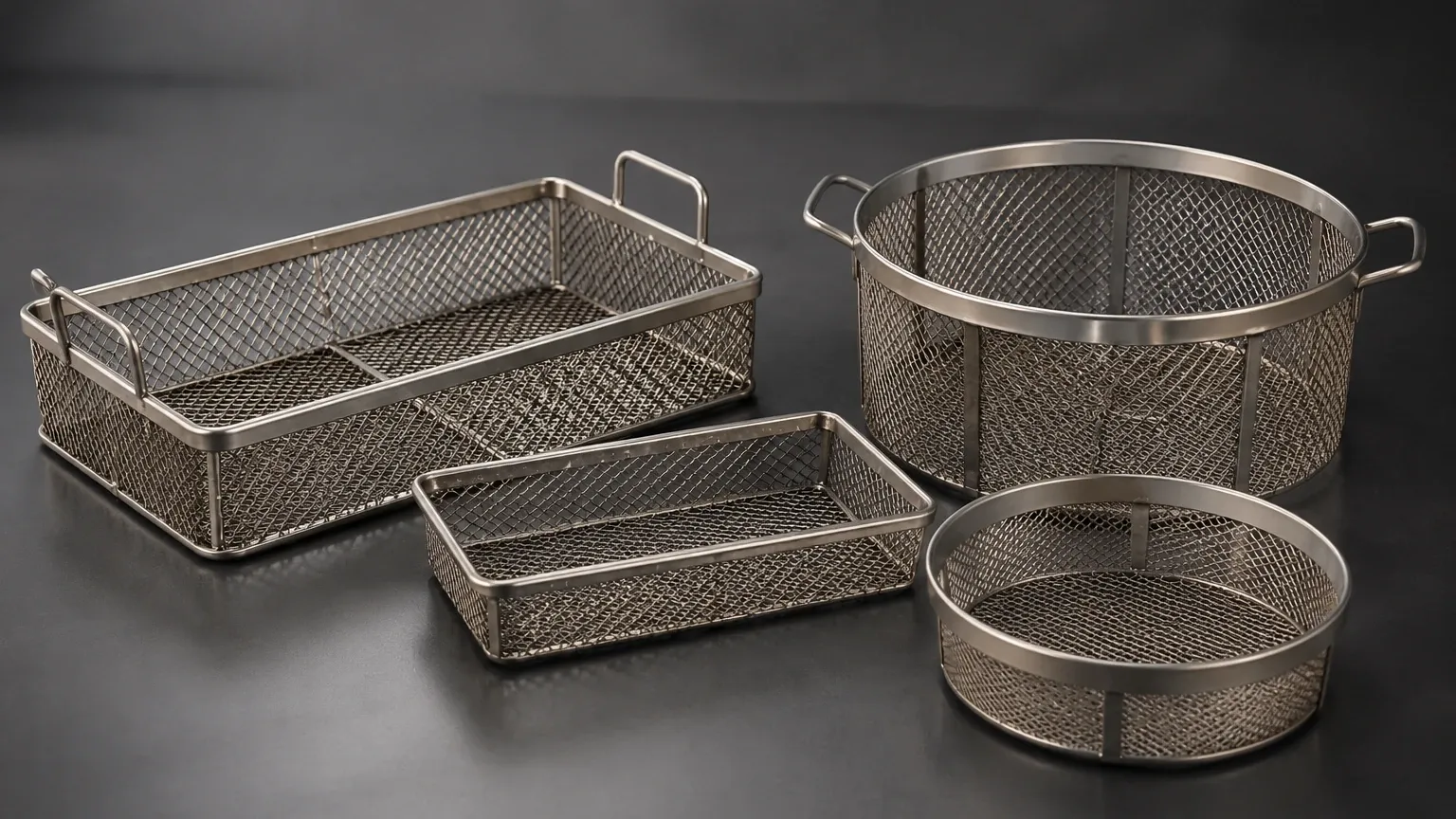
In the landscape of industrial filtration and material handling, the expanded metal basket serves as a critical component for processes requiring high structural integrity, optimal airflow, and efficient drainage. Unlike standard wire mesh containers, these baskets are fabricated from a single sheet of metal that has been slit and stretched, creating a seamless structure that offers unique mechanical advantages. For engineers and procurement specialists, understanding the technical nuances of Perforated & Expanded Metal is essential when specifying components for harsh chemical environments, high-temperature food processing, or precision pharmaceutical cleaning.
The Engineering Principles of Expanded Metal
The foundation of a high-performance expanded metal basket lies in the manufacturing process itself. Expanded metal is produced by simultaneously slitting and stretching a solid metal sheet. This process creates diamond-shaped openings without any loss of material, making it a highly cost-effective alternative to perforated metal in many applications.
One of the primary advantages of this structure is its inherent strength. Because the metal is not cut and then joined, but rather stretched into a continuous web, the "strands" and "bonds" (the points where strands intersect) provide a rigid framework that resists deformation under heavy loads. In an industrial basket configuration, this means the unit can withstand significant weight and mechanical stress without the risk of individual wires fraying or breaking, which is a common failure point in woven wire mesh baskets.
Technical Specifications: LWD, SWD, and Strand Geometry
When specifying an expanded metal basket, engineers must define several key geometric parameters that dictate both the filtration capability and the structural capacity of the unit. These include:
* Long Way of Design (LWD): The distance from the center of one bond to the center of the next bond across the long axis of the diamond.
* Short Way of Design (SWD): The distance across the short axis of the diamond.
* Strand Width and Thickness: These dimensions determine the overall weight and strength of the mesh. A thicker strand provides greater durability but reduces the open area.
* Raised vs. Flattened: In its "raised" state, the strands of the expanded metal are angled. This creates a three-dimensional surface that can be useful for increasing surface area or providing extra grip. "Flattened" expanded metal is passed through a cold-rolling mill, resulting in a smooth, flat surface. For most cleaning and dipping baskets, flattened metal is preferred to prevent scratching delicate parts and to ensure easier cleaning of the basket itself.
Material Selection for Industrial Environments
The performance of an expanded metal basket is heavily dependent on the alloy used in its construction. At Kaifil, we focus on high-grade materials that can withstand the rigors of industrial cycles.
Stainless Steel (304 and 316L)
Stainless steel is the industry standard for filtration baskets. Grade 304 offers excellent corrosion resistance for general industrial use, while Grade 316L (low carbon) is essential for applications involving high chloride environments or aggressive chemicals. The molybdenum content in 316L provides superior resistance to pitting and crevice corrosion, making it the preferred choice for pharmaceutical and marine applications.
Carbon Steel and Galvanized Options
For less corrosive environments where cost-efficiency is a priority, carbon steel baskets may be used. These are often galvanized or powder-coated to provide a protective barrier against oxidation. However, in heavy-duty industrial filtration, stainless steel remains the superior choice for longevity and hygiene.
Specialty Alloys
In extreme cases involving high temperatures or highly acidic solutions, specialty alloys like Monel, Inconel, or Hastelloy may be utilized. These materials ensure that the expanded metal basket maintains its structural integrity even when exposed to temperatures exceeding 1000°F or concentrated sulfuric acid.
Structural Design and Fabrication Standards
An expanded metal basket is more than just the mesh; its utility is defined by its frame and finish. Industrial-grade baskets require robust fabrication to ensure they can handle repeated cycles in ultrasonic cleaners, degreasers, or autoclaves.
Frame Reinforcement
To prevent the edges of the expanded metal from snagging or causing injury, baskets are typically constructed with a solid rod or U-channel frame. The mesh is TIG (Tungsten Inert Gas) welded to the frame. TIG welding is preferred in these applications because it provides a clean, strong bond without the splatter associated with other welding methods, which is crucial for maintaining a contaminant-free environment in food and pharma sectors.
Handles and Lids
Depending on the application, baskets may feature drop handles, fixed handles, or integrated hooks for hoist systems. Lids are often required for parts washing to ensure components remain submerged and do not migrate during high-pressure agitation. These lids are usually secured with heavy-duty latches or spring-loaded clips.
Surface Finishing
Post-fabrication treatments are vital for performance. Electropolishing is a common requirement for stainless steel baskets used in the medical and food industries. This process removes a microscopic layer of material, eliminating burrs and smoothing the surface at a molecular level. This not only enhances corrosion resistance but also ensures that the basket is "easy-to-clean," preventing the buildup of bacteria or chemical residues.
Key Performance Indicators: Flow Rate and Particle Retention
The primary function of an expanded metal basket in a filtration context is to allow the passage of fluids or gases while retaining solid particles. Engineers must balance the Open Area Percentage with the required mechanical strength.
A high open area (often reaching 60-80% in expanded metal) facilitates rapid drainage and high flow rates, which is essential for dipping operations where the "drag-out" of expensive chemicals must be minimized. However, if the openings are too large, the basket will fail to retain the necessary solids. When very fine filtration is required, the expanded metal basket often serves as a "support cage" for a finer inner liner of woven wire mesh. This hybrid design combines the structural rigidity of expanded metal with the precision filtration of fine wire cloth.
Applications in Specialized Industrial Sectors
The versatility of the expanded metal basket makes it a staple across various high-stakes industries:
1. Chemical Processing
In chemical plants, these baskets are used for catalyst recovery and as strainer elements in large-scale piping systems. The ability to customize the material grade ensures that the basket can withstand the specific pH levels and temperatures of the process fluid.
2. Food and Beverage
From blanching vegetables to frying snacks, expanded metal baskets provide the necessary heat resistance and drainage. Because they can be manufactured from food-grade 304 or 316 stainless steel and electropolished, they meet stringent FDA and hygiene standards.
3. Pharmaceutical and Medical
Baskets are used for the sterilization of surgical instruments and the processing of bulk pharmaceutical ingredients. The seamless nature of the expanded metal diamonds reduces the number of "dead zones" where contaminants can hide, facilitating more effective cleaning and sterilization.
4. Parts Washing and Degreasing
In automotive and aerospace manufacturing, small components must be cleaned in bulk. Expanded metal baskets are ideal for ultrasonic cleaning because the diamond pattern allows sound waves to pass through the mesh with minimal interference, ensuring that the cleaning energy reaches the parts effectively.
Selecting the Right Expanded Metal Basket
When consulting with a manufacturer like Kaifil, engineers should be prepared to confirm several operational parameters to ensure the final product is fit for purpose:
1. Total Load Weight: What is the maximum weight the basket will carry? This dictates the strand thickness and the need for bottom reinforcement rods.
2. Chemical Exposure: What chemicals will the basket encounter, and at what concentrations and temperatures? This determines the specific stainless steel grade or alloy.
3. Clearance Dimensions: What are the internal dimensions of the tanks or machines where the basket will be used? Precise tolerances are necessary for automated systems.
4. Handling Requirements: Will the basket be moved by hand, by forklift, or by an automated overhead hoist? This influences the design of the handles and the overall weight of the empty basket.
5. Particle Size: What is the smallest item or particle that must be retained? This determines the SWD and LWD of the mesh.
Maintenance and Service Life
To maximize the service life of an expanded metal basket, regular inspection and maintenance are required. In corrosive environments, even 316L stainless steel should be rinsed with deionized water after use to prevent the accumulation of salts or aggressive residues. Inspection should focus on the weld points and the integrity of the mesh strands. If a strand is broken, it should be repaired immediately to prevent the sharp edge from damaging parts or compromising the structural safety of the unit.
Because Kaifil specializes in custom solutions, we can provide replacement components or redesign baskets based on observed wear patterns in your specific facility. This iterative approach to design ensures that the total cost of ownership remains low by extending the interval between replacements.
Conclusion
The expanded metal basket is a fundamental tool in modern industrial operations, offering a balance of strength, transparency, and durability that few other materials can match. By leveraging the inherent benefits of Perforated & Expanded Metal and applying rigorous engineering standards to the fabrication process, Kaifil provides filtration and handling solutions that meet the most demanding technical requirements. Whether you are optimizing a chemical filtration process or streamlining a high-volume parts cleaning line, selecting a correctly specified expanded metal basket is a critical step toward operational efficiency.
