


Black Expanded Metal Mesh
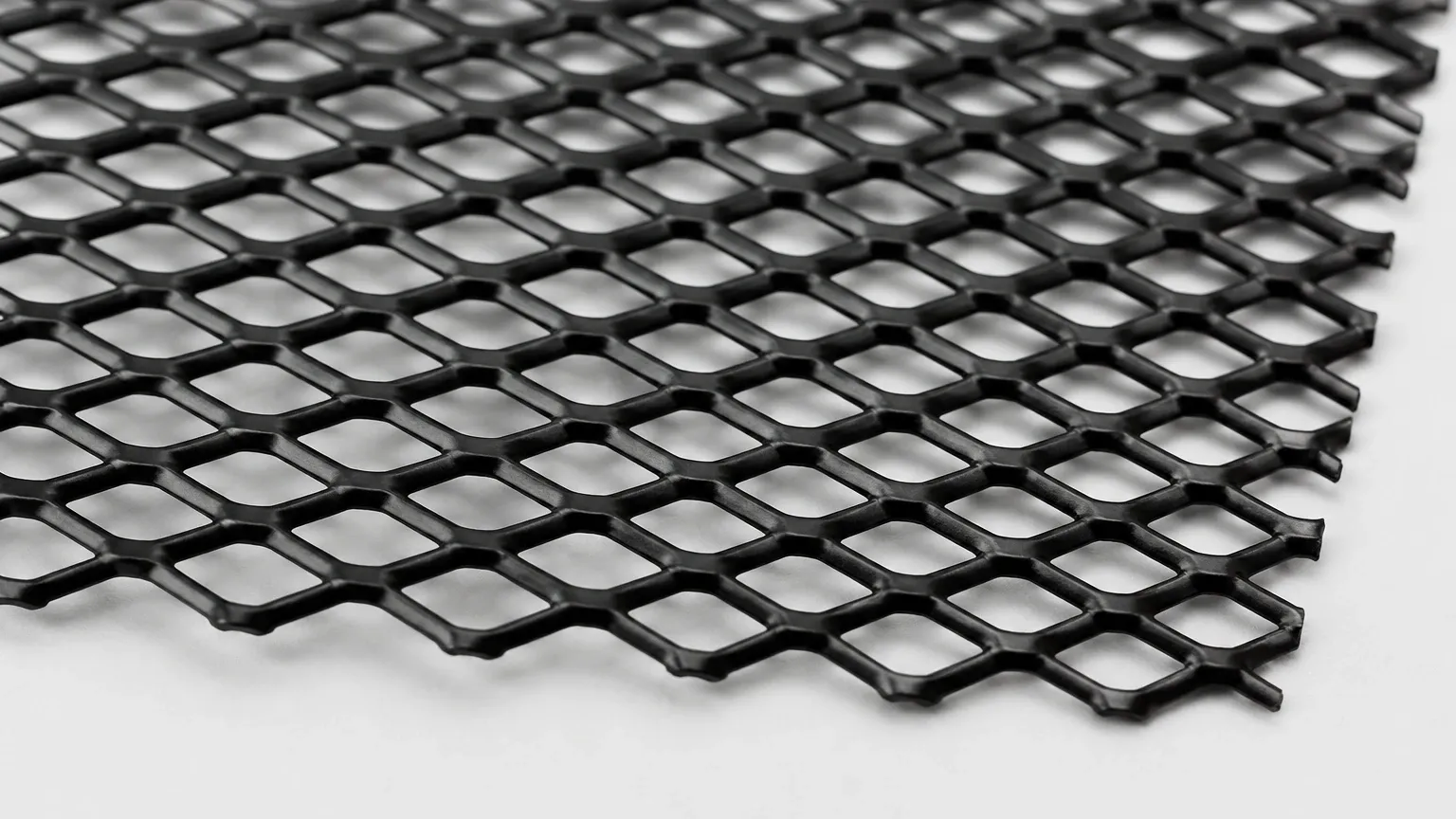
In industrial engineering and manufacturing, the selection of structural and filtration components depends heavily on the balance between mechanical strength, open area, and environmental resistance. Black expanded metal mesh represents a specialized category of Perforated & Expanded Metal that is widely utilized across chemical processing, hydraulic systems, and protective equipment manufacturing. Unlike traditional woven wire, expanded metal is produced through a unique process of slitting and stretching, resulting in a continuous piece of material without joins or welds. When specified with a black finish—typically achieved through powder coating, PVC dipping, or chemical oxidation—the material gains enhanced corrosion resistance and specific aesthetic or optical properties required in high-performance environments.
For engineers and procurement professionals, understanding the technical nuances of black expanded metal mesh is essential for ensuring long-term performance and cost-efficiency. This guide examines the manufacturing processes, technical specifications, and application criteria necessary to select the right mesh for demanding industrial tasks.
The Manufacturing Process: Slitting and Stretching
The production of expanded metal is inherently efficient, as it generates virtually no waste. The process begins with a solid metal sheet, usually carbon steel or stainless steel, which is fed through a machine equipped with specialized knives. These knives slit the metal at regular intervals while simultaneously stretching the sheet. This mechanical deformation creates the characteristic diamond-shaped openings.
Standard (Raised) vs. Flattened Mesh
In its primary state, expanded metal is "raised." The strands and bonds are set at a uniform angle to the plane of the sheet, providing a high strength-to-weight ratio and excellent anti-slip properties. However, for many filtration and precision component applications, the mesh undergoes an additional cold-rolling process to become "flattened." Flattened black expanded metal mesh offers a smooth, level surface, which is often preferred when the mesh serves as a support layer for finer filter media or when it must be integrated into tight mechanical assemblies.
Material Integrity
Because the mesh is expanded from a single sheet, it maintains structural continuity. There are no welds to fail or wires to unravel under vibration or thermal cycling. This makes it an ideal substrate for industrial filters that must withstand high-pressure differentials or turbulent flow conditions.
Defining the "Black" Finish: Coating Technologies
While the base metal provides the structural framework, the black finish is what defines the material's interaction with its environment. Engineers must choose the coating method based on the chemical exposure, UV requirements, and mechanical wear expected in the application.
Powder Coating
Powder coating is the most common method for producing black expanded metal mesh. An electrostatic charge is used to apply a dry plastic powder (typically polyester or epoxy), which is then cured under heat. This results in a thick, durable layer that provides excellent resistance to chipping, scratching, and fading. In outdoor or high-moisture industrial environments, powder-coated carbon steel is a cost-effective alternative to stainless steel.
PVC and Plastisol Coating
For applications requiring high chemical resistance or a softer surface, PVC (Polyvinyl Chloride) coating is utilized. The mesh is dipped into a liquid plastisol, creating a thick, rubber-like black coating. This is particularly useful in marine environments or chemical wash-down areas where the mesh may be exposed to corrosive cleaning agents.
Black Oxide and Electroless Nickel
In precision engineering where dimensional tolerances are critical, a thin-film black oxide finish may be applied. Unlike powder coating, which adds measurable thickness to the strands, black oxide is a chemical conversion coating. It provides mild corrosion resistance and a matte black appearance without significantly altering the mesh's aperture size or strand dimensions. This is often specified for internal components in optical instruments or specialized hydraulic housings where "stray light" or tight clearances are concerns.
Technical Specifications and Engineering Parameters
When specifying black expanded metal mesh, engineers must look beyond simple hole sizes. The performance of the mesh is dictated by several interlocking geometric factors:
* SWD (Short Way of Diamond): The distance from the center of one bond to the center of the next bond measured across the short axis of the diamond.
* LWD (Long Way of Diamond): The distance measured across the long axis of the diamond.
* Strand Width: The amount of metal fed into the knives for each slit.
* Strand Thickness: The original thickness of the base metal sheet.
* Open Area Percentage: This is perhaps the most critical value for filtration and ventilation applications. It determines the flow rate and pressure drop across the mesh.
For example, a mesh with a large LWD and thin strands will offer a high open area (up to 80% or more), making it suitable for air filtration or protective grilles. Conversely, a small SWD with wide strands provides a robust, rigid barrier with a lower open area, ideal for heavy-duty support in liquid filtration cartridges.
Applications in Industrial Filtration and Protection
Kaifil specializes in integrating Perforated & Expanded Metal into complex filtration systems. Black expanded metal mesh serves several distinct roles in these industrial contexts:
1. Support and Pleat Spacing
In high-pressure hydraulic or air filters, fine wire mesh or synthetic media often lacks the rigidity to maintain its shape under flow. Black expanded metal is used as an outer or inner support cage. The black coating prevents galvanic corrosion between the support layer and the primary filter media, especially in systems using dissimilar metals.
2. Pre-Filtration and Debris Guarding
In water treatment and chemical processing, expanded metal acts as a primary barrier to capture large particulates before they reach more sensitive, expensive secondary filters. The black finish can assist in visual inspection, making it easier to identify trapped debris against the dark background of the mesh.
3. Machine Guarding and Safety
The high strength-to-weight ratio of expanded metal makes it a standard choice for machine guards. The black finish is frequently specified for these guards because it reduces glare from factory lighting, allowing operators to see through the mesh to monitor equipment more clearly than they could through a bright, galvanized, or stainless finish.
4. Acoustic and EMI Shielding
In electronic enclosures and specialized industrial cabinets, black expanded metal can be used for ventilation while providing a degree of Electromagnetic Interference (EMI) shielding. The black coating can be formulated to be conductive or insulative depending on the grounding requirements of the system.
Evaluating Quality and Common Risks
Specifying black expanded metal mesh requires a rigorous evaluation of the manufacturer’s quality control processes. Poorly manufactured mesh can introduce several risks into an industrial system:
* Burrs and Sharp Edges: If the slitting knives are not properly maintained, the mesh can have significant burrs. In filtration applications, these burrs can puncture the primary filter media or shed metallic particles into the downstream flow.
* Coating Inconsistency: The "valleys" and "bonds" of expanded metal are notoriously difficult to coat uniformly. If the black coating is too thin at the bonds, corrosion will begin at these points and spread underneath the rest of the finish (a process known as "creep").
* Flatness Tolerances: For automated assembly lines, the mesh must meet strict flatness requirements. Residual stresses from the expansion process can cause the sheets to bow or twist if not properly leveled.
Engineers should request material certifications and coating thickness reports to ensure the product meets the intended service life. At Kaifil, the focus is on precision manufacturing to ensure that every component integrates seamlessly into the final assembly.
Procurement Checklist for Engineers
Before finalizing a purchase order for black expanded metal mesh, confirm the following technical details with your supplier:
1. Base Material: Is carbon steel sufficient, or does the chemical environment require a stainless steel base with a black finish?
2. Dimensional Accuracy: What are the tolerances for LWD, SWD, and strand width? Even minor variations can impact the flow characteristics of a filter.
3. Coating Type: Does the application require the UV stability of polyester powder coating or the chemical inertness of PVC?
4. Edge Configuration: Do you require "random sheared" edges or "bond sheared" edges? Bond shearing provides a finished edge without sharp protruding strands, which is safer for handling and installation.
5. Post-Processing: Does the mesh need to be formed into cylinders, discs, or custom shapes? Working with a manufacturer that offers both expansion and fabrication services reduces the risk of fitment issues.
Conclusion
Black expanded metal mesh is a high-performance material that offers more than just aesthetic appeal. Its structural integrity, customizable open area, and enhanced protective coatings make it a vital component in modern industrial filtration and equipment design. By understanding the mechanical properties and coating options available, engineering teams can optimize their systems for durability and efficiency. Whether used as a robust support for filter cartridges or as a glare-reducing safety guard, the right specification of expanded metal ensures that industrial processes remain reliable and safe. For those seeking tailored solutions, exploring the range of Perforated & Expanded Metal options is the first step toward achieving precision filtration performance.
