


Black Expanded Metal
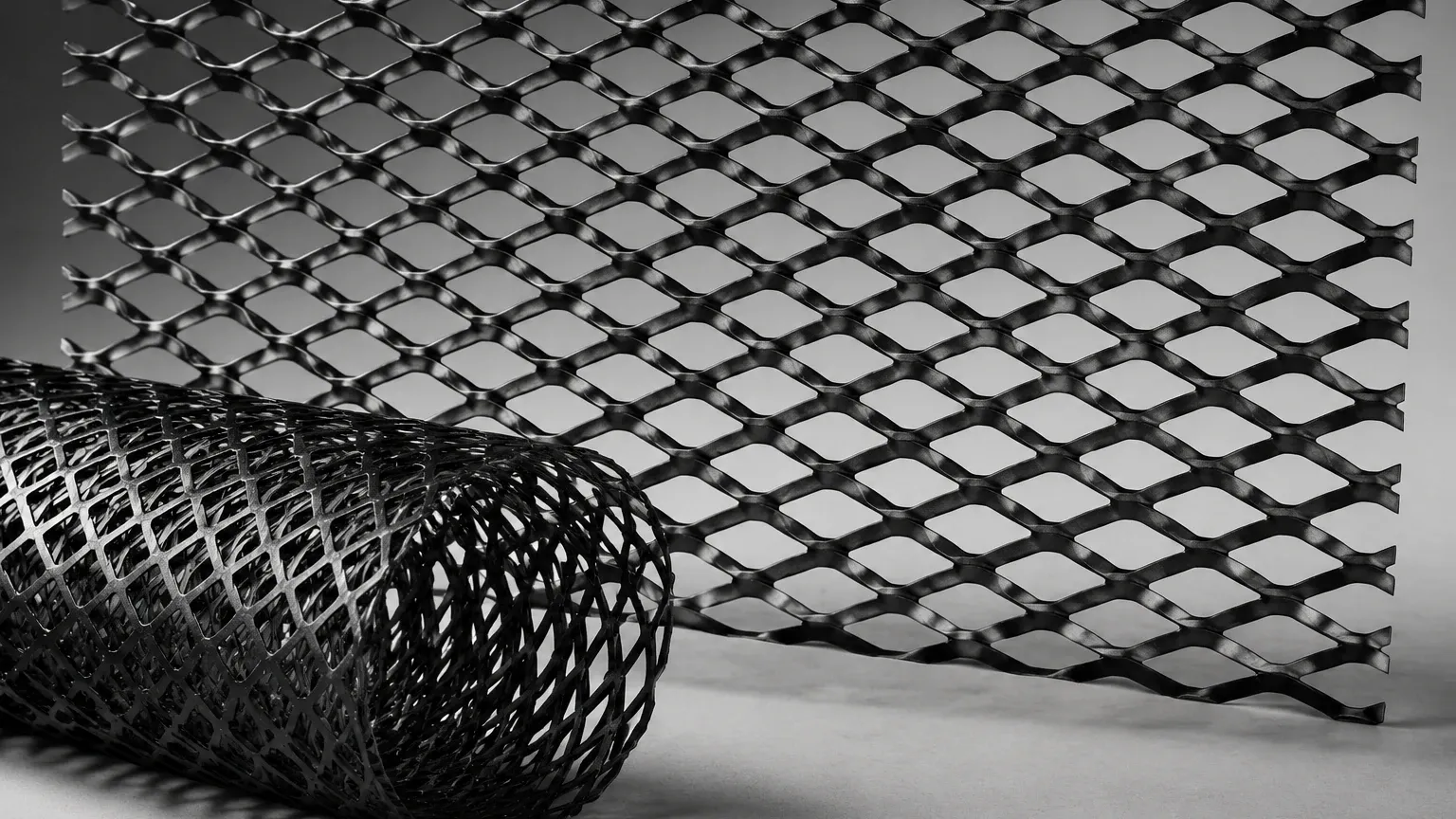
In the landscape of industrial material science, black expanded metal represents a versatile and cost-effective solution for structural, protective, and filtration applications. Unlike traditional woven wire or perforated sheets, expanded metal is produced through a unique process of slitting and stretching, which creates a continuous piece of mesh without joins or welds. When specified with a black finish—typically achieved through powder coating, PVC coating, or specialized chemical treatments—the material gains enhanced corrosion resistance, aesthetic uniformity, and specific functional properties required for demanding B2B environments.
For engineers and procurement specialists, understanding the technical nuances of black expanded metal is essential for optimizing performance in chemical processing, filtration systems, and industrial machinery guarding. This guide examines the manufacturing processes, material specifications, and engineering considerations necessary for selecting the right Perforated & Expanded Metal solutions for high-performance applications.
The Fundamentals of Expanded Metal Production
The production of expanded metal is a precision engineering process that prioritizes material efficiency. A solid sheet of metal, usually carbon steel, stainless steel, or aluminum, is fed through a machine equipped with a reciprocating knife. As the knife slits the metal, the sheet is simultaneously stretched (expanded). This results in a diamond-shaped pattern of openings, where the "strands" are the metal strips and the "bonds" are the points where the strands intersect.
One of the primary advantages of this method is that it generates zero waste. Unlike perforated metal, where the "slugs" or holes are punched out and discarded (or recycled), every ounce of the original base metal is utilized in the final mesh. This makes expanded metal an inherently sustainable and cost-efficient choice for large-scale industrial projects.
When we refer to black expanded metal, we are discussing the base expanded metal that has undergone a secondary finishing process. While the base metal provides the structural integrity, the black finish provides the environmental protection and specific surface characteristics needed for specialized industrial use.
Exploring the "Black" Finish: Coatings and Treatments
The choice of finish is just as critical as the choice of base metal. In industrial settings, the "black" in black expanded metal is rarely just for appearance; it serves a functional purpose. There are three primary methods used to achieve this finish:
1. Powder Coating
Powder coating is the most common method for industrial black expanded metal. An electrostatic charge is used to apply a dry plastic powder (typically polyester or epoxy) to the metal surface, which is then cured under heat to form a hard, durable "skin." This coating provides excellent resistance to chipping, scratching, and UV degradation. In filtration and machinery guarding, powder-coated black expanded metal is preferred for its ability to withstand mechanical wear.
2. PVC (Vinyl) Coating
PVC coating involves dipping the expanded metal into a liquid vinyl or applying a thick layer of thermoplastic. This results in a thicker, softer finish compared to powder coating. PVC-coated black expanded metal is highly resistant to moisture and chemical exposure, making it ideal for marine environments or wastewater treatment facilities where the metal must be shielded from corrosive elements.
3. Black Oxide and Chemical Conversion
For precision components where dimensional tolerances are tight, black oxide is often used. This is a chemical conversion coating that creates a black iron oxide (magnetite) on the surface of ferrous metals. Unlike powder or PVC, black oxide does not add significant thickness to the strands, which is crucial for filtration components that must fit into precise housings. However, black oxide offers less corrosion resistance than polymer coatings and usually requires an oil or wax sealant.
Key Technical Parameters for Engineering Specifications
When specifying black expanded metal for an industrial project, engineers must define several critical dimensions to ensure the material meets the application's mechanical requirements. These parameters include:
* SWD (Short Way of Diamond): The distance from the center of one bond to the center of the next bond measured across the short diamond diagonal.
* LWD (Long Way of Diamond): The distance from the center of one bond to the center of the next bond measured across the long diamond diagonal.
* Strand Width: The amount of metal fed into the machine between the slits; essentially the width of the individual metal strips forming the diamond.
* Strand Thickness: The gauge or thickness of the original base metal sheet.
* Open Area Percentage: A critical calculation for filtration and ventilation applications. It determines how much fluid or air can pass through the mesh. Unlike perforated metal, the open area in expanded metal is influenced by the angle of the strands.
The Role of Black Expanded Metal in Industrial Filtration
In the filtration industry, black expanded metal serves as a vital structural component. While the primary filtration is often performed by a fine wire mesh or synthetic media, the expanded metal provides the necessary rigidity to withstand pressure differentials.
Support Cages and Pleat Support
In high-pressure hydraulic or air filtration systems, pleated filter media can collapse under the force of the fluid flow. Black expanded metal is often formed into cylinders to act as an internal support core or an outer protective cage. The black coating ensures that the support structure does not react with the fluid or the filter media, preventing galvanic corrosion.
Pre-Filtration and Debris Screening
In heavy industrial environments, such as chemical processing plants, black expanded metal is used as a pre-filter to capture large particulates before they reach more sensitive filtration stages. The diamond pattern is particularly effective at catching irregular debris while maintaining a high flow rate. The black finish can also serve as a visual indicator in certain optical sorting systems or simply provide a non-reflective surface in light-sensitive environments.
Structural Advantages: Raised vs. Flattened Profiles
Engineers must choose between two physical profiles when ordering black expanded metal: raised (standard) and flattened.
* Raised Expanded Metal: This is the material as it comes off the expansion press. The strands and bonds are set at a uniform angle to the plane of the sheet. This creates a three-dimensional surface that offers maximum strength and rigidity. It also provides excellent grip and anti-skid properties, which is why it is frequently used for industrial walkways and stair treads.
* Flattened Expanded Metal: To create this profile, the raised expanded metal is passed through a cold rolling mill. This flattens the strands and bonds into a single plane, resulting in a smooth, flat surface. Flattened black expanded metal is often preferred for filtration housings or guards where a low-profile, smooth surface is required to prevent snagging or to facilitate easier cleaning.
Comparative Analysis: Expanded Metal vs. Perforated Metal
Deciding between expanded metal and perforated metal involves balancing cost, weight, and structural requirements. While both fall under the broader category of Perforated & Expanded Metal, they behave differently under stress.
| Feature | Expanded Metal | Perforated Metal |
| :— | :— | :— |
| Material Waste | Zero waste during production | Significant waste (slugs) |
| Strength-to-Weight | High (due to continuous strands) | Moderate (holes can create stress points) |
| Cost | Generally lower per square foot | Generally higher due to waste and tooling |
| Aesthetics | Industrial, diamond pattern | Versatile (round, square, custom holes) |
| Flow Dynamics | Complex, directional flow | Straight-through, predictable flow |
For many B2B applications, black expanded metal is the superior choice for protective barriers and support structures because the interconnected diamond structure distributes loads more effectively than a perforated sheet of the same weight.
Selecting the Right Coating for Durability
The longevity of black expanded metal in an industrial setting depends heavily on matching the coating to the environment. Engineers should consider the following factors:
* Chemical Compatibility: If the metal will be exposed to acidic or alkaline cleaning agents, a PVC coating or a specialized epoxy powder coat is necessary. Carbon steel with a simple black oxide finish will fail rapidly in these conditions.
* Thermal Stability: In high-temperature filtration or exhaust systems, standard polymer coatings may off-gas or melt. In these instances, high-temperature resistant black paints or specialized ceramic coatings may be required.
* Abrasion Resistance: If the mesh is used as a guard in a facility where it will be frequently bumped by equipment or subjected to high-velocity particulates, a heavy-duty powder coating is the most resilient option.
Procurement Considerations for OEM and Industrial Applications
When partnering with a manufacturer like Kaifil for black expanded metal components, technical clarity during the procurement phase prevents costly delays. Purchasing teams should confirm several factors before production begins:
1. Material Certifications: Ensure the base metal (e.g., Grade 304 or 316 stainless steel, or specific carbon steel gauges) meets industry standards (ASTM, ISO).
2. Coating Thickness: Specify the required micron or mil thickness of the black coating to ensure it meets the necessary corrosion resistance ratings.
3. Dimensional Tolerances: Define the acceptable variance in SWD, LWD, and overall sheet dimensions, especially if the expanded metal must fit into a pre-machined frame.
4. Edge Treatment: Expanded metal naturally has "open" or sharp edges where the diamonds are cut. For safety or assembly purposes, specify whether the edges should be "random sheared" or "bond sheared," or if a U-edging frame should be applied.
By focusing on these technical details, B2B buyers can ensure that the black expanded metal they receive is not only aesthetically suitable but also engineered to survive the rigors of industrial use. Whether it is used as a support layer in a complex filtration cartridge or as a robust safety guard for moving machinery, the combination of expanded metal’s structural integrity and a high-performance black finish provides a reliable, long-term solution for modern engineering challenges.
