


Expanded Metal Brackets
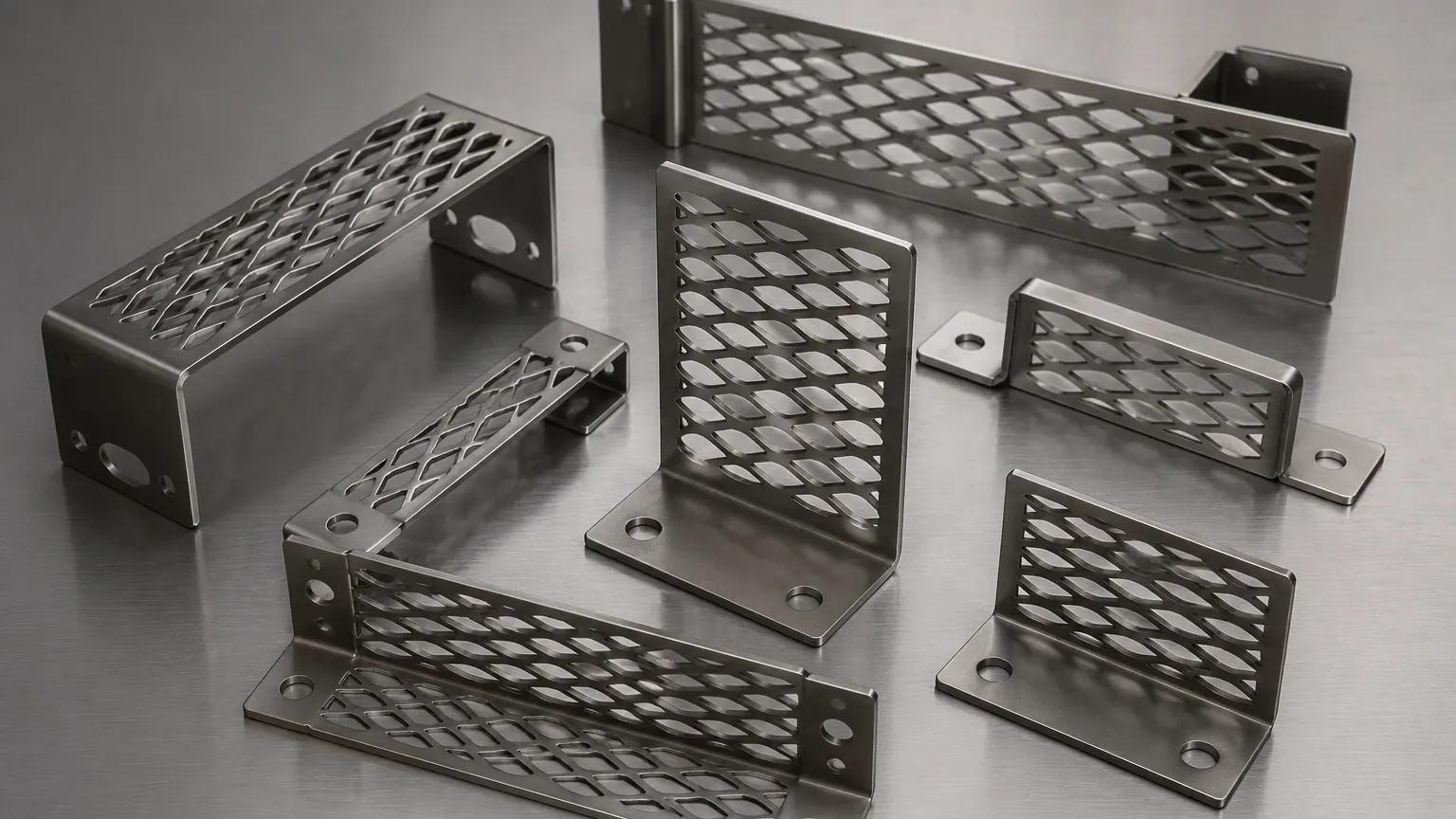
In industrial engineering and equipment design, the structural integrity of mounting systems is as critical as the machinery they support. Expanded metal brackets represent a specialized category of hardware designed to provide high strength-to-weight ratios, ventilation, and durability in demanding environments. Unlike standard solid plate brackets, these components utilize the unique geometry of expanded metal to achieve specific performance goals, particularly in filtration, HVAC, and heavy machinery sectors.
For engineers and procurement teams, selecting the right bracket involves more than just choosing a shape; it requires an understanding of the material properties, the expansion process, and how the resulting mesh interacts with environmental stressors. As part of a broader category of Perforated & Expanded Metal, these brackets offer a versatile solution for applications requiring both structural support and fluid or air permeability.
The Role of Expanded Metal in Industrial Bracketing
Expanded metal is produced by simultaneously slitting and stretching a solid metal sheet. This process creates a continuous piece of metal with a diamond-shaped pattern, characterized by "strands" and "bonds." When this material is fabricated into expanded metal brackets, it retains the structural continuity of the original sheet because no material is removed during the expansion process.
In B2B industrial contexts, these brackets are frequently used to secure heavy-duty components where weight reduction is a priority but structural failure is not an option. Because the strands are set at an angle to the plane of the sheet, the resulting bracket possesses inherent rigidity that resists bending and shearing forces more effectively than many perforated or woven alternatives. This makes them ideal for supporting filtration housings, protecting sensitive sensors, or mounting electrical components in high-vibration environments.
Engineering Advantages: Strength, Ventilation, and Weight
The primary reason engineers specify expanded metal brackets over solid steel alternatives is the optimization of physical properties. The expansion process allows for a significant increase in surface area and volume without an increase in weight.
High Strength-to-Weight Ratio
Because the diamond pattern acts like a series of interconnected trusses, expanded metal brackets can support substantial loads while remaining lightweight. This is particularly beneficial in mobile industrial equipment or aerospace applications where every kilogram saved contributes to fuel efficiency and reduced mechanical wear.
Natural Ventilation and Drainage
In many industrial settings, heat dissipation is a critical concern. Solid brackets can trap heat or obstruct airflow around motors and electronic controllers. The open area of expanded metal allows for natural convection, keeping supported components within their optimal operating temperature ranges. Furthermore, in wash-down environments—common in food processing and chemical plants—the open mesh prevents the accumulation of liquids and debris, reducing the risk of microbial growth and localized corrosion.
Enhanced Grip and Friction
For brackets used as steps, platforms, or handrail supports, the raised edges of the expanded strands provide a high-friction surface. This slip-resistant quality is a safety requirement in many industrial facilities where oil or moisture may be present on the floor or equipment surfaces.
Material Selection for Harsh Environments
When specifying expanded metal brackets, material choice is the most significant factor influencing the component's lifespan. Industrial applications often expose hardware to corrosive chemicals, extreme temperatures, and high humidity.
Stainless Steel (Grades 304 and 316L)
Stainless steel is the industry standard for high-performance brackets. Grade 304 offers excellent corrosion resistance for general industrial use, while Grade 316L (low carbon) is preferred for marine environments or chemical processing where resistance to pitting and chloride-induced stress corrosion cracking is required. Kaifil specializes in these high-grade alloys to ensure that brackets maintain their structural integrity even when exposed to aggressive cleaning agents or saline atmospheres.
Carbon Steel and Galvanization
For less corrosive environments, carbon steel brackets are a cost-effective alternative. To prevent oxidation, these are typically hot-dip galvanized or powder-coated. However, engineers must ensure that the coating is applied uniformly across the complex geometry of the expanded metal strands to avoid "holidays" or gaps where rust could initiate.
Aluminum
Aluminum expanded metal brackets are selected for their low density and natural oxide layer, which provides moderate corrosion resistance. These are common in architectural applications or lightweight framing where structural loads are lower than those found in heavy industrial filtration systems.
Fabrication Techniques for Custom Brackets
Transitioning from a flat sheet of expanded metal to a functional bracket requires specialized fabrication techniques. Unlike solid plate, the "open" nature of the material demands precision during cutting and forming.
Precision Cutting and Edging
Expanded metal can be cut using shearing, laser, or plasma methods. However, because the edges of the mesh consist of cut strands, they can be sharp and structurally vulnerable. Custom expanded metal brackets often feature a "U-edging" or a solid metal frame welded around the perimeter. This not only protects personnel from sharp edges but also provides a solid surface for bolting or welding the bracket to the main structure.
Bending and Forming
Bending expanded metal requires an understanding of the "direction of the diamond." The material bends differently depending on whether the bend line is parallel to the Long Way of Design (LWD) or the Short Way of Design (SWD). Professional manufacturers calculate these tolerances to ensure that the bending process does not fracture the bonds or distort the mesh pattern beyond acceptable limits.
Welding Considerations
Welding expanded metal to a solid frame or another component requires high skill. TIG (Tungsten Inert Gas) welding is often preferred for stainless steel brackets to provide clean, strong joints without excessive heat distortion. The welder must ensure that each strand at the interface is securely fused to the mating surface to prevent vibration-induced fatigue failure.
Integration with Industrial Filtration Systems
As a manufacturer specializing in filtration, Kaifil often integrates expanded metal brackets into complex filtration assemblies. In these applications, the bracket serves a dual purpose: it provides the structural skeleton for the filter media and acts as the mounting interface for the entire unit.
In large-scale chemical processing, filter cartridges may be subjected to high-pressure differentials. Expanded metal brackets or internal support cores prevent the filter mesh from collapsing under pressure. The choice of expanded metal here is strategic; it provides maximum support while offering minimal resistance to the flow of the process fluid.
Engineers must confirm the "open area" percentage when designing these brackets. If the open area is too low, the bracket will cause a significant pressure drop (delta P), reducing the efficiency of the filtration system. Conversely, if the open area is too high, the structural strands may be too thin to support the filter media under load.
Procurement Criteria and Quality Control
When sourcing expanded metal brackets for B2B projects, technical buyers should evaluate suppliers based on several key performance indicators (KPIs):
1. Dimensional Tolerances: Standard expanded metal can have significant variances. For precision brackets, specify tight tolerances for strand width and overall thickness.
2. Flattened vs. Raised: Decide whether the application requires "raised" expanded metal (which has more grip and rigidity) or "flattened" expanded metal (which is smoother and easier to clean).
3. Mesh Uniformity: Inconsistent diamond shapes can indicate poor tooling or material quality, which leads to uneven stress distribution in the final bracket.
4. Finish Quality: For stainless steel, ensure the brackets are properly passivated or electropolished to remove surface contaminants introduced during fabrication, which can lead to premature corrosion.
Before finalizing a purchase order, it is recommended to confirm the specific loading requirements. Engineers should provide the manufacturer with the static load (the weight of the component) and any dynamic loads (such as vibration or fluid surge) the bracket will encounter.
Common Risks and Mitigation
The most common risk associated with expanded metal brackets is fatigue failure at the bonds. In high-vibration environments, such as those near industrial pumps or motors, the constant oscillation can cause micro-cracks in the strands. To mitigate this, manufacturers may recommend a heavier gauge of metal or a specific diamond size that shifts the natural frequency of the bracket away from the operating frequency of the equipment.
Another risk is galvanic corrosion. If a stainless steel expanded metal bracket is bolted to a carbon steel frame without proper insulation (such as nylon washers), the two metals will react, leading to rapid deterioration of the carbon steel. Specifying compatible materials across the entire assembly is essential for long-term reliability.
Conclusion
Expanded metal brackets are essential components that bridge the gap between structural necessity and functional efficiency. By offering a combination of strength, permeability, and lightweight design, they solve complex engineering challenges in sectors ranging from industrial filtration to machinery manufacturing.
When selecting a partner for these components, working with a manufacturer that understands the nuances of Perforated & Expanded Metal is vital. Precision in material selection, fabrication, and finishing ensures that the resulting brackets will perform reliably in the most demanding industrial environments. For engineers, the focus should remain on balancing the open area requirements with the structural demands of the application, ensuring a solution that is both cost-effective and durable.
