


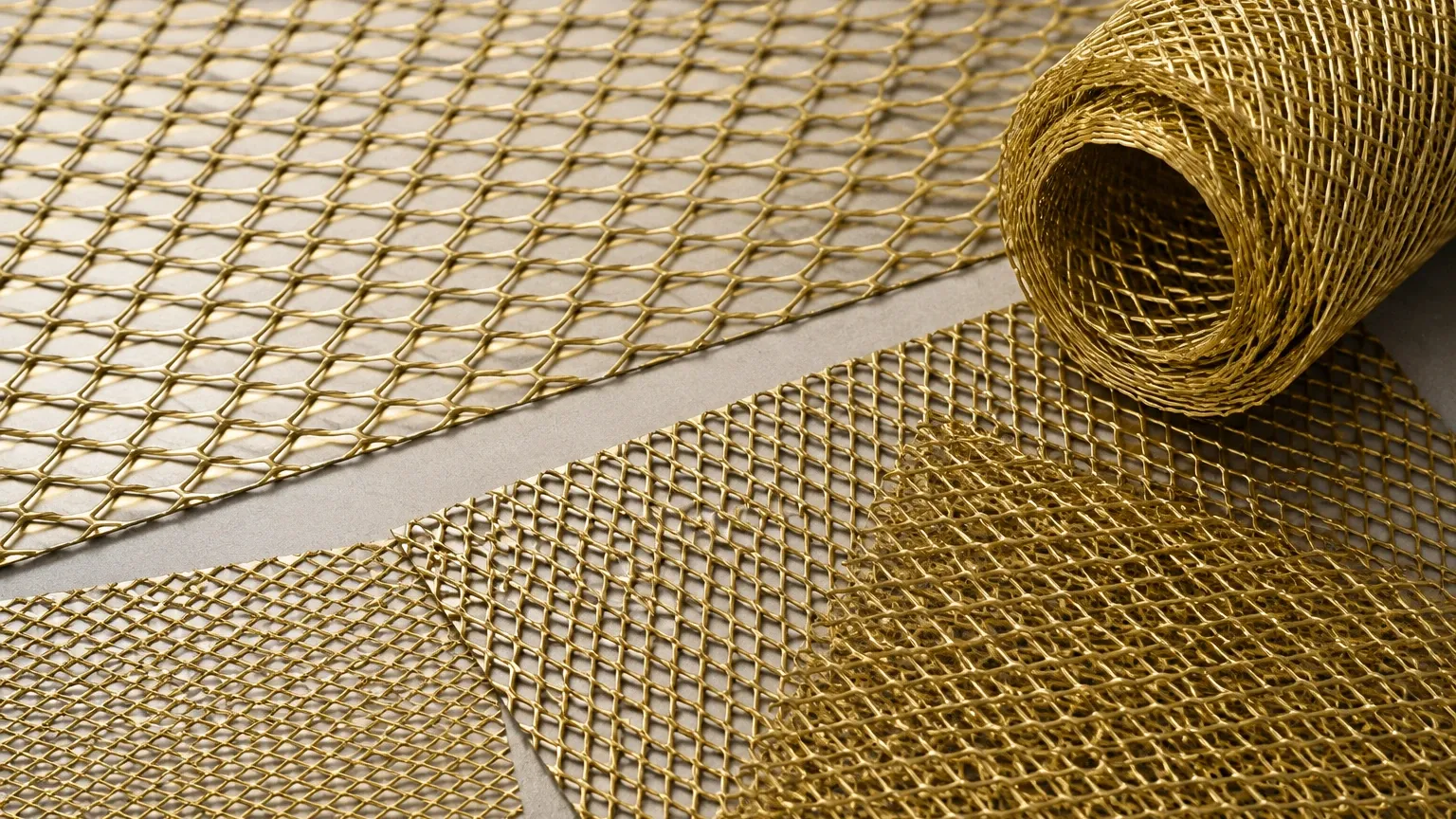
Brass Expanded Metal
In the landscape of industrial filtration and structural components, brass expanded metal stands as a specialized material choice that balances mechanical strength with unique chemical and physical properties. Unlike traditional woven wire mesh or perforated sheets, expanded metal is produced through a process of simultaneous slitting and stretching. When executed using brass—a copper-zinc alloy—the resulting material provides distinct advantages in conductivity, corrosion resistance, and spark-resistance, making it a critical component in sectors ranging from chemical processing to electromagnetic shielding.
For engineers and procurement specialists, understanding the technical nuances of brass expanded metal is essential for ensuring system longevity and filtration efficiency. This guide examines the manufacturing parameters, material benefits, and engineering considerations necessary for selecting the right expanded metal solution for demanding industrial applications.
Understanding the Manufacturing Process of Expanded Metal
The production of expanded metal is a precision engineering process that differs significantly from perforation. While perforated metal involves punching holes out of a solid sheet—resulting in material waste—expanded metal is created by slitting the base metal and stretching it in a single motion. This process creates a diamond-shaped pattern without any loss of material, which contributes to its cost-effectiveness and structural integrity.
Standard vs. Flattened Expanded Metal
There are two primary forms of expanded metal used in industrial contexts:
1. Standard (Raised) Expanded Metal: This is the material as it comes off the expanding machine. The strands and bonds are set at a uniform angle to the plane of the sheet. This creates a three-dimensional surface that offers high rigidity and excellent grip, which is often utilized in filtration stages where turbulence or mechanical support is required.
2. Flattened Expanded Metal: To produce this, the standard expanded metal is passed through a cold-roll reducing mill. This flattens the strands and bonds into a single plane, resulting in a smooth, level surface. Flattened brass expanded metal is frequently used in precision filtration assemblies where a consistent thickness is required to fit within tight tolerances or where the filter media must lay perfectly flush against a support structure.
By choosing the appropriate form, engineers can control the fluid dynamics and mechanical footprint of the component within a larger system. For those evaluating these structural differences, reviewing the available Perforated & Expanded Metal options can help clarify which geometry best suits a specific pressure or flow requirement.
Material Characteristics of Brass in Industrial Filtration
Selecting brass as the base material for expanded metal is typically driven by specific environmental or functional requirements that stainless steel or carbon steel cannot meet. Brass alloys, primarily composed of copper and zinc, offer a suite of characteristics valued in technical environments.
Corrosion Resistance and Biofouling
Brass exhibits excellent resistance to corrosion in many environments, particularly in soft water and certain alkaline conditions. Furthermore, the copper content in brass provides inherent antimicrobial properties. In water treatment and food processing applications, this can help reduce biofouling on the filter surface, maintaining flow rates and extending the intervals between manual cleanings.
Electrical and Thermal Conductivity
Brass is significantly more conductive than stainless steel. In applications involving electromagnetic interference (EMI) or radio frequency interference (RFI) shielding, brass expanded metal serves as an effective barrier. Additionally, its high thermal conductivity makes it an ideal material for heat exchange components or filters operating in high-temperature gas streams where heat dissipation is necessary to prevent localized warping.
Non-Sparking Properties
In volatile environments, such as chemical processing plants or fuel filtration systems, the risk of mechanical sparks is a primary safety concern. Brass is a non-ferrous, non-sparking material. Using brass expanded metal for safety guards, strainers, or support grids minimizes the risk of ignition during maintenance or high-velocity fluid movement.
Technical Specifications and Engineering Parameters
When specifying brass expanded metal, engineers must use precise terminology to ensure the manufactured product meets the design intent. The geometry of the diamond opening is defined by several key measurements:
* SWD (Short Way of Diamond): The distance from the center of a bond to the center of the next bond measured across the short diamond diagonal.
* LWD (Long Way of Diamond): The distance from the center of a bond to the center of the next bond measured across the long diamond diagonal.
* SWO (Short Way of Opening): The actual width of the opening, excluding the strand width.
* LWO (Long Way of Opening): The actual length of the opening, excluding the strand width.
* Strand Width: The amount of metal fed into the machine between slits.
* Strand Thickness: The thickness of the original base metal sheet.
Calculating Open Area
The "Open Area" percentage is perhaps the most critical metric for filtration applications. It determines the flow capacity and the pressure drop across the filter. Because expanded metal is stretched, the open area can be precisely tuned during manufacturing. A higher open area allows for greater flow but may reduce the structural rigidity of the sheet. Conversely, a smaller open area provides a more robust support structure for secondary filter media, such as fine wire mesh or synthetic membranes.
Comparing Perforated & Expanded Metal for Industrial Use
While both perforated and expanded metals are used for similar functions, their mechanical behaviors differ. In a perforated sheet, the removal of material creates holes but leaves a solid "bridge" of metal between them. In expanded metal, the strands are interconnected at an angle (in the raised version), which provides a high strength-to-weight ratio.
From a cost perspective, expanded metal is often more economical because there is no scrap metal generated during the expansion process. From an engineering perspective, expanded metal is often preferred for support cages in filter cartridges because the angled strands can help direct flow and provide more surface area for bonding or welding compared to the flat edges of a perforated hole.
However, perforated metal may be preferred when a very specific hole shape (such as round, square, or slotted) is required for precise particle size exclusion. When determining the optimal choice, it is vital to consult with a manufacturer like Kaifil that understands the interplay between material thickness, hole pattern, and the final application environment.
Application Scenarios in Chemical and Water Treatment
Brass expanded metal is utilized across various industries where its specific alloy benefits outweigh the cost of standard steel.
Chemical Processing
In chemical plants, brass components are often used in the filtration of non-acidic fluids and gases. Its resistance to atmospheric corrosion and its ability to withstand the stresses of high-pressure pipelines make it a reliable choice for strainer baskets and internal support structures for chemical reactors.
Water Treatment and Desalination
In marine environments or brackish water treatment, brass (specifically naval brass or high-zinc alloys) provides better resistance to de-zincification than lower-grade alloys. Expanded metal screens are used as intake filters to prevent large debris from entering sensitive pumping equipment while resisting the corrosive effects of salt spray.
HVAC and Air Filtration
In industrial HVAC systems, brass expanded metal is often used as a pre-filter or a face-guard for high-efficiency particulate air (HEPA) filters. Its rigidity protects the delicate pleated media from physical damage, while its aesthetic finish is sometimes preferred in architectural industrial designs where the filtration system is visible.
Selection Criteria for Custom Filtration Solutions
When sourcing brass expanded metal for a custom project, engineers should evaluate several factors to ensure the component performs as expected:
1. Alloy Grade: Ensure the brass alloy (e.g., C26000, C27000) is compatible with the chemical composition of the fluid being filtered.
2. Mechanical Load: Determine if the expanded metal will be a self-supporting structure or if it will be reinforced. This influences the choice between standard and flattened mesh.
3. Filtration Accuracy: If the expanded metal is the primary filter medium, the SWO and LWO must be strictly controlled to meet the required micron rating or particle retention size.
4. Edge Finishing: Expanded metal has naturally sharp edges where the diamonds are cut. For many industrial applications, these edges must be hemmed, framed, or welded into a housing to ensure safety and proper sealing within a filter housing.
Kaifil’s expertise in custom manufacturing allows for the development of filtration components that meet these specific criteria, providing OEM solutions that integrate seamlessly into existing industrial frameworks.
Maintenance and Total Cost of Ownership
The total cost of ownership (TCO) for brass expanded metal components involves more than just the initial purchase price. Because brass is a durable material with high fatigue resistance, these components often have a longer service life than synthetic alternatives.
Cleaning and Regeneration
Unlike disposable filters, brass expanded metal components can often be cleaned and reused. Methods such as ultrasonic cleaning, backwashing, or chemical dipping (using compatible solvents) can remove accumulated debris without damaging the structural integrity of the metal. This makes expanded metal a sustainable choice for long-term industrial operations.
Monitoring Performance
Engineers should monitor the pressure differential ($\\Delta P$) across the filter. An increase in pressure drop typically indicates that the mesh is becoming blinded. Because brass is relatively soft compared to stainless steel, maintenance teams should use non-abrasive cleaning tools to avoid deforming the strands, which could alter the filtration accuracy.
In conclusion, brass expanded metal is a versatile and technically superior material for specific industrial filtration and structural needs. By carefully considering the manufacturing specifications—from SWD/LWD dimensions to the choice between standard and flattened forms—purchasing teams can secure components that offer the perfect balance of flow efficiency and mechanical durability. For those seeking specialized configurations, the range of Perforated & Expanded Metal products provides the necessary foundation for high-performance industrial filtration systems.
