Buy Expanded Metal Near Me
For procurement managers, maintenance engineers, and industrial designers, the search to "buy expanded metal near me" often stems from an immediate need for structural support, filtration media, or protective screening. However, in the context of high-precision industrial applications—such as chemical processing, hydraulic systems, and pharmaceutical manufacturing—proximity is only one factor in a complex selection process. While local metal service centers may offer standard carbon steel or aluminum sheets, specialized filtration and engineering projects require a deeper understanding of material science, geometric tolerances, and manufacturing capabilities.
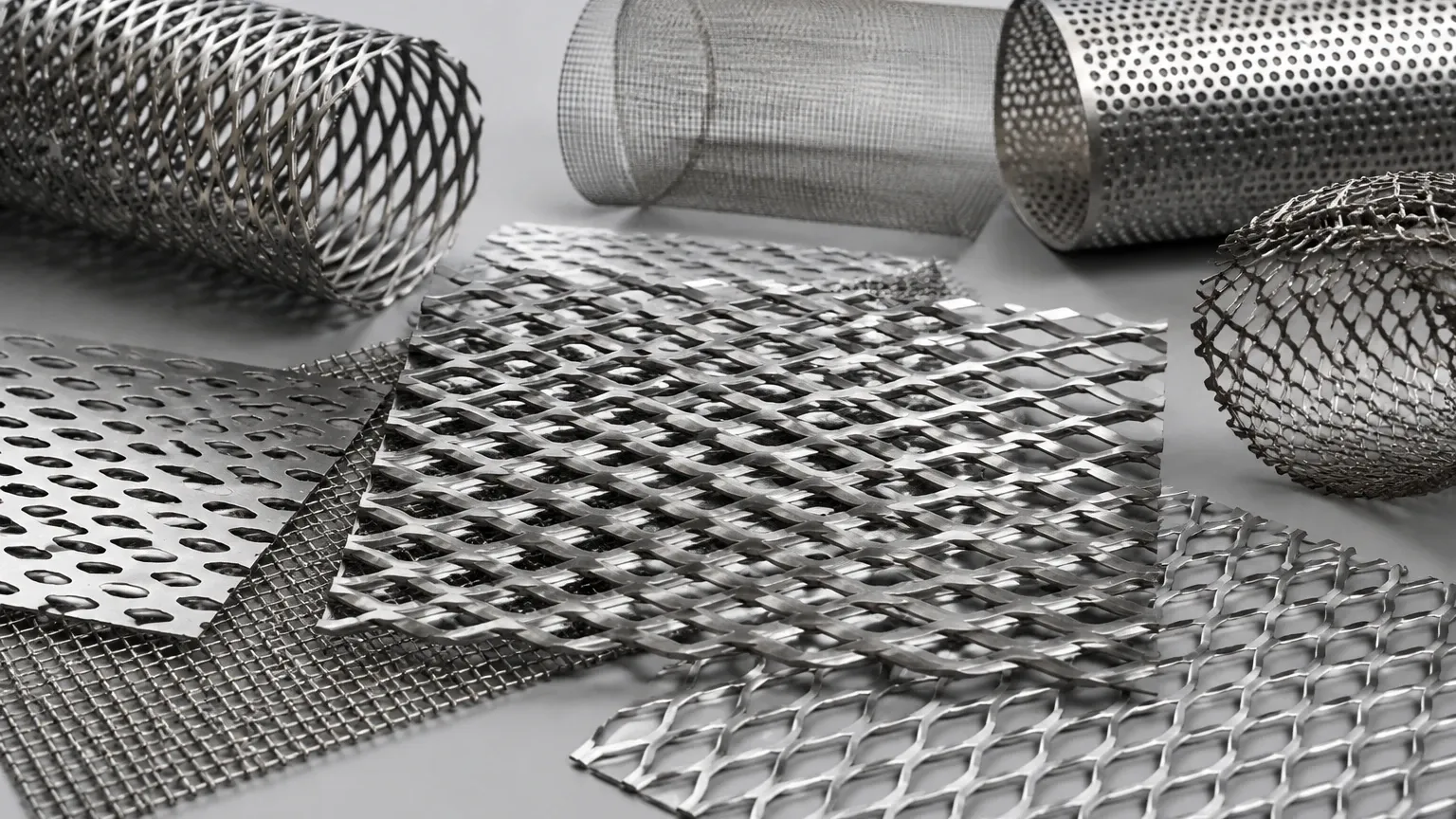
Expanded metal is a versatile material produced by simultaneously slitting and stretching a solid sheet of metal. This process creates a diamond-shaped pattern of openings, resulting in a product that is lightweight yet structurally rigid. Because the material is formed from a single piece of metal, it maintains its structural integrity without the need for welds or joins, making it an excellent candidate for heavy-duty industrial filtration components.
Understanding the Technical Specifications of Expanded Metal
When evaluating options to buy expanded metal near me, it is essential to move beyond basic dimensions and focus on the technical parameters that dictate performance in industrial environments. Engineers must specify several key metrics to ensure the material meets the application's mechanical and filtration requirements.
1. SWD (Short Way of Design): This refers to the distance from the center of one bond to the center of the next bond across the short axis of the diamond opening.
2. LWD (Long Way of Design): This is the distance across the long axis of the diamond opening.
3. Strand Width and Thickness: The width of the metal "ribs" and the thickness of the original base material determine the overall strength and weight of the mesh.
4. Open Area Percentage: Crucial for filtration and airflow applications, this percentage determines the flow rate and pressure drop across the medium.
In industrial filtration, expanded metal often serves as a support structure for finer wire mesh or as a primary coarse filter. Choosing the wrong specification can lead to premature structural failure or inefficient flow dynamics within a system.
Material Selection: Beyond Standard Carbon Steel
While a local search for "buy expanded metal near me" might yield results for galvanized or cold-rolled steel, high-performance industrial sectors typically demand stainless steel. Kaifil specializes in providing Perforated & Expanded Metal solutions in various grades of stainless steel to combat corrosion and withstand high temperatures.
* Stainless Steel 304: The most common grade, offering excellent corrosion resistance and value for general industrial applications.
* Stainless Steel 316/316L: Contains molybdenum, providing superior resistance to chlorides and acids, making it the standard for marine, chemical, and pharmaceutical environments.
* High-Nickel Alloys: For extreme environments involving high heat or highly aggressive chemicals, specialized alloys may be required.
Selecting the correct material grade is critical for the total cost of ownership. A lower-cost local option made of inferior material may require frequent replacement due to oxidation or chemical degradation, ultimately costing more in downtime and labor than a precision-engineered stainless steel component.
Perforated vs. Expanded Metal: Engineering Trade-offs
Engineers often weigh the benefits of perforated metal against expanded metal. While both provide open area for flow, their manufacturing processes and physical characteristics differ significantly.
Perforated metal is created by punching holes into a sheet, which allows for highly precise hole patterns and margins. However, this process generates scrap material, which can increase the cost. In contrast, expanded metal is produced with virtually no waste, making it a more cost-effective solution for large-scale applications. Furthermore, the "raised" nature of standard expanded metal provides a three-dimensional surface that can enhance mechanical grip or create turbulence in specialized fluid dynamics applications. If a smooth surface is required, the material can be "flattened" through a cold-rolling process, though this slightly reduces its structural rigidity.
The Limitations of Sourcing Locally for Specialized Projects
The intent behind searching to "buy expanded metal near me" is often to minimize lead times and shipping costs. For standard architectural or fencing needs, local stockists are often sufficient. However, industrial filtration components frequently require customization that local distributors cannot provide. These requirements include:
* Custom Slitting and Sizing: Standard sheets (typically 4'x8' or 4'x10') often need to be precision-cut into strips or specific shapes for filter cartridges.
* Cylindrical Forming and Welding: Many filtration systems require expanded metal to be formed into cylinders and seam-welded to act as internal support cores.
* Precision Tolerances: Industrial equipment often has tight spatial constraints, requiring tolerances that exceed standard commercial grades.
* Cleanliness Standards: For food, beverage, and pharmaceutical applications, the metal must be free of machining oils and contaminants, requiring specialized ultrasonic cleaning or passivation.
In these instances, partnering with an OEM manufacturer like Kaifil ensures that the material is not only sourced correctly but also processed to meet the exact engineering specifications of the final assembly.
Applications in Industrial Filtration and Beyond
Expanded metal plays a vital role across various sectors. Understanding these applications helps engineers determine the necessary specifications when they look to buy expanded metal near me.
1. Support Cores for Filter Cartridges
In hydraulic and liquid filtration, expanded metal is often used as the inner core or outer shroud of a filter cartridge. It provides the necessary collapse strength to withstand high differential pressures while maintaining a high open area to minimize flow resistance.
2. Flame and Spark Arrestors
The unique geometry of expanded metal can dissipate heat and disrupt the path of sparks, making it a critical component in safety venting and exhaust systems for volatile chemical processing.
3. Strainers and Coarse Filtration
In water treatment and food processing, expanded metal acts as a primary strainer to remove large particulates before the fluid reaches finer secondary filtration stages. Its durability allows it to be cleaned and reused multiple times.
4. EMI/RFI Shielding
In electronics and aerospace, specialized fine expanded metal foils are used to provide electromagnetic interference shielding while allowing for ventilation and weight reduction.
Critical Questions for Procurement Teams
Before finalizing a purchase from a local supplier or a global manufacturer, technical professionals should confirm the following details to ensure project success:
* Is the material flattened or raised? Raised expanded metal offers more strength but may not fit in tight assemblies. Flattened metal is smoother but thinner.
* What is the exact alloy composition? Ensure the supplier provides material certifications (MTRs) to verify the grade of stainless steel.
* What are the directional requirements? Expanded metal has different properties depending on whether the load is applied parallel to the LWD or SWD.
* Are there burr requirements? The expanding process can leave sharp edges. For many applications, deburring or edge-trimming is necessary for safety and fitment.
Evaluating Total Cost of Ownership
When searching to buy expanded metal near me, the initial price per sheet is only one part of the equation. A comprehensive B2B procurement strategy considers the longevity of the component. Stainless steel expanded metal, while more expensive upfront than carbon steel, offers a significantly longer service life in corrosive environments.
Furthermore, sourcing from a manufacturer that understands filtration—like Kaifil—can reduce costs associated with secondary processing. If a local supplier provides raw sheets that then require transportation to a separate facility for cutting, forming, and welding, the logistics costs and risk of error increase. Sourcing a finished or semi-finished component directly from a specialist streamlines the supply chain and ensures accountability for the final product's performance.
Conclusion
While the impulse to buy expanded metal near me is driven by a need for efficiency, industrial applications demand a focus on technical precision and material integrity. Whether you require heavy-duty support for hydraulic filters or precision-expanded foils for specialized screening, understanding the nuances of SWD, LWD, and alloy selection is paramount. For those seeking high-quality, customized solutions that meet rigorous industrial standards, Review product options and application support to find the ideal Perforated & Expanded Metal for your specific engineering requirements. By prioritizing technical compatibility and manufacturing expertise over simple proximity, organizations can ensure the reliability and efficiency of their filtration systems for years to come.