


Central Expanded Metal
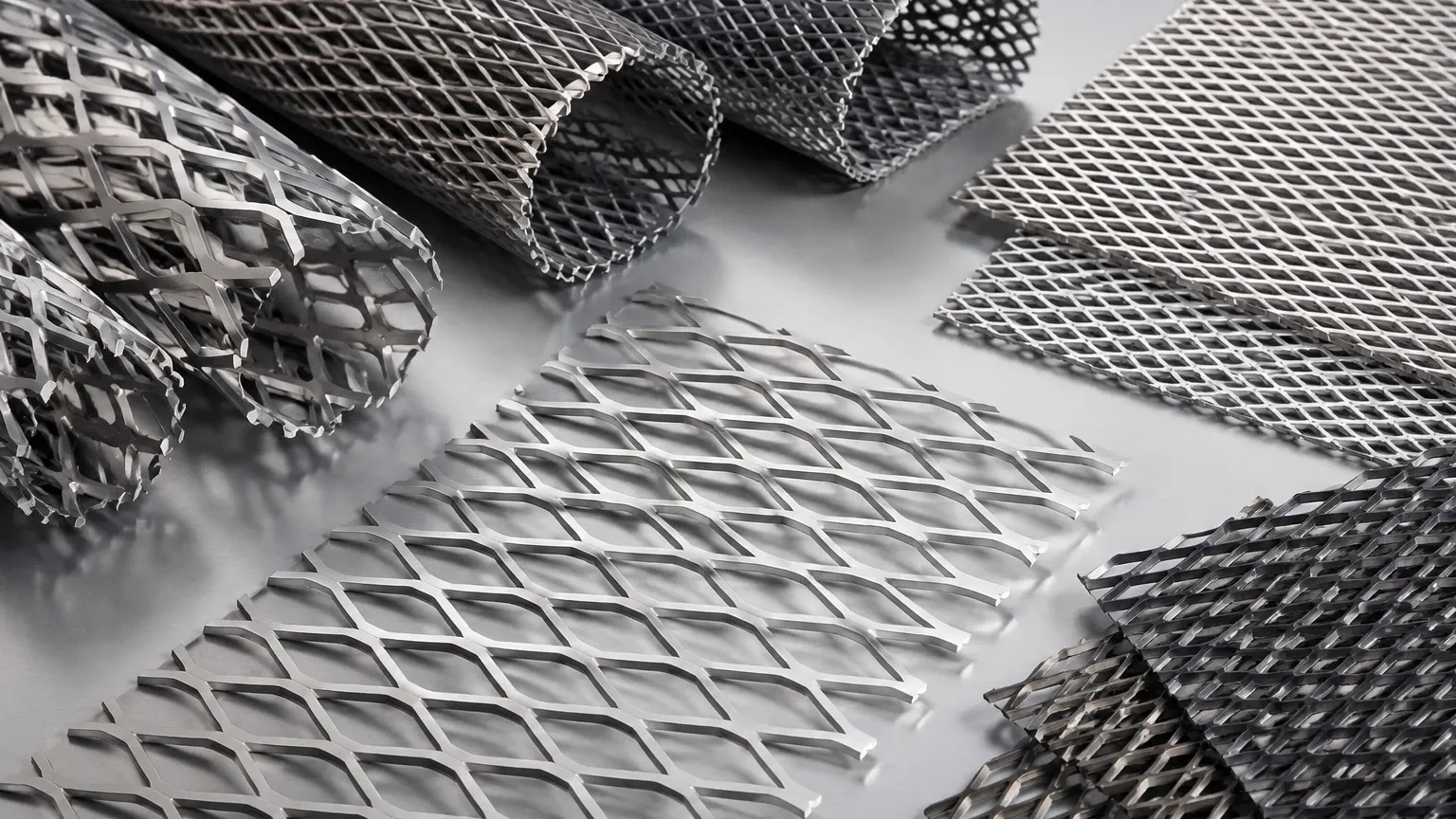
In industrial filtration and structural engineering, the selection of internal support components is critical to the longevity and efficiency of the system. Central expanded metal serves as a primary structural element in many filter assemblies, providing the necessary rigidity to withstand high differential pressures while maintaining the open area required for fluid flow. Unlike perforated materials, expanded metal is produced through a process of slitting and stretching, resulting in a unique diamond-shaped pattern that offers a superior strength-to-weight ratio.
For engineers and procurement professionals, understanding the technical nuances of Perforated & Expanded Metal is essential for optimizing filter performance. This guide examines the engineering specifications, material considerations, and application-specific benefits of central expanded metal in industrial contexts.
Understanding Expanded Metal in Industrial Filtration
Expanded metal is a versatile material used extensively as a support core or outer protective wrap in industrial filter cartridges. The manufacturing process involves a machine that simultaneously slits and stretches a solid metal sheet. This process creates a continuous piece of mesh without joins or welds, ensuring structural integrity that is often higher than that of woven wire mesh or assembled components.
In the context of "central expanded metal," the term typically refers to the expanded metal used as the central support core (the center tube) of a cylindrical filter. This core must support the filter media—whether it be pleated wire mesh, fiberglass, or synthetic polymers—against the force of the incoming fluid. If the central core fails or deforms under pressure, the filter media can collapse, leading to bypass or total system failure.
The Manufacturing Advantage
The expansion process is highly resource-efficient. Because the metal is stretched rather than punched, there is virtually zero material waste. This makes expanded metal a cost-effective alternative to perforated metal for many high-volume industrial applications. Furthermore, the resulting diamond-shaped trusses are oriented at an angle to the original plane of the sheet, which adds mechanical stiffness to the final cylindrical form of a filter core.
Technical Parameters and Engineering Specifications
When specifying central expanded metal for a filtration project, engineers must define several key geometric parameters. These dimensions dictate both the mechanical strength of the core and the hydraulic resistance it will introduce to the system.
SWD and LWD
* SWD (Short Way of Design): The distance from the center of one bond to the center of the next bond measured across the short diamond diagonal.
* LWD (Long Way of Design): The distance from the center of one bond to the center of the next bond measured across the long diamond diagonal.
These measurements are critical for determining the density of the mesh. A smaller SWD/LWD ratio generally results in a denser mesh with higher structural support but lower open area.
Strand Width and Thickness
* Strand Thickness: The thickness of the original base metal sheet.
* Strand Width: The amount of metal fed into the machine for each slit-and-stretch cycle.
The combination of thickness and width determines the cross-sectional area of the "trusses" in the diamond pattern. For high-pressure hydraulic applications, thicker strands are required to prevent the core from buckling under the compressive force of the fluid.
Open Area Calculation
The open area is perhaps the most vital specification for filtration. It is the percentage of the total area that allows for the passage of fluid. While expanded metal provides excellent support, an insufficient open area will lead to a high initial pressure drop (ΔP), reducing the overall efficiency of the system and increasing energy consumption. Engineers must balance the need for structural rigidity (more metal) with the need for low flow resistance (more open area).
Material Selection for Demanding Environments
The performance of central expanded metal is heavily dependent on the alloy used. In industrial filtration, where exposure to corrosive chemicals, high temperatures, and high-pressure steam is common, stainless steel is the standard choice.
Stainless Steel 304 vs. 316L
* Grade 304: Suitable for general-purpose industrial applications, offering good corrosion resistance and excellent formability. It is commonly used in food and beverage processing where acidic conditions are minimal.
* Grade 316L: The "L" stands for low carbon, which improves weldability and prevents intergranular corrosion. Grade 316 contains molybdenum, significantly increasing its resistance to chlorides and marine environments. This is the preferred material for pharmaceutical and chemical processing filters.
Specialty Alloys
For extreme environments, such as those found in petrochemical refining or aerospace, specialty alloys like Monel, Inconel, or Hastelloy may be used. These materials maintain their mechanical properties at much higher temperatures and offer superior resistance to highly aggressive chemical agents.
The Role of Central Expanded Metal in Filter Cartridge Design
In a standard cylindrical filter cartridge, the central expanded metal core acts as the backbone. The design must account for several mechanical stresses:
1. Radial Compression: As fluid flows from the outside of the filter to the inside (out-to-in flow), the pressure pushes the media against the central core. The core must resist this radial compression without deforming.
2. Axial Loading: During installation or due to hydraulic shocks, the core may experience axial (vertical) loads. The expanded metal must be trimmed and finished precisely to ensure it seats correctly against the end caps.
3. Media Protection: The surface of the expanded metal must be free of burrs or sharp edges. In many designs, the expanded metal is "flattened" after the initial expansion process. Flattened expanded metal is passed through cold-reduction rolls, resulting in a smooth, level surface that will not puncture or abrade the delicate filter media wrapped around it.
Flow Distribution
Beyond structural support, the geometry of the expanded metal influences how fluid is distributed across the filter media. The angled strands of raised expanded metal can actually help in creating a more turbulent flow, which in some specific pre-filtration stages, helps in preventing the rapid buildup of a filter cake, although this is secondary to its structural role.
Comparing Perforated and Expanded Metal for Support Structures
Engineers often choose between perforated metal and expanded metal for central cores. Each has distinct advantages:
* Structural Integrity: Expanded metal is often stronger per pound than perforated metal because the strands are oriented at an angle, acting like a series of structural trusses. However, perforated metal provides a more uniform surface for very thin membrane media.
* Cost: Expanded metal is generally more economical due to the lack of material waste during production.
* Customization: Perforated metal allows for more complex hole patterns and margins (solid areas at the edges), whereas expanded metal is a continuous pattern. For most industrial filter cores, the continuous pattern of expanded metal is sufficient and preferred for its consistency.
Engineering Considerations: Pressure Drop and Efficiency
A common mistake in filter design is over-specifying the thickness of the central expanded metal. While a thicker core is stronger, it occupies more volume and can restrict flow. The "Total Cost of Ownership" (TCO) of a filtration system is heavily influenced by the pressure drop. A core with a 40% open area will require significantly more pump energy to maintain flow than a core with a 60% open area, especially as the filter media begins to load with contaminants.
When evaluating a central expanded metal component, engineers should request flow-test data or use computational fluid dynamics (CFD) modeling to ensure that the core geometry does not become a bottleneck in the system.
Quality Standards and Manufacturing Precision
For OEM applications, the precision of the expanded metal is paramount. Variations in the expansion process can lead to inconsistencies in the SWD and LWD, which in turn affects the diameter of the finished filter core. If the core diameter is even slightly out of tolerance, the filter media will not fit snugly, leading to potential bypass or assembly difficulties.
Key quality checks for central expanded metal include:
* Dimensional Accuracy: Ensuring the LWD and SWD meet the design specifications.
* Flatness: For flattened expanded metal, verifying that the thickness is uniform across the sheet.
* Surface Finish: Inspecting for sharp edges, oil residues (from the expansion lubricants), or oxidation.
* Weldability: Ensuring the material is clean and ready for longitudinal welding into a tube shape.
Sourcing and Customization for OEM Applications
When sourcing central expanded metal, it is beneficial to work with a manufacturer that understands the end-use in filtration. Customization options often include specific material grades, custom diamond sizes to match flow requirements, and secondary processing such as annealing or specialized cleaning for pharmaceutical-grade applications.
Before finalizing a purchase, technical teams should confirm:
1. Burst Pressure Requirements: What is the maximum differential pressure the core must withstand?
2. Chemical Compatibility: Does the selected alloy resist the specific cleaning agents and process fluids?
3. End-Cap Integration: How will the expanded metal tube be joined to the end caps (e.g., ultrasonic welding, adhesive bonding, or thermal welding)?
By addressing these factors during the design phase, companies can ensure they select a central expanded metal solution that maximizes the service life and reliability of their industrial filtration systems. For more detailed specifications on available patterns and materials, technical professionals can Review product options and application support to find the optimal configuration for their specific industrial needs.
