


Expanded Metal Coils
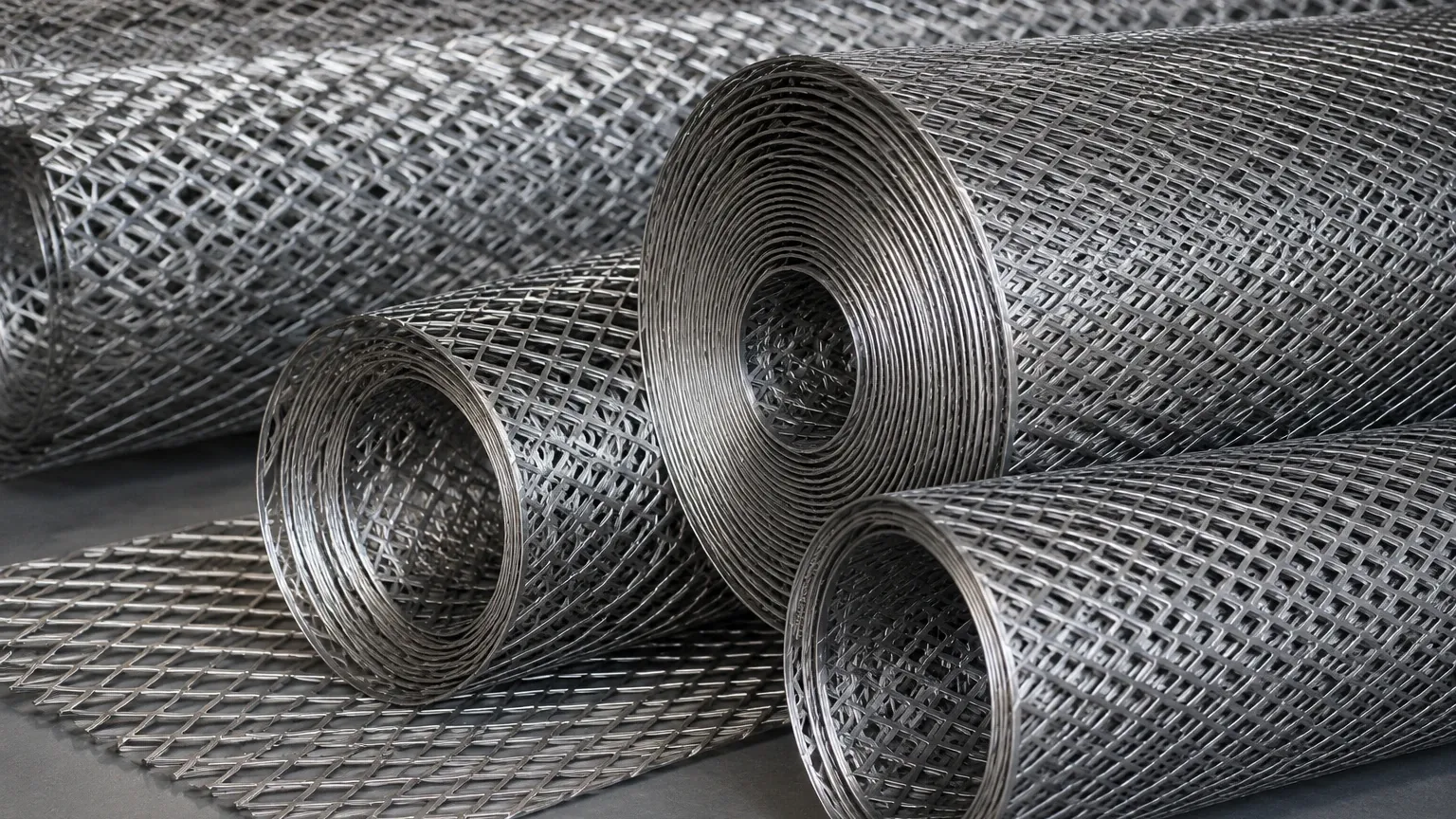
In the landscape of industrial filtration and structural support, expanded metal coils represent a versatile and efficient material choice. Unlike traditional perforated sheets, expanded metal is produced through a process of simultaneous slitting and stretching, which transforms a solid metal coil into a continuous mesh of diamond-shaped openings. For engineers and procurement professionals in the chemical, pharmaceutical, and hydraulic sectors, understanding the technical nuances of these coils is essential for optimizing filter performance and ensuring long-term durability.
As a specialized manufacturer, Kaifil focuses on delivering precision-engineered Perforated & Expanded Metal solutions that meet the rigorous demands of industrial environments. This guide examines the mechanical properties, material selection criteria, and application-specific considerations for expanded metal coils.
Understanding the Manufacturing Process of Expanded Metal Coils
The production of expanded metal coils is a cold-working process that significantly differs from punching or weaving. A metal coil is fed through an expanding machine where a series of knives slit the material while simultaneously stretching it. This process creates a truss-like structure where the strands and bonds are angled to the plane of the sheet.
One of the primary engineering advantages of this method is the lack of material waste. Because the metal is stretched rather than punched, the final product can be up to ten times the length of the original raw material, depending on the expansion ratio. This efficiency directly translates to cost savings, particularly when utilizing high-cost alloys such as stainless steel 316L or Hastelloy. Furthermore, because the mesh is formed from a single piece of metal, there are no welds or joints to fail, ensuring a high strength-to-weight ratio and excellent structural integrity.
Key Technical Specifications and Terminology
When specifying expanded metal coils for industrial filtration or support components, engineers must use precise terminology to ensure the final product meets the application's flow and pressure requirements. The following parameters are critical:
* SWD (Short Way of Diamond): The distance from the center of one bond to the center of the next bond across the short axis of the diamond.
* LWD (Long Way of Diamond): The distance from the center of one bond to the center of the next bond across the long axis of the diamond.
* Strand Width: The amount of metal fed into the knives for each stroke; this determines the thickness of the individual mesh segments.
* Strand Thickness: The thickness of the original base metal coil.
* Opening Size: The actual clear space (aperture) between the strands, which is vital for calculating filtration efficiency and flow rates.
* Percent Open Area: A calculation used to determine the transparency of the mesh, which directly impacts the pressure drop across a filter element.
Expanded metal can be supplied in two primary forms: Raised (Standard) and Flattened. Raised expanded metal retains the natural angled profile of the strands, providing maximum rigidity and a slip-resistant surface. Flattened expanded metal undergoes an additional cold-rolling process to create a smooth, level surface, which is often preferred for filter outer guards or when the mesh must be bonded to other media layers.
Material Selection for Industrial Filtration and Support
The performance of expanded metal coils is heavily dependent on the chemical and thermal properties of the base material. In industrial filtration, where exposure to corrosive fluids, high temperatures, and varying pH levels is common, material selection is the first line of defense against premature failure.
Stainless Steel 304 and 304L
As the most common choice for general industrial applications, Grade 304 provides excellent formability and good corrosion resistance. It is widely used in food and beverage processing and hydraulic systems where extreme chemical exposure is not a primary concern.
Stainless Steel 316 and 316L
For chemical processing, pharmaceutical manufacturing, and marine environments, Grade 316 is the standard. The addition of molybdenum enhances resistance to pitting and crevice corrosion in chloride-rich environments. The "L" (low carbon) variants are preferred for components requiring extensive welding to prevent carbide precipitation.
Specialty Alloys
In highly specialized sectors, such as aerospace or advanced chemical synthesis, expanded metal coils may be produced from Monel, Inconel, or Titanium. These materials are selected for their ability to maintain mechanical properties at extreme temperatures or in highly oxidizing environments.
Comparing Expanded Metal and Perforated Metal for Filter Components
Engineers often weigh the benefits of Perforated & Expanded Metal when designing filter cores, cages, or support screens. While both serve similar functions, their mechanical behaviors differ.
Material Efficiency and Cost
Expanded metal is inherently more resource-efficient. Perforated metal involves punching holes out of a sheet, creating "slugs" or waste material that must be recycled. Expanded metal utilizes nearly 100% of the raw coil, making it a more economical choice for large-scale production runs of expanded metal coils.
Structural Integrity
Expanded metal functions as a continuous truss. The bonds between the diamonds are not welded but are part of the parent metal, which allows for better stress distribution. However, perforated metal offers more predictable directional strength, as the solid margins can be designed to handle specific axial loads in high-pressure hydraulic cylinders.
Filtration Characteristics
Perforated metal allows for highly precise hole shapes (round, square, hexagonal) and exact hole-to-hole spacing. Expanded metal diamonds are more variable but provide a unique three-dimensional profile in the "raised" state. This profile can be used to create turbulence in a fluid stream, which may be advantageous in certain pre-filtration or coalescing applications.
Engineering Considerations for Integration and Customization
Integrating expanded metal coils into an industrial filtration system requires careful consideration of the manufacturing workflow. For OEM manufacturers, purchasing expanded metal in coil form rather than cut-to-size sheets offers several advantages:
1. Automated Production: Coils can be continuously fed into stamping, rolling, or welding machines, reducing manual handling and labor costs.
2. Reduced Seams: In the production of long filter cartridges or protective sleeves, coils allow for continuous lengths, minimizing the number of circumferential welds required.
3. Custom Widths: Precision slitting of the base coil before expansion allows for the creation of narrow mesh ribbons tailored to specific filter diameters.
When customizing expanded metal, engineers must also consider the "edge" condition. In many filtration applications, a solid (unexpanded) border is required for welding to end caps or support flanges. While expanded metal is typically expanded across its full width, specialized tooling can create localized expanded zones, though this is more complex than with perforated alternatives.
Quality Control and Performance Evaluation
To ensure reliable performance in demanding applications, expanded metal coils must adhere to strict quality standards. Key evaluation criteria include:
* Dimensional Tolerance: Consistency in SWD and LWD is critical for ensuring that the mesh fits precisely within the filter housing or over the filter media.
* Flatness and Camber: For automated processing, the coil must remain flat and free from excessive camber (sideways curvature), which can cause tracking issues in production machinery.
* Surface Finish: In pharmaceutical and food-grade applications, the mesh must be free of burrs, oils, and manufacturing residues. Passivation or electropolishing is often required to ensure the highest level of corrosion resistance and cleanliness.
* Mechanical Testing: Depending on the application, tensile strength tests and pressure drop simulations may be performed to verify that the mesh can withstand the operating stresses of the system.
Conclusion: Selecting the Right Filtration Partner
Choosing the appropriate expanded metal solution involves more than just selecting a diamond size. It requires a comprehensive understanding of the fluid dynamics, chemical environment, and mechanical stresses of the specific application. By focusing on precision manufacturing and material expertise, Kaifil provides the technical support necessary for engineers to navigate these complexities.
Whether the goal is to reduce the weight of a hydraulic filter support or to enhance the durability of a chemical strainer, expanded metal coils offer a robust and cost-effective solution. For technical professionals seeking to optimize their filtration systems, consulting with a manufacturer that understands both the metallurgy and the application-specific requirements is the most effective path to achieving long-term performance goals.
