


Expanded Mesh 8
In the landscape of industrial filtration and structural engineering, material selection is dictated by the balance between mechanical integrity and functional permeability. Expanded mesh 8 represents a specific category of high-strength, precision-engineered material used extensively as a support structure or primary filtration stage in demanding environments. Unlike traditional woven wire cloth, expanded metal is produced through a simultaneous slitting and stretching process, resulting in a monolithic structure that offers unique advantages in terms of rigidity and weight-to-strength ratio.
For engineers and procurement professionals, understanding the technical nuances of Perforated & Expanded Metal is critical for optimizing system performance. Whether utilized as a protective outer cage for filter cartridges or a structural support for fine mesh media, expanded mesh 8 provides the durability required to withstand high-pressure differentials and corrosive chemical exposures.
Understanding Expanded Mesh 8 in Industrial Filtration
The designation "expanded mesh 8" typically refers to the gauge of the base material or a specific dimensional standard within the expanded metal hierarchy. In industrial contexts, an 8-gauge expanded metal is a heavy-duty specification, often characterized by a thickness of approximately 0.1285 inches (3.26 mm) before the expansion process. When this material is expanded, it creates a diamond-shaped pattern that is inherently stronger than the original flat sheet due to the structural orientation of the strands and bonds.
The Manufacturing Process
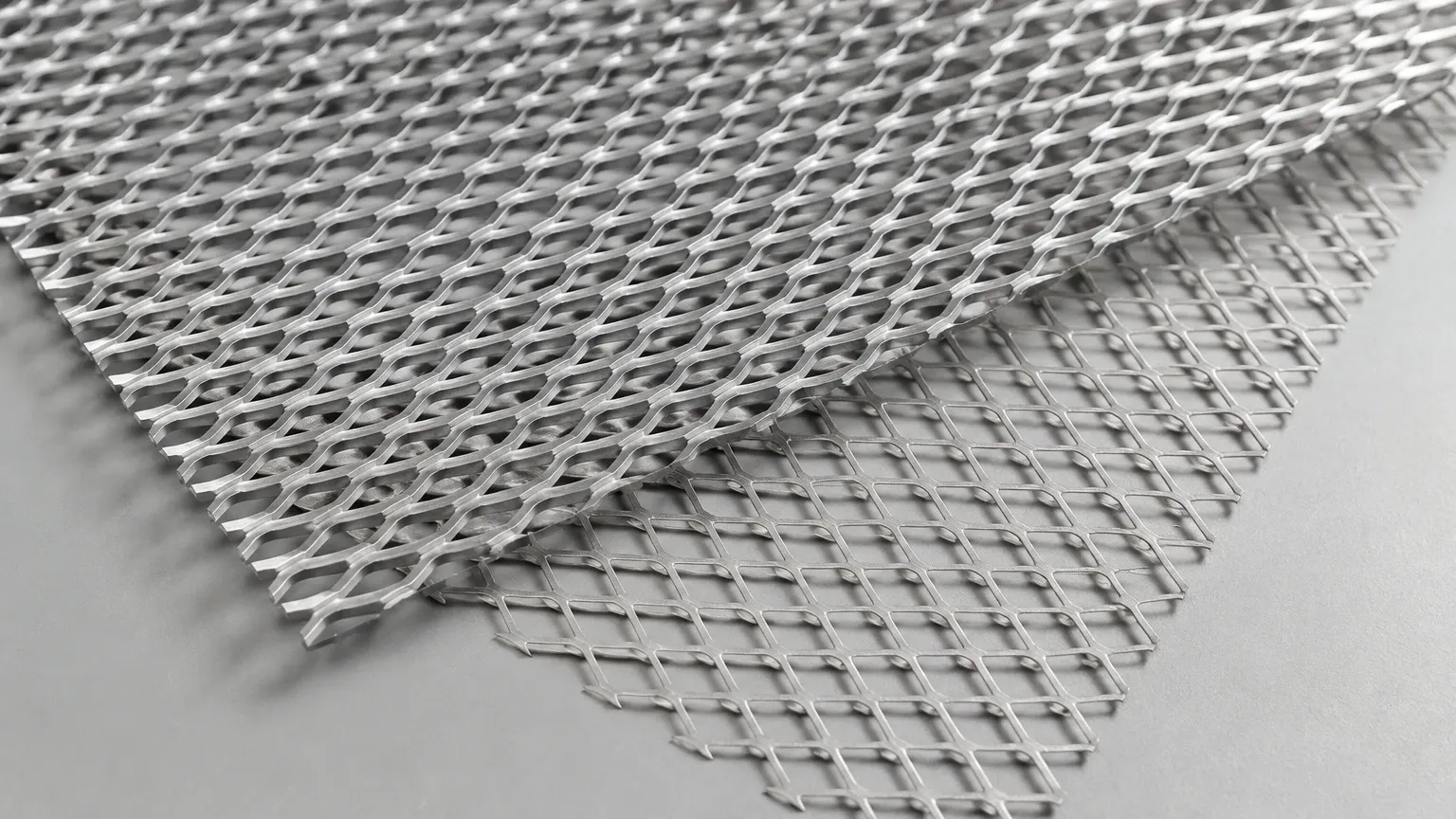
Expanded metal is manufactured by feeding a solid metal sheet through a machine that slits and stretches the material in a single motion. This process creates a continuous piece of metal without welds or joints. For filtration applications, this is a significant advantage as there are no weak points that could fail under mechanical stress or thermal cycling. The resulting diamond-shaped openings are measured by the Long Way of the Design (LWD) and the Short Way of the Design (SWD), which dictate the flow characteristics and particle retention capabilities of the mesh.
Structural Integrity vs. Open Area
One of the primary engineering considerations for expanded mesh 8 is the ratio of open area to solid strand. In filtration, a high open area is desirable to minimize pressure drop and maximize flow rates. However, in heavy-duty industrial applications, the mesh must also provide sufficient rigidity to prevent the collapse of inner filter media. Expanded mesh 8 strikes a balance, providing a robust framework that can support finer layers of stainless steel wire mesh or synthetic membranes while maintaining efficient throughput.
Material Selection and Engineering Specifications
When specifying expanded mesh 8 for industrial use, the choice of alloy is the most critical factor in determining the component's lifespan and performance. At Kaifil, we focus on high-performance alloys that meet the rigorous standards of the chemical, pharmaceutical, and food processing industries.
Stainless Steel 304 and 316L
Stainless steel is the industry standard for expanded mesh used in filtration.
* Grade 304: Offers excellent strength and basic corrosion resistance, making it suitable for water treatment and general industrial machinery.
* Grade 316L: Contains molybdenum, which provides superior resistance to chlorides and pitting. This is the preferred choice for marine environments, chemical processing, and pharmaceutical applications where hygiene and corrosion resistance are paramount.
Raised vs. Flattened Expanded Mesh
Engineers must choose between "raised" and "flattened" expanded mesh 8 based on the specific application:
1. Raised (Standard) Mesh: The strands are set at an angle to the plane of the sheet. This provides maximum rigidity and a textured surface that can assist in breaking up fluid flow or providing mechanical grip.
2. Flattened Mesh: The raised mesh is passed through a cold-rolling mill, which flattens the strands into a single plane. This reduces the overall thickness and creates a smooth surface, which is essential when the mesh is used as a support for delicate filter membranes that could be punctured by the sharp edges of raised mesh.
Performance Evaluation Criteria for Expanded Mesh 8
To ensure that expanded mesh 8 meets the operational requirements of a filtration system, several performance metrics must be evaluated during the design phase. These criteria go beyond simple dimensions and delve into the fluid dynamics and mechanical limits of the material.
Pressure Drop and Flow Resistance
Every layer added to a filtration assembly contributes to the total pressure drop (ΔP). Because expanded mesh 8 has relatively thick strands, its impact on flow must be calculated. The angular orientation of the strands in raised mesh can create turbulence, which may be beneficial for certain mixing applications but detrimental if a laminar flow is required. Technical teams should request flow coefficient data to ensure the mesh does not become a bottleneck in the system.
Load-Bearing Capacity
In high-pressure hydraulic systems or large-scale water intake screens, the expanded mesh must resist deformation. The load-bearing capacity of expanded mesh 8 is significantly higher than that of perforated metal of a similar thickness because the strands are interconnected at angles that distribute stress more effectively. This makes it an ideal choice for "back-washable" filters where the mesh must withstand frequent pressure reversals.
Filtration Accuracy and Pre-Screening
While expanded mesh 8 is often used as a support structure, it can also serve as a primary coarse filter or "trash screen." In these cases, the SWD (Short Way of the Design) determines the maximum particle size that can pass through. For applications requiring finer filtration, the expanded mesh acts as the substrate for sintered wire mesh or multi-layer filter cartridges.
Common Risks and Quality Control in Manufacturing
Procuring industrial-grade expanded mesh 8 involves navigating potential quality pitfalls that can lead to system failure or increased maintenance costs. Technical buyers should be aware of the following risks:
Edge Burrs and Sharpness
The slitting process used to create expanded metal naturally leaves sharp edges. In many B2B applications, especially in the food and beverage or pharmaceutical sectors, these burrs must be removed through electropolishing or mechanical deburring. Residual burrs can shed metal particles into the process stream, leading to contamination, or they can damage secondary filter layers.
Material Fatigue and Cracking
If the expansion ratio is too aggressive for the specific alloy, micro-cracks can form at the "bonds" (the intersection of the diamonds). These cracks may not be visible to the naked eye but can propagate under vibration or thermal expansion, eventually leading to structural failure. Quality assurance protocols, including dye penetrant testing or ultrasonic inspection, are essential for mission-critical components.
Dimensional Inconsistency
In automated assembly lines, dimensional tolerances are tight. If the LWD or SWD varies across the sheet, the mesh may not fit correctly into filter housings or frames. Ensuring that the manufacturer uses precision expansion equipment and maintains strict tolerance controls is vital for seamless integration into OEM equipment.
Customization and Integration with Filtration Systems
One of the core strengths of Kaifil’s manufacturing capability is the ability to provide customized Perforated & Expanded Metal solutions that go beyond off-the-shelf specifications. Expanded mesh 8 can be tailored in several ways to meet specific engineering challenges.
Custom Geometry and Framing
For many industrial applications, expanded mesh is not used as a flat sheet but is rolled into cylinders or fabricated into custom shapes. Kaifil provides precision cutting, rolling, and welding services to ensure the mesh integrates perfectly with existing filter housings. Adding solid metal borders or custom frames can also simplify the installation process and improve the seal within the filtration vessel.
Surface Treatments
Beyond material selection, surface treatments can enhance the performance of expanded mesh 8.
* Passivation: Essential for stainless steel to restore the protective oxide layer after fabrication.
* Electropolishing: Removes surface imperfections and creates a mirror-like finish, which is critical for "clean-in-place" (CIP) systems in the pharmaceutical industry.
* Coating: In highly aggressive chemical environments, specialized coatings can provide an additional layer of protection against localized corrosion.
Procurement Considerations for Engineering Teams
When moving from the design phase to procurement, there are several practical factors that influence the total cost of ownership and the long-term reliability of the expanded mesh 8 components.
Technical Documentation and Traceability
For industries like aerospace, medical, and high-end chemical processing, traceability is non-negotiable. Procurement teams should ensure that the supplier provides Mill Test Reports (MTRs) for the raw material and certificates of conformance for the finished product. This documentation confirms the chemical composition of the alloy and ensures that the material meets the specified mechanical properties.
Replacement Cycles and Maintenance
While expanded mesh 8 is designed for durability, it is not indestructible. In abrasive environments, the strands will eventually thin, leading to a loss of structural integrity. Engineers should establish inspection intervals based on the erosive nature of the process fluid. Because expanded metal is a single-piece construction, it is generally easier to clean than woven mesh, which can trap particles in the wire overlaps, potentially extending the time between replacement cycles.
Total Cost Considerations
While the initial cost of stainless steel expanded mesh 8 may be higher than galvanized or carbon steel alternatives, the reduction in downtime, maintenance, and replacement frequency often results in a lower total cost of ownership. By selecting a manufacturer with deep technical expertise in filtration, such as Kaifil, companies can ensure they receive a product optimized for their specific application, rather than a generic solution that may underperform under pressure.
In conclusion, expanded mesh 8 is a versatile and robust material that plays a vital role in industrial filtration. By focusing on material purity, precise manufacturing tolerances, and application-specific customization, engineering teams can leverage this material to enhance the efficiency and reliability of their filtration systems. For those seeking high-performance filtration components, reviewing the available options for Perforated & Expanded Metal is the first step toward achieving optimized industrial performance.
