


Perforated Metal 8mm
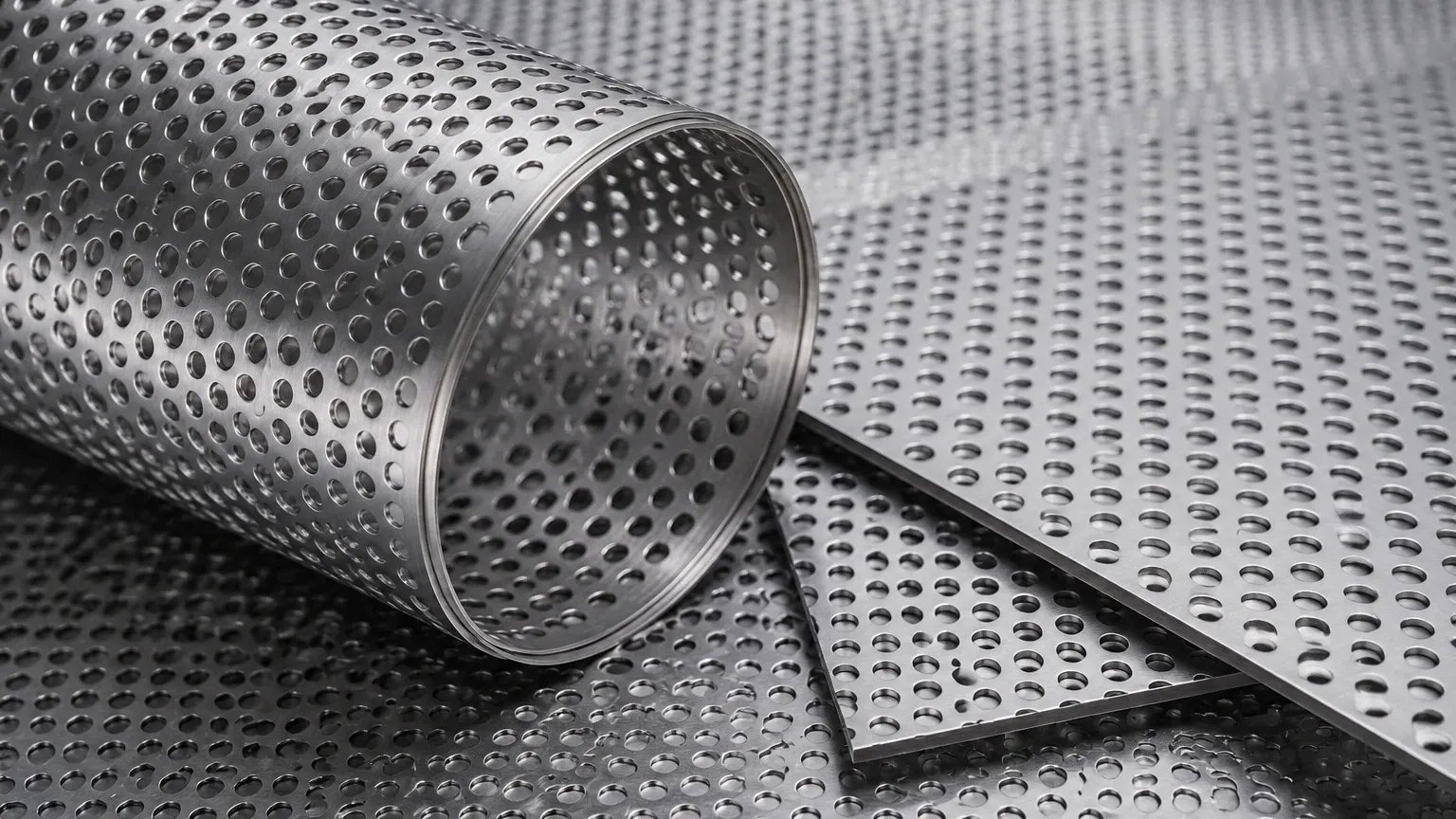
In industrial filtration and structural engineering, the specification of perforated media is critical to the performance, durability, and efficiency of the system. Perforated metal 8mm—referring typically to the hole diameter or, in specific heavy-duty applications, the plate thickness—serves as a versatile standard in various sectors. For engineers and procurement specialists, selecting the right Perforated & Expanded Metal involves balancing mechanical strength with hydraulic requirements.
At Kaifil, we manufacture precision-engineered filtration components where perforated metal acts as the primary screening element or the structural skeleton for finer wire mesh layers. Understanding the technical nuances of 8mm specifications is essential for optimizing industrial processes in chemical, food and beverage, and water treatment applications.
Technical Specifications: Defining Perforated Metal 8mm
When specifying perforated metal 8mm, it is vital to clarify whether the dimension refers to the aperture size or the gauge of the material. In most filtration contexts, an 8mm hole diameter is a common requirement for coarse screening or as a support core for multi-layered filter cartridges.
Hole Patterns and Pitch
The arrangement of the 8mm holes significantly impacts both the structural integrity of the sheet and the flow characteristics. The two most common configurations are:
1. Staggered Pattern (60-degree): This is the industrial standard due to its inherent strength and high open area. It provides a uniform distribution of stress across the metal sheet, making it ideal for high-pressure environments.
2. Straight Row Pattern: Used primarily for aesthetic or specific mechanical alignment purposes, straight rows offer lower structural stability compared to staggered patterns but may be required for certain automated cleaning systems.
Calculating Open Area
The "Open Area" is the percentage of the sheet that consists of holes, determining the flow rate and pressure drop. For a staggered pattern, the formula is:
* Open Area % = (D² × 90.69) / P²
Where *D* is the hole diameter (8mm) and *P* is the pitch (the distance from the center of one hole to the center of the next). If an 8mm hole is punched with a 12mm pitch, the open area is approximately 40.3%. Engineering teams must specify the pitch carefully to ensure the metal retains enough "bridge" (the material between holes) to withstand mechanical loads.
Material Selection for Industrial Environments
The choice of alloy is as critical as the physical dimensions. Since perforated metal 8mm is often exposed to corrosive fluids or high temperatures, material selection must align with the chemical profile of the process.
* Stainless Steel 304: The most common grade for general industrial use, providing excellent corrosion resistance and formability. It is widely used in food processing and general water filtration.
* Stainless Steel 316L: Containing molybdenum, 316L offers superior resistance to chlorides and acids. This is the preferred choice for pharmaceutical and marine applications where pitting corrosion is a risk.
* Specialty Alloys: For extreme environments, materials like Duplex stainless steel or Monel may be used to provide higher tensile strength and resistance to stress corrosion cracking.
Engineering Considerations: Strength vs. Flow
One of the primary challenges in filter design is the trade-off between the flow capacity and the structural rigidity of the support core. Perforated metal 8mm is frequently used as a "support cage" for fine wire mesh or pleated filter media.
Structural Support for Fine Media
In high-pressure hydraulic or gas filtration, fine wire mesh lacks the mechanical strength to resist collapsing. An 8mm perforated cylinder provides the necessary rigid framework. Engineers must ensure that the perforated support can handle the maximum expected differential pressure (ΔP) without deforming. If the bridge between the 8mm holes is too narrow, the cylinder may buckle under operational stress.
Pressure Drop and Turbulence
Larger apertures like 8mm are excellent for minimizing initial pressure drop. However, the thickness of the plate also plays a role. A thicker plate (e.g., 2mm or 3mm thickness with 8mm holes) creates a longer "path" for the fluid, which can induce localized turbulence. This turbulence can be beneficial in certain mixing applications but may lead to increased energy consumption in high-volume pumping systems.
Manufacturing Precision and Customization
Kaifil’s manufacturing process for Perforated & Expanded Metal focuses on precision and repeatability. When ordering perforated metal 8mm, several customization factors should be confirmed:
* Margins: Standard sheets often have "unperforated" edges. Specifying the width of these margins is crucial for welding or mounting the sheet into a frame or filter housing.
* Flatness and Levelling: The punching process naturally introduces internal stresses that can cause the metal to curl. We employ precision levelling to ensure sheets remain flat, which is vital for subsequent laser cutting or rolling.
* Surface Finishing: For the pharmaceutical and food industries, burr-free holes are mandatory. We offer electropolishing and passivation to remove microscopic burrs and enhance the chromium oxide layer, ensuring the component is hygienic and resistant to contamination.
Applications of 8mm Perforated Components
While 8mm may seem like a specific dimension, its applications across the industrial landscape are diverse:
1. Coarse Intake Screens: Used in water treatment plants to prevent large debris from entering sensitive pump systems.
2. Centrifuge Baskets: In the sugar and chemical industries, 8mm perforated sheets serve as the outer basket providing the centrifugal force resistance while allowing liquid separation.
3. Support Cores for Filter Cartridges: Serving as the internal spine for large-diameter industrial filter elements.
4. Grain Drying and Aeration: In agricultural processing, 8mm holes allow for sufficient airflow through grain silos while preventing the loss of larger seeds.
Evaluation Criteria for Purchasing Teams
Procurement professionals should evaluate several key factors before finalizing a supplier for perforated metal 8mm:
* Tolerance Standards: What are the allowable deviations in hole diameter and pitch? For precision filtration, tight tolerances are necessary to ensure uniform flow.
* Material Certification: Ensure the supplier provides Mill Test Reports (MTRs) to verify the chemical composition of the stainless steel, particularly for 316L requirements.
* OEM Capabilities: If the project requires the perforated metal to be rolled into cylinders, welded, or fitted with end caps, selecting a manufacturer with integrated fabrication capabilities reduces the supply chain risk and ensures better fitment.
Maintenance and Total Cost of Ownership
The durability of perforated metal 8mm components makes them a cost-effective long-term solution, but they are not maintenance-free. In filtration systems, the primary maintenance concern is "blinding" or clogging.
Cleaning Protocols
Unlike fine mesh, 8mm perforated holes are relatively easy to clean using backwashing or Clean-in-Place (CIP) systems. However, if the fluid contains fibrous materials, these can wrap around the bridges between holes. Engineers should design the system to allow for easy inspection and mechanical cleaning if necessary.
Replacement Cycles
Because these components are typically made from heavy-gauge stainless steel, their lifespan can span several years. The total cost of ownership is often lower than disposable plastic or thin-gauge alternatives, as the metal can be cleaned and reused multiple times. When evaluating costs, purchasing teams should look beyond the initial price and consider the longevity and reduced downtime offered by high-quality perforated metal.
Conclusion
Selecting perforated metal 8mm is a technical decision that impacts the entire performance of an industrial filtration or structural system. By focusing on material grade, open area calculations, and manufacturing precision, engineers can ensure their systems operate at peak efficiency.
As a specialist in custom filtration solutions, Kaifil provides the engineering support and manufacturing expertise required to deliver high-performance Perforated & Expanded Metal products. Whether you require flat sheets, rolled cylinders, or complex fabricated components, our focus on quality and precision ensures your application requirements are met with reliability.
